Byblos: The Harbour That Never Closed
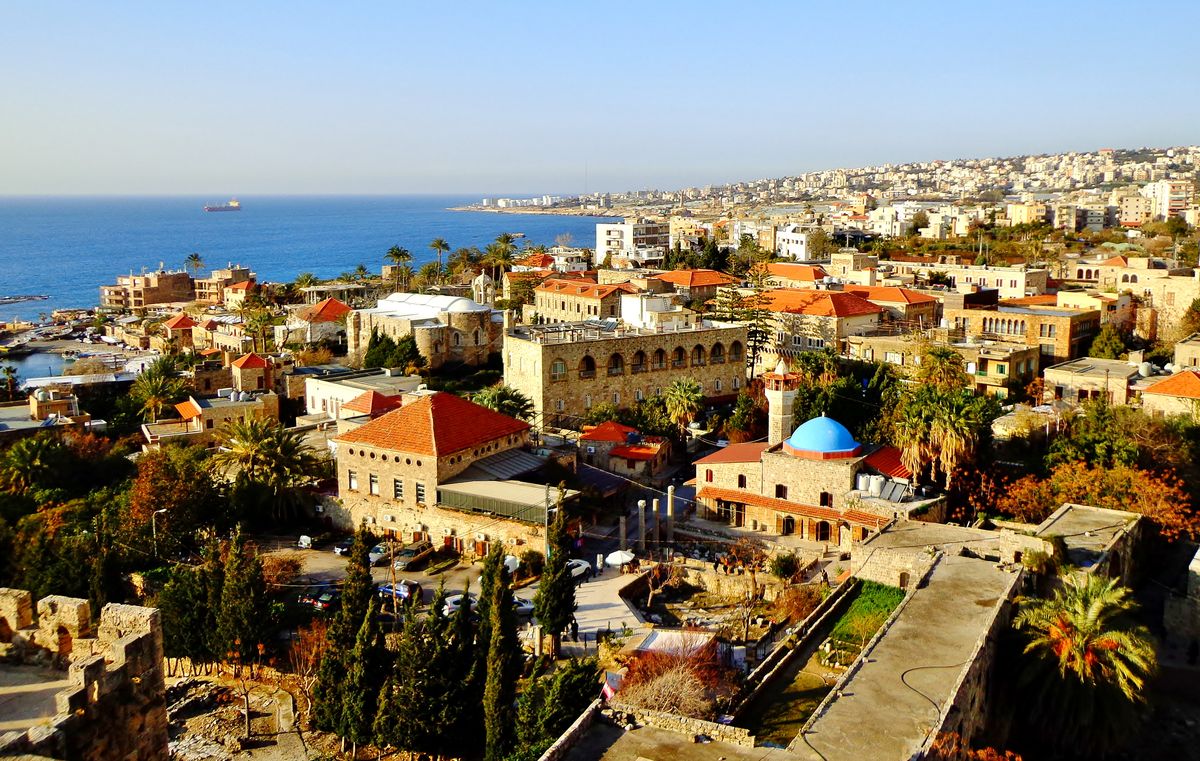
In a town stacked with Phoenician, Roman, and Crusader stone, the busiest structure on the waterfront is still the working fishing fleet.

Harbour, Still Working
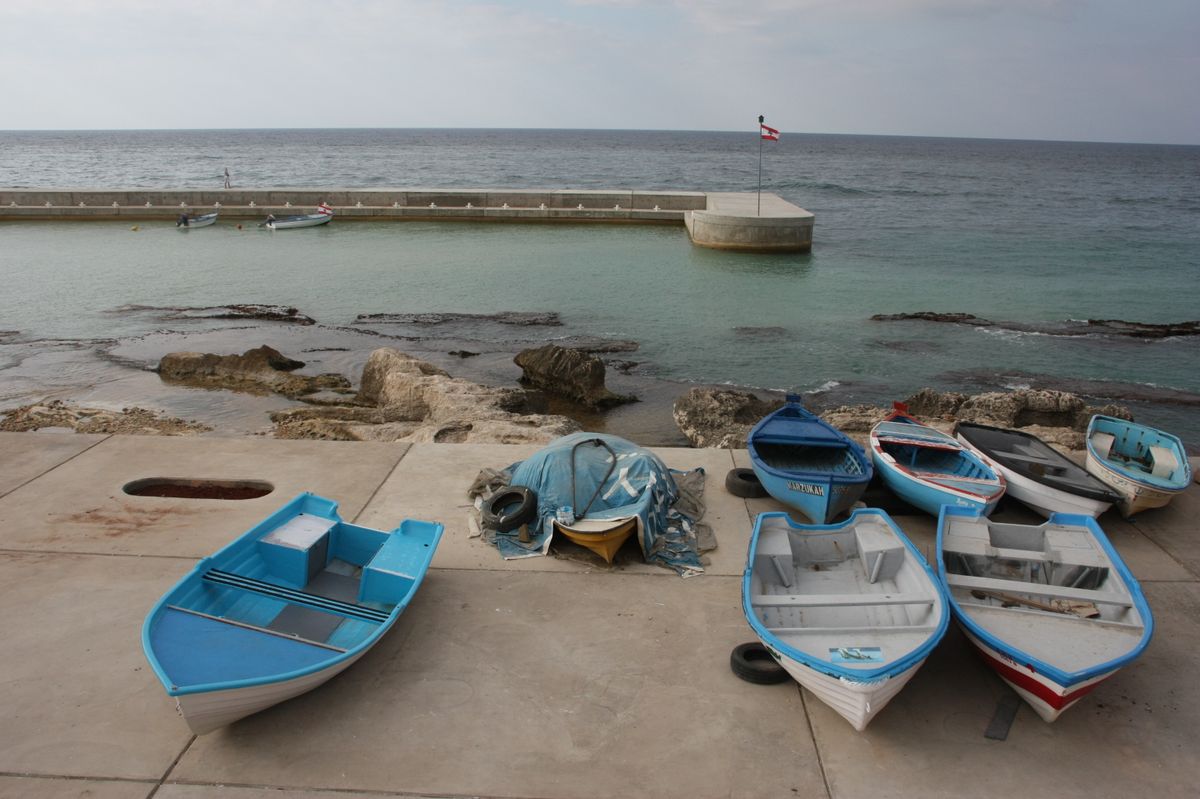
The working fleet at Byblos's old harbour, distinct from the marina further along the coast.
Six wooden boats, blue hulls chipped down to the primer, sit stern-first against the stone quay at Byblos's old harbour, ropes slack at low tide. The question worth asking of any three-thousand-year-old port is not how old it is but who still needs it, and for what.
Byblos, called Jbeil by the Lebanese who live here, counts among the longest continuously inhabited settlements in the region. Phoenician, Roman, and Crusader-era layers sit stacked on the same small headland above this harbour, and the boats moored below all that history are not for tourists. They're the same working fleet that goes out most mornings for whatever the season allows, mostly small fish, some weeks squid.
Elie has worked the ticket booth at the archaeological site above the harbour for six years, close enough to watch the boats come and go on his lunch break. 'People ask me if the fishermen are part of the show,' he said. 'They're not. They were here before the ticket booth.'
A few hundred metres up the coast, Byblos Marina does the work of nightlife: yachts, restaurant terraces, a marina bar that plays music into the evening. The old harbour does the work of a harbour, which is a smaller and less decorative job.
Byblos Marina, built out along the same waterfront in the modern era, is not the ancient port. The ancient port is the stone-walled cove where Elie can name the owner of any boat at a glance.
A working harbour and a heritage site share the same stone, and neither is the other's backdrop.
Headland, Layered Deep
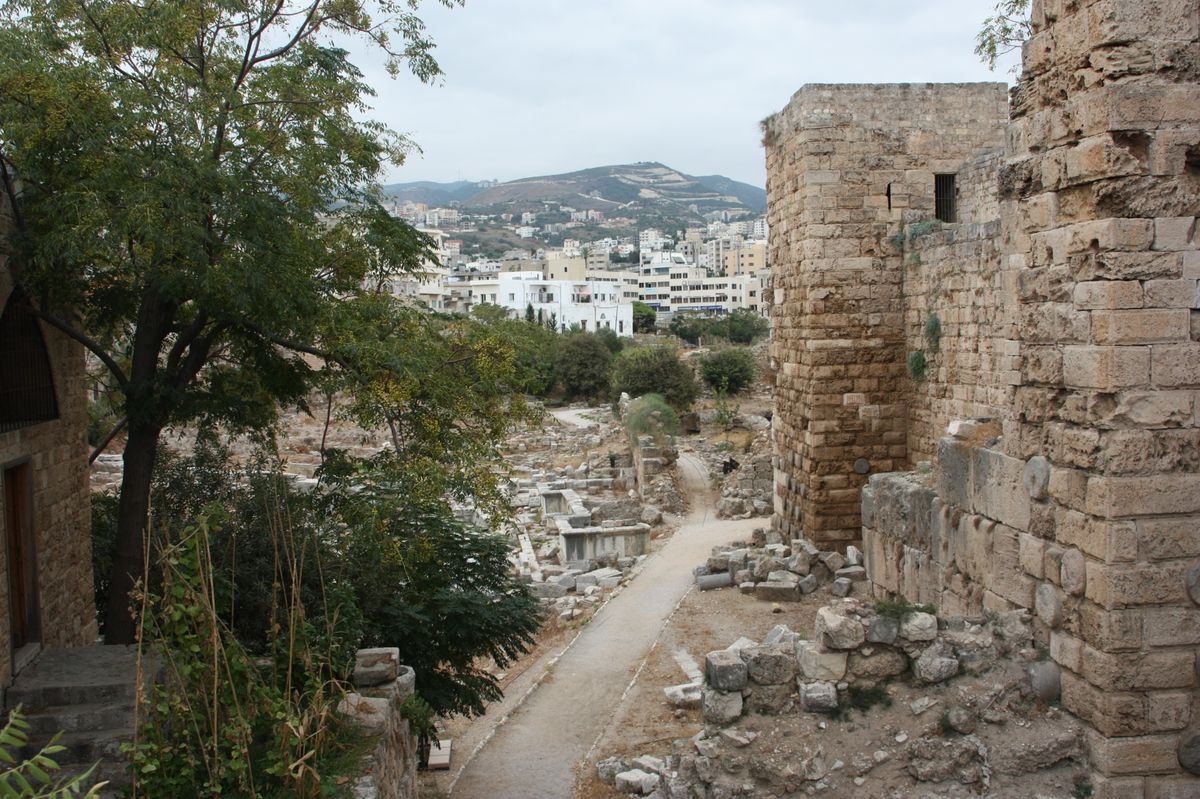
A Crusader-era tower stands wedged into the headland above the harbour, its lower courses built from Roman column drums laid on their sides like firewood. Someone in the twelfth century needed stone fast and took whatever the site already had.
The headland holds Phoenician-era ruins beneath the Crusader construction, foundations and temple remains excavated in stages over more than a century. Each occupying power built with what was already standing rather than clearing it away, which is why the castle looks, from certain angles, like it's wearing someone else's coat.
The Phoenician city that stood here traded papyrus in enough volume that the Greeks named the material after the port: byblos. That word became the root of 'biblia,' the books, and eventually the English 'Bible' by way of Greek. The popular version of this story has it that the Bible was written in Byblos, which isn't true. What happened here was a word, not a text, and the difference matters to anyone tracing it back.
The column drums in the tower's base are Roman, not Phoenician. The Phoenician layer sits lower and earlier, in the temple foundations closer to the shore, a distinction the guidebooks routinely blur.
Before You Climb the Headland
One ticket covers the Crusader castle, the Phoenician excavations, and the Roman colonnade.
The path across the headland is gravel and uneven in stretches; skip sandals.
Ask at the booth for the short route up to the castle wall that overlooks the harbour directly.
St. John's, After Dark
By nine at night, the Church of St John the Baptist stands lit against a sky with no stars in it, its arches stacked in two visible tiers of stone like a sentence with its own footnote built in. The old town around it has mostly gone quiet by then, shops shuttered, one bakery still working.
Built during the Crusader period and also known locally as Saint John Mark, the church predates most of what's called 'old town' Byblos by centuries, though the souk streets around it wear a more recent, Ottoman-era face. The layered arches are original enough that a mason today would recognize the joinery, if not necessarily approve of it.
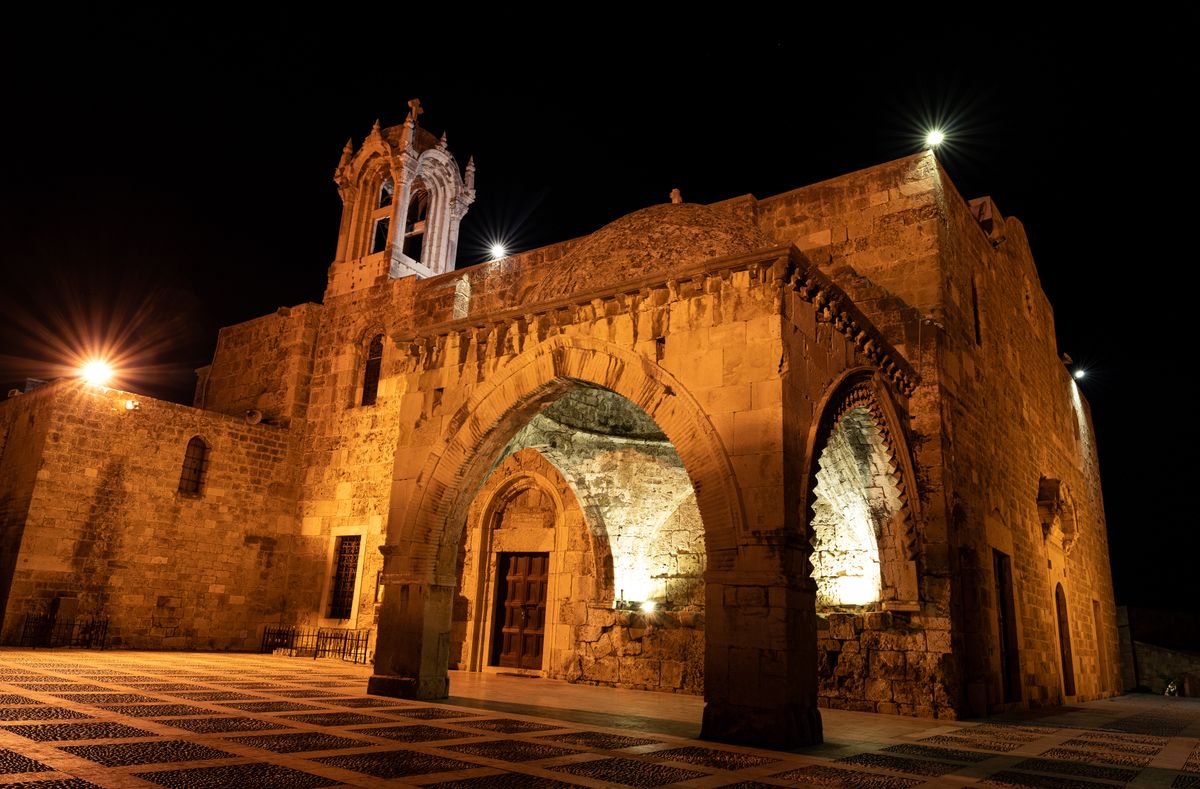
Stand at the church steps and the harbour is two minutes downhill on foot, the castle another five minutes past that, three centuries in one short walk. The brochures would call it a journey through time three-century walk under ten minutes, which is the accurate description hiding under the marketing one.
The 'timeless' read also undersells the maintenance: the harbour walls get patched most winters, the church floodlights are relatively recent, and Elie's booth runs on a laptop, not a ledger. None of it stopped being real for being kept up. ■