Colonia del Sacramento and the Argument Two Empires Never Settled
Portugal built it to smuggle past Spanish Buenos Aires; Spain took it back in under a year, and neither side ever fully let go of the architecture. A guide, a UNESCO citation, and one contested street name later, the fight is still visible on every block.

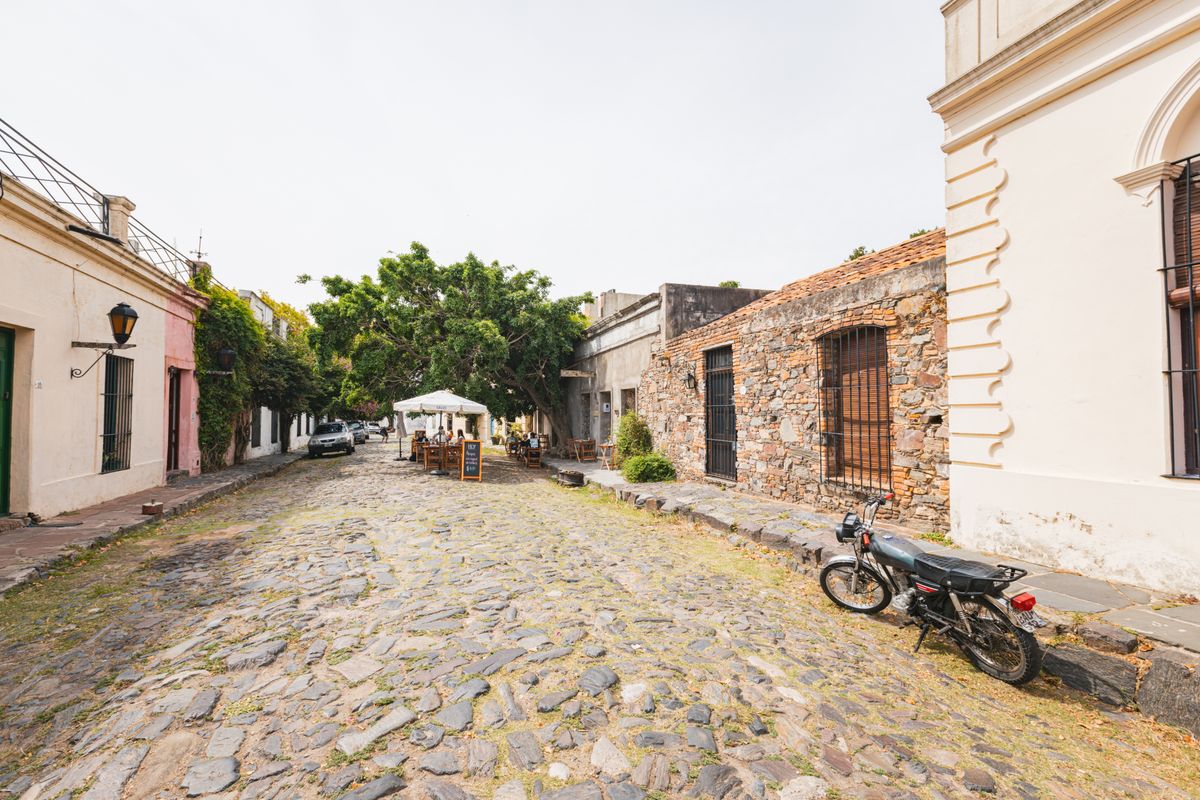
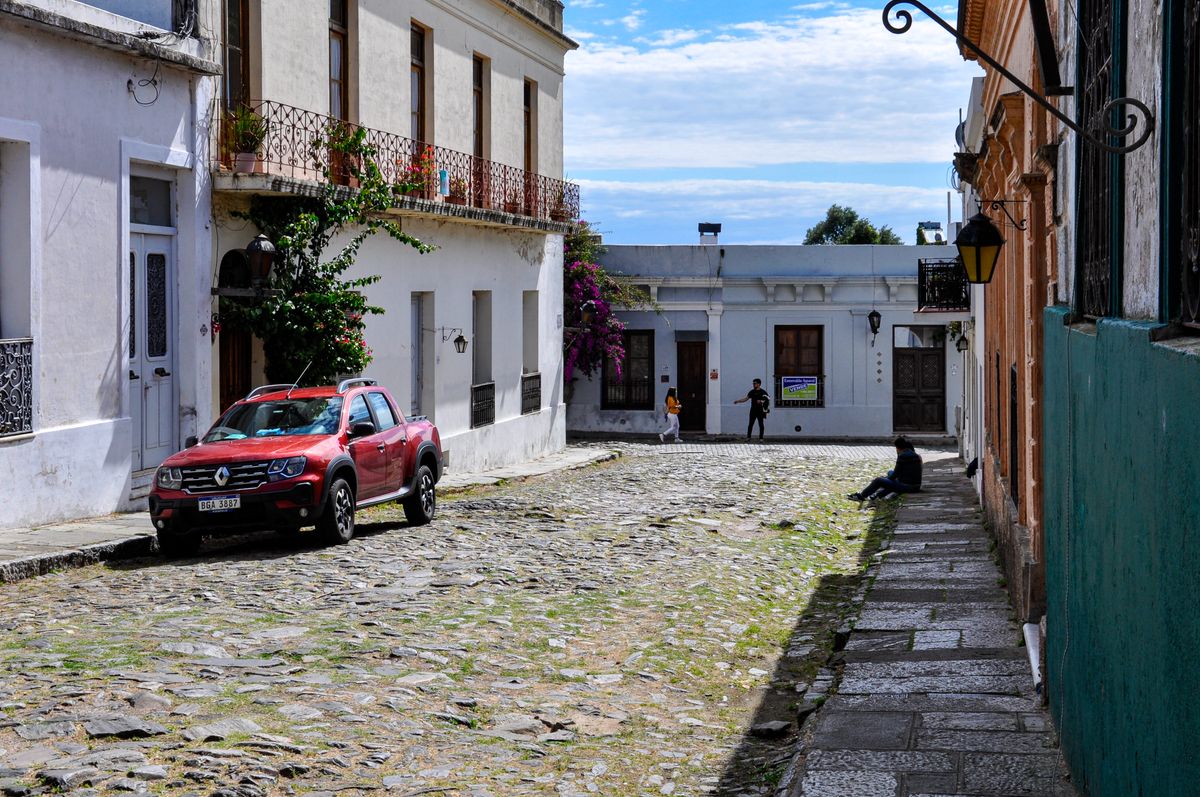
A motorcycle sits parked mid-block on a cobblestone lane that dead-ends in a stand of trees, no rider in sight, the buildings on either side refusing to match: whitewashed Spanish stucco butted straight against a mustard Portuguese facade, no seam, no apology. This is a country most itineraries skip, yet it pulls day-trippers across an international river for this exact corner, so the question an editor has to ask is who Colonia del Sacramento is actually for, the ferry crowd from Buenos Aires or the town left standing after the last catamaran pulls out.
Founding: A Fort Built to Be Taken
Manuel Lobo landed here in January 1680 with five ships and roughly four hundred men, soldiers, carpenters, and stonecutters sent from Rio de Janeiro by the Portuguese crown, and he had not come to admire the view. The site he picked was a peninsula facing Buenos Aires directly across the Río de la Plata, close enough to watch Spanish chimney smoke, which was the entire point: a smuggling post planted inside a rival empire's claimed territory.
Spain did not wait long to object. By August, the Spanish governor of Buenos Aires, José Garro, had taken the fort by force and marched Lobo off as a prisoner across the same river his men had just crossed to found it; Lobo died in that captivity three years later, in 1683, having held his own outpost for barely seven months.
Locals still call the ruined gate near the bastion the Portón de Campo, and the guidebooks describe it as a picture-perfect ruin literal property line, the last upright piece of the wall Lobo's stonecutters raised to keep Spanish troops out. It did not hold the season it was built in.
The story usually gets told as one dramatic founding, a flag planted and kept. Reality is messier: Colonia changed hands between Portugal and Spain at least half a dozen times over the following century, with a stretch under Brazilian rule before Uruguay's independence, because whoever held the peninsula controlled the smuggling route, not because either crown ever actually won it.
Suspiros: A Street Two Empires Couldn't Agree On
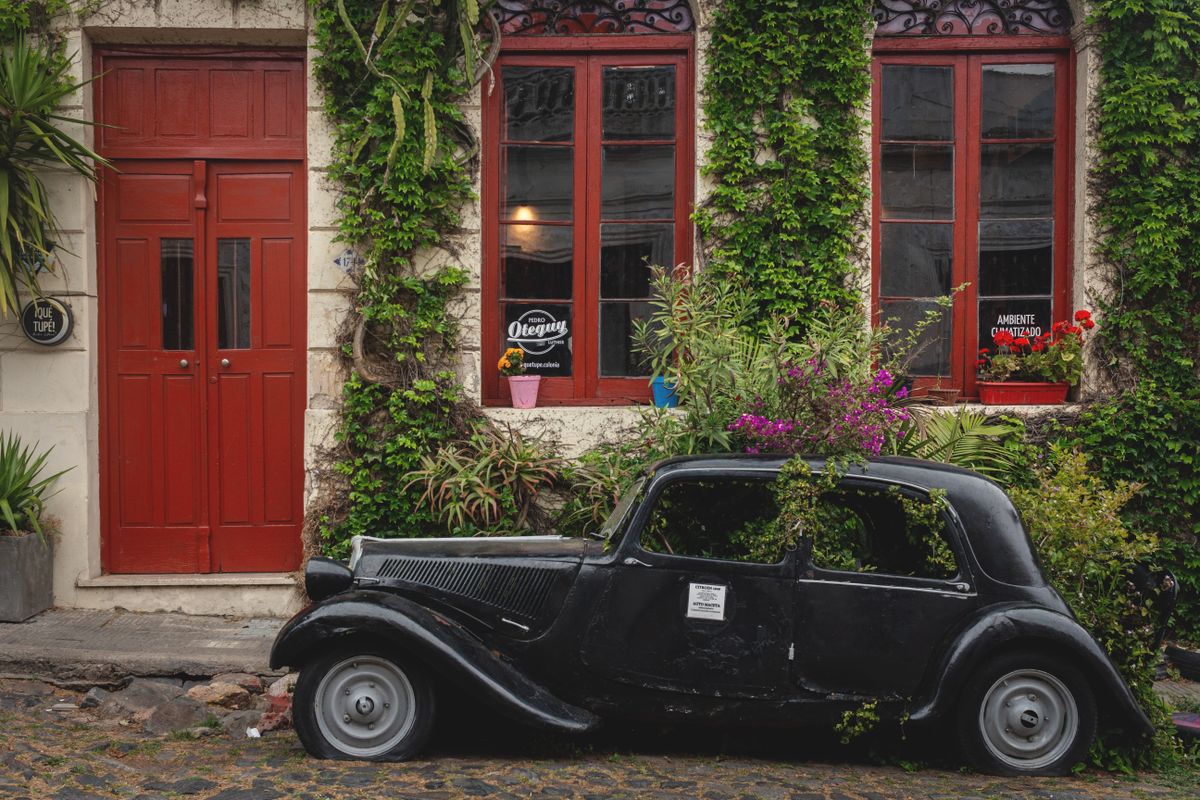
The car has been parked against that ivy long enough to rust into the scenery.
Calle de los Suspiros is four blocks of uneven cobblestone, narrow enough that two people have to turn sideways to pass, and it is the most-photographed lane in the country. What draws the cameras is not one style of building but two, refusing to resolve into either.
The plaque outside the tourist office on Calle del Comercio calls the quarter a living time capsule UNESCO World Heritage Site, a designation it earned in 1995 for a specific reason: Colonia is the only city in the Americas where Portuguese and Spanish colonial architecture sit fused on the same streets, neither style erasing the other.
Rocío Bentancur has guided walking tours through the Barrio Histórico for nine years and starts every group at the same corner of Suspiros. "Tourists ask which building is the real one, Spanish or Portuguese," she said. "There isn't a real one. That's the whole point of the ruins, showing there were two."
The popular version of the street's name says it comes from lovers sighing in the dark, or from prisoners marched down to the port, depending which stall you ask. No plaque on the block confirms either story, and the sighs most visitors actually produce on Suspiros come from hauling a wheeled suitcase over stones cut for horse carts, three hundred years before anyone owned luggage with wheels.
The cobblestones don't commemorate a winner: they record a century-long draw between two empires.
Waterfront: The Ferry Still Runs the Argument
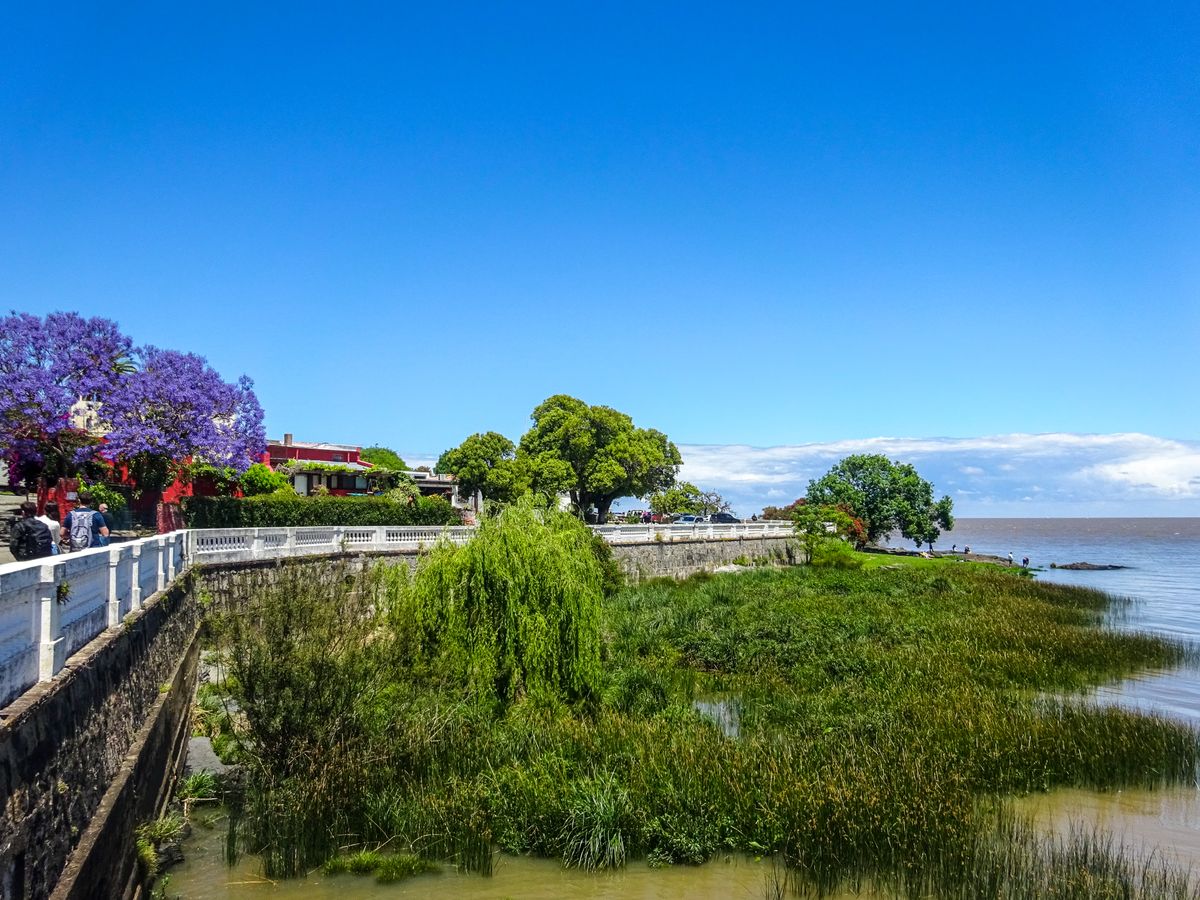
By late afternoon the promenade along the river fills with locals walking dogs under a jacaranda in full purple bloom, a low stone wall on one side, the Río de la Plata stretching the color of wet concrete toward a horizon that hides Buenos Aires completely, though the city sits barely an hour away by boat.
That crossing is the same one Lobo's smugglers used three centuries ago, minus the taxes he was dodging. Today it is a licensed business, not a workaround: catamaran operators like Buquebus and Colonia Express sell tickets openly for a river crossing that used to be worth going to prison over.
Crossing the river that founded the town
It is tempting to read the day-trip industry as the border finally settling into a joke, a scenic layover between two countries that get along. The record does not support the joke: Uruguay's independence in the nineteenth century came only after Portuguese, Spanish, and Brazilian control of this exact peninsula in turn, which means the ferry carrying lunch crowds across the Río de la Plata today is running the same argument three empires never actually finished, just at a lower volume. ■