Two Ways Beirut's Past Keeps Surfacing
Downtown, a bullet-scarred monument and a bomb-exposed crypt both show a city that keeps its damage in plain sight rather than repairing it away.

Martyrs' Square, Reading the Scars
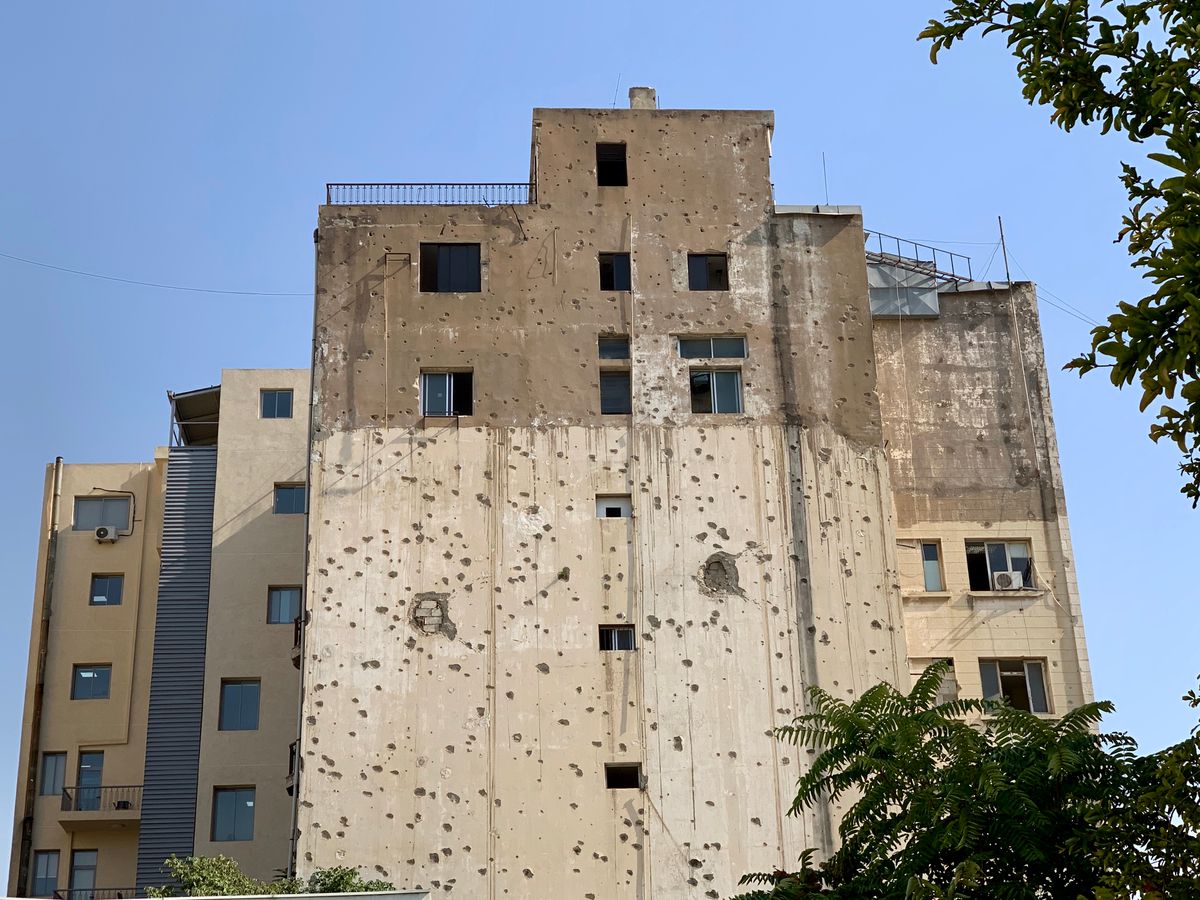
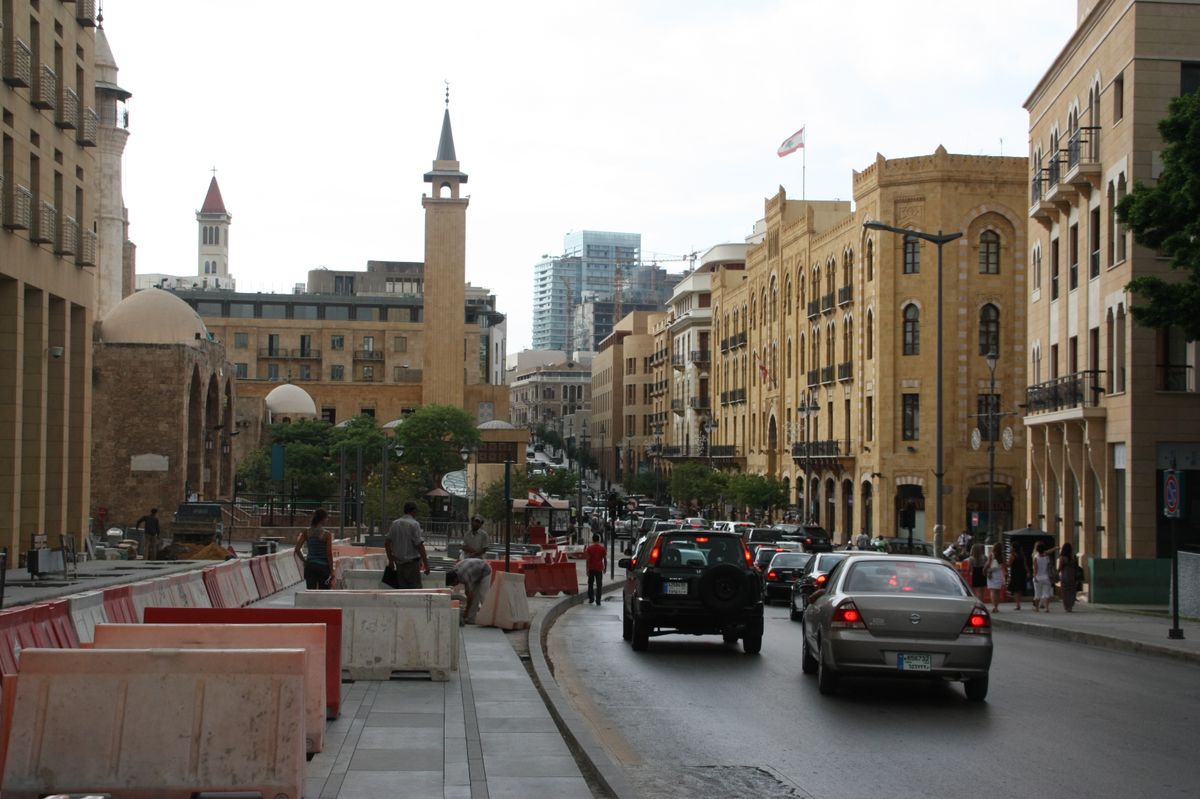
A building facade elsewhere in Beirut, not the monument itself, but the same kind of damage left visible rather than patched over.
A bronze figure at Martyrs' Square is missing the top third of the torch she once held, and the metal near the break is pocked with marks the width of a fingertip. Why does a monument built to honor executions from 1916 still carry damage from a war that didn't start until nearly sixty years later, and who decided that damage should stay?
The square itself functions more like a traffic circle than a plaza, cars looping the monument's base while pedestrians cross in gaps between them to reach the center island. Buses idle along one edge, engines running, waiting for a break in traffic that rarely comes.
On May 6, 1916, Ottoman General Jamal Pasha ordered the public hanging of a group of Lebanese Arab Patriots at the site, men from different religious communities charged together with speaking against Turkish rule. The square took its current name from that date, Martyrs' Square, and the name outlasted the Ottoman period, the French Mandate that followed it, and the war that came decades later.
The monument standing there now came more than four decades after the executions. Italian sculptor Marino Mazzacurati cast the bronze figures, and the city inaugurated the piece in 1960, turning an informal habit of mourning at the site into something the city itself endorsed.
Randa Chalhoub has sold coffee from a handcart near the square's northern edge for eleven years, close enough to point at specific marks on the bronze without crossing traffic. "That one is a rifle round, not shrapnel, someone told me once, you can tell by the shape," she said, gesturing at a cluster of holes near the statue's base. She has heard a dozen different explanations from customers over the years and repeats none of them as settled fact.
A plaque fixed to the monument's base calls it a timeless symbol of national unity statue the country took down once, in 1996, and argued over before putting back up. Unity, in this case, took a restoration budget and a decision about what to leave broken.
That restoration cleaned the bronze but left the bullet holes and shrapnel gouges exactly where the war put them, a choice conservators made deliberately rather than an oversight. Nothing in the square explains that choice directly, no signage walks a visitor through the reasoning, but the result reads as intentional the moment you look for it.
None of this makes the monument the same age as the massacre it commemorates. The bronze dates to 1960, forty-four years after the hangings it honors, which means the statue itself has now stood on that spot for over sixty years, longer than the gap between the executions and its unveiling.
Beirut didn't restore the monument to erase the war. It restored the war onto the monument.
Under Saint George, Twelve Stops Down
A staircase behind Saint George Greek Orthodox Cathedral drops into a room where the floor turns to exposed rubble held behind glass panels. Why is one of downtown Beirut's clearest layered timelines sitting in a basement nobody set out to dig?
The stairs narrow as they descend, and the cathedral's traffic noise fades within a few steps. Cool air replaces it, along with the particular hush of a room built to be walked through slowly rather than passed through.
In 1975, in the war's early months, a bomb struck the cathedral and tore into the ground beneath it. The blast damaged the building, but it also exposed archaeological layers that had sat undisturbed under the church for centuries, and what started as repair work turned into excavation.
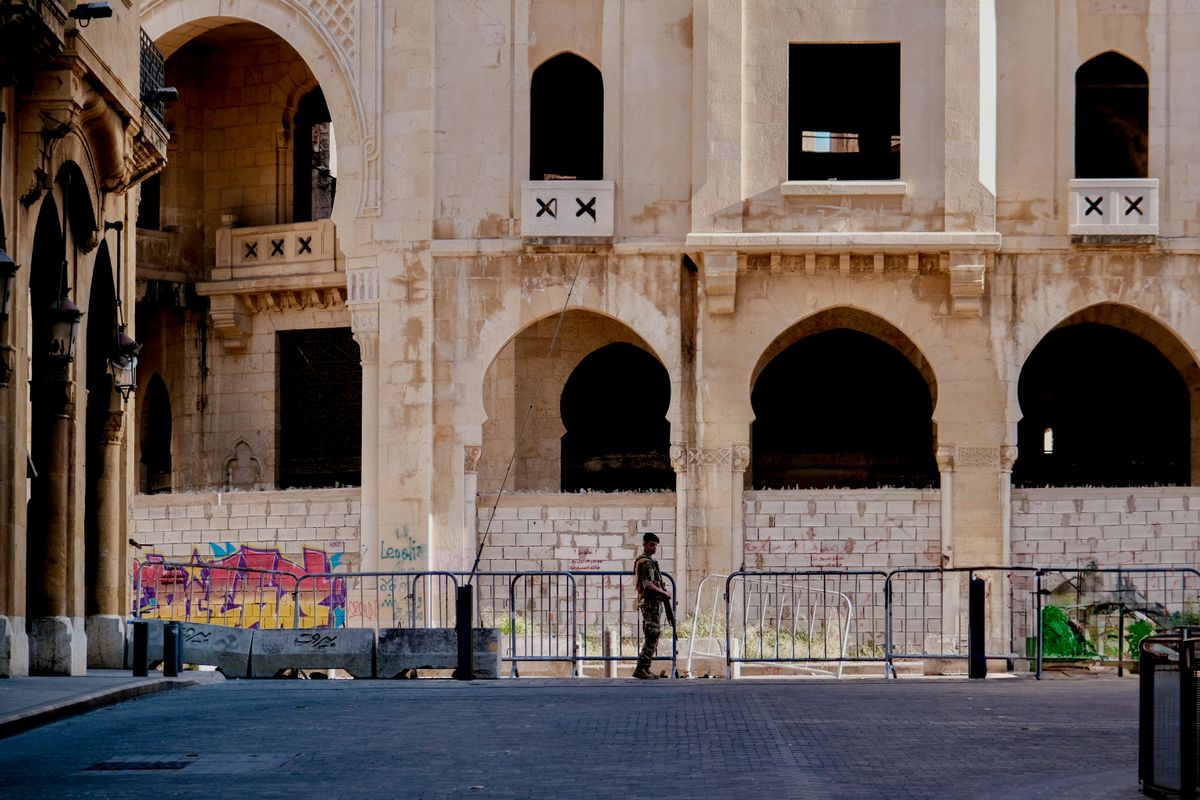
The museum that resulted runs through roughly a dozen stops, closer to a route than a floor plan. Visitors move case by case from Hellenistic pottery and oil lamps through Roman-era columns to Ottoman-period tombstones and mosaic fragments, with the foundations of earlier churches on the same site marked out underfoot.
Antoine Sarkis has led walk-throughs of the crypt three afternoons a week for six years, and he starts every group at the same case near the entrance. "People expect to find one old thing down here," he said. "They don't expect twelve different old things, stacked on top of each other." He carries a flashlight clipped to his belt for the corners the cathedral's wiring doesn't reach.
The tidier version of this story credits foresight, an excavation commissioned because someone suspected ruins under the cathedral. Reality is blunter: a bomb did the first digging, and the archaeology came after, a rescue project organized around damage nobody wanted in the first place.
That doesn't make the ruins new. The Hellenistic material in the crypt's earliest cases predates the cathedral above it by centuries, meaning the ground was already old when the church was built on top of it, long before any bomb gave anyone a reason to look down. ■