The Bekaa Valley Plays Slow, Then Fast: Wine and Ruins on a Fault Line
A week through Lebanon's wine country starts with a nineteen-year-old on an oud nobody's listening to. It ends underneath six Roman columns that have outlasted every empire that built them.

Zahle, Tuning Up
Getting Up From Beirut
Service taxis from the airport to Zahle run around $40-45 USD, agreed on before you get in, not after.
Shared 'service' taxis into town from Zahle's main square cost a dollar or two if you're not in a hurry.
Most Bekaa businesses quote in US dollars now; keep small notes for change in Lebanese pounds.
The first sound in Zahle wasn't the river, and the river was right there under the railing, loud enough to argue with. It was a bouzouki being tuned two tables down before the food had even landed, the player running the same four bars twice, adjusting, running them again, while a waiter set a plate of labneh down and walked off like this happened every night. It did.
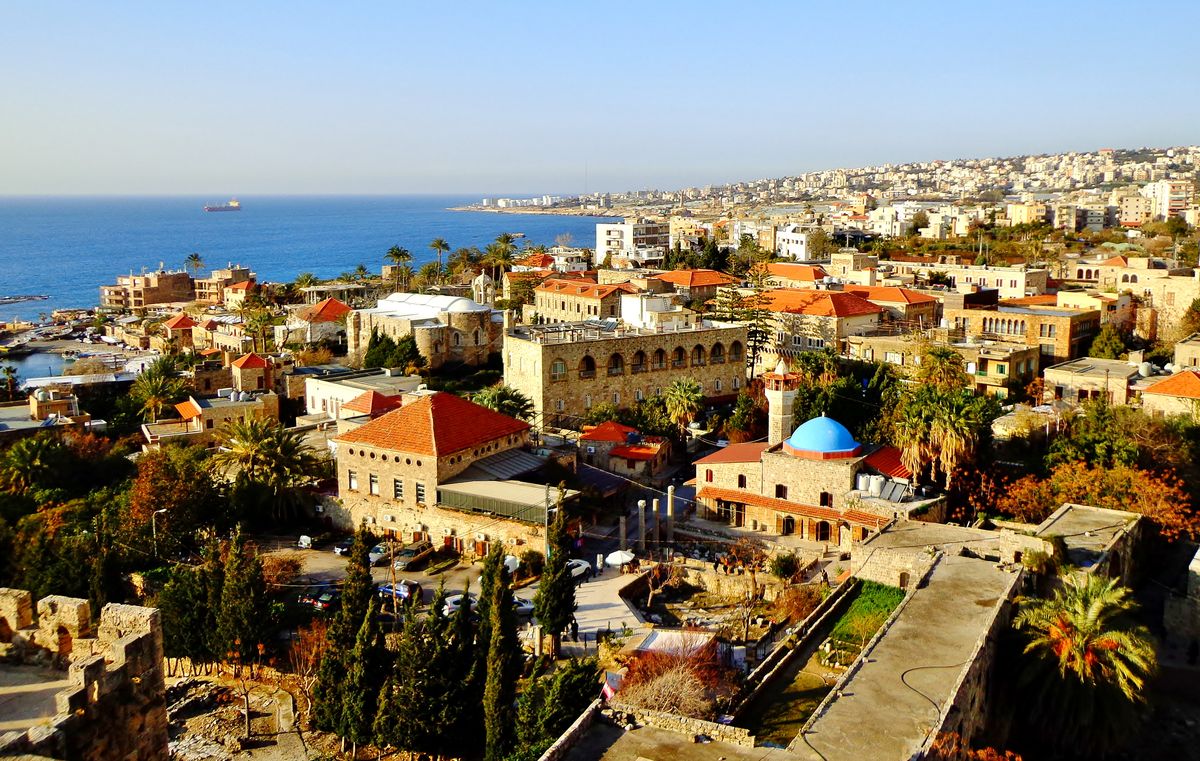
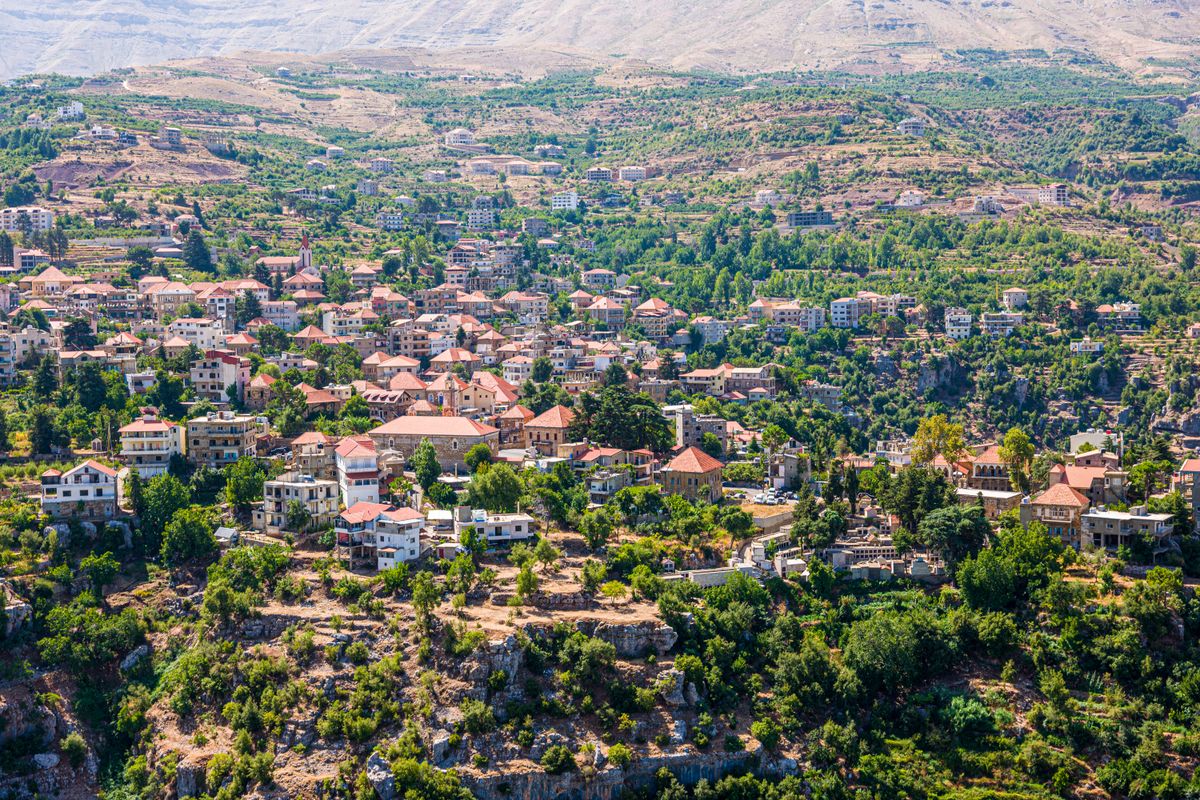
I'd flown Dublin to Beirut by way of Istanbul, landed after one in the morning, and paid a driver forty-five dollars to take the hour up into the Bekaa Valley in the dark, so my first proper look at the place came from a hotel balcony at sunrise, the Anti-Lebanon range going pink on one side of the valley and Mount Sannine still holding its shadow on the other. Zahle is built into the gorge the Berdawni river cut coming down off the mountain, red roofs and church spires stacked down the slope, restaurant terraces built out three and four deep over the water. Locals call it the Bride of the Bekaa, and nobody I asked could tell me who started that, only that it stuck.
By eight that first night every terrace along the Berdawni corniche had someone playing something. Arak turned up unasked, with a jug of water and a bowl of ice, and you cloud it yourself, watching it go from clear to milk-white while you top up the glass. Twelve dollars a half-litre, and the waiter didn't blink when I ordered a second. Mezze kept coming whether I asked for it or not: muhammara, kibbeh nayeh, a plate of fried kaake nobody at the table could name and everybody finished.
Two terraces along, a man in his fifties was working through the wedding-band circuit's greatest hits on an oud for a table of six who weren't really listening, competent and a little tired, the way a Tuesday gig always is before the room's decided to become a room. Further upriver, past where the terraces thin out, a kid of about nineteen had an oud and no audience at all, playing something slower I didn't recognise, and every table within earshot went quiet without seeming to notice they'd done it.
That's the tell for a place like this, which act is performing for the room and which one would play the exact same thing to an empty terrace. Zahle's river carries the second kind more often than you'd expect for a strip that lives off tourist buses in high season. I never did learn the kid's name, only that he was still there, still not looking at anyone, when I paid up and walked back along the water to the hotel.
The best set of the night was being played to an empty table, same as it usually is.
The Vineyards Sit on a Fault
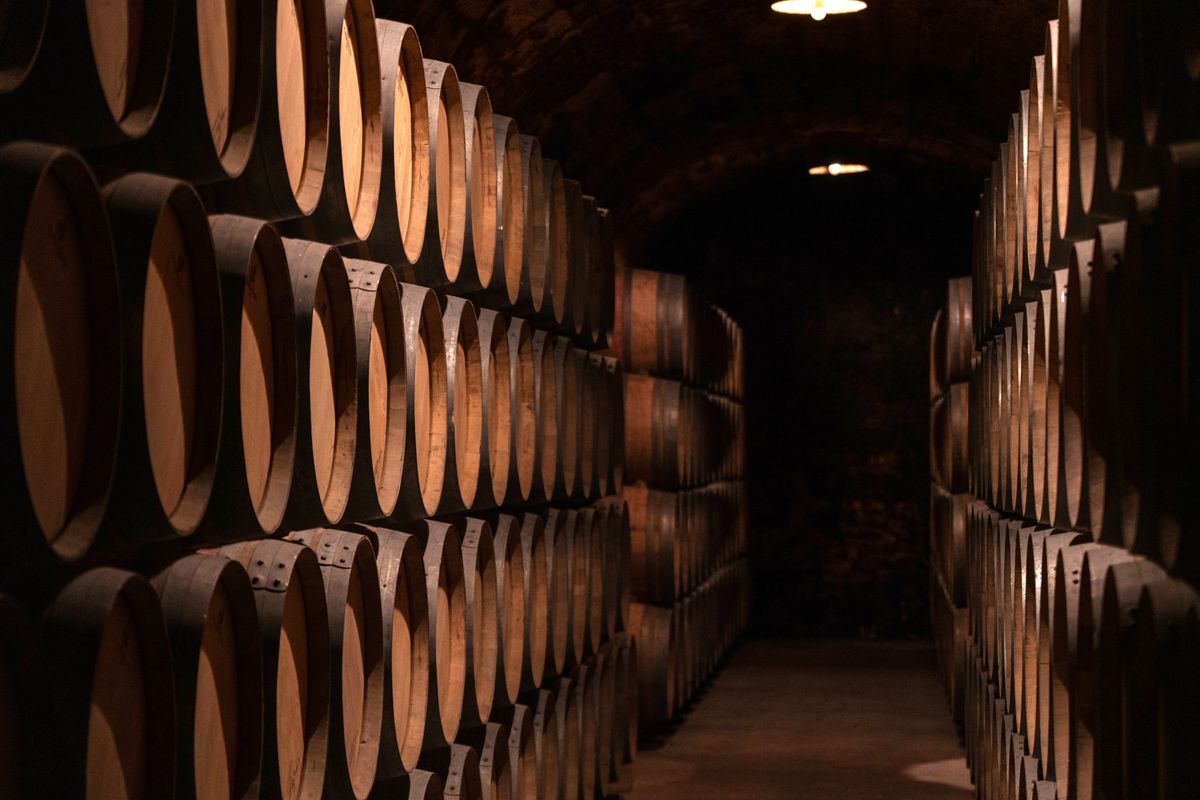
Ksara's cellar doesn't sound like anything at first, which is the whole point of two kilometres of tunnel cut through limestone. No traffic, no wind, just your own footsteps arriving half a second after you expect them and a drip somewhere off in the dark that the guide said was groundwater still finding its way through rock the Romans quarried two thousand years ago.
The tunnels were rediscovered in 1898 by, depending on which staff member tells it, either a fox or a rabbit or both, one chasing the other into a hole that opened onto a cave system running half a kilometre back into the hill. Jesuit priests had founded the winery above ground forty years earlier, in 1857, and once they found the caves they moved the whole operation underground, where it's stayed a constant eleven or twelve degrees regardless of what the valley's doing outside. Bottles here don't age so much as wait.
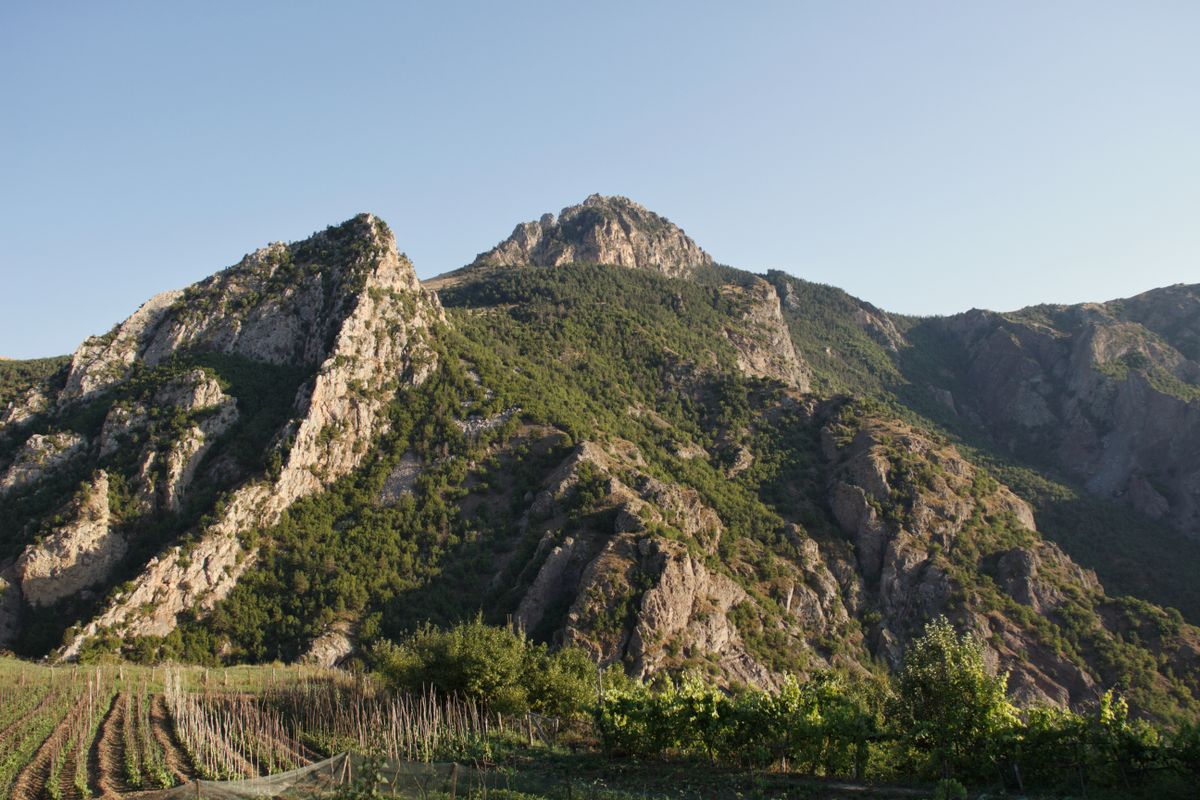
The valley itself sits on the Yammouneh fault, part of the same fracture in the earth's crust that runs the length of the Dead Sea Transform, separating the Arabian plate from the African one a few centimetres a year. That's the reason for the altitude, close to a kilometre up, which gives the vines hot days and genuinely cold nights, and it's the reason for the earthquakes that turn up in the region's history every century or two. Nobody at Ksara brought up the fault line unprompted. When I asked, the guide shrugged and said the wine had never seemed to mind.
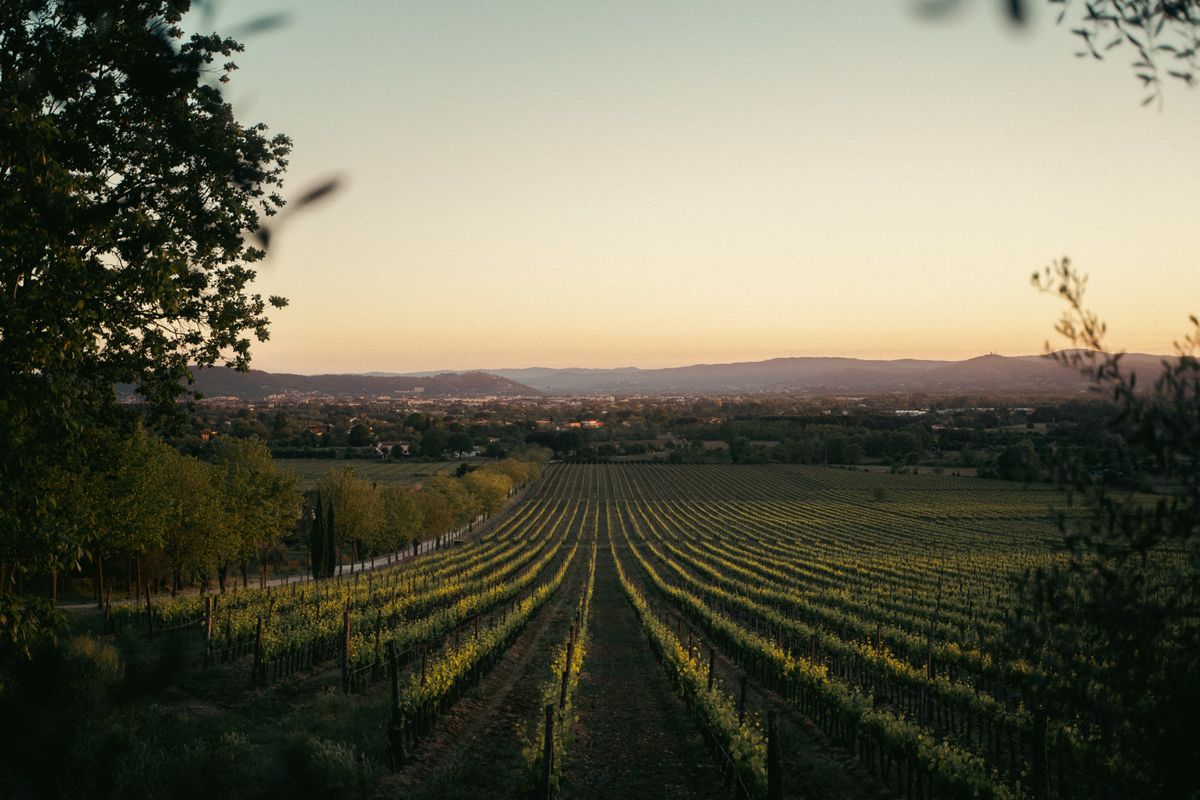
Kefraya, on the far side of the valley under the foothills of Mount Barouk, was a different kind of room entirely. The tasting terrace overlooks vines running in long rows toward the mountains, which is the postcard shot everyone comes for, but a wedding was setting up in the field next door, and their sound engineer was running a line check through a PA loud enough to reach the parking lot, one bar of the same song, again, again, at a volume that had nothing to do with the size of the room it needed to fill. Ksara's cave had been a quiet, considered set. Kefraya's afternoon was a soundcheck that hadn't found its levels yet.
I ended up away from both tasting rooms before the day was out, sitting on a low wall at the edge of Kefraya's vines with a glass I hadn't paid for. A worker two rows over was humming something under his breath while he checked the wire trellising, not performing for anyone, not even really singing, just working with a tune running somewhere behind it. That was the best sound I heard on a winery tour all week, and it cost nothing at all.
A Day of Bekaa Wineries
Ksara plays a quiet, considered set underground. Kefraya was still finding its levels when I left.
Older Than Any Tune
Baalbek Heat
Bring more water than feels necessary. There's no real shade until you're inside the temple walls.
Go before eleven if you can. The stone starts throwing heat back by midday.
A private guide runs $20-25 for the site and is worth it for the trilithon stones alone, three blocks in the podium wall around 800 tons each.
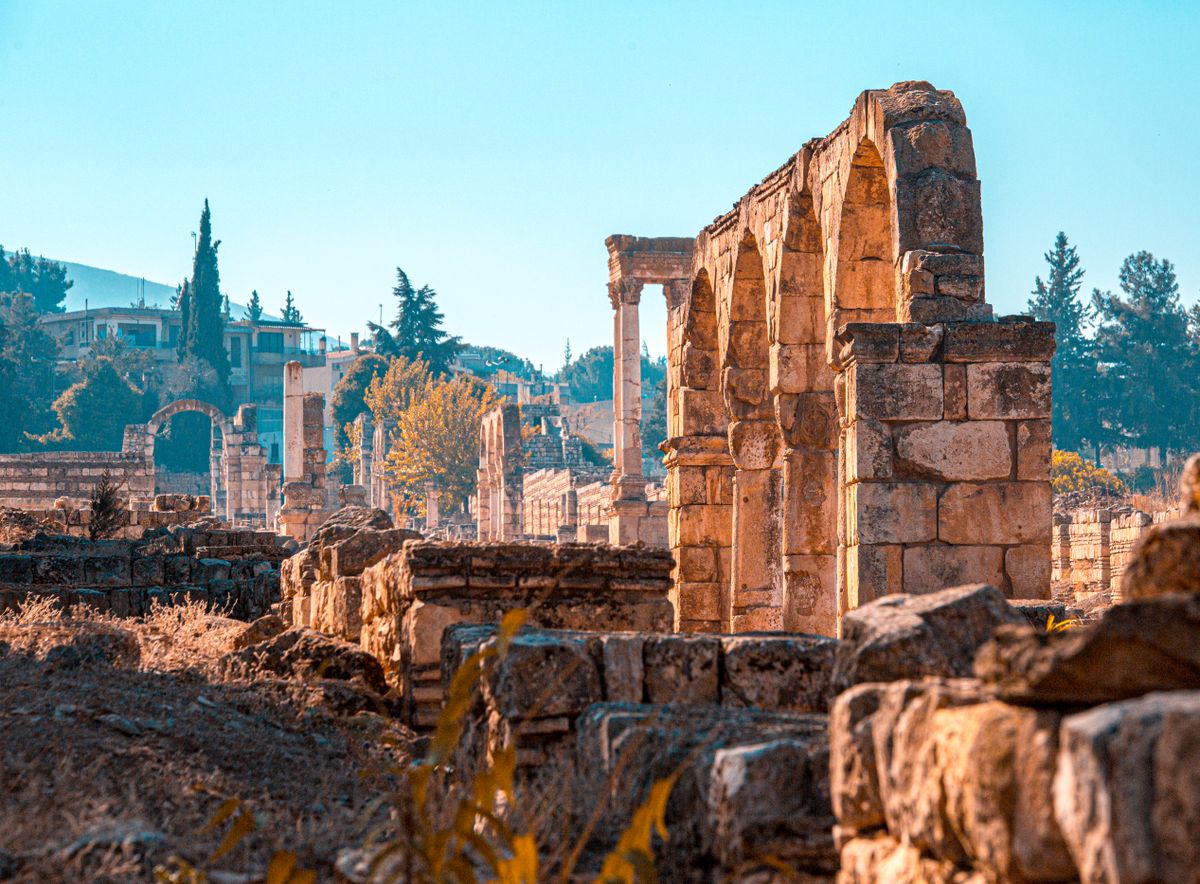
Baalbek's ruins run right up against the edges of the modern town that grew around them.
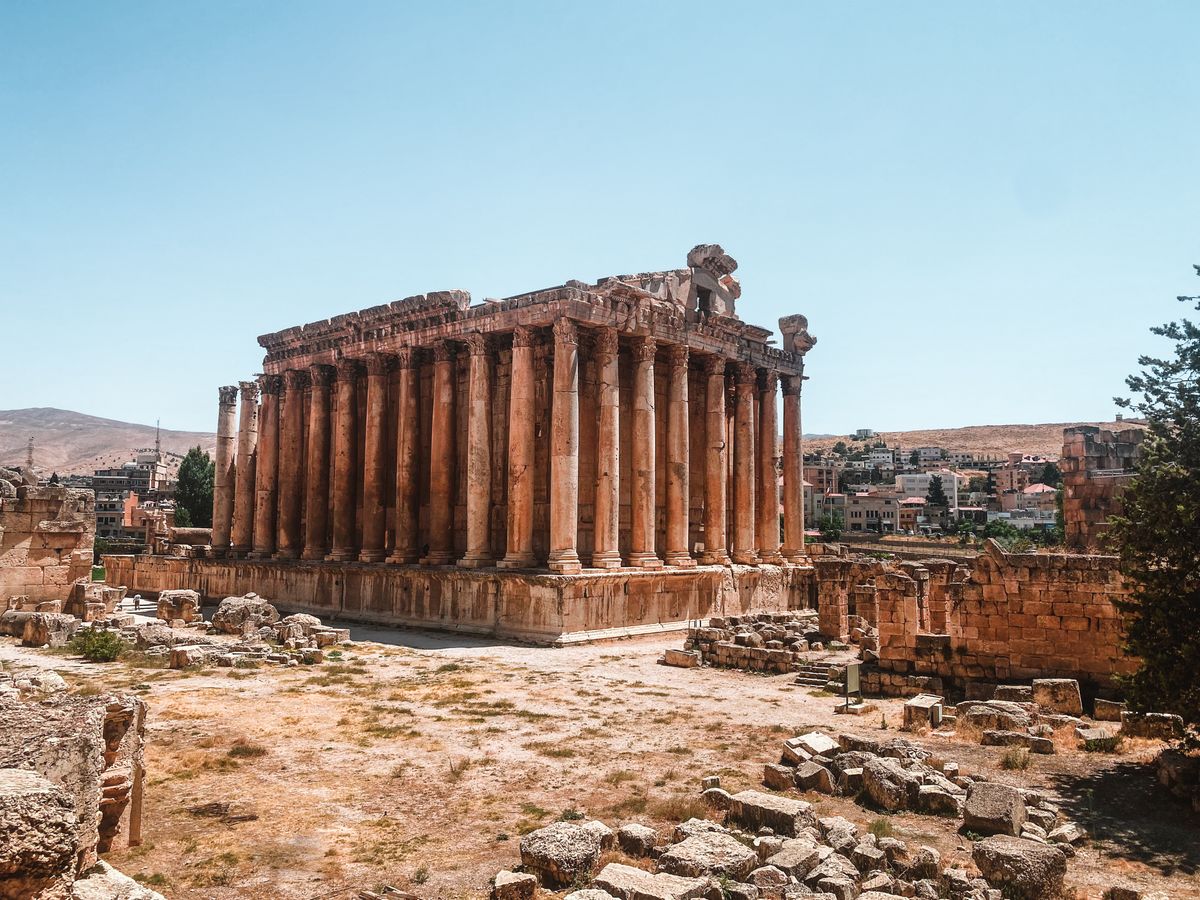
Baalbek doesn't do subtlety. Six columns of the Temple of Jupiter stand nearly twenty metres tall, the tallest Roman columns left standing anywhere, visible from the road into town like the ruins are advertising themselves before you've paid for a ticket. What you hear walking in isn't music. It's four or five guide groups running simultaneous commentary in Arabic, French, English and German, each pitched to carry over the last one, so the actual soundtrack to one of the largest religious complexes the Romans ever built is a stack of overlapping tour scripts that never quite line up.
Entry runs about fifteen dollars for a foreign visitor, more with a private guide, and by ten in the morning the heat off the stone was doing most of the talking anyway. The Temple of Bacchus, smaller than Jupiter's but far better preserved, might be the most intact Roman temple standing anywhere in the world, bigger inside than it looks from the approach, with carved vines and pomegranates still legible on the ceiling coffers after the better part of two thousand years.
Down in the quarry a short walk from the main complex sits the Hajar al-Hibla, the Stone of the Pregnant Woman, an unfinished monolith the Romans never managed to move, estimated at somewhere north of a thousand tons. It's just sitting there in the grass, half-cut, the way you'd leave a job if the tools broke and nobody ever came back for a replacement set. No guide script had anything clever to say about it, which might be why it was the quietest five minutes I spent at Baalbek.
Anjar is forty-five minutes further into the valley, close to the Syrian border, and it's a different register entirely. Built by the Umayyad caliph Walid the First in the early 700s, it's laid out like a Roman army camp, a grid of streets meeting at a central crossing, which is unusual for the Umayyads and still not fully explained. The town around the ruins today is Armenian, resettled here in 1939 by families who'd fled the Musa Dagh area when the French mandate handed that territory to Turkey. Between the two histories stacked on top of each other there wasn't another visitor in sight the whole time I was there. No guides running commentary, no PA warming up next door, just wind through cut stone and, somewhere past the far wall, a radio playing what sounded like an Armenian folk station too quietly to make out the words.
Baalbek was five guides talking over each other. Anjar was wind and someone's radio, and Anjar won.
Last Set on the Berdawni
We drove back into Zahle the long way, along the valley floor with the vines running out flat on either side and the light going that late gold that makes even the electricity pylons look considered. Somewhere past Chtaura the driver put the radio on, a call-in show with someone singing badly and the host laughing about it instead of cutting them off, and that felt like the right soundtrack for a valley that's been getting knocked around by geology and history in roughly equal measure and just keeps replanting.
It wasn't the set from six nights earlier, and I didn't pretend it was.
My last night I went back to the same terrace on the corniche, mostly to see if the kid with the oud would be there again. He wasn't. Someone else was playing, older, running through requests for a table of tourists who kept asking for songs he clearly didn't know and covering well enough that most of them probably didn't notice. It was fine. It was a Thursday-night professional doing a Thursday-night job, and there's no shame in that, but it wasn't the set from six nights earlier and I didn't pretend to myself that it was.
I never got the kid's name, never went looking for him on my last two nights either, which in hindsight was probably a mistake, or maybe it wasn't, since some sets are only good because you weren't meant to stay for the encore. The river was still running under the railing when I paid up for the last time, same as it had been on the first night, same as it presumably was doing right now, several time zones away, completely indifferent to whether I was there to hear it or not. ■