The Cenotes Near Tulum Sound Like a Room Tuning Up
Listening to the cenotes near Tulum in the Yucatán, from an open daylight pool to a cavern where every drip carries and the snorkellers go quiet.

Soundcheck
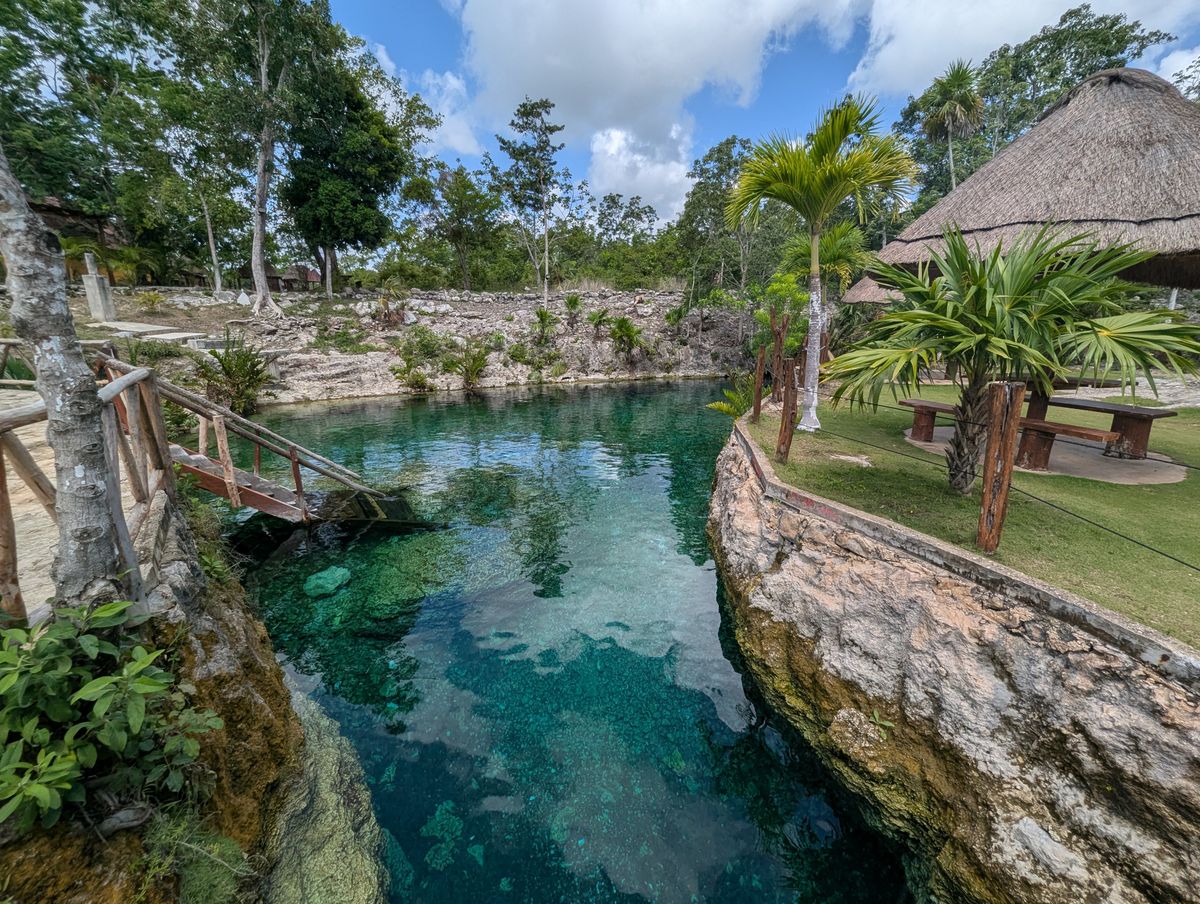
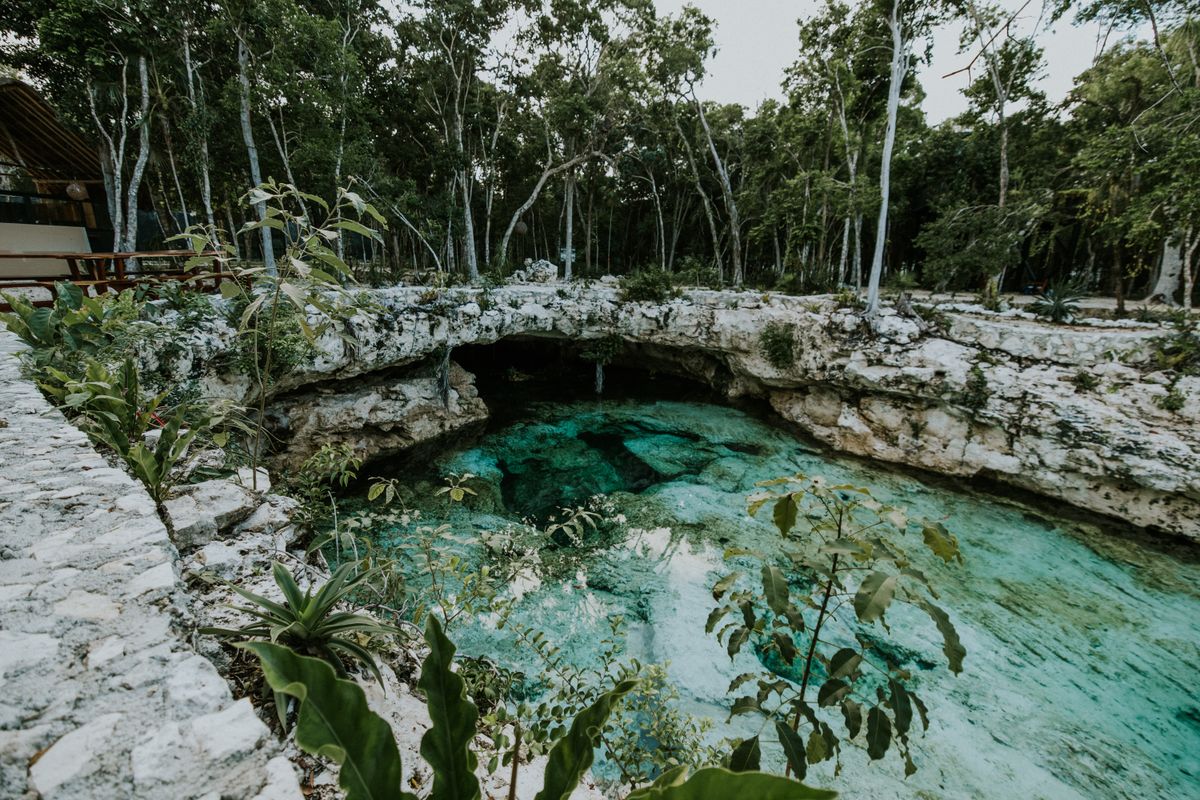
The open pool at the start, with the palapa side doing most of the talking.
The first sound of the day was wood: the planks of a walkway knocking hollow under wet feet at an open-air cenote outside Tulum, on Mexico's Caribbean coast. A cenote is a sinkhole where collapsed limestone has exposed the groundwater underneath, and this one was open to the sky, clear to the bottom and nearly still. We were starting in daylight and finishing at Dos Ojos, a cavern cenote north of town.
Over at the palapa, a thatch-roofed shelter where people eat and wait their turn, a handful of other groups were murmuring, and somewhere in the car park a radio was playing something with an accordion in it, tinny and cheerful and a long way from the water.
Nobody was hurrying. The Yucatán Peninsula has an estimated 10,000 cenotes, and in much of the region they are the only perennial source of drinking water, so it felt slightly wrong when a child on the walkway dropped a flip-flop in. It landed with a flat slap and floated. A man from another group reached down, hooked it back to the rail with his foot and went on talking without looking round. Then the pool settled, the ripples running out to the stone rim long after anyone had stopped paying attention.
Main set
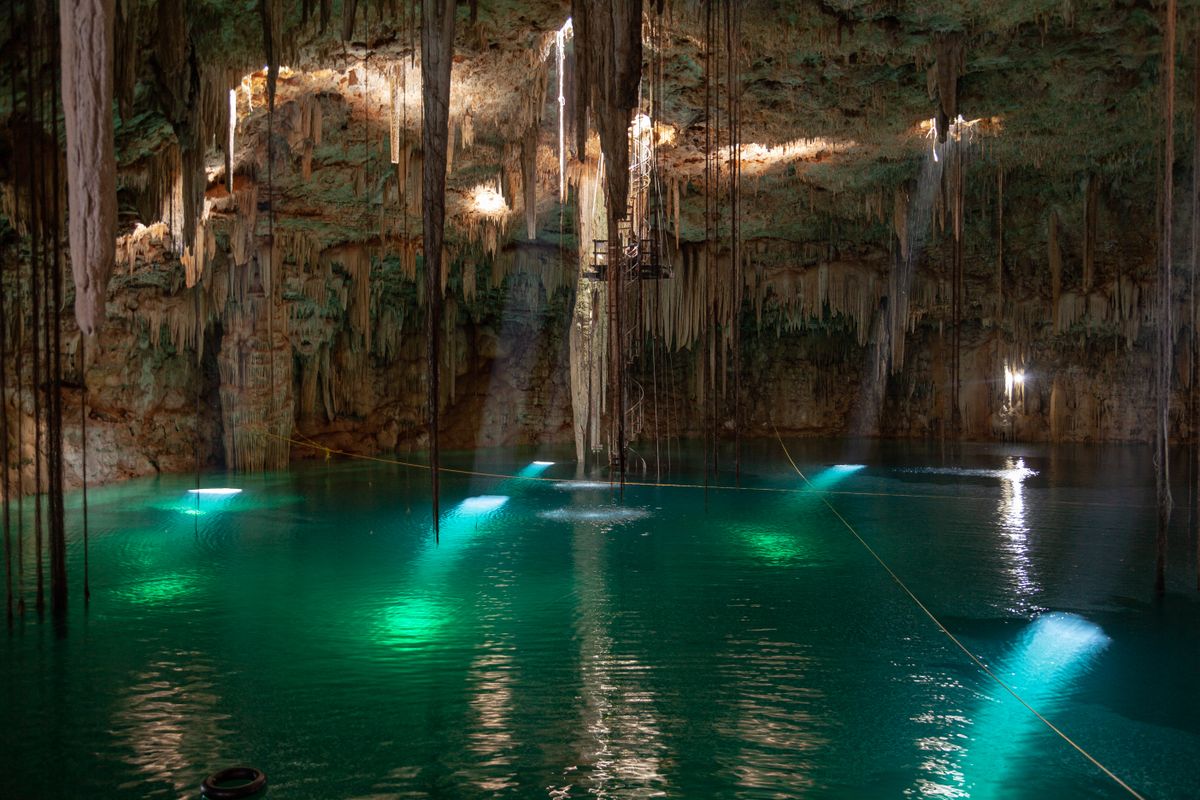
At Dos Ojos the first sound was the rope, a wet knock against rock whenever someone in the water below shifted their grip. Dos Ojos means two eyes, for the two neighbouring cenotes that open into one large cavern. The cave system named after them has 28 known sinkhole entrances. We queued on a wooden stair in order and mostly in silence, and the snorkellers went in first because the divers were still sorting their gear.
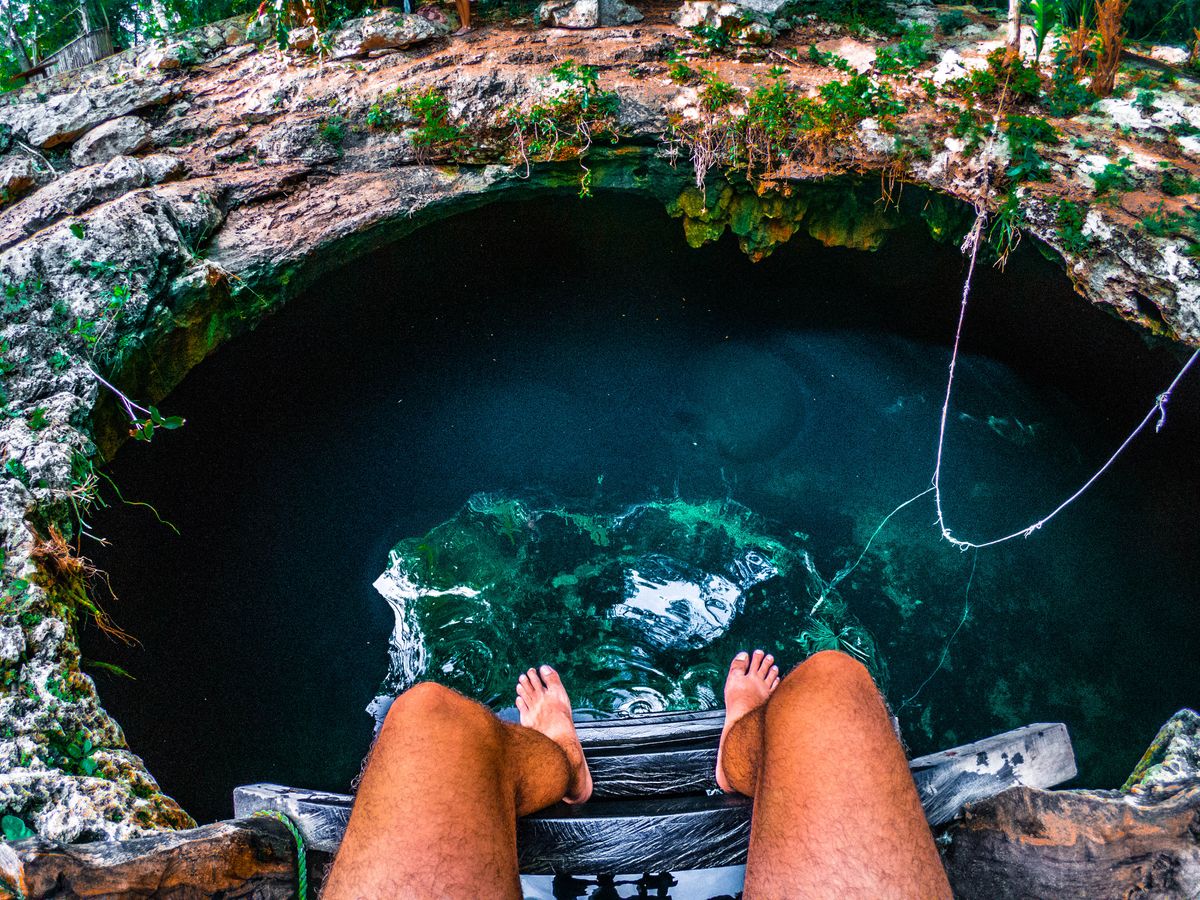
I sat on the step with my feet over the water and listened. The water lapped, paused and lapped again, and each echo came back a beat late. Straight down, past my feet, it went black. The Maya believed cenotes were portals to Xibalba, their afterlife, and from that step I wasn't going to argue. Nobody on the stair spoke above a murmur. Marta, who had talked about her lost sunglasses since the van, stopped mid-sentence and didn't start again.
Then we were in. Cold water made everyone swear quietly, and then the swearing stopped too. We strung out along the rope, with the guide at the back beside the slowest swimmer, and nobody blew a whistle.
Ahead of me, the first snorkeller ducked under a low ledge and the chatter went with her, as if someone had pulled the lead out of an amp. What was left came in order of loudness: breath through a snorkel, the rope, the drips. Behind us the round opening was the only daylight, and the drips came off its mossy lip into the water one note at a time.
When the first snorkeller ducked under the ledge, the chatter went with her.
Encore
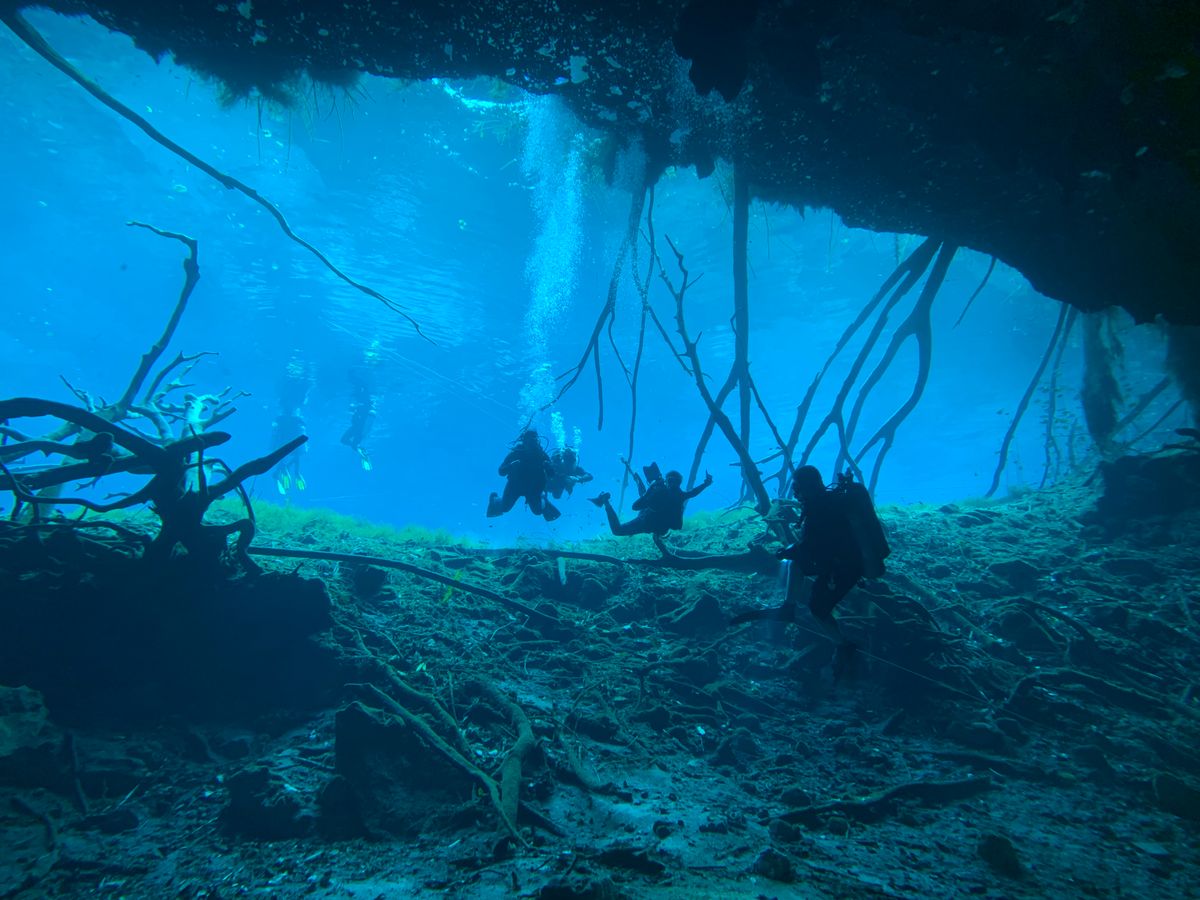
The regulators came last. A regulator is the mouthpiece a diver breathes through, and with my face in the water its sound was a slow hiss, then a rattle of bubbles, then a pause, like brushes on a snare played by someone in no hurry. The divers on our tour were cavern diving, which keeps them where the exit to open water can be seen by natural light. I don't dive, so I stayed on the surface and listened.
Below me they were dark shapes moving slower than anyone on the walkway that morning, and their bubbles came up past my mask in loose columns and broke on the surface as small pops. Past the daylight, cave diving begins, and there a diver in trouble cannot swim straight up because the ceiling is in the way. Every bubble I watched came up out of water the light still reached.
Climbing out, I passed the next group on the stair, talking over each other in a hurry while the cavern handed every word back to them a moment late. Behind me the rope knocked once against the rock, and under it the drips kept on, one note, a gap, another note. A diver from our tour was waiting at the top. He held the rail steady while I found my feet, then turned his camera round without a word to show me what I had only been listening to.
Before you go in
Cavern diving stays within sight of daylight at the exit. Cave diving goes past it, where a diver can't swim straight up, and it carries enough risk that a self-taught approach is discouraged, so check which one a tour is offering and get proper instruction before going beyond the cavern.
Dos Ojos is a popular snorkelling and cavern diving site, so snorkellers and divers share the water.
Gran Cenote is 5 km west of Tulum, close enough to town for a first stop before heading north to Dos Ojos.