Two Trays, Two Airlines: The Panels Where Economy Still Feeds You
A webtoon illustrator boards long-haul economy on Singapore Airlines, Turkish Airlines, and ANA, then grades the meal service and the crew pacing like page layouts.

Page 1: Two Trays, Two Airlines
inker's notes
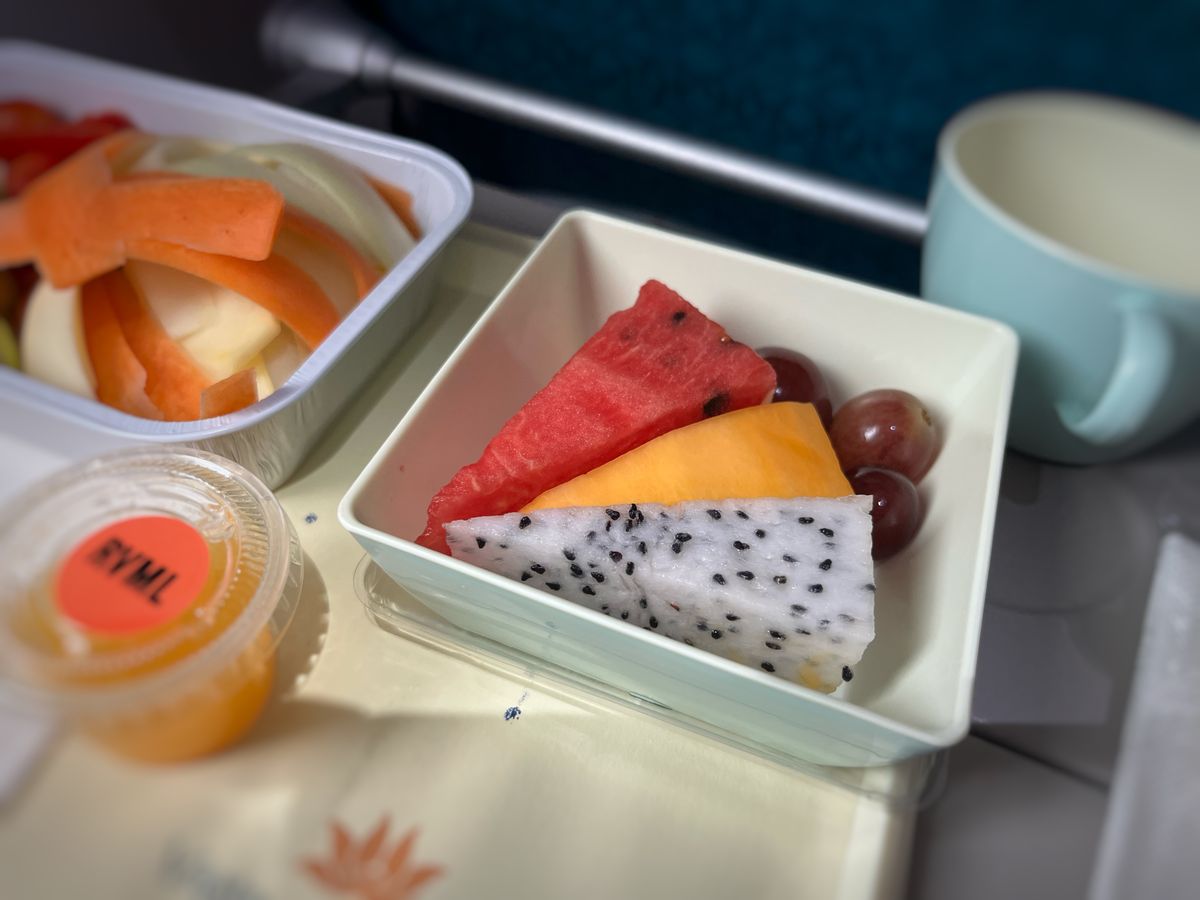
Request RVML or another special meal well ahead of departure, cutoff windows vary by airline so check before you book.
Turkish Airlines and Singapore Airlines both publish sample economy menus before you fly, worth a look before you pick a route.
A second drink isn't rude to ask for. Most crews I've flown just keep pouring if you hold the cup up.
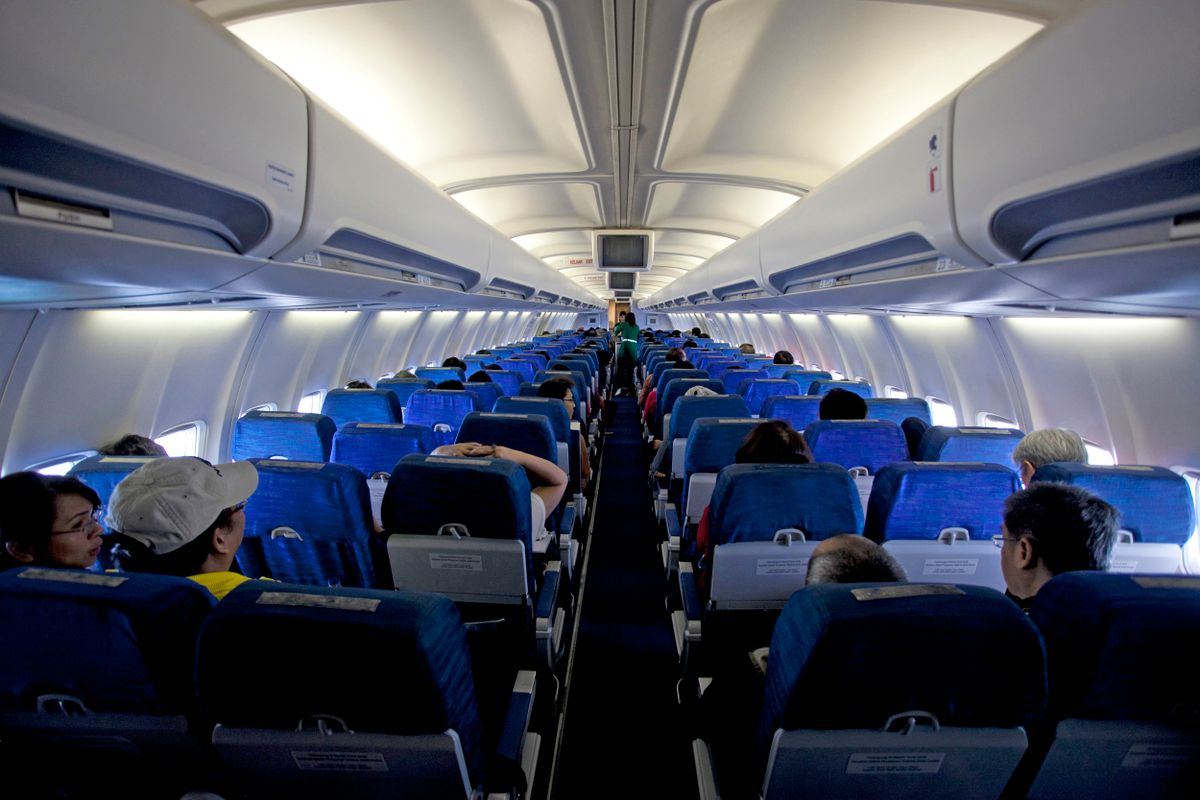
Panel 1: wide establishing shot, a beverage cart three rows back, meal service beginning somewhere over open water, the cabin lit the flat gray of a window shade only half down. This is the setup panel before any comparison means anything, because economy catering only reads as a real story when two trays land on the same page and the gutter between them does the work.
Panel 2: close-up on a printed menu insert, Singapore Airlines filling its half of the page with volume first. The airline has built out roughly forty distinct dishes for economy over the years, rotated by route instead of one static menu stamped across every flight. My tray carried a main, a side of stir-fried vegetables that tasted seasoned on purpose, and a crew member who came back twice, once with wine before the meal and once with a refill I got just by holding my empty cup up. Complimentary spirits and wine on the cart, tea and coffee and juice on request after, none of it rationed like it might run out mid-flight.
Panel 3: close-up on the facing tray, Turkish Airlines drawing its half differently. The menu mixes Turkish dishes with international ones on the same plate, a meze-style starter beside a chicken main that could have come off any regional carrier's rotation, except the portions run noticeably larger and the vegetables taste like they were bought this week. Turkish Airlines gets cited constantly as the benchmark other airlines measure against for economy catering, and sitting there with a tray that left no gap of white space on the plate, I understood the reputation. Bread came warm from a basket instead of pre-plated.
Split panel, gutter down the middle: Singapore Airlines on the left reading as controlled variety, forty dishes deep, a cart that keeps circling back. Turkish Airlines on the right reading as generosity up front, one tray doing more work per square inch. Same seat pitch, same page count, two kitchens drawing completely different panels.
Panel 4: close-up, a tray two rows up carrying a different label entirely. A sticker on the liner read RVML in plain block print, the real IATA code for a raw vegetarian meal, and instead of the standard bread roll and hot main it carried watermelon, dragon fruit, mango, and grapes stacked loose in a compartment built for something smaller. Most major carriers will build that tray if requested well ahead of departure, and it often arrives on its own timeline, ahead of the general cart still working its way down the aisle.
A flight attendant restocking the napkin drawer at the front galley wouldn't make the page. No motion worth drawing, no expression change, just a drawer sliding shut. But the moment the Turkish Airlines crew member cracked open a second bread basket mid-aisle without anyone flagging her down, hands moving over the tray, steam still coming off the rolls, that earns a close-up. Small movement, but it earns the panel.
Cut to: tray table folded up, cart pushed past, page one closed before dessert even circulated.
Same seat pitch, same gutter width, but the kitchen behind the curtain draws two entirely different pages.
— storyboard notes
Page 2: The Service Between Meals
Panel 1: wide establishing shot, a different cabin this time, ANA with the lights dimmed early and blankets already distributed before the seatbelt sign even clicked off. Food matters, but the panels that actually hold a long-haul flight together sit between meals, where nothing's being plated and everything's about pacing.
Panel 2: medium shot, ANA's crew working the aisle at the same unhurried register the whole way, whether the route runs to North America, Europe, or somewhere else in Asia. The menu doesn't chase the forty-dish rotation Singapore Airlines runs, and it doesn't build a tray as generous as Turkish Airlines does. What ANA draws instead is consistency, the same clean cabin and the same even pace from boarding to landing, nobody rushing a row and nobody skipping one either.
Panel 3: medium shot, a different flight, a Southeast Asian carrier whose crew worked the aisle in a batik-patterned uniform, EXIT and KELUAR stacked on the same placard overhead. The cart moved, trays landed, empty cups disappeared, all without a single raised voice or a rushed step down the aisle.
inker's notes
ANA's economy meals run simpler than Singapore or Turkish, book it for the calm cabin, not the biggest tray.
Crew pacing is easiest to judge in the first half hour after takeoff. Watch how fast the first cart actually reaches your row.
A quiet, unhurried cabin is usually the better tell than the printed menu.
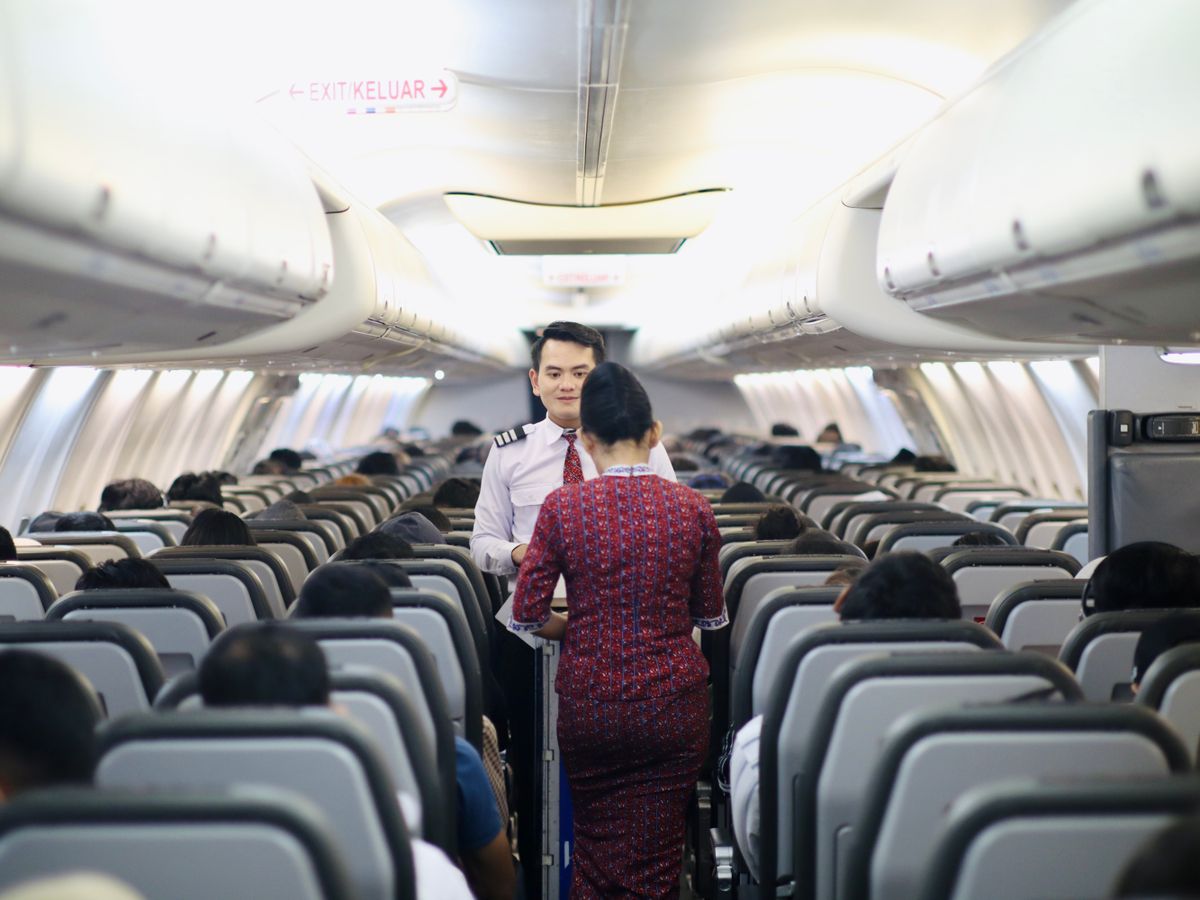
A flight attendant carrying four trays stacked at uneven angles down a moving aisle without dropping one, that's a splash page, full width, no border needed to sell it. Watching the same cart sit parked for what felt like ten minutes while someone decided between chicken and pasta, that wouldn't make the page. Nothing moves, nobody reacts, just a stalled panel with too much dialogue and no visual beat.
So which panel would I actually want to sit inside. Turkish Airlines if the tray itself is the whole story worth telling. Singapore Airlines if I want the option to keep asking for more across a long flight without ever feeling rationed. ANA if I just want the cabin to stay quiet, competent, and out of my way. None of the three needs a dramatic page to earn the seat, which is rarer than the menu itself.
Cut to: black. Tray table latched, screen off, no next page needed. ■