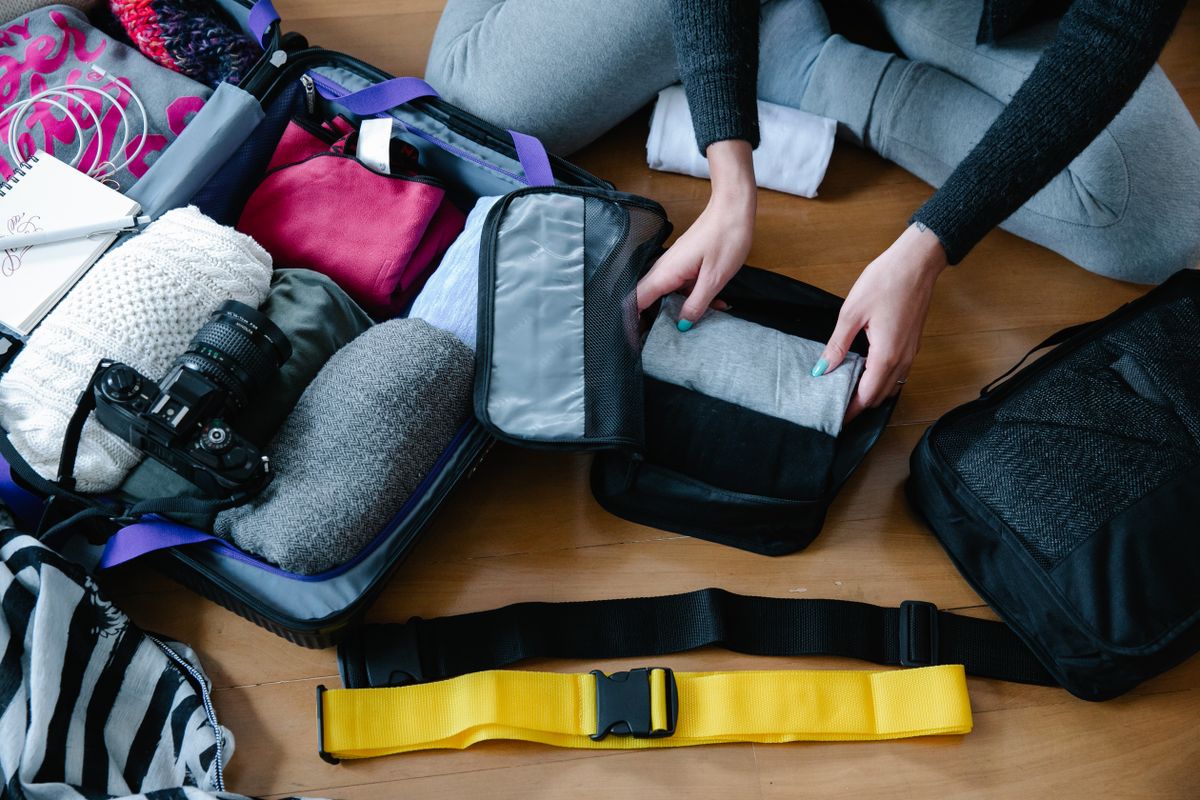
Packing Cubes vs. Rolling: The Boring Truth
A staff writer runs the same carry-on load through rolling, packing cubes, and one compression cube, panel by panel, to find out which method actually saves space.

Panel 1: five shirts, two pairs of trousers, and a duffel that used to hold laundry
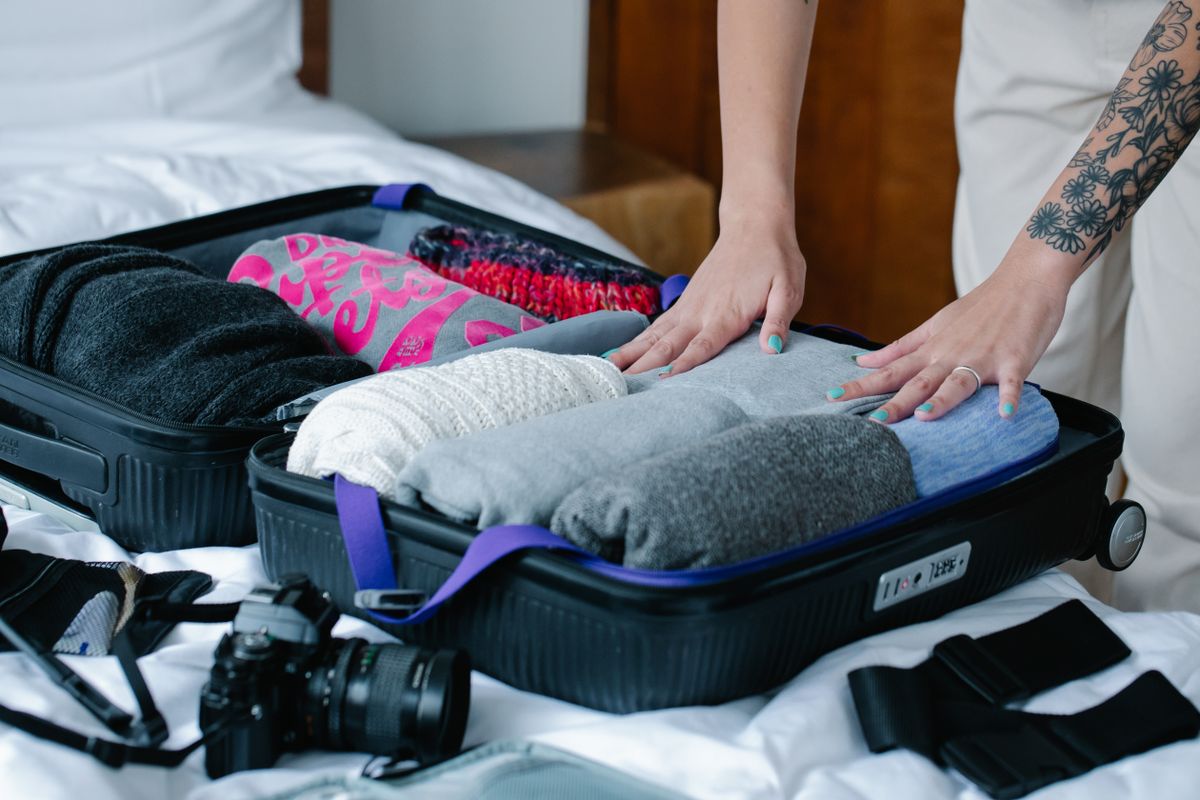
The shot that made the cut: rolls corralled by hand, one grip holding four shirts before they can drift.
Same carry-on load, packed two different ways on two separate mornings before a trip that never needed the extra decision: rolled first, then cubed. Wide establishing shot to open, the whole duffel flat on the bed, nothing sorted yet. Five t-shirts, two pairs of trousers, one base layer, one rain shell, laid out before anything gets touched. Rolled tight by hand, the same t-shirt that folds down into a flat rectangle collapses into something closer to a fist, and the number gear reviewers keep repeating holds up on this load too: a rolled shirt runs about 30 percent smaller than the same shirt folded flat. Across the whole duffel, rolling saved somewhere in the 15 to 30 percent range against a folded pack of the identical items, depending on how tight the rolls came out and how much air got pressed out by hand along the way.
Close-up on the duffel from directly above, no lid between the camera and the clothes. Every roll sits visible at once, which is rolling's real advantage and the part gear articles undersell: nothing to unstack, nothing hiding under a divider. But visible only holds up while the bag stays still. The second the duffel gets picked up and tipped toward a shoulder, the rolls start sliding into each other, and by the time it lands on a hotel floor the tidy rows from the bed have gone soft and shapeless. Rolling packs small. It does not stay organized unless something else is holding the rolls in place.
Watching a shirt lie flat on the duvet before the first roll wouldn't make the page, no motion in it, nothing worth inking. The moment worth a panel comes later: one hand cupping four rolled shirts to keep them from unspooling while the other zips the duffel shut, a small fight against gravity a folded pack never needs. Small gesture, but it moves.
Cut to: the same load, minus the duffel, poured into four zippered cubes across a hotel bedspread.
Panel 2: the same load, zipped into four cubes and one that squeezes
Wide establishing shot again, same bed, same five shirts and two pairs of trousers, now sorted into four cubes instead of rolled loose. Packing cubes don't win on raw space the way the marketing implies, not against a rolled duffel. What they win is organization: in a rectangular suitcase they stack like blocks, one cube per category, and a specific shirt stops being a search and starts being a known location. That's the entire pitch, and on this load it delivers exactly what it promises, nothing more.
One of the four is an Eagle Creek Pack-It Isolate Compression Cube, the medium size, made from recycled 70D nylon that Eagle Creek sources from ocean plastic, with a second zip that runs the perimeter and squeezes air out of whatever is inside once the main zip closes. Retail runs $26 to $30 for a single medium cube depending on the store, or $39.99 for the two-piece set that pairs a small 6-liter cube with the medium 13-liter one. A widely cited 2023 gear study, credited to a group called WanderLab and repeated across enough packing sites that it has become the industry default number, puts the compression zip's reduction at up to roughly 25 percent on soft items. I haven't run one through a lab scale myself, but the packed volume on this load tracks close enough to believe it: two rolled shirts and a base layer that filled the cube loosely before the second zip closed sat noticeably lower in the bag after.
Inker's notes
Roll knits and cotton tees, fold anything stiff like a button shirt, a tight roll crushes structured fabric more than folding does.
Put rolled clothes inside cubes instead of picking one method, it beats either one alone on space and still keeps categories separate.
Save the compression zip for soft goods only, cables and toiletries don't compress and the extra pressure just strains the seams.
A two-cube set, one small and one medium, covers most carry-on trips, a third cube only earns its weight on longer packing lists.
What it actually costs
The gutter between rolling and cubes is where the real space gets saved.
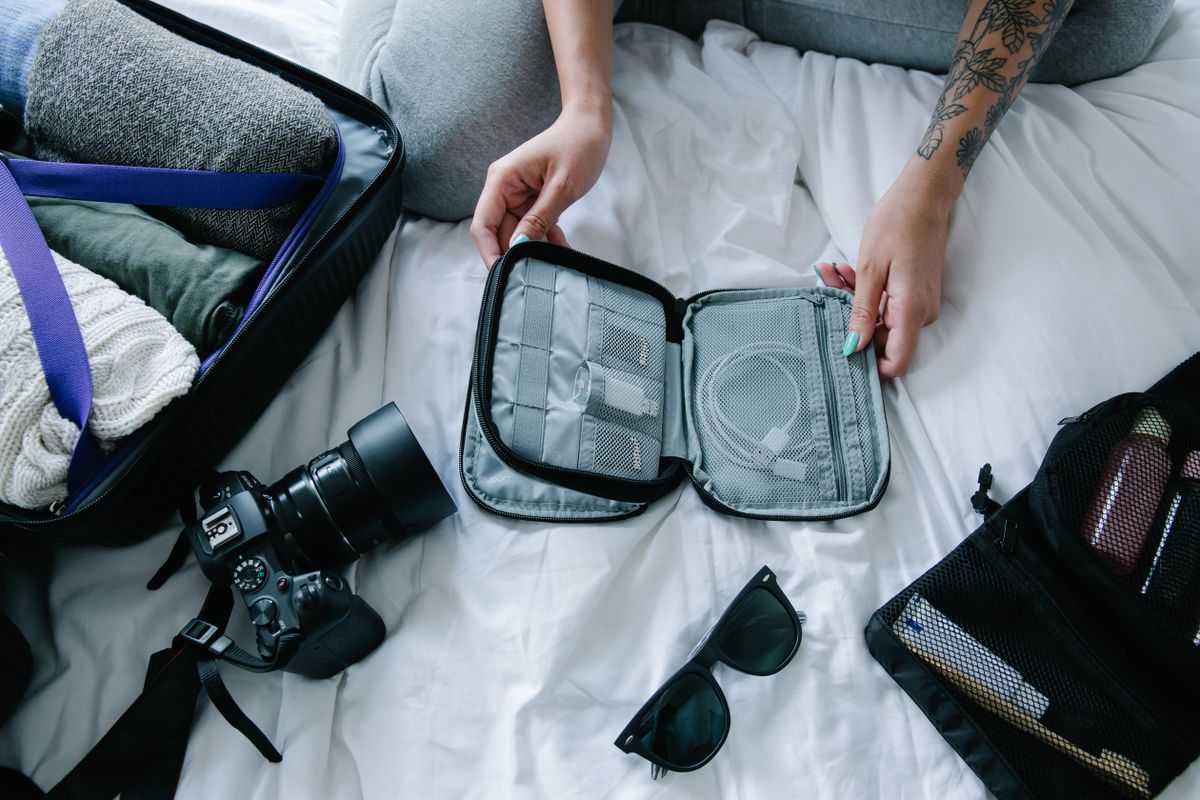
Close-up on the compression zip mid-pull, that's the shot, not the cube sitting closed on the bed already flat. The interesting part of a compression cube is the ten seconds where it's still working, fabric visibly losing height under the zipper. A cube already zipped and squared away is just a box. Wide shot, no motion, wouldn't make the page.
Cut to: black, then the whole load, both versions, side by side on the same bed.
Four rolled shirts stuffed inside the two larger cubes instead of loose in a duffel outpacked both methods run alone, which lines up with what independent testers have been finding for years: rolling and cubes together beat either one alone on space, cubes alone stay the most organized, and rolling alone is the loosest, most chaotic option of the three once a bag actually gets moved around. None of that required a lab, just three packing sessions and the same five shirts.
Cut to: the duffel folded flat in a closet, the four cubes stacked on a shelf, next trip's list still not written. No lesson here worth a caption, just a heavier bag if the trip runs long enough to need the extra cube. ■