Three Panels, One Night: Sketchcrawling Seoul's Neon Alleys
Illustrator Hana Yoon treats an evening sketchcrawl through Euljiro, Bukchon, and Myeongdong like she's building a comic page, wide shots first, close-ups next, the splash saved for last.

Panel 0: a blank page, six subway stops between City Hall and Dongdaemun, nothing inked yet. Tonight's crawl runs three neighbourhoods across one page: Euljiro for the establishing shots, Bukchon for the close-ups, Myeongdong for the splash. Pencils in the bag, no reference photos taken yet, because none of this is worth faking later.
Panel 1: Euljiro (Hipjiro)
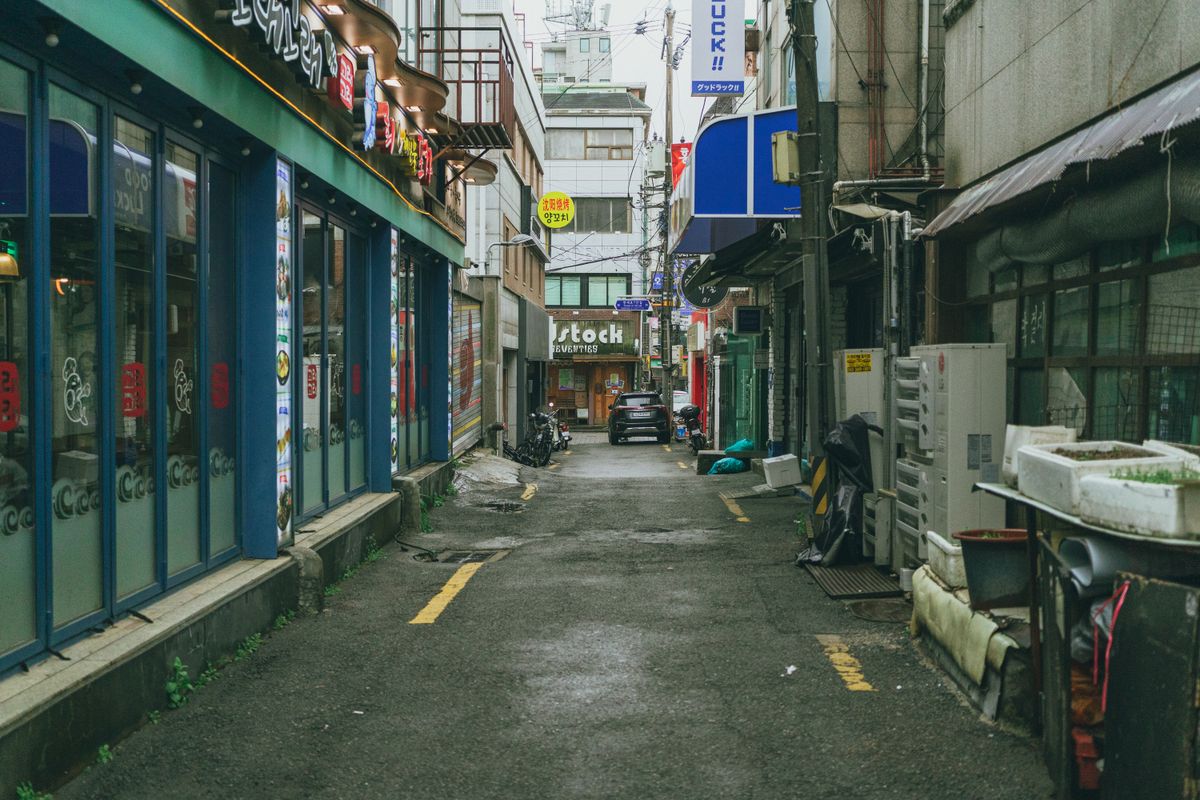
Establishing shot, before the neon comes on.
Wide establishing shot: Euljiro before dark, blue shopfronts down a narrow alley, tool crates and pipe stacked outside like nobody plans to move them before closing. Kids online call this Hipjiro now, a pun stitched onto a district that used to just print business cards and weld things. The joke works because the metalworking shops are still open behind the bars that took over the same buildings.
Close-up: a hand resting on a cold railing at Euljiro 3(sam)-ga station, exit 11, before the walk even starts. Exit right, count about a hundred metres of sidewalk, and the alley opens on the left already lit though the sky isn't dark yet. That's the panel where the palette flips, tool-shop grey to signage red and blue, and it happens in about four steps.
A cafe menu board with looping copperplate lettering wouldn't make the page as a close-up, too static, no visual beat, a sign standing still being a sign is not a panel. One print shop worker sliding a paper cutter closed one-handed while glancing at the alley crowd, that earns a close-up. Small gesture, but it moves.
Cut to: Bukchon Hanok Village, ten minutes north by taxi.
inker's notes
Euljiro neon alley: from Euljiro 3(sam)-ga station, take exit 11, turn right, walk about 100 metres, alley's on the left.
Euljiro: best at dusk, the panel where daylight tool shops and neon signage overlap for maybe twenty minutes.
Bukchon: mornings, before the tour groups, when the hanok roofline still reads as a shape instead of a scrum of umbrellas.
Myeongdong: after 8pm, once every sign on the stack is lit and the noraebang columns are competing with each other.
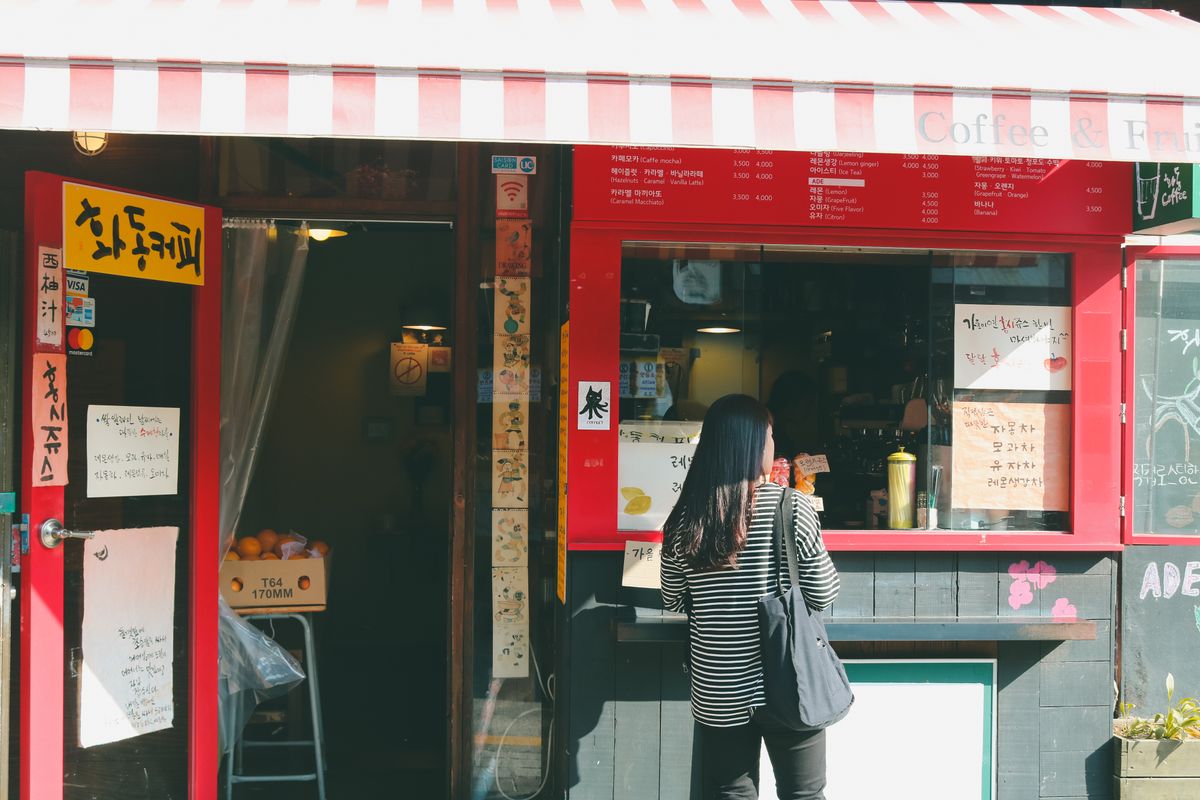
Panel 2: Bukchon Hanok Village
Wide establishing shot: tiled hanok roofs stacked downhill between Gyeongbokgung and Changdeokgung, no palace walls visible in this panel, just roof after roof at a diagonal that would look fake in a comic if it weren't real.
Close-up: a woman ordering at a coffee counter under a red-striped awning, Korean signage stacked behind the register. The lane's narrow enough that the framing does itself, counter, customer, signage, no need to crop later.
A row of matching hanok doors wouldn't make the page as a wide establishing shot, six panels of the same doorway photographed six times, no visual beat to justify the width. One delivery driver threads a scooter between two tour groups without touching either, that's a close-up worth inking, motion cutting through a frame that's mostly stillness.
Cut to: Myeongdong, the last page, splash panel territory.
Crop the sky out or the roofline stops reading as a shape and starts reading as noise.
— storyboard notes
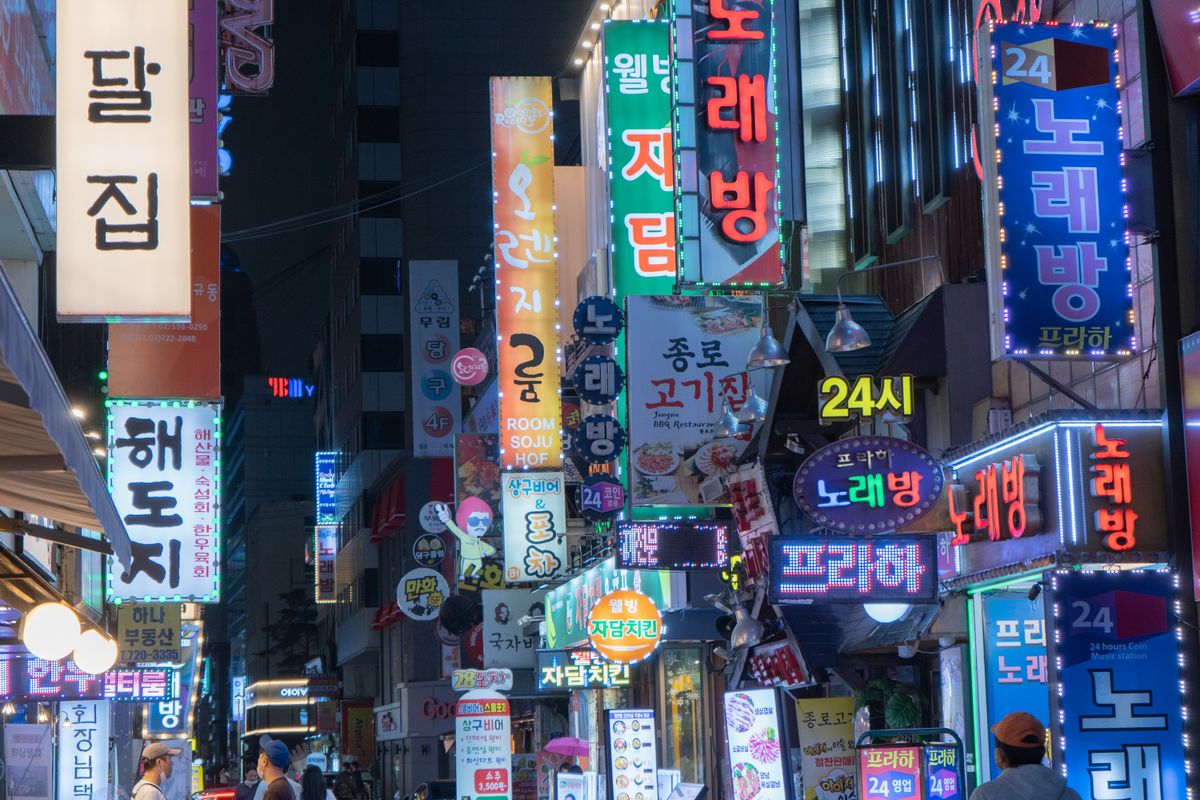
Panel 3: Myeongdong, Splash Page
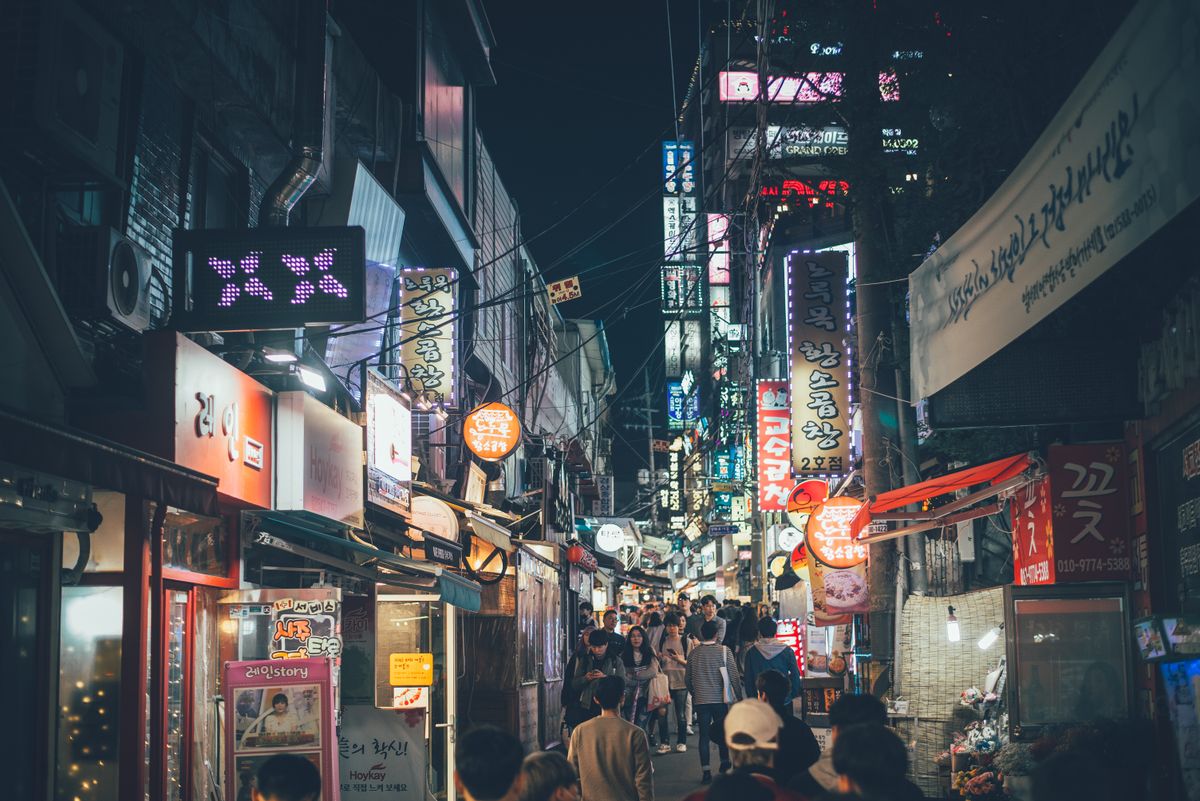
Splash page: the whole spread given over to one shot, a vertical stack of neon signage climbing higher than a single panel could hold, noraebang signs three and four deep above street level. No gutter breaks this one up, the whole page is the panel.
Close-up: one noraebang sign flickering half a beat behind its neighbours, a stutter that would read as a mistake if I inked it exactly and as a joke if I inked it a frame late. That's the difference between tracing a photo and drawing a panel.
Wide establishing shot, looking straight up instead of across: the alley narrows the higher the signs stack, so the panel gets taller instead of wider, which isn't how panels are supposed to work and is exactly why this one earns the splash treatment.
Cut to: black. No caption, no next panel, just the sketchbook closed on a page that isn't finished and doesn't need to be. ■