Eating Through Tainan, Taiwan's Old Capital
Tainan was Taiwan's capital for two centuries and still eats early, from danzai noodles by the Confucius Temple to beef soup poured over raw slices.

Danzai before the temple opens
Pork fat and dried shrimp on a low flame, before seven in the morning, is what Tainan smells like two blocks off Nanmen Road. Tainan is Taiwan's oldest city and was its capital until 1887, and the old centre still eats early. The stall had three stools and a cook at a pot who looked like she had stood there for decades. Danzai noodles are the city's own dish, named for the shoulder pole a fisherman used to carry his noodle baskets when he started selling them in 1895. NT$50 buys a small bowl: thin noodles, a few garlic chives, one shrimp laid on top, and underneath a spoonful of minced pork stewed down with shallot oil until the shallots had almost dissolved into the fat.
I make a pork sauce like this for my own noodle cart back home, and mine takes forty minutes over a low flame before I'll serve it. This one tasted like it had been going far longer, over a burner a third the size of mine. My sauce is sweeter, with more fish sauce in the balance; this one leaned savoury, almost bitter at the back from shallots taken dark. The dark shallots are a choice, and I would eat a bowl every morning.
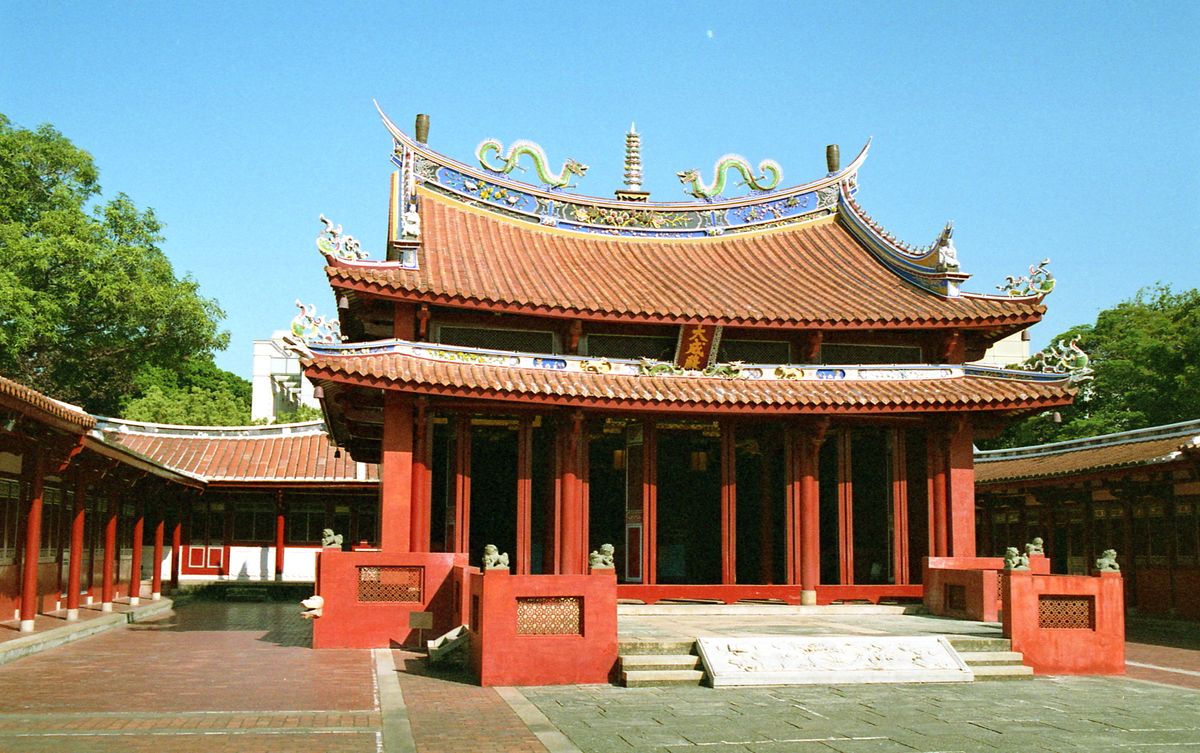
The Confucius Temple sits three minutes' walk from the stall, on Nanmen Road. It was built in 1665 as the first Confucian temple in Taiwan, and the main hall has red walls and dragons on the roof ridge that caught the sun hard enough to hurt my eyes. There is no food inside the grounds and no food smell either, which after two stalls was a rest for the nose. I sat under a banyan near the Lingxing Gate, the ceremonial gate into the main courtyard, for ten minutes doing nothing, which is not a thing I do at home.
Beef soup and the butcher's timing
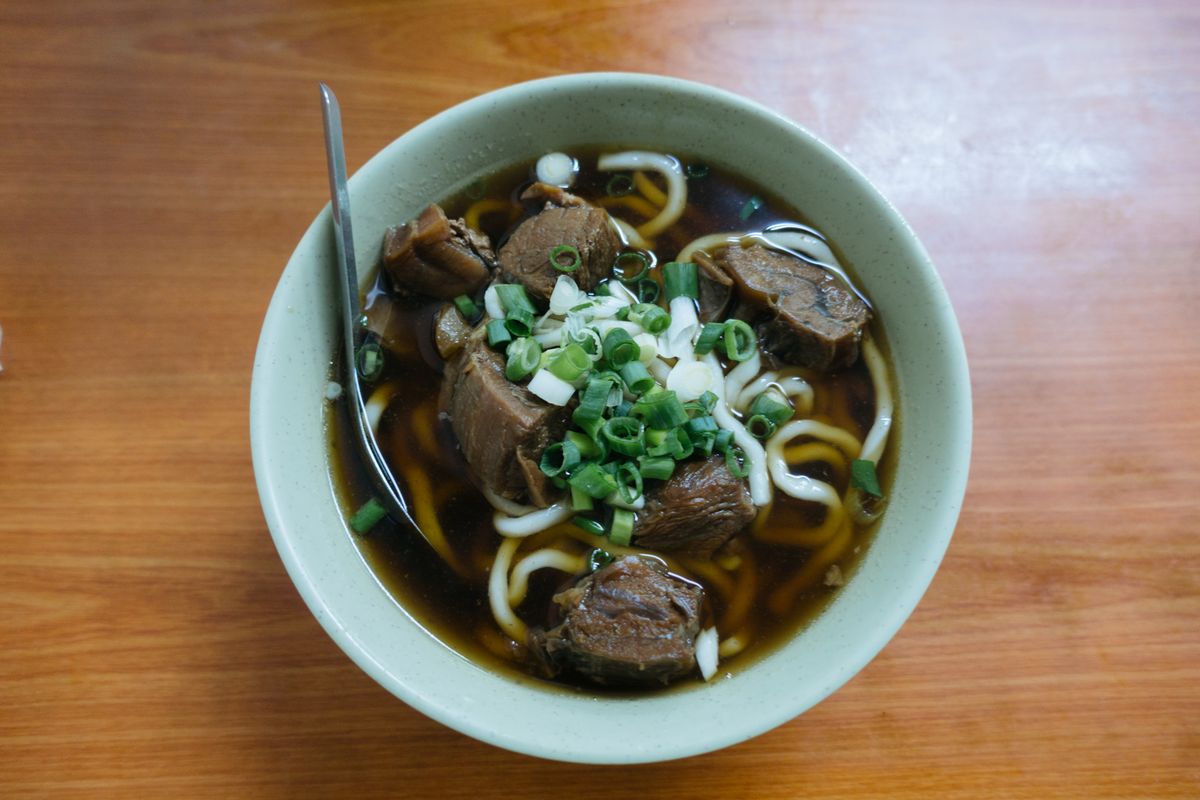
Tainan beef soup runs on the slaughterhouse clock. Beef from the slaughterhouse in Shanhua, a farming district in the north of the city, reaches the soup shops before dawn, which is why the famous ones open around four or five and sell out early. The raw slices go into the bowl first and the boiling broth is ladled over them, so the beef cooks in front of you and stays a faint pink at the centre. I sat down at a shop near Guohua Street, the old market street, around nine and paid about NT$150 for a medium bowl.
The broth is beef bone and not much else, clear enough to see the bottom of the bowl, and that clarity is work, because broth goes cloudy when someone lets it boil hard instead of holding it at a bare simmer. Mine at the cart never gets this clear, since I'm running six pots at once and can't babysit one broth for hours. Taiwan's better-known beef noodle soup goes the other way, with chunks of beef braised dark in soy until you can't see past the surface. The slices in my bowl needed one more minute in the broth to render their fat, and I would have left them in.
Between soup and the next stop I had a second breakfast of milkfish congee, a Tainan rice porridge made with the belly of a local farmed fish. The broth is boiled from the fish bones, and the bowl comes with soft belly meat, a few small oysters, celery and fried shallots on top. It tasted cleanly of fish, with none of the muddy note that pond fish can carry.
Clear broth means someone held it at a bare simmer for hours.
Coffin bread and the fry stations
Three Tainan staples
Danzai noodles, small bowl. NT$50
Beef soup, medium bowl. about NT$150
Coffin bread. NT$70
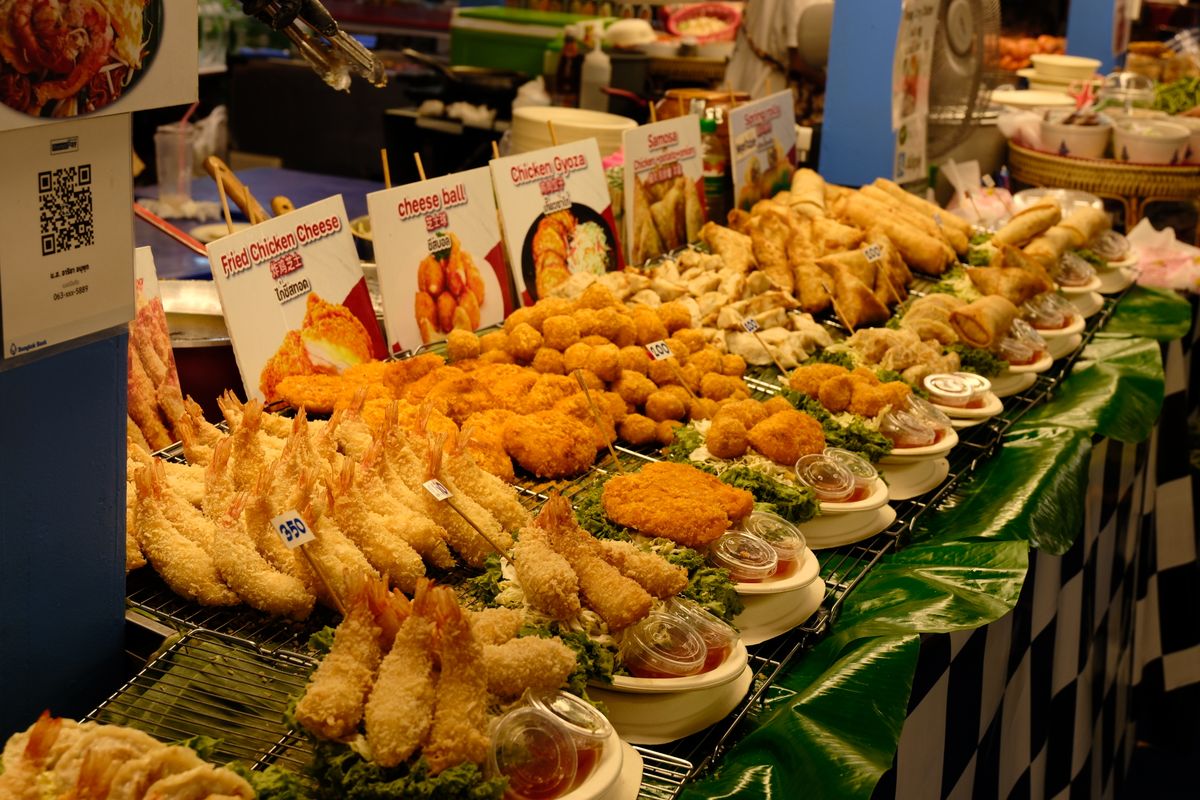
Coffin bread gets its name from the shape: a thick slab of white toast, deep-fried, hollowed out, filled with a creamy chicken stew with carrot and peas, then capped with its own fried lid. It was invented in the 1940s in Kangle Market, an old covered market in the city centre. I ate mine from a stall near there for NT$70. The fry oil smelled clean, with none of the burnt-sugar smell of oil reused past its life, and the bread held its crunch for the two minutes it took me to eat it before the stew soaked through.
Two stalls down were shrimp rolls, Tainan's other fried classic: shrimp mixed with minced pork and fish paste, wrapped in pork caul fat and fried until the fat melted into the filling and the wrapper went lace-thin and crisp. It's the same idea as the fried spring rolls on my own cart, but the caul fat bastes the filling from the inside while it fries, which a rice-paper wrapper can't do. I can't get caul fat reliably where I cook, and eating these made me a little annoyed about that. Eight out of ten, and most of the missing points are jealousy.
Cash, and go before eleven
Most of the old-district stalls take cash only, and the smaller counters may balk at a NT$1000 note, so carry small bills. The beef soup shops sell out early, and the stalls near the Confucius Temple fill up by mid-morning. Eat before eleven and you're mostly eating alongside people who work in the neighbourhood.
Lanterns over the last stall
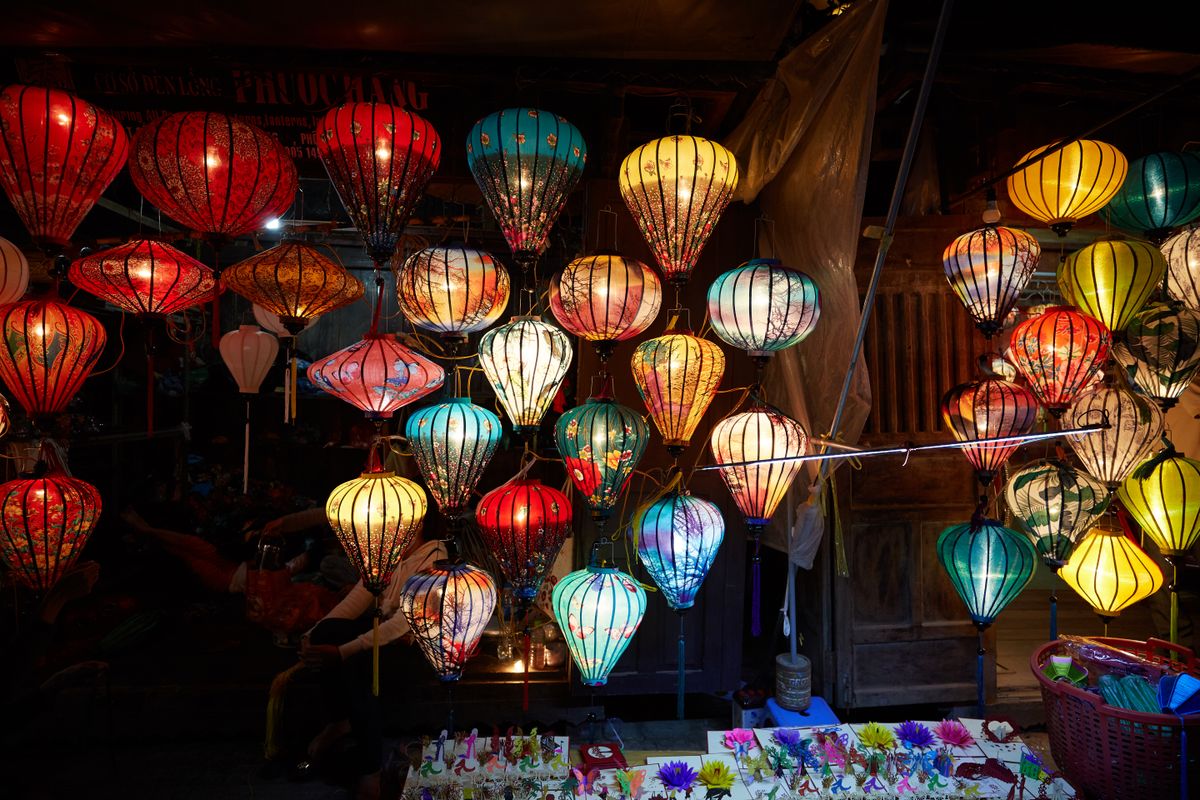
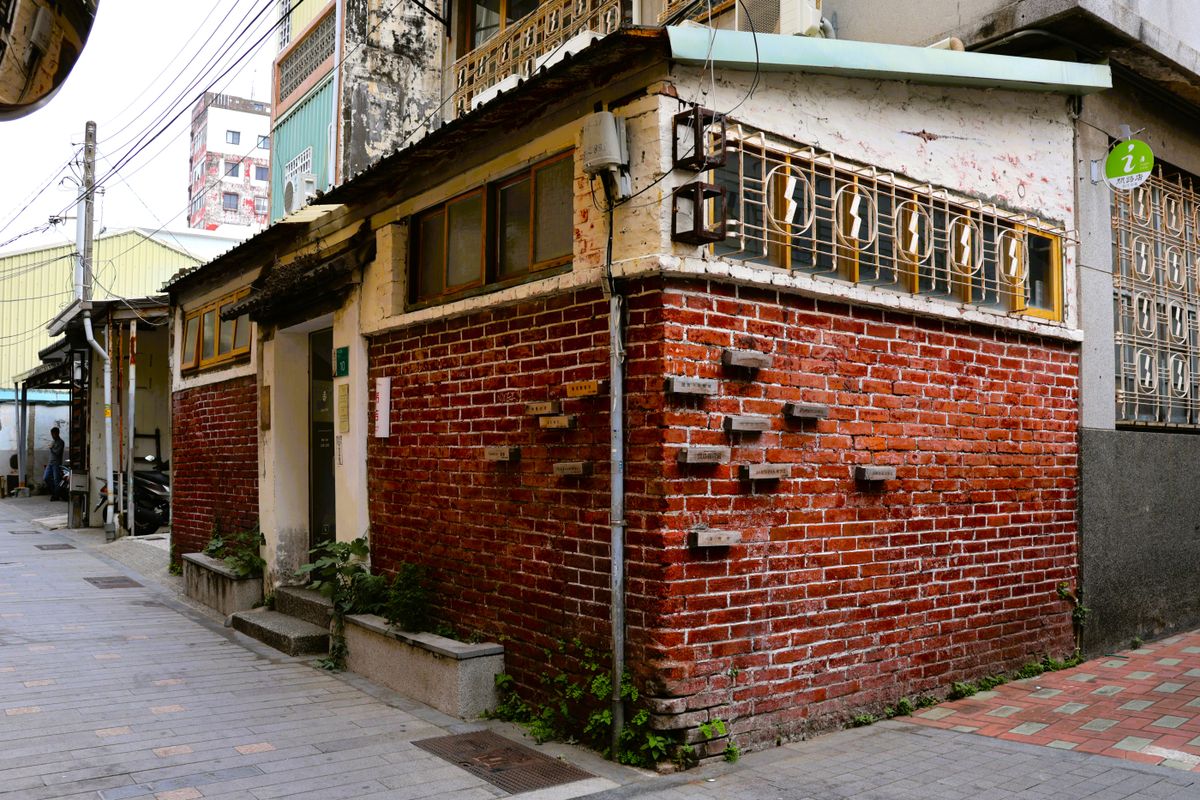
By evening I'd walked the old centre twice, once for the food and once without a bowl in my hand. Shennong Street, a Qing-era lane that once led down to the harbour canals, is lined with old two-storey shophouses, and paper lanterns hang along it after dark. The smell changed here too: less fry oil, more incense drifting out of Jinhua Temple, a shrine about the size of a garage, mixed with someone's dinner frying two doors on.
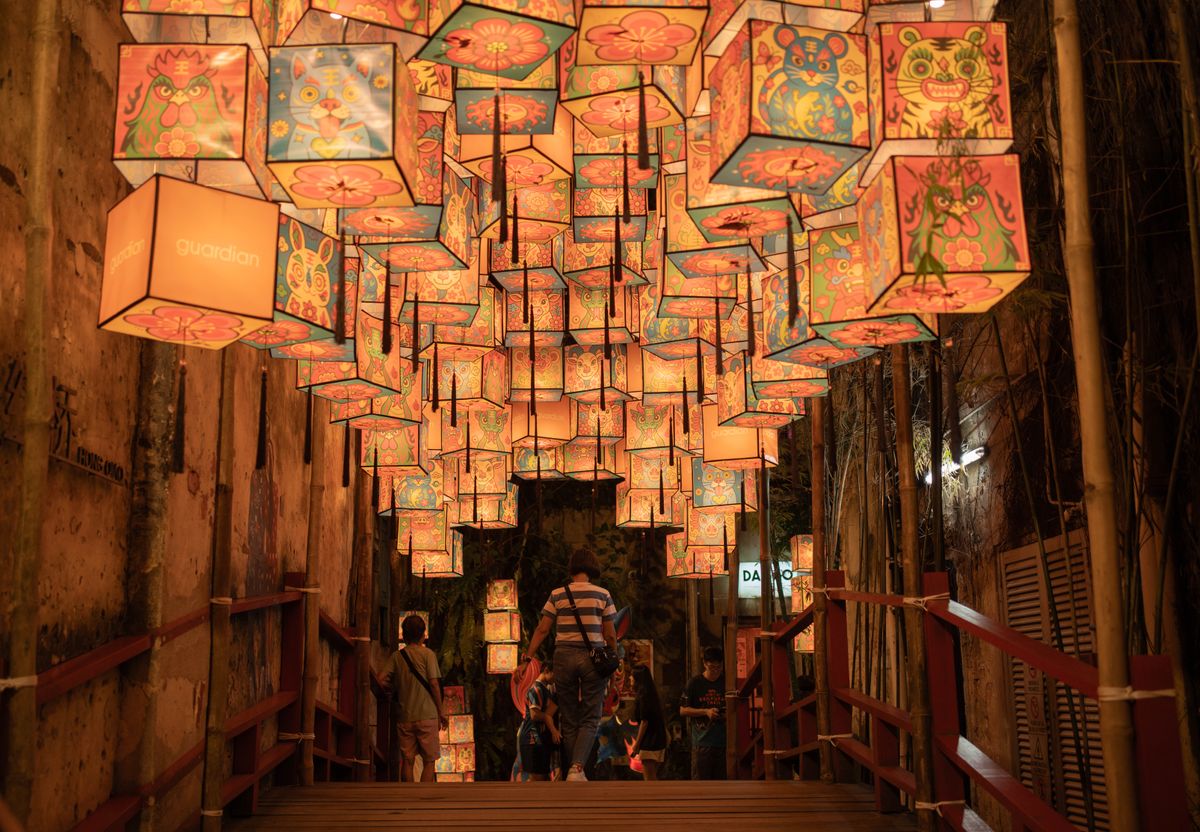
My last stop was a stall grilling squid on a stick, basted with a soy glaze that went sticky over the coals, the whole body split flat and scored so it curled when it hit the heat. I ate it standing in the lane under the lanterns, licked the glaze off my fingers, and kept walking. ■