The Mountain Keeps Its Teeth
Three reopened trails, one borrowed helmet, and 212 names in a gorge that has belonged to everyone. A hyphenated American walks in after the earthquake.

My mother is from Kaohsiung, and in twenty-odd years of shipping me back to Taiwan for summers she never once took me to Taroko Gorge. "It's just rocks," she said when I called her from the train. My father, who is from Ohio, once said the same thing about the Grand Canyon, so at least my parents agree on geology. I based myself in Xincheng, the small town at the mouth of the gorge, where the Catholic church stands inside the frame of a demolished Japanese Shinto shrine, torii gates with a cross planted on top. Nobody in town seems to find that complicated. I find it extremely complicated, and that turned out to be the whole trip. The gorge has been Truku hunting ground, a Japanese concession, a nation-building project, and, since April 2024, a disaster site slowly reopening one trail at a time. I came to see which of those histories would have me.
Shakadang, Named for a Tooth
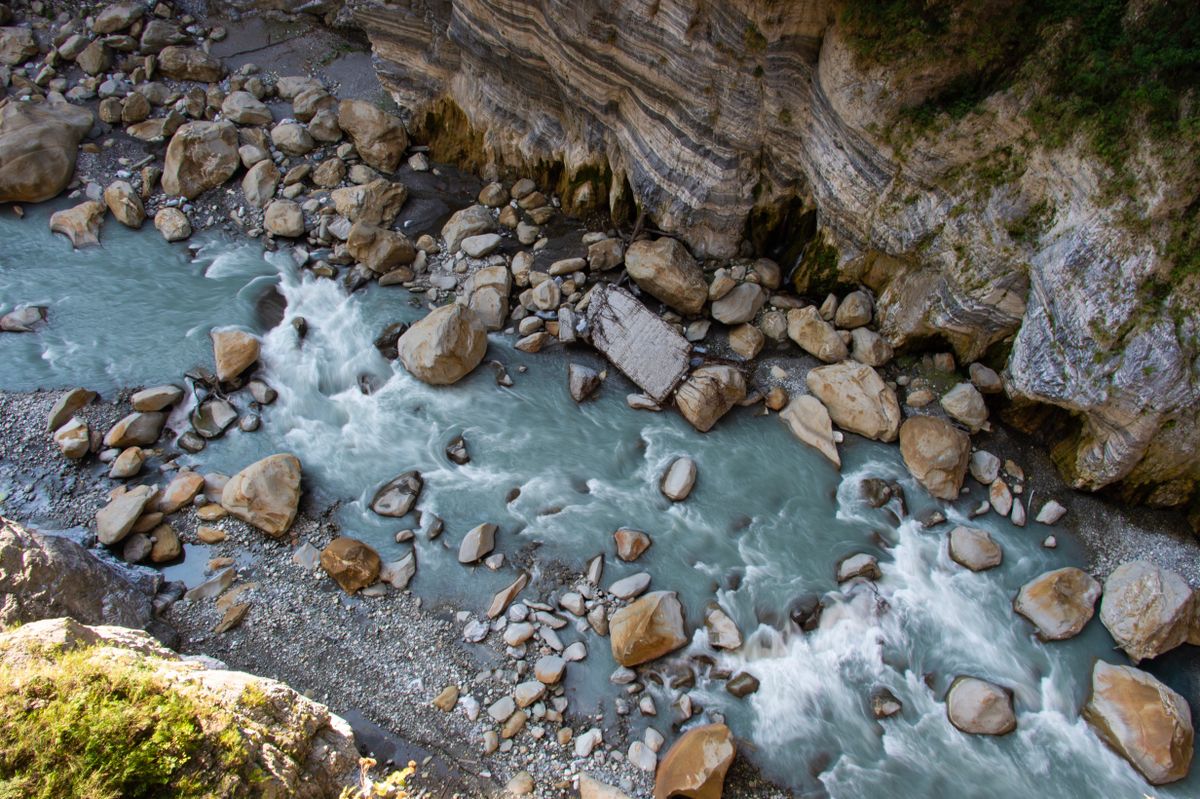
The Shakadang Trail starts under a bridge painted with Truku hunting motifs and follows a river so improbably turquoise my camera kept trying to correct it. Japanese engineers blasted the path into the cliff in 1940 to service a hydroelectric project; the name is much older. Skadang means molar tooth in Truku, for the ancestral teeth people turned up when they dug here, and I spent the first kilometre thinking about a valley named after what the ground remembered. Since the earthquake you can only walk the opening stretch, out to the cluster of stalls the signs call Five Houses. That is where I met Apay, a Truku woman grilling wild boar sausage at fifty NT a stick, who answered my careful Mandarin in better English. "This was our farmland before it was a trail. You are all walking through the kitchen." She said it while handing me roselle tea and a piece of millet mochi, so I chose to hear hospitality and history in the same sentence. I bought a second sausage. Diplomacy.
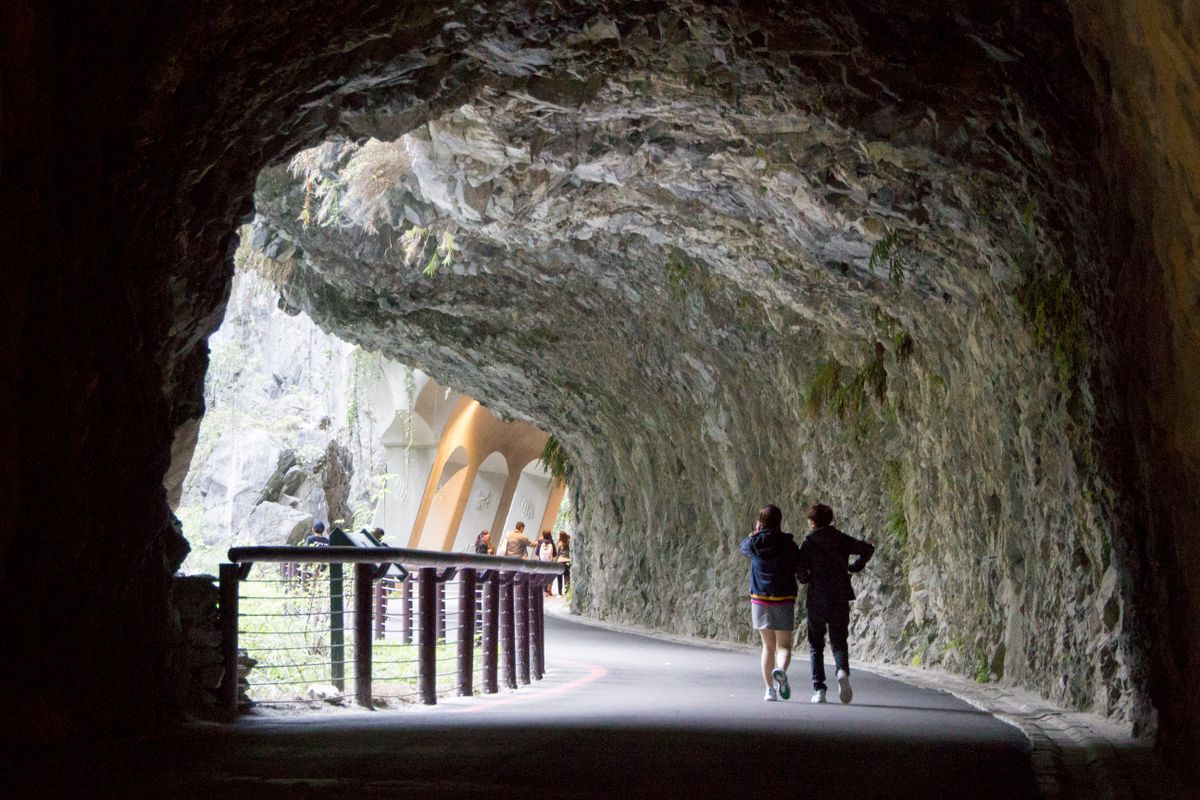
Swallow Grotto, Helmets Mandatory
At Swallow Grotto they hand you a helmet before they let you near the marble, which tells you everything about the current relationship between these cliffs and the people underneath them. The walkway is a retired stretch of the Central Cross-Island Highway, the road Chiang Kai-shek's government drove through the gorge between 1956 and 1960 using thousands of veterans who had retreated from China with the army and had no other Taiwan to belong to. They worked with hand drills and dynamite. More than two hundred of them died doing it. My guesthouse owner in Xincheng, Mr. Tsai, poured me tea the night before and told me his grandfather was one of the ones who lived. "They gave him a wage and a mountain. Nobody asked what he lost." Down below, the Liwu grinds bus-sized boulders into new positions, still rearranging itself after the earthquake dropped half a cliff into the channel. Swallows nest in the potholes overhead. Everyone who ever came to this gorge was trying to make a home in rock that never agreed to hold one.
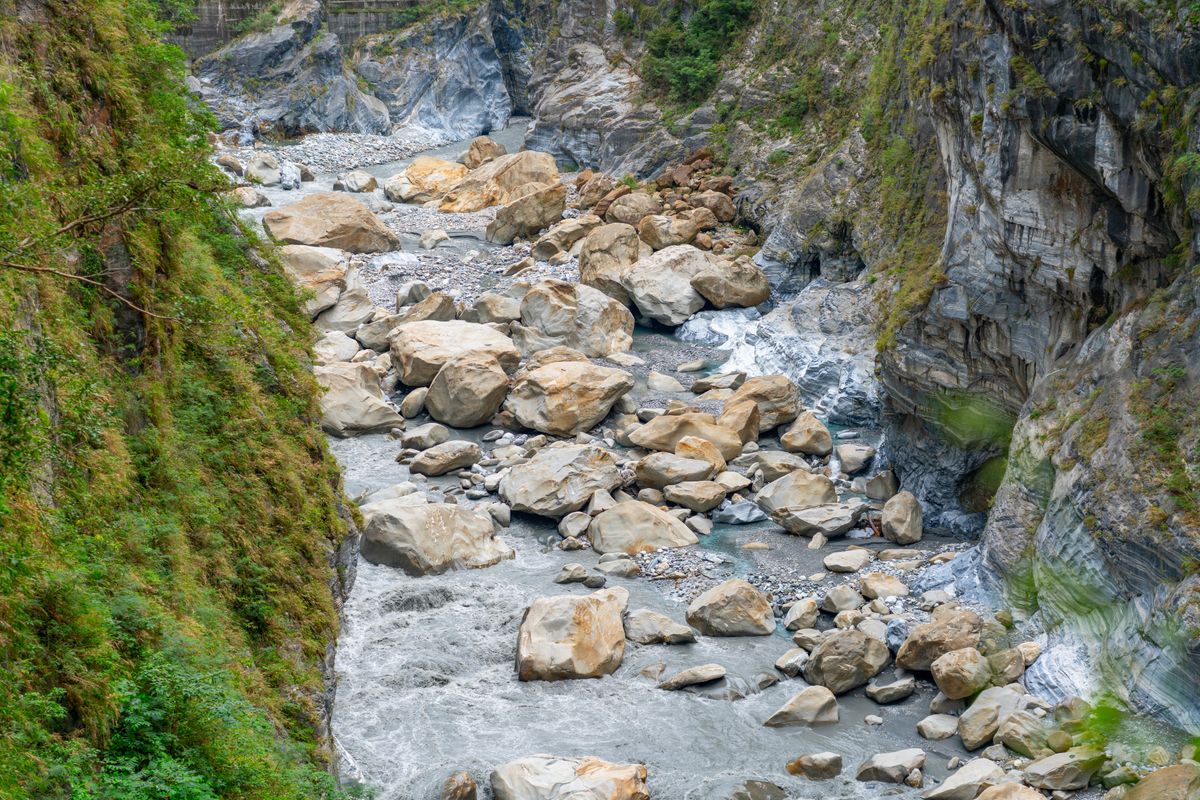
The gorge holds every claim at once, Truku, Japanese, lost soldiers, hyphens, and refuses to rank a single one.
Eternal Spring, Rebuilt Twice
Four days at the gorge, in numbers
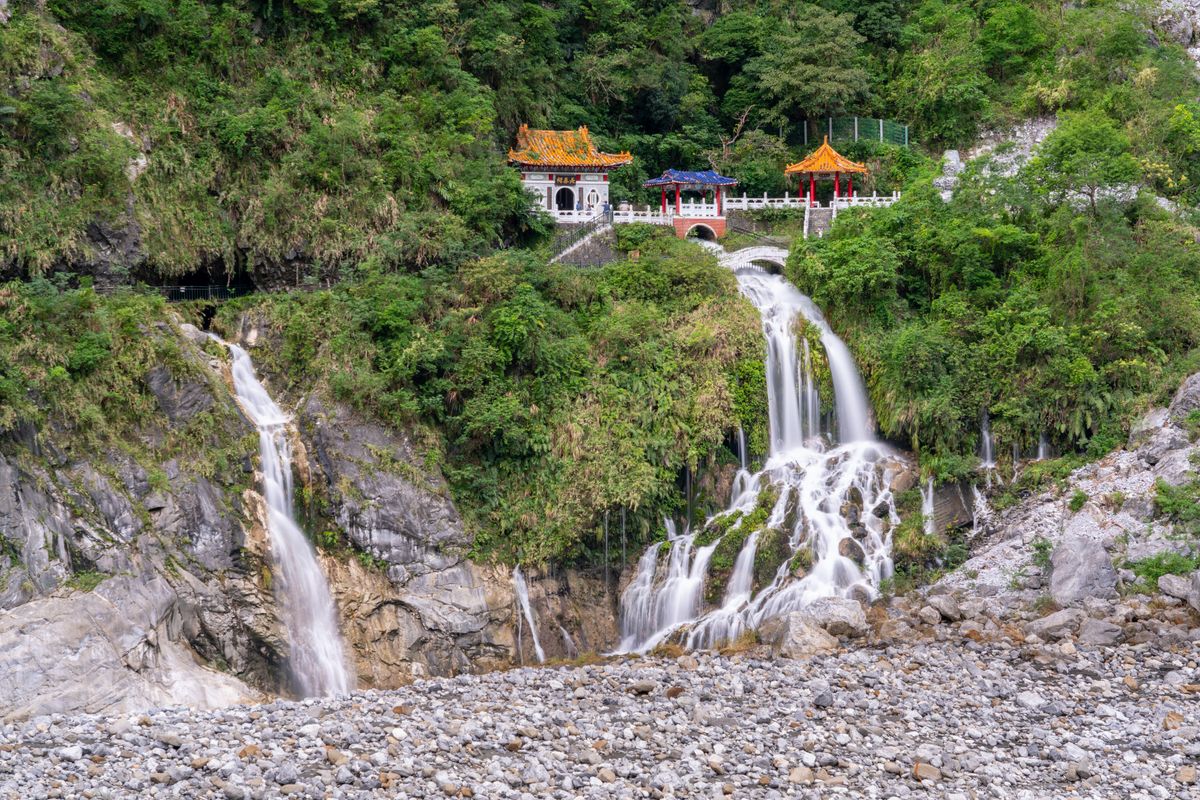
The Eternal Spring Shrine is the gorge's memory made architecture, a small temple with orange roofs set over a spring that has never stopped falling, built to hold the names of the 212 men who died making the highway. Landslides destroyed it in 1980 and again in 1987, and both times it was rebuilt on the same spot, which reads as either devotion or stubbornness, two qualities Taiwan has never bothered to separate. The 2024 earthquake shut the trail for over a year. When it reopened, Mr. Tsai started driving out on quiet mornings before the tour buses, and on my last day he took me with him. We stood on the arched bridge while the water came down through the shrine like part of the liturgy. His grandfather's name is not on any wall here, because he survived. "He used to say the lucky ones got the shrine." I lit incense for men who lost one country and were spent building the roads of another, and I did not feel especially American or especially Taiwanese doing it. Mostly I felt like the water. Continuous, from somewhere else, passing through.
Status: slow train south out of Xincheng, a bottle of Jia Xing lemon juice sweating in my lap, still no verdict on which history claims me. Apay said to come back, so at least one of them is negotiating. ■