NT$60 at a Time: Three Nights in My Mother's Taipei
Three markets, three nights, and a queue-hardened daughter of the diaspora testing whether you can order your way home. Pepper buns NT$60, verdicts free.

My mother learned to count money at a fruit stall on Raohe Street, making change for strangers while her homework went soft in the humidity. Forty years and one emigration later, I walked into the same market and a vendor looked at me and said, in English, "Hello! Very delicious!" I answered in Mandarin. He laughed and carried on in English anyway, the way you'd gently correct a typo.
So that was night one settled. I gave myself three nights and three markets: Raohe because it was hers, Ningxia because every Taipei aunt swears by it, and Shilin because you don't get to skip the big one and call yourself thorough. My rules were simple. Eat standing up, talk to whoever is cooking, keep every receipt. Night markets don't issue receipts, which is how I ended up doing arithmetic in a notebook, like my mother at the fruit stall. I noticed that too.
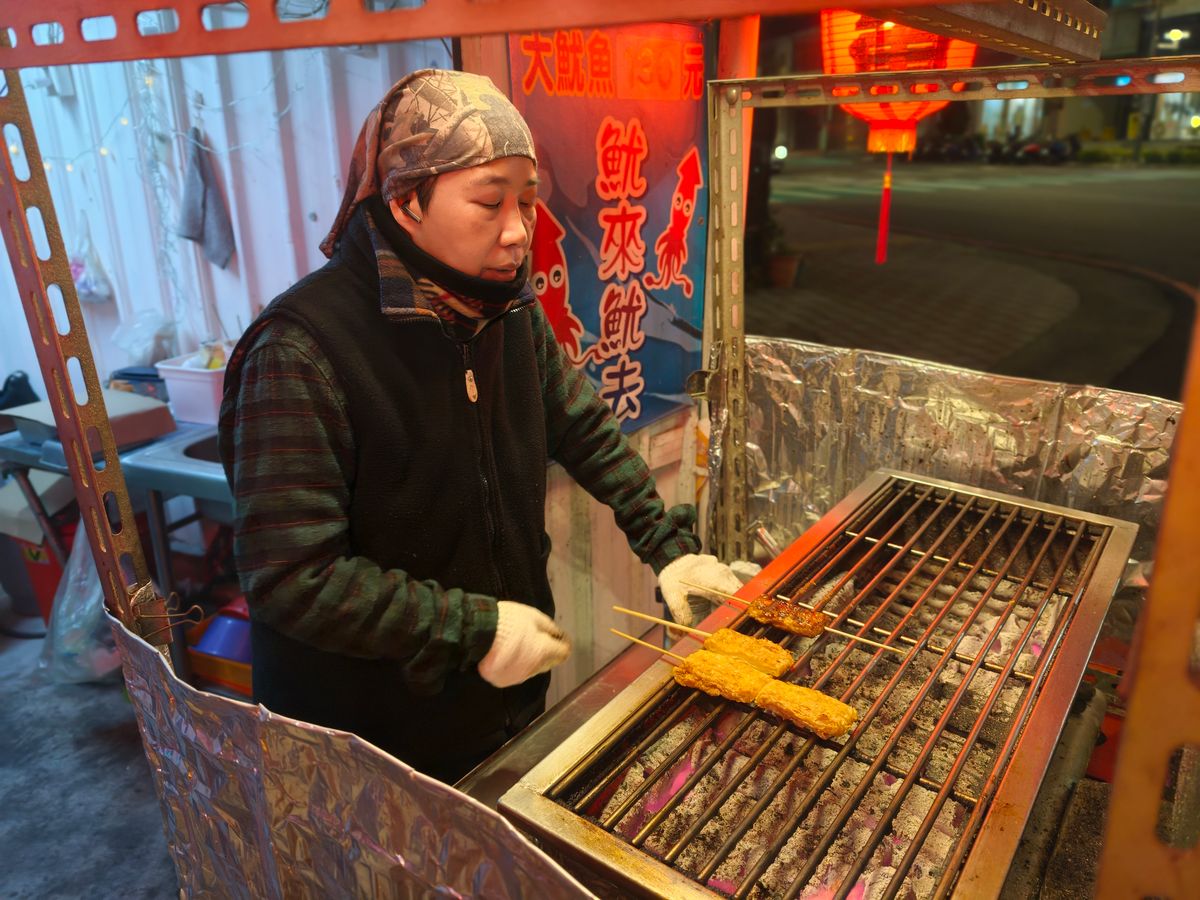
Raohe Street, where the temple came first
Raohe is a single straight lane, about 600 metres gate to gate, with Ciyou Temple standing at the eastern end like a chaperone who has seen everything. The temple came first, finished in 1753 and dedicated to Mazu, the sea goddess who watches over fishermen. Taiwanese markets grew up at temple gates for the same reason airports grew food courts: people gather, people wait, people get hungry. The commerce is not a corruption of the sacred here. It is the oldest part of it.
The first queue starts before you even reach the gate. Fuzhou black pepper buns, NT$60, slapped against the inside wall of a charcoal tandoor and peeled off blistered, pork and scallion and enough white pepper to make you briefly religious. The retired bus driver behind me, Mr. Kao, remembers when the bun cost less than his fare. "I have eaten this bun thirty years," he told me. "It was better at NT$35. It is still better than everything else."
Down at the quieter end, a woman in a patterned headscarf grills squid over charcoal, six skewers to a hand, NT$100 each, brushed with soy and a chili sauce she declines to discuss. She was working this corner before Songshan station opened in 2014 and started delivering the crowds to her cart. "Tourists photograph me more than they buy," she said, without turning around. "You bought. So you can photograph." I bought a second one to be safe.
Ningxia Road, the market that only does food
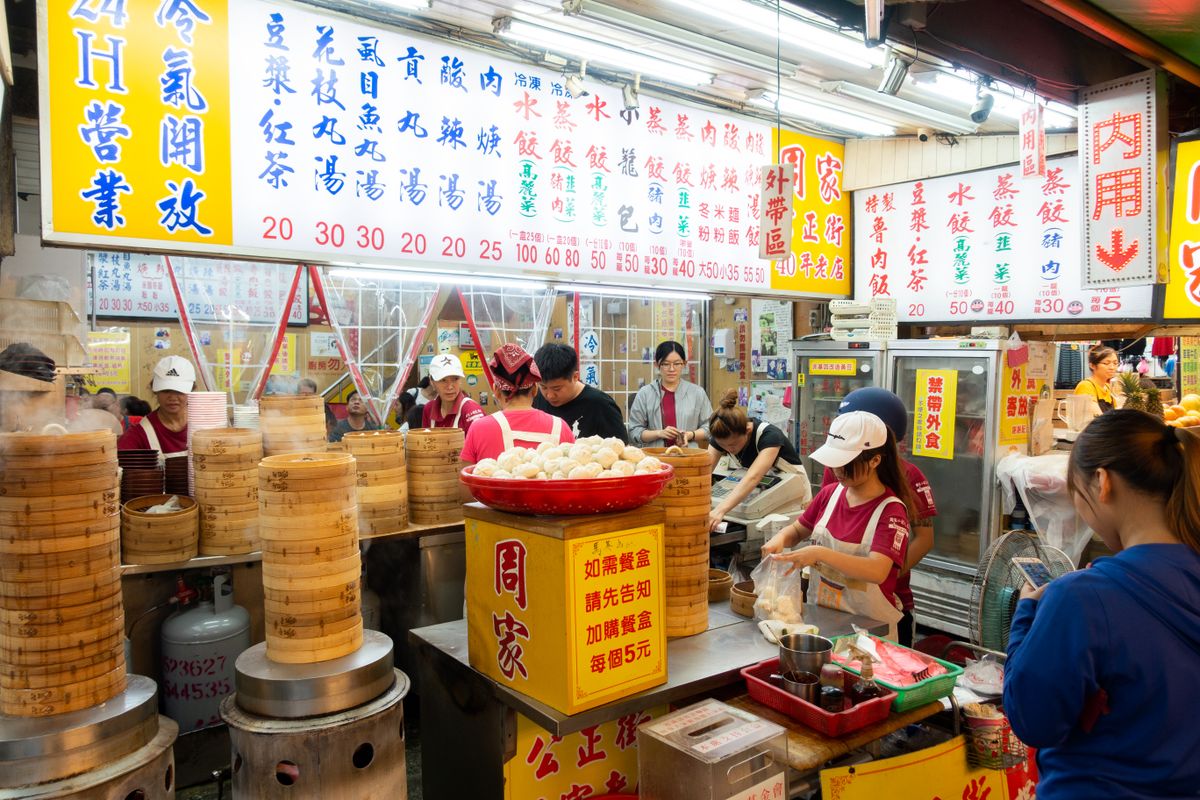
The steamers never entirely stop. Neither does the woman running them.
Ningxia is short, two hundred metres and change, and it has no sock stalls, no phone cases, no claw machines. Food, end to end. It sits on the edge of Dadaocheng, the riverside quarter where tea merchants got rich in the 1870s, and it kept the old district's seriousness about eating. This is where Taipei families actually go, which you can verify by counting grandmothers.
I ate an oyster omelet for NT$80, eggs and sweet-potato starch and oysters from down the coast, under the gaze of a man who watched my chopstick grip like an examiner. Then deep-fried taro balls, NT$50, from Liu Yu Zi, a stall with a Michelin Bib Gourmand nod and a queue that predates Michelin's interest by decades.
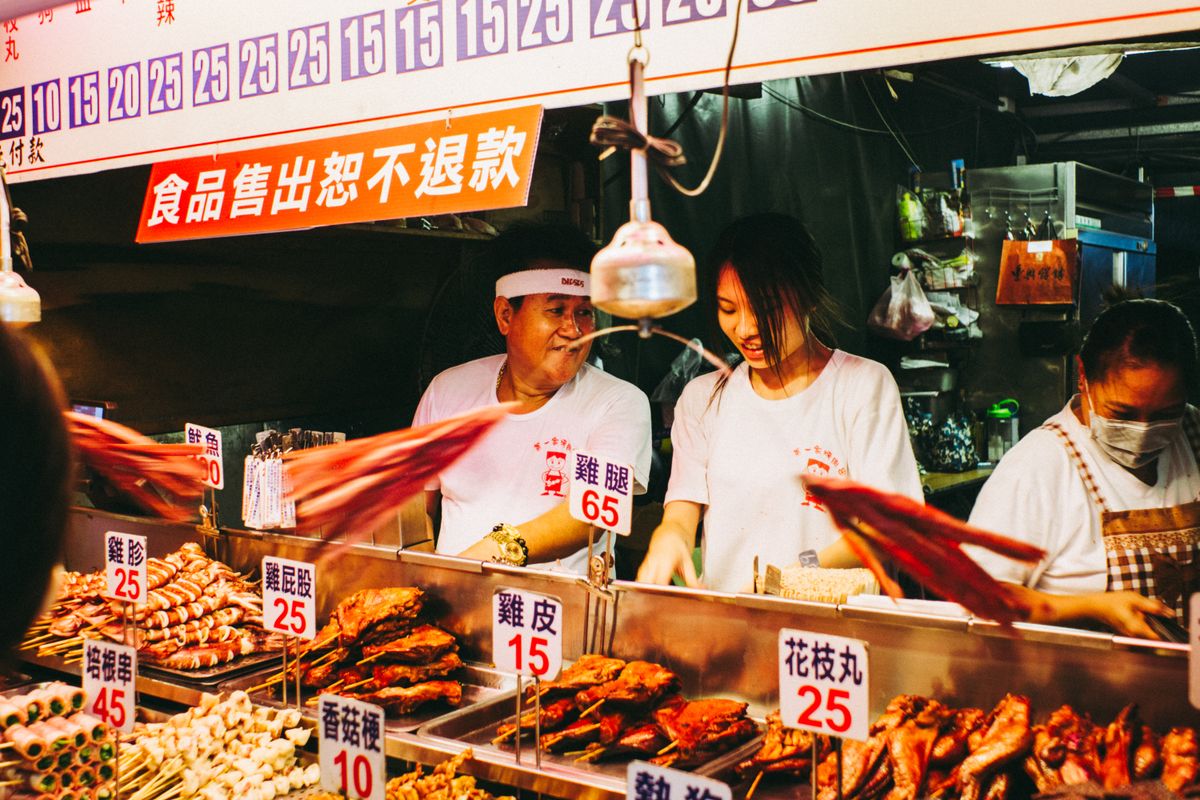
Just off the main lane there is a bao stall that never closes, steamers stacked taller than the staff, the whole menu sitting between NT$20 and NT$50. The woman filling bags wore a red polo and the expression of someone who has correctly guessed ten thousand orders. I asked who buys bao at four in the morning. "Everyone who is not asleep," she said, and handed me a vegetable bun I had not ordered yet and was, it turns out, about to.
Ningxia in one pass
Go 6:30 to 7 p.m. The famous stalls rarely sell out, but the waits triple by 8.
Cash only at almost every stall. Pull NT$500 per person from the 7-Eleven ATM at the south end and you'll go home with change.
Order the oyster omelet (NT$80) and Liu Yu Zi's taro balls (NT$50) first, then graze. The 24-hour bao stall (NT$20–50) is your insurance policy for the walk home.
Read the queue, not the sign. Grandmothers waiting means it's good; tripods waiting means it's photogenic.
A night market doesn't ask what you are. It asks what you want, and whether you can eat it standing up.
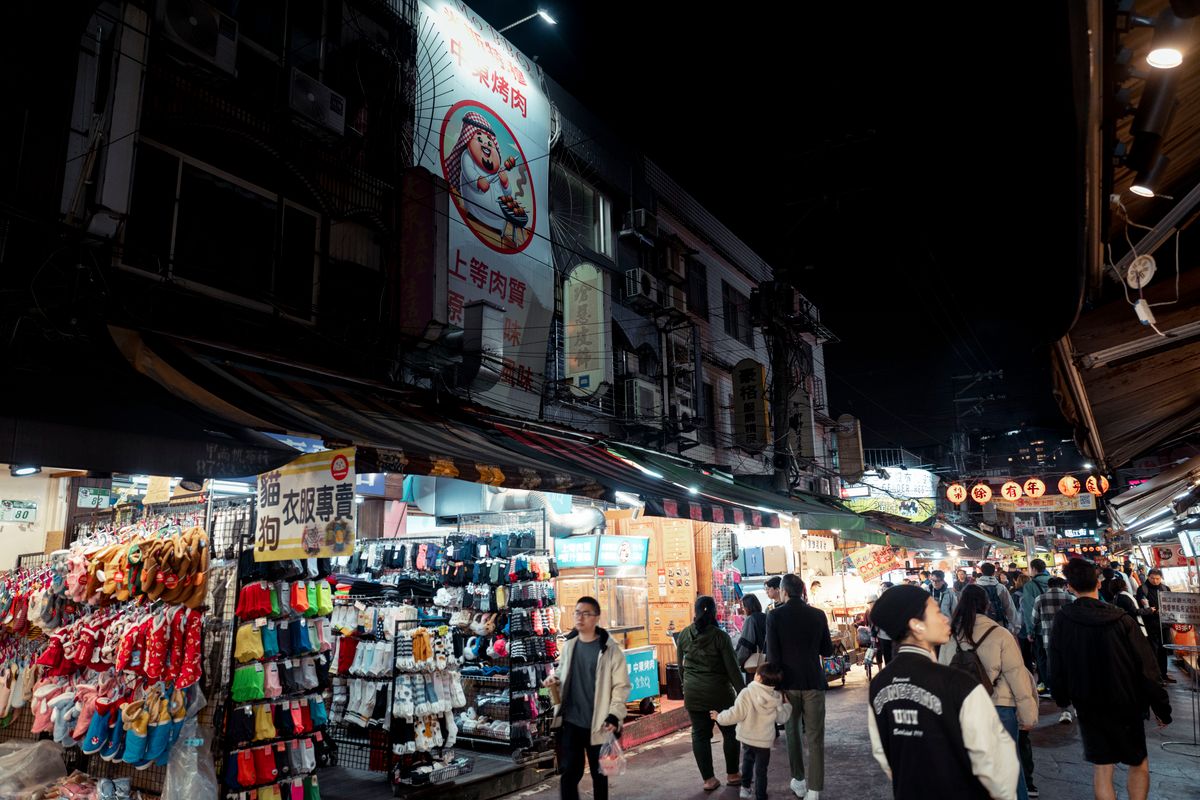
Shilin, the one everyone warns you about
Every Taipei local I met performed the same ritual when I mentioned Shilin: a wince, a disclaimer, then a specific stall I absolutely had to try. The market has been trading since 1899, longer than the Republic of China has governed the island, and it wears its age like a teenager, all neon and noise and socks. There are always socks. Night markets across Taiwan sell socks, and I have never once seen anyone buy them.
At a shrimp-fishing stall, the owner sized me up while I paid. "You look Taiwanese until you walk." I asked what my walk looked like. "Like you have somewhere to be. Nobody here has somewhere to be." He was right about the market, at least. The whole point of Shilin is drift, a giant fried chicken cutlet in one hand for NT$90, papaya milk in the other for NT$70, letting the lane decide.
I finished with stinky tofu, NT$60, from a stall the shrimp man pointed me to, fermented far past politeness and fried until the outside shatters. My mother raised me on that smell and I still braced. Two bites in, I stopped bracing. Whatever my walk says, my palate votes local.
What the markets keep
Three nights, itemised
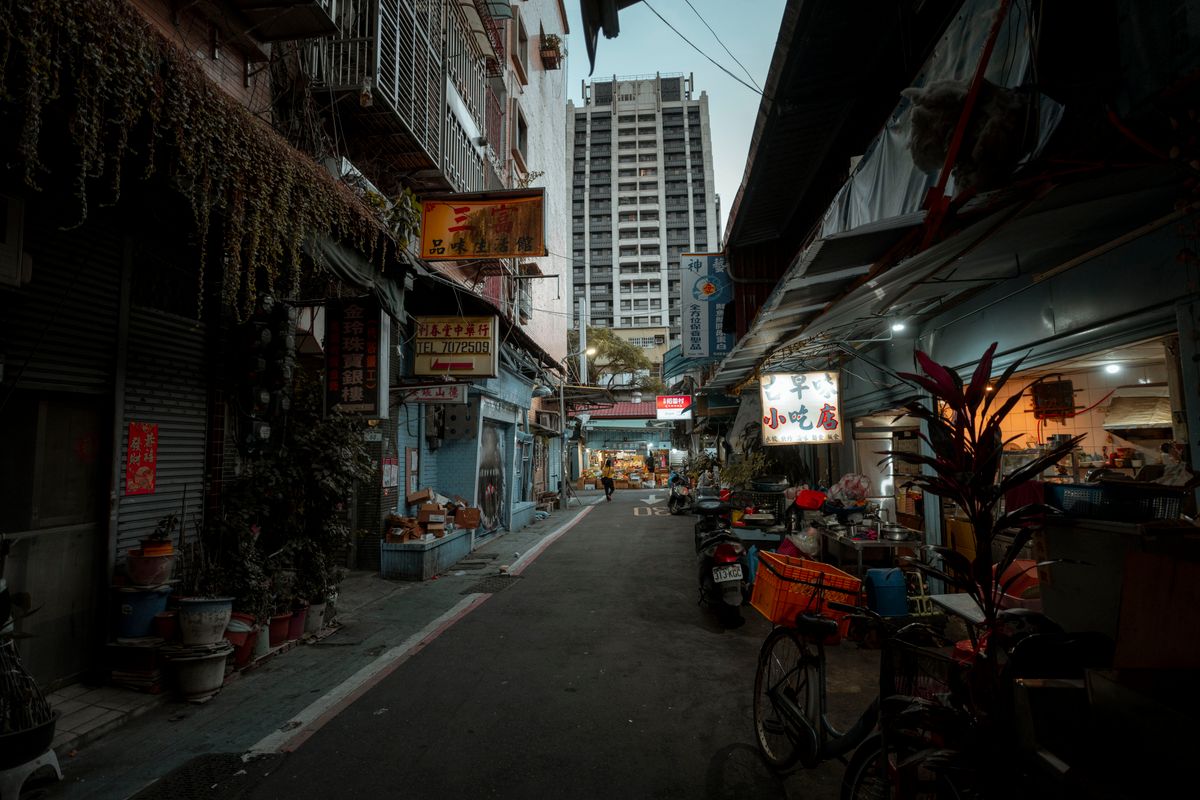
On the last night I called my mother and described the corner of Raohe where the fruit stall used to be, which is now a stand selling grilled mochi. She corrected my pronunciation of Ciyou, went quiet, then asked if the pepper bun queue was still long. It was never a question about the queue. I told her forty minutes, and she said, satisfied, "Good. Some things should cost something."
The English hellos kept coming on night three. I kept answering in Mandarin, and each conversation landed wherever it wanted, usually somewhere in the middle, which is roughly where I live. Here is what three nights bought.
Three nights, NT$920, zero receipts, one pair of socks. Still too American for the vendors, still too Taiwanese to let it go. ■