Reading the Okavango's Slow Tide

Rain fell on the Angolan highlands back in February. It reaches me in July, six months late and about a thousand kilometres south, standing in ankle-deep water at Seronga with a fibreglass hull against my shins and a poler named Thuso telling me to shift my weight back. That's the tide I'm working with out here, if you can call something that takes half a year to arrive a tide at all.
The Okavango doesn't run to the sea. It runs into the Kalahari desert and stops, spreads across sand and reed until sun and dry ground between them drink it down, one of the few deltas on the planet that never reaches an ocean at all. UNESCO listed the place as a World Heritage site in 2014, which tells you what the rest of the world thinks it's worth. Thuso just calls it work.
Full Channel, Six Months Late
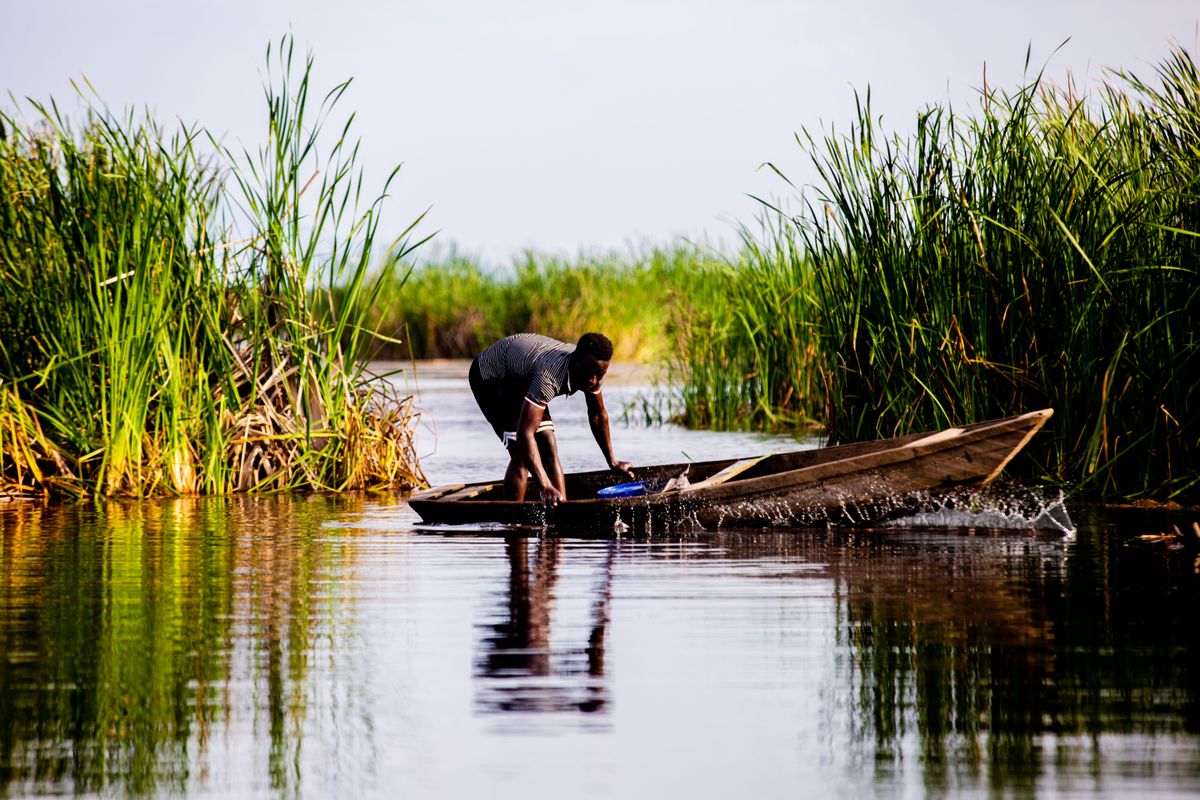
Channel depth at Third Bridge running somewhere between knee and thigh this week, reed density thick enough to hide a hippo at ten metres, water the colour of stewed tea and about as see-through. That's the forecast Thuso reads before he puts the nose of the mokoro into a channel, and none of it comes off a screen.
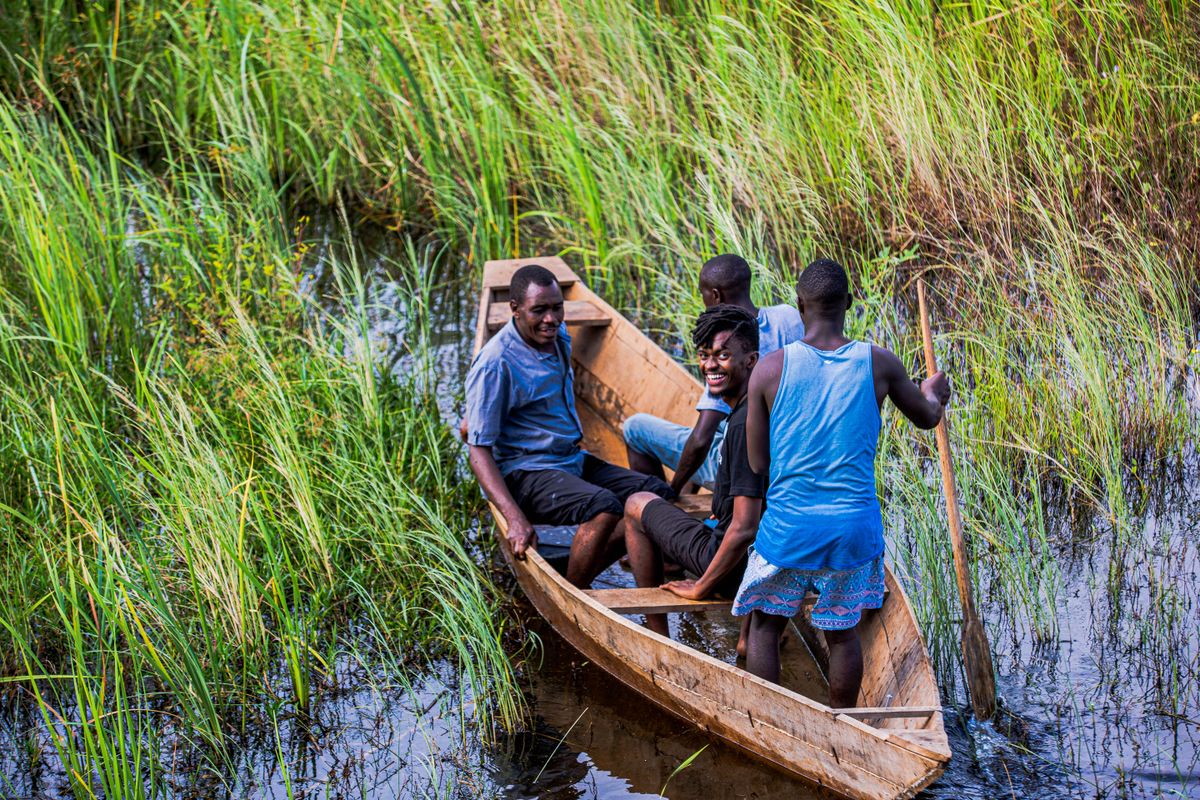
A mokoro isn't paddled. You stand near the stern, plant a pole against the channel bottom, and push, the same motion a punter uses on a flat river back home except this river has crocodiles in it and nobody's selling tickets. Traditionally the hull comes from a single sausage tree or jackalberry trunk, hollowed out over days with an axe and patience. Thuso's is fiberglass, built to the same low, narrow shape, and he's not sentimental about the switch. Fewer trees down for every mokoro on the water, same pole, same standing balance you either have or you don't.
Depth's the whole conversation out here. Too shallow and the hull grounds on peat and sedge, too deep and the reeds give way to open lagoon where a bit of wind gets a run at you, small as that risk is on water this still. My bet's on the channel dropping another few centimetres before the week's out, and Thuso adjusting his line before I've even noticed the reeds changing colour.
What Reads You Back
Visibility down to about a forearm's length under the surface, current close to nothing, one hippo pod bedded down somewhere past the bend nobody's naming out loud. That's the water Thuso reads next, and it reads back.
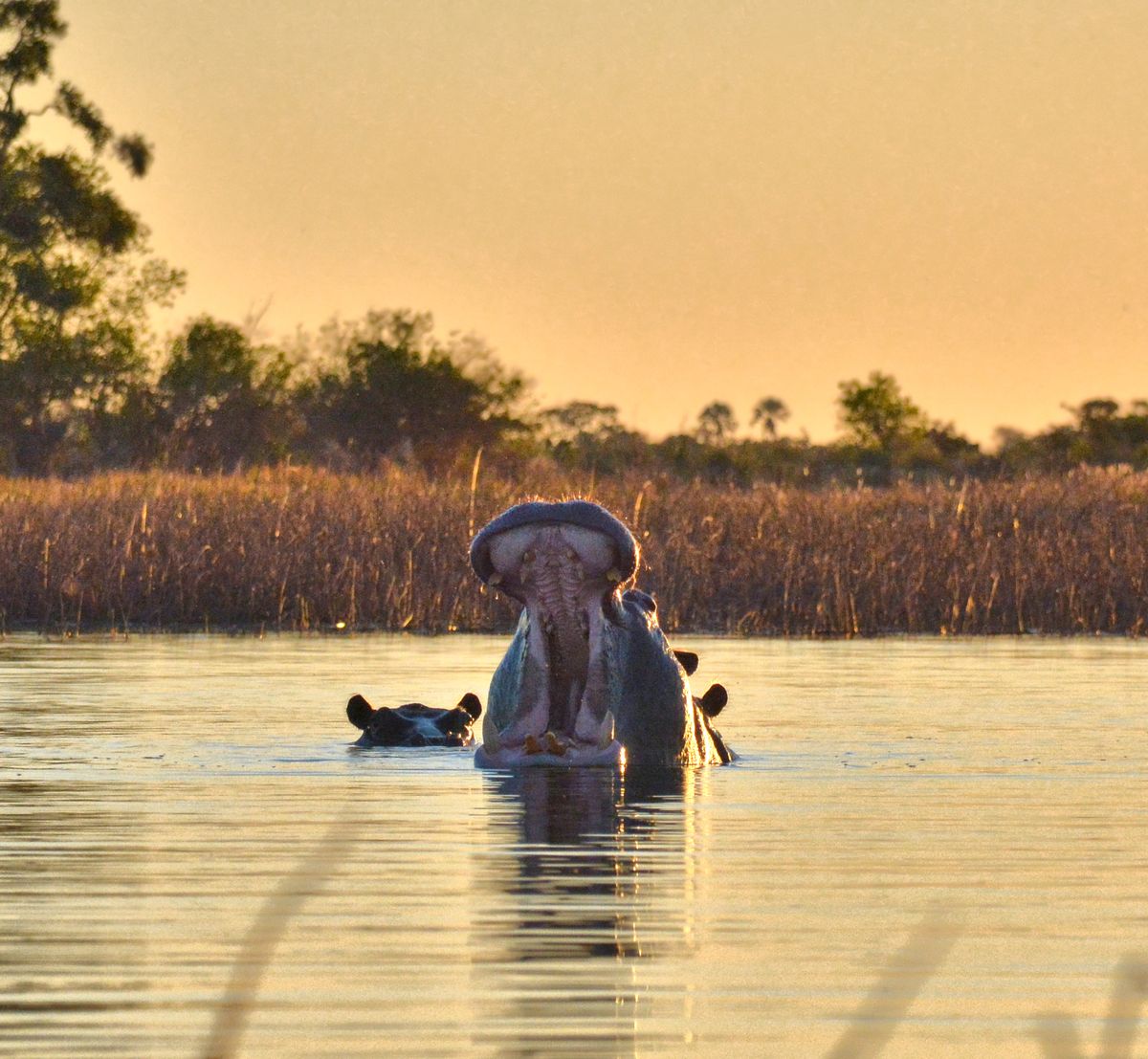
Hippos are one of the most dangerous animals you can meet at close range on this continent, and a mokoro sits low enough that a startled bull can put a poler in the water before he's finished the thought. Thuso doesn't carry a weapon for it. He carries silence, a habit of scanning the reed line for a flattened patch or a set of nostrils breaking the surface, and a willingness to reverse the pole and take the long way round a channel he doesn't like the look of. That's the skill. Not bravado, not luck. Reading a patch of still water the way I'd read a swell line before deciding whether the boat goes out.
Somebody at camp told me you rap the pole twice on the hull before a blind bend, keeps the river spirits from taking offence at your passing. It's not spirits. It's the hippo underneath that bend, and a mokoro appearing in its face at close range is what actually gets people hurt, not an insulted current. Two taps gives it time to move off before you're on top of it. Thuso taps anyway. No sense arguing with a habit that's kept every poler on this channel alive so far.
My money's on that pod staying put till dusk, and on Thuso knowing the exact metre where we stop being interesting to it.
deckhand's notes
Sit low and stay seated. A mokoro's stability depends on your weight staying where the poler put it.
Go out at dawn if you can. Wind stays down, water's glassier, and a poler can pick out a hippo's nostrils against still water.
Ask who owns the mokoro. A cooperative-run camp will tell you straight. A lodge will change the subject.
Skip the perfume and bright colours. Elephants and hippos both react to smell and movement before anything else.
Log: pole raised straight up, no wake, no words. The water breathes once, then goes still, and we go.
Poler-Owned Water Versus the Photo-Op Circuit
Water levels still rising through the panhandle, channels near Seronga running fuller than the ones down at Maun, poler cooperatives working double the hours the lodges are booking them for. That's the season, and it's splitting the delta into two different operations wearing the same reed hats.
A poler-run camp is a working operation. The men who own the mekoro set their own rates, choose their own channels, and stop for as long as a hippo needs to move off, because the trip is the product, not a warm-up act. A lodge-run mokoro ride is often twenty minutes tacked onto a package built around game drives and a bar tab, poled by staff on a wage that has nothing to do with how good their channel-reading actually is. Both get you wet feet and a decent photo. Only one of them has skin in the water.
What a channel actually costs
I didn't come away with some tidy lesson about slow travel or living in the moment. I came away knowing which camps pay their polers properly and which ones don't, and I'm not going to pretend that's a small thing. The next flood pulse rolls through the panhandle around June, same as it did this year and the year before that, and Thuso will be out reading it whether or not anyone's paying to watch. ■