The Chobe River, by the Rules of the Road
A Bosphorus ferry captain applies harbour rules to elephant crossings and hippo pods on Botswana's Chobe River, working out current, traffic, and who should have yielded to whom.

Current on the Chobe running east that week, feeding down toward the confluence with the Zambezi, maybe half a knot on the surface where the channel narrows off Sedudu Island, nothing that fights a hull but enough that a boat holding station has to keep a hand near the throttle. Traffic count by four in the afternoon: eleven boats inside of two kilometres of riverfront, all converging on the same stretch of bank because the animals were converging on it too.
Nobody hired me for my knowledge of elephants. I know current, wake, and who owes whom room to manoeuvre, and it turns out a river with the densest elephant population on the continent running through it works on the same logic as the Bosphorus at rush hour. Somebody is always crossing somebody else's line. The question is only ever who called it first.
The Elephant Crossing
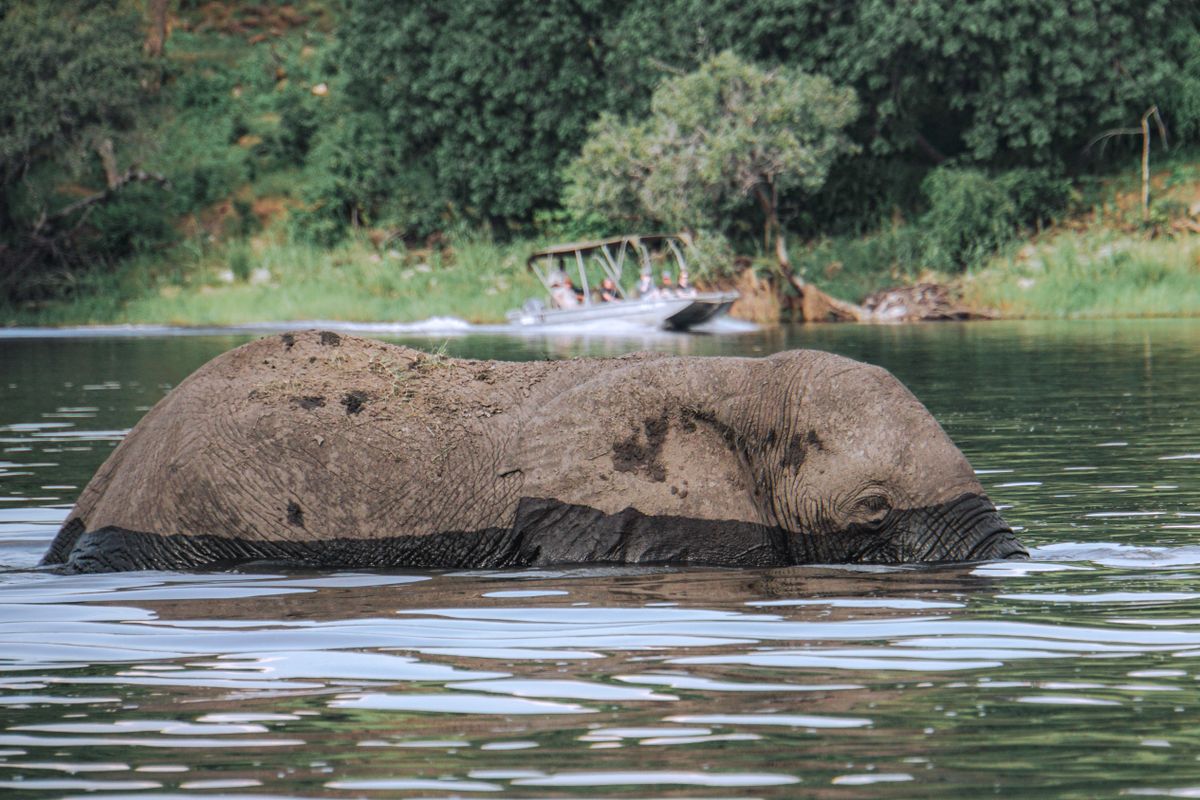
Current runs faster through the Sedudu channel where the island splits the river in two, squeezed down to something closer to a knot in the narrows, current that matters if you're trying to hold alongside a herd already committed to open water.
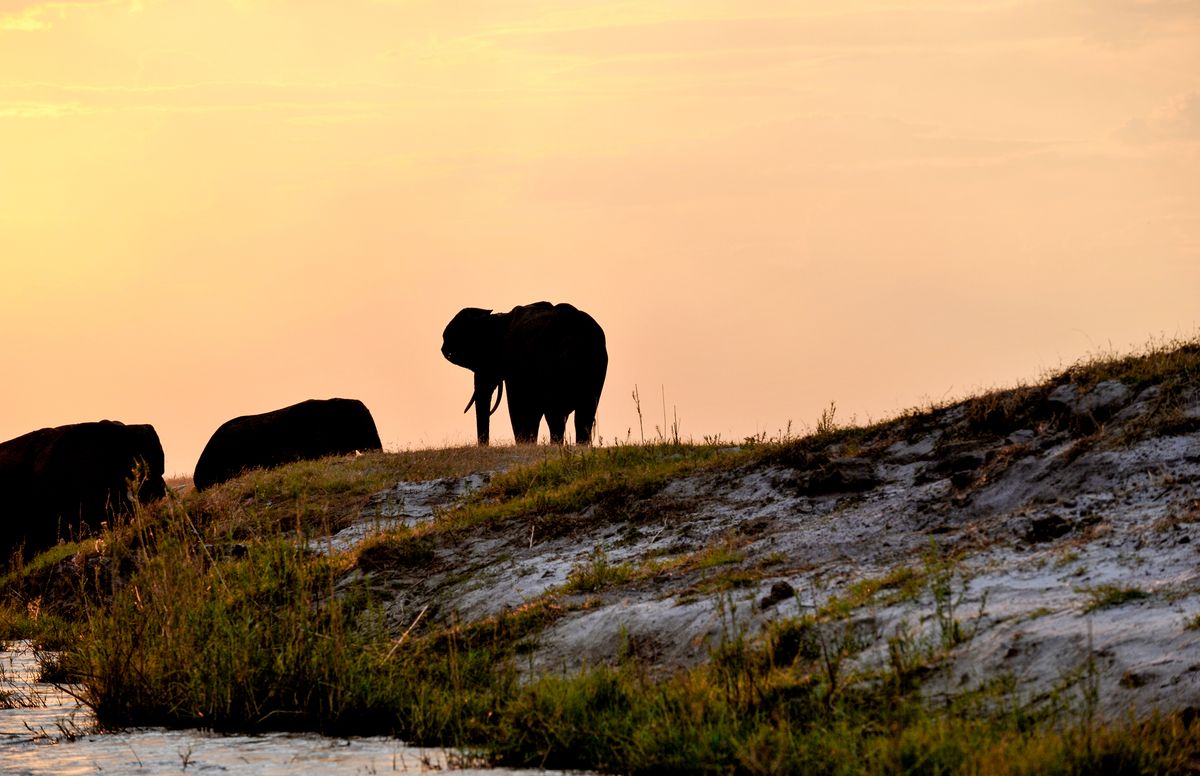
A family herd came down to the water off the Namibian side around five, the matriarch first, testing the bank with one foot before committing the rest of herself, then the younger cows, then four calves small enough to need the current to help carry them. Once a herd like that steps off the bank and starts swimming, it is not visiting the crossing, it is committed to it, the way a loaded ferry is committed to a pier approach once the wheel is over. You do not cut in front of that and expect it to swerve.
One of the other boats, a smaller open-hulled charter running two guides and six guests, throttled up to close the gap for a better camera angle and put its bow across the herd's line maybe thirty metres ahead of the lead cow. The elephants held their heading. The boat was the one that altered course, hard, and came about wide enough that the guide had to apologise over the radio to the rest of us on channel. A herd that has committed to a crossing is the stand-on vessel. The boat that arrived on scene last and wanted the shot is the one obligated to keep clear, and it did, eventually, after making everyone else's afternoon worse for about forty seconds.
An elephant that has committed to a crossing has right-of-way over anything that showed up later wanting a photo.
— wheelhouse notes
Hippo Water, No Right-of-Way
Below Kasane the channel widens and slows, current down under half a knot, but traffic density on this stretch runs the other way, more boats per kilometre than anywhere else on the circuit because the reed beds hold the resident pods and everybody wants the picture.
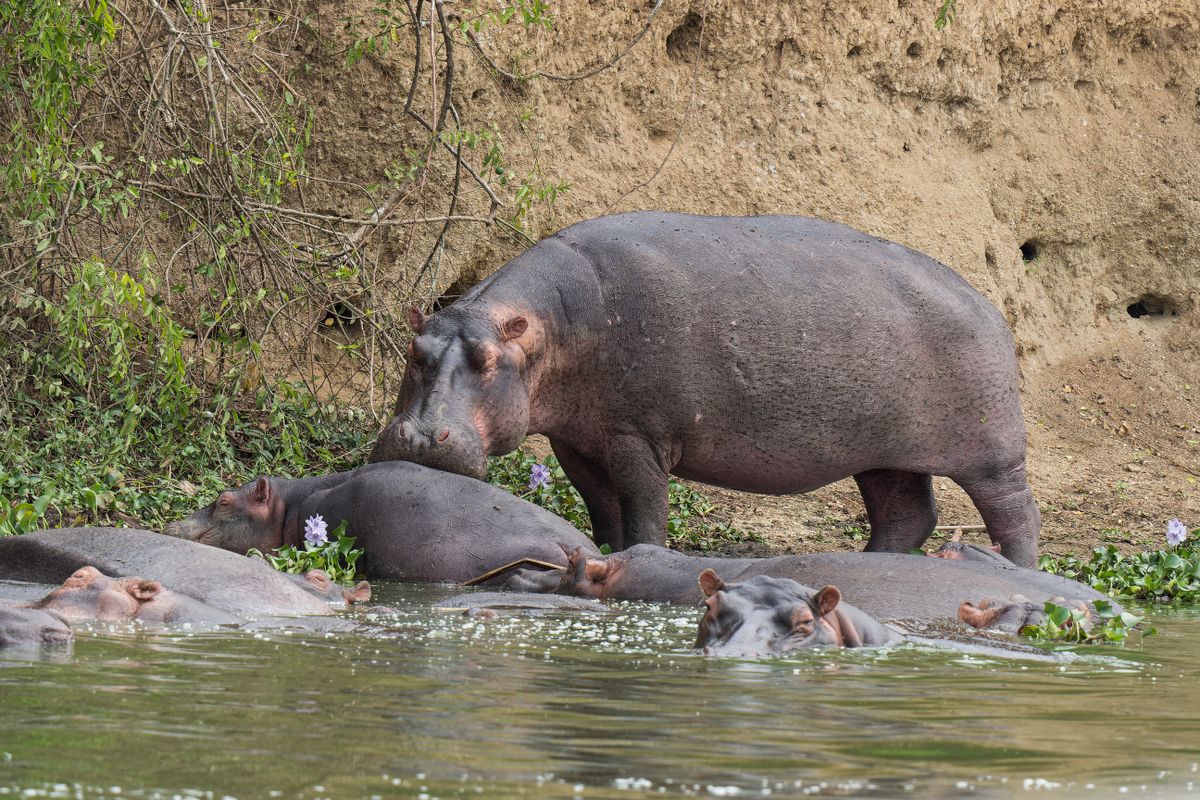
A pod of around fifteen hippos holds a stretch of water most afternoons there, the biggest bull surfacing every few minutes to blow and look around before going back under. Guides here cut the engine well back and let the boat drift with the current rather than motor straight through, and that is not caution for the sake of a good photo, it is because a hippo does not recognise vessel traffic rules and does not need to. Nothing on this river outranks a hippo in its own water.
A boat two days before mine idled too close to the reed bed trying to get guests a clean look at a mother and calf, and the bull surfaced eight metres off the port bow, close enough that the whole boat went quiet in the way a wheelhouse goes quiet when an engine note changes. The guide reversed off immediately, no debate, no wheel spun to make it look casual. That boat was the give-way vessel in every sense that matters, arriving late into water a resident bull already held, and the only reason it counted as a near miss instead of an incident is that the give-way vessel actually gave way.
The Waterhole at Peak Hour
By evening the current barely registers, the whole river running low and easy toward the confluence, but boat traffic on the last stretch before sundown thickens to something closer to a terminal at rush hour than open water.
By six the light goes long and gold and every herd on the floodplain seems to remember the river at the same moment, elephants coming down three and four family groups at a time until the bank looks less like a wildlife circuit and more like a ferry terminal at peak hour, everyone converging on the same three landing points inside twenty minutes.
Captain's notes
Best viewing window is late afternoon in the dry season, roughly May to October, when animals concentrate at the river as inland pans dry up.
Sedudu Island splits the Chobe into two channels for a few kilometres. Botswana and Namibia disputed ownership until the International Court of Justice ruled in 1999 that the border runs north of the island, confirming it as Botswana's.
A crossing herd commits before it enters the water, matriarch first. Once she's in, hold position and let her finish, she won't alter course for a boat.
Hippos are the real hazard on this river, not the elephants. Give any pod a wide berth and never idle between a cow and her calf.
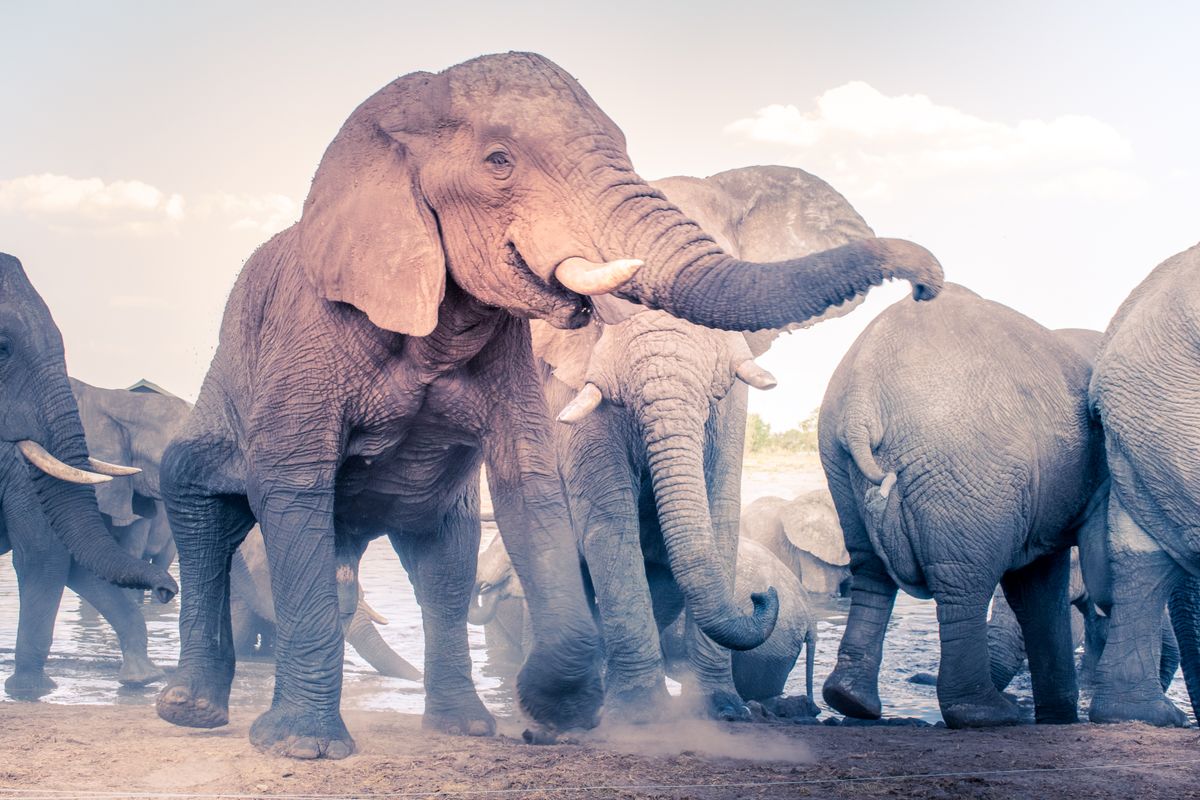
Boats stack up for it too. By the time four separate herds were working the same two hundred metres of bank, six tour boats had bunched into a line abreast of each other, engines idling, each one trying to hold position without drifting into the boat next to it or the elephants in front of it. One skipper kept nosing forward a boat length at a time to improve his guests' angle, which meant the boat behind him had to keep dropping back to hold clearance, over and over, for ten minutes. The boat repeatedly closing the gap was the one obligated to hold its position and didn't. Everyone else on that stretch of water was giving way to a decision nobody made out loud.
Nobody on the water that week called any of it a close call, not officially, because nobody wanted to be the boat named on the report. But the water doesn't need a report to sort out who had room and who didn't. The elephants held their line, the hippos held their reed bed, and the boat that crowded a family herd off the Namibian bank was the only vessel out there that had to explain itself. Give-way vessel gave way. That's the whole verdict. ■