Reading Busan on the Ebb
A South Island deckhand walks Nampo-dong's fish stalls, Gamcheon's painted stairs and the crossings to Yeongdo Island, grading each one the way he'd grade a harbour before deciding whether to go out.

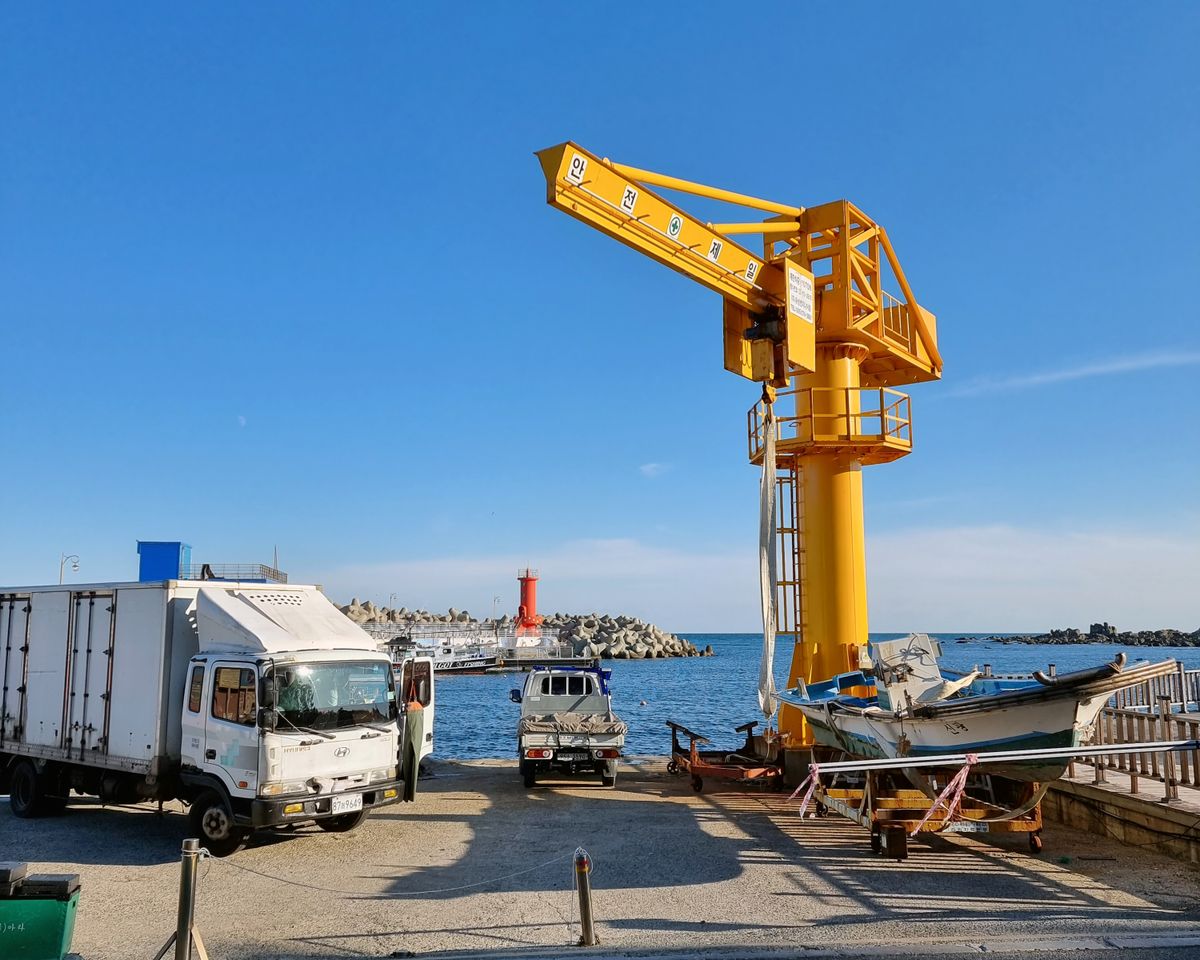
Nor'wester twenty knots off the ranges, dying to a sou'westerly ten by midafternoon, swell under a metre inside Busan's breakwater, tide making at Nampo-dong a little after six that morning. Back home that's a green light, boat off the wharf by first light, gear over the side before the tourist charters have finished their coffee. Here it just told me which way the smell of diesel and bait was going to blow while I walked the port district end to end, working the same question I'd ask of any harbour: what's real work, and what's set up to be photographed.
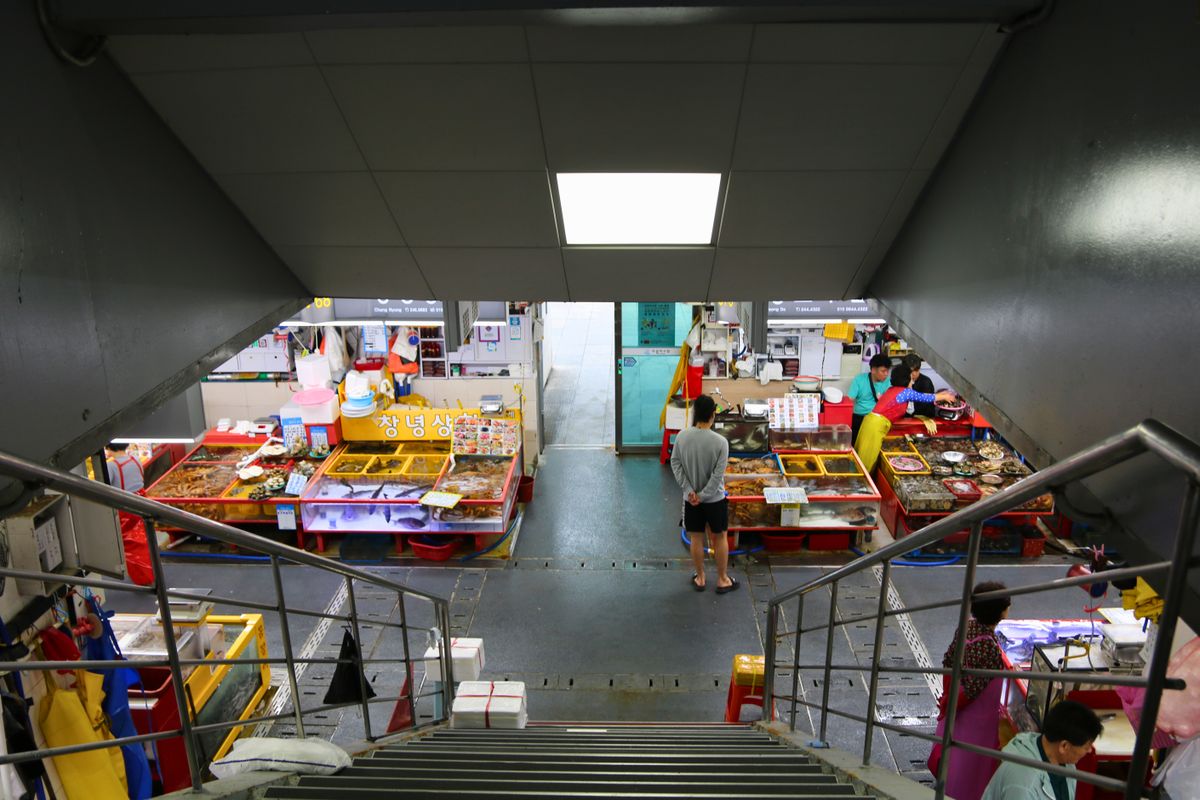
Jagalchi, on the Last of the Ebb
Wind easing further through the morning, tide bottoming out at Nampo-dong, and low water eases the smell out of a fish market rather than in, whatever people tell you. Jagalchi at low tide smells like a market working properly: brine, diesel, ice melting off the back of a truck that's been queueing since four. Nampo-dong's still got gravel in its name, jagal, from when this stretch of shoreline was exactly that, before the war and the reclamation filled it in behind concrete.
The market itself came later than the name, built up by women who started laying out catch on the gravel after the Korean War because there wasn't another income going, and the stalls now run generations deep off some of those same families. Jagalchi grades as a working port the way any real one does, not by the size of the building but by what happens if you take the tourists out of it. Take them out of Jagalchi and the boats still come in, the auction still runs, the women in the rubber aprons still gut and bag and shout prices over each other in a rhythm that hasn't got anything to do with whoever's holding a camera on the stairs above them. A photo op empties out the second the light's wrong. A working port doesn't notice you're there.
Someone on the auction floor told me you never turn a fish belly up before it's sold, bad luck, the catch turns bad with it. It's not luck. A fish shows its freshest colour belly down, gills tucked, and flipping it belly up before a buyer's looked it over just makes it look older and greyer under the market lights than it is, which knocks the price down before the auctioneer's even opened his mouth. Forty years of fishmongers didn't need the biology to know it cost them money. I left the fish exactly as I found them.
Tide's still on the ebb as I write this, low water not due for another two hours by my reckoning, and I'd bet the smell along the waterfront gets worse before it gets better.
Gamcheon, a Long Way From Any Boat
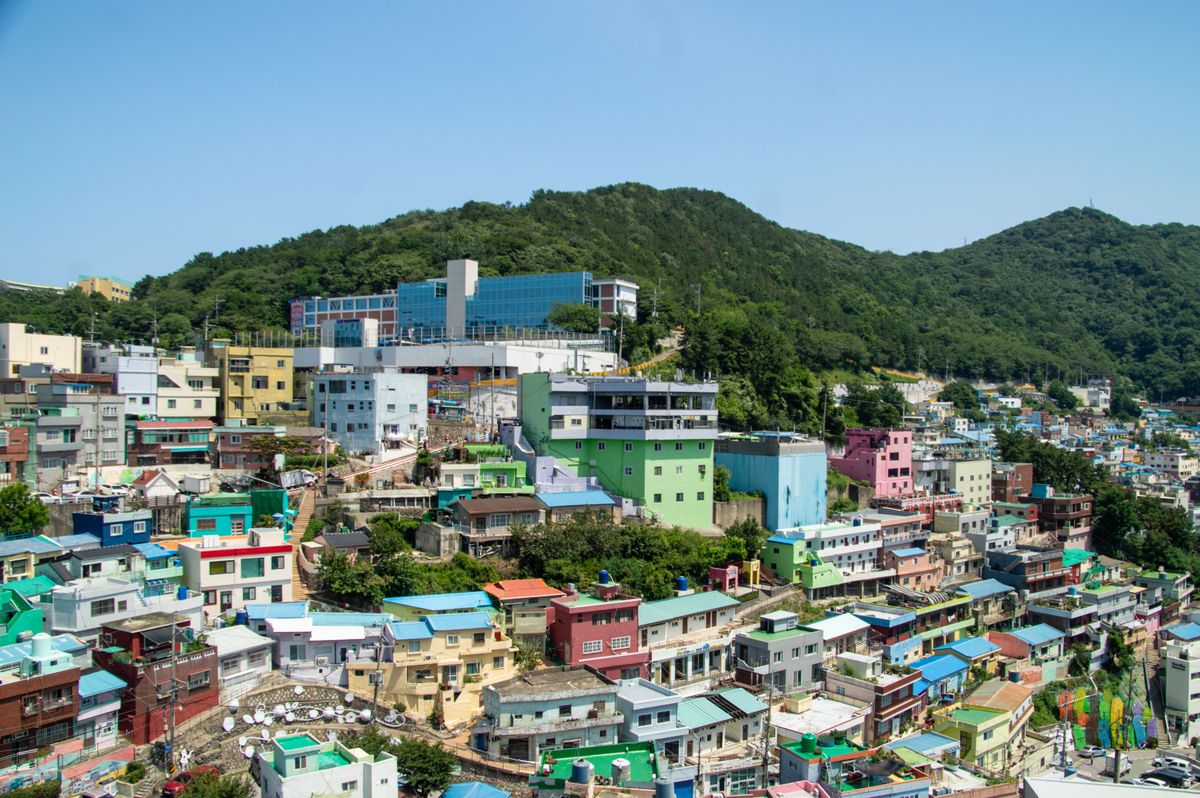
Wind still nor'west and easing by the time I climbed out of Nampo-dong toward Saha-gu, which doesn't mean much on a hillside with no boats on it, except that the container ships working the anchorage below were riding easier than they had been at seven that morning. I noticed anyway. Old habit, checking the water even when I'm nowhere near it.
Gamcheon Culture Village is the postcard everyone in Busan tells you to climb for, houses in blue and yellow and pink stacked down the cliff toward the water, and by the harbour-grading rule it should fail outright: nobody's landing a catch on those stairs, nobody's running a winch. Except Gamcheon's honest about what it is in a way most photo ops aren't. It was a refugee settlement built after the war, poor and steep because that was the only land left, and it stayed poor for decades before an arts project in the 2000s turned the same houses into what won it the UN-HABITAT Asian Townscape Award in 2012.
That's the edge case that doesn't fit neatly into working port or tourist theatre. Gamcheon isn't pretending to be a working harbour and it isn't pretending the poverty wasn't real either. It's just changed what pays the bills on that hillside, same houses, same steep lanes, different cargo coming up them now, tour groups instead of fish boxes. I'd grade it a photo op with its receipts still showing, which is more than I can say for half the harbourside restaurants back home with fishing nets nailed to the wall and no boat that's ever worked out of them.
Cloud was building over the anchorage by the time I came back down, the kind that sits offshore for hours deciding whether it's coming in, and I'd bet on rain over the port district by evening before it clears the ranges.
The Crossings to Yeongdo
Wind dropped to nothing in the lee of the island, tide two hours off the top when I walked down to Yeongdo, current running harder than it looked through the gap between the island and the mainland, the kind of water that makes a bridge a serious piece of engineering rather than a formality.
deckhand's notes
Yeongdodaegyo raises daily at 2pm for fifteen minutes, worth timing your walk around rather than hoping to catch it.
Jagalchi's auction floor is busiest and least staged before eight in the morning, same as any fish market anywhere.
Namhang Bridge has no pedestrian view worth the walk, drive it or skip it and save the legs for the old crossing.
A bridge that once carried a war's worth of names still lifts on schedule, whether anyone's watching or not.
— log entry
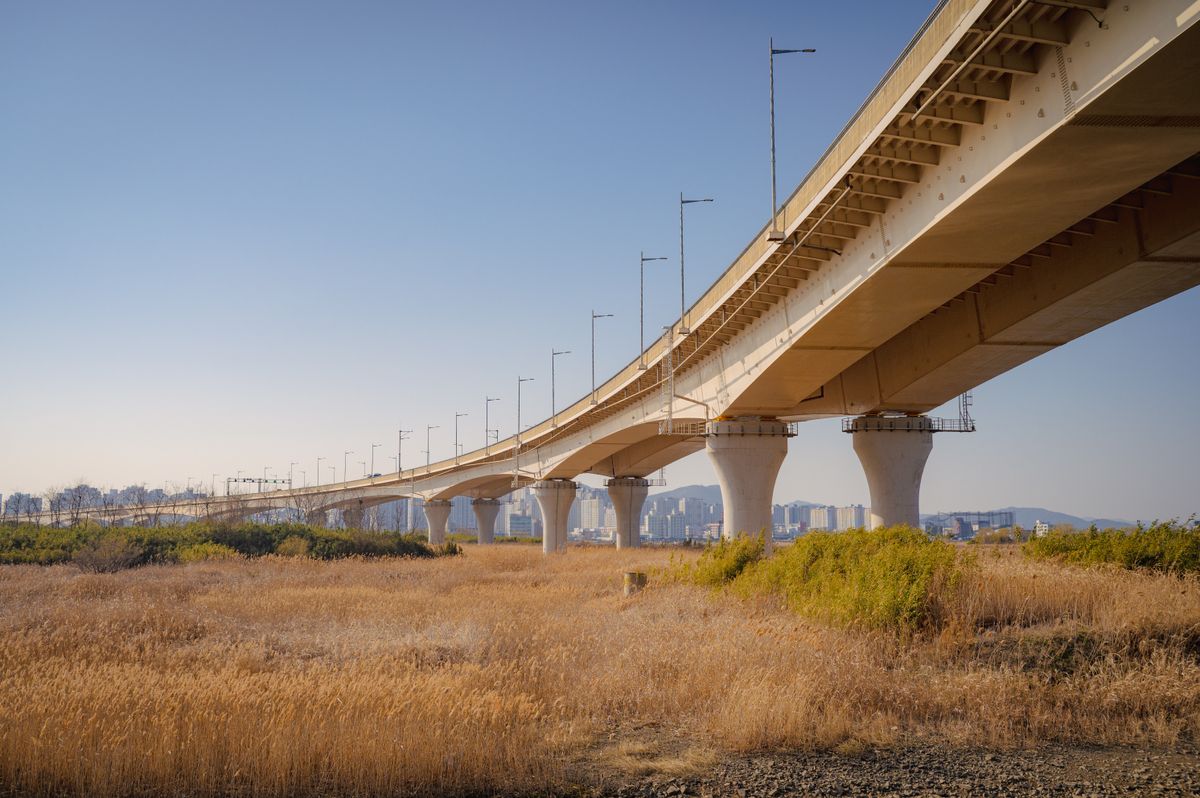
The Namhang Bridge carries the highway traffic across now, an elevated span you drive over without noticing much except the view, which is the point of a modern bridge, get you across and out of the way. The old crossing, Yeongdodaegyo, is a few hundred metres north and does the opposite. Opened in 1934, it's still Korea's first and only drawbridge, built to open in the middle so ships could pass through rather than route around, and for decades it did exactly that at noon, raising on schedule like clockwork you could set a shift by.
During the Korean War, Yeongdodaegyo became the meeting point for families split up by the fighting, people scrawling names and hometowns on paper and cloth and tying them to the handrails in case someone they'd lost came looking. The bridge stopped raising in 1966 when the mechanism gave out and wasn't fixed for close to fifty years. They restored it and got it lifting again in November 2013, fifteen minutes now, starting at two in the afternoon, more ceremony than shipping channel these days, but the gears are the same ones doing the work.
Namhang gets you there faster and nobody ties anything to its rails. That's not a criticism, a highway bridge doing highway bridge things is a working piece of infrastructure same as any wharf, it's just infrastructure with nothing written on it. The old one still carries the weight of what it was built to hold, which was never just ships.
Tide was turning by the time I got back to the harbour proper, that flat moment where the water can't decide which way it's going for a good twenty minutes, and Busan's port district struck me as being in roughly the same state, one foot in the auction floor and one in the postcard rack. My money says the working half keeps winning quietly, the way it does in every port that's still got diesel drums nobody bothers photographing, right up until someone decides the fish stalls would look better as a heritage attraction too. ■