Naadam Plays Slow, Then Fast: A Season of Drums, Hooves and Grunts on the Mongolian Steppe

The Opening Ceremony: A Drum Before a Word
The first sound at the National Naadam Stadium in Ulaanbaatar wasn't a voice. It was a drum, one deep hit, then a pause long enough that you weren't sure it was going to happen again, then another. Somewhere behind the drum a horn came in low, more felt in the chest than heard, and only after that did the crowd start finding its own noise, thousands of people all deciding at once to stop murmuring and start watching.
This is the nine white banners coming out, the Yösön Khult Tsagaan Tug, carried in by soldiers in ceremonial dress with the kind of unhurried walk that tells you the procession has been rehearsed for longer than anyone in the crowd has been alive. July 11th, the opening morning of the national Naadam, and the sound design is doing exactly what a good opening act should do: it's not trying to win you over yet, it's just letting you know the room is full and something's about to start.
Naadam means "games" and it's built on three of them, wrestling, archery and horse racing, the eryn gurvan naadam or three manly games, though the archery lines these days have plenty of women pulling bows and nobody in the stands seems bothered by the old name not quite fitting anymore. The stadium leg of it runs the wrestling and the archery and the opening pageant. The horse racing happens outside town entirely, on open ground, and that's where the sound changes completely, which is where this show is actually heading.
There's a period during the opening where a soloist does the long-song, urtiin duu, a single held note that seems to travel further than it should across a packed stadium with no roof to bounce it off. It's the kind of vocal performance that would flatten a smaller room. Here it just gets absorbed into the size of the place, and that tells you something about the scale you're dealing with before a single horse has run.
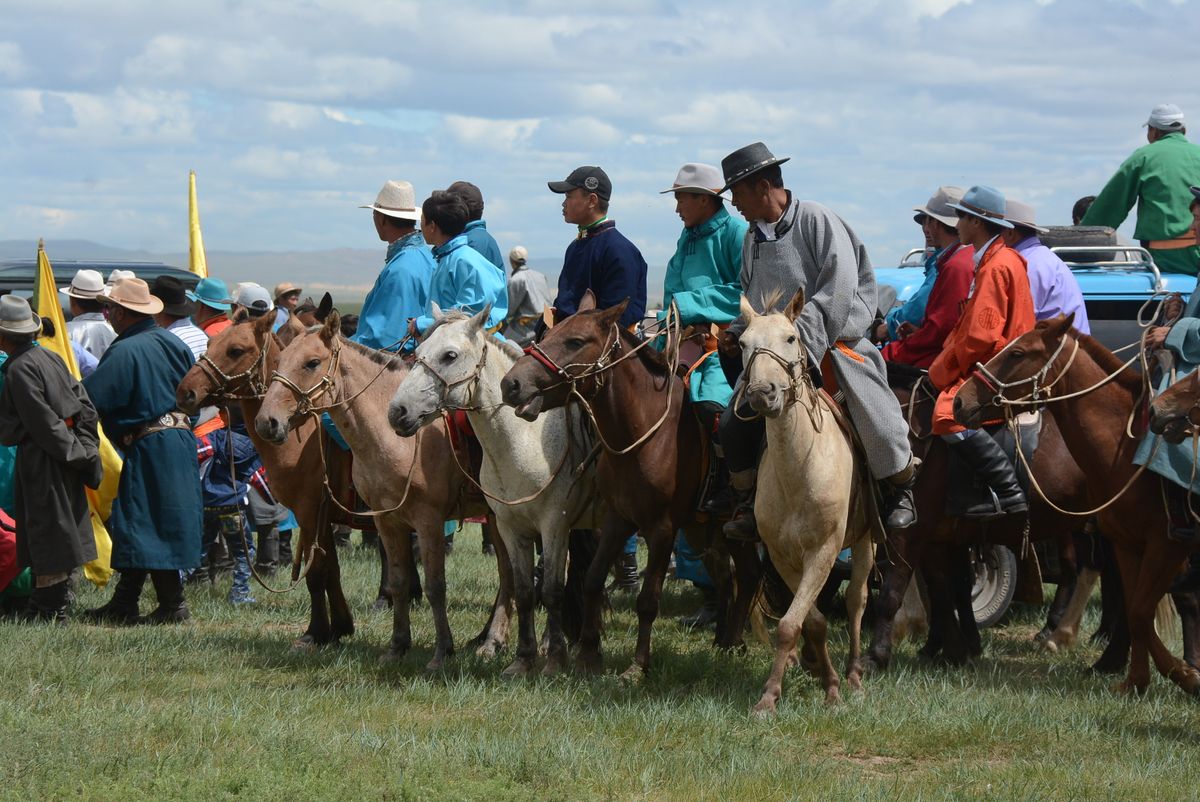
The drum wasn't trying to win you over yet. It was just letting you know the room was full.
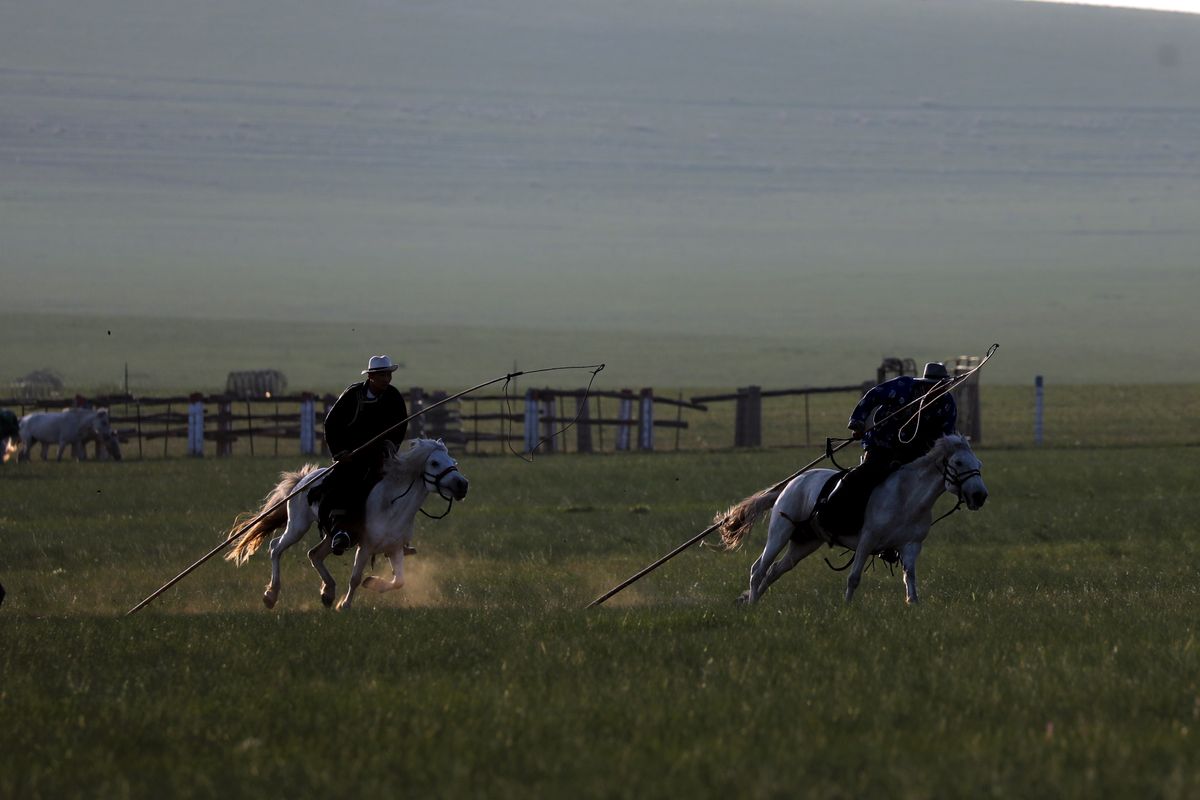
The Horse Race: Hoofbeats Across Open Ground
Get out to the racing grounds past Hui Doloon Khudag, west of the city, and the acoustics change entirely. No stadium walls, no roof, no crowd packed shoulder to shoulder. Just steppe, wind moving grass that's already moving, and a start line so far off that the first sign of the race isn't visual at all. It's a sound, low and building, that you'd mistake for weather if you didn't already know what it was.
Hoofbeats travel strangely on open ground. There's no single direction they come from. They arrive as pressure first, something you register in the ground under your own feet before your ears catch up, and then the noise resolves into individual beats, and then you can see the dust, and only after the dust do you see the horses themselves, strung out over what might be a kilometre of visible track with more behind the rise.
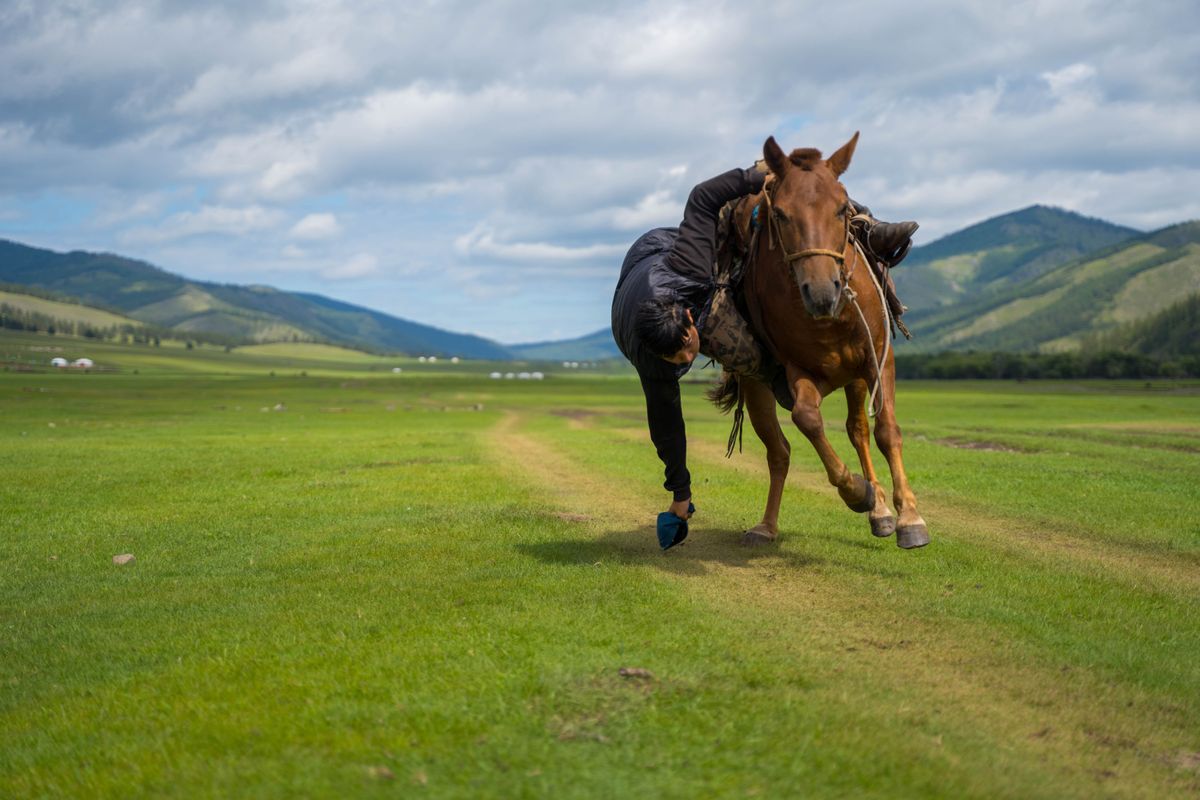
These are cross-country races, run over real distance across open terrain rather than around a track, the distance set by the age-class of the horse, and the jockeys are children, a practice that goes back generations here and one nobody in the crowd around me treated as remarkable, just as how it's done. The kids ride bareback or close to it, singing to their horses as they go, a specific high call that carries oddly well over hoofbeat and wind, and it's the singing more than anything that tells you this isn't a spectacle built for an outside audience. Nobody's mic'd. Nobody needs to be.
The finish is its own kind of chaos, families running out onto the course to meet their riders, the crowd noise finally arriving in a way it hasn't all race, a wall of sound after twenty minutes of wind and distant hooves. And then, just as fast, it thins back out again, because the next race is already being called somewhere down the line, and the ground goes back to being mostly quiet.
Getting to the racing
National Naadam runs July 11-13 every year, with the horse racing sometimes starting a day earlier
Provincial (aimag) Naadams happen on different dates through the summer and are far less crowded
Get to the finish line early; the best listening spot is well before the dust arrives, not after
The Wrestling: Slap, Grunt, Silence
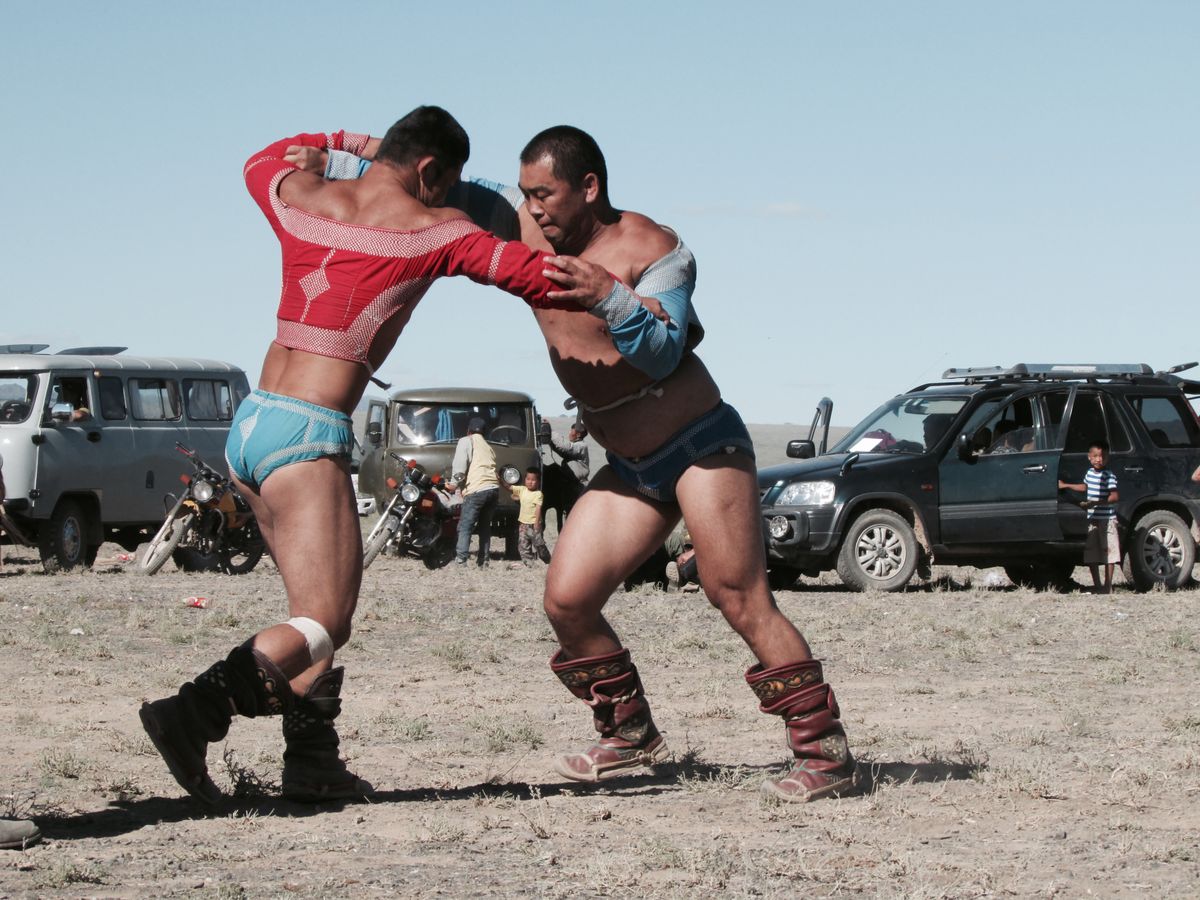
Back in the stadium the bökh wrestling has its own sound entirely, and it's not what you expect from a combat sport. No weight classes, no rounds, just one bout, and it starts with something closer to ceremony than fight: each wrestler doing the devekh, the eagle dance, arms out, a slow circling stamp that the crowd watches in something close to silence.
Then the bout itself, and it's shorter and louder than the buildup suggests. A slap of open hands on the zodog, the open-chested jacket both wrestlers wear over the shuudag shorts, a grunt of effort that's audible from a fair distance back, feet finding grip on packed ground, and then it's over, one wrestler down, sometimes in under a minute. The winner does a slower version of the eagle dance again, this time under one arm of an official, and the loser walks off to a specific kind of applause, warm but not loud, the crowd giving credit for a good showing rather than mourning a loss.
It was a good afternoon set, professional, unhurried, and there's a real skill in watching a bout that's mostly won in the first three seconds of contact and knowing exactly what you saw. Some of it, especially early rounds with less experienced wrestlers, ran long and got scrappy, more grind than technique, and the crowd's attention audibly slackened, phones came out, conversations picked back up. Nothing wrong with that. Not every bout on the card is going to be the headline act, and this crowd knows the difference between a wrestler having a rough one and a wrestler being bad, and only ever reacts to the first with any restlessness.
What stuck with me wasn't the bouts that ended fast, it was the crowd noise around them, how it rose and dropped in a shape that had nothing to do with a scoreboard and everything to do with how a room reads a contest. A murmur before contact, a single collective exhale on the takedown, then that warm applause, and then quiet again for the next dance.
The Ger Camp: Everything the Festival Sounds Like When It Stops
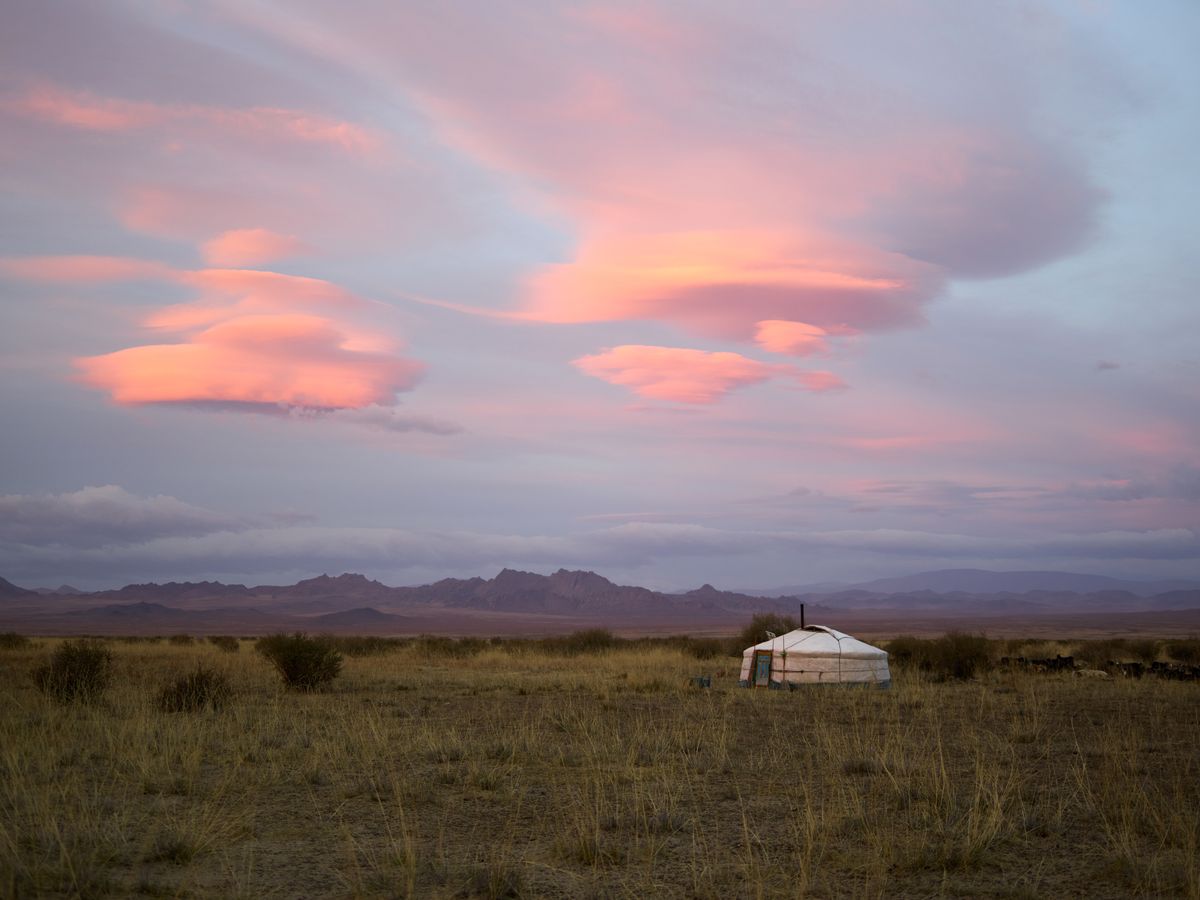
By the third evening the noise had migrated out of the stadium entirely, following the crowd back toward the ger camps scattered across the grassland outside town, where a lot of visitors and no small number of locals stay for the festival. This is the closing number, and it's the quietest one by a long way, which after two days of drums and hoofbeats and grunt-and-slap is its own kind of relief.
A ger camp at dusk has an acoustic all its own. Felt walls swallow sound rather than bounce it, so conversation from the next ger over arrives soft and directionless, more texture than words. Somewhere a horse-head fiddle, the morin khuur, was being played badly and cheerfully by someone clearly still learning, two strings under a bow that kept catching, and nobody around the fire seemed to mind in the slightest. That's the kind of playing you don't get inside the stadium, unpolished, unperformed, nobody buying a ticket for it and nobody expecting them to.
The dogs settle last. Somewhere past midnight the last conversation from the next ger over finally goes quiet, and what's left is wind on felt and canvas, and a silence so complete after two days of stadium noise that it takes a while to trust it.
A rough day at Naadam
No ticket booth out here. Nobody's playing to anyone but themselves.
Provincial Naadams, held in the weeks around and after the national one, are the version worth chasing if the stadium crowd isn't your thing. Smaller stages, smaller crowds, and a version of all three games played by and for the people who live there, not performed outward at anyone. Ulaanbaatar's national leg is a big professional show doing exactly the job it's built for, well rehearsed and worth the ticket, but the provincial Naadam is a different set entirely, one that resolves the same way every good closing tune does: quietly, and completely on its own terms. ■