In the Gobi Desert, the Camels Decide the Itinerary
Three days trekking Bactrian camels from the singing dunes of Khongoryn Els to the fossil-red cliffs of Bayanzag, told by the animals' own account of the trip.

Day One: Camels Out of Ömnögovi
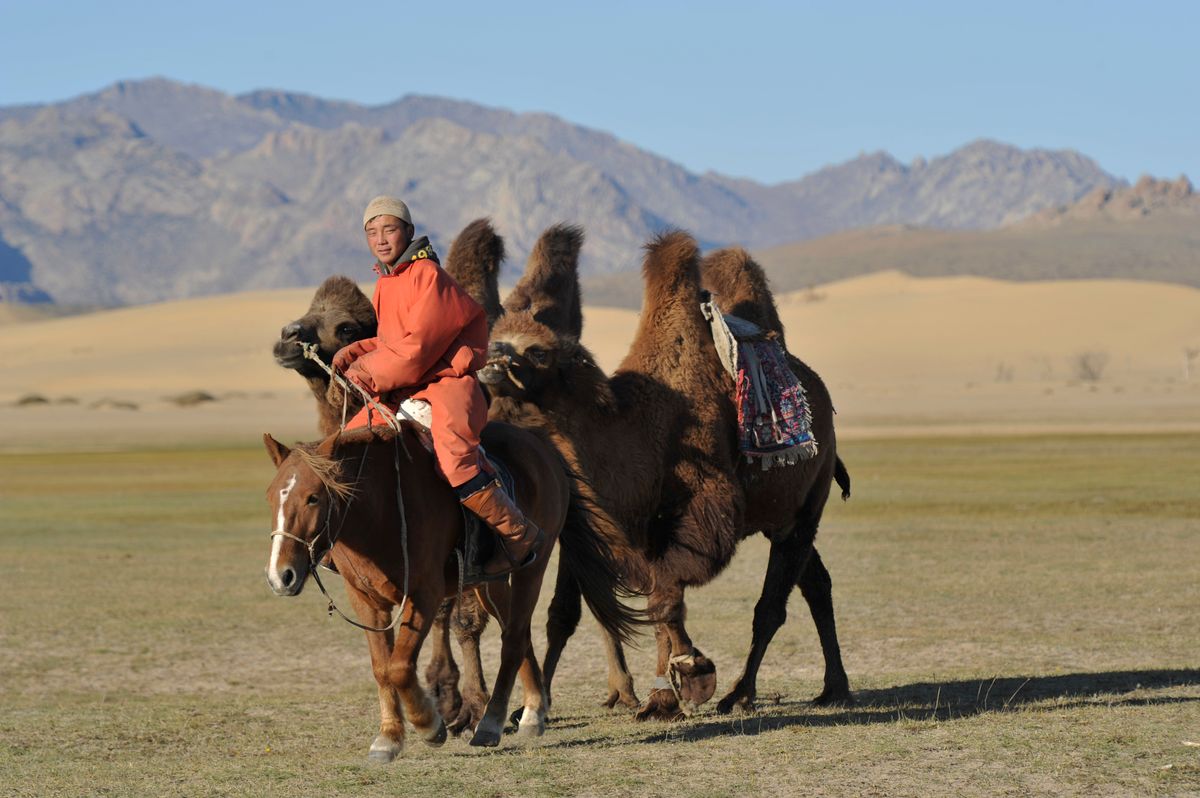
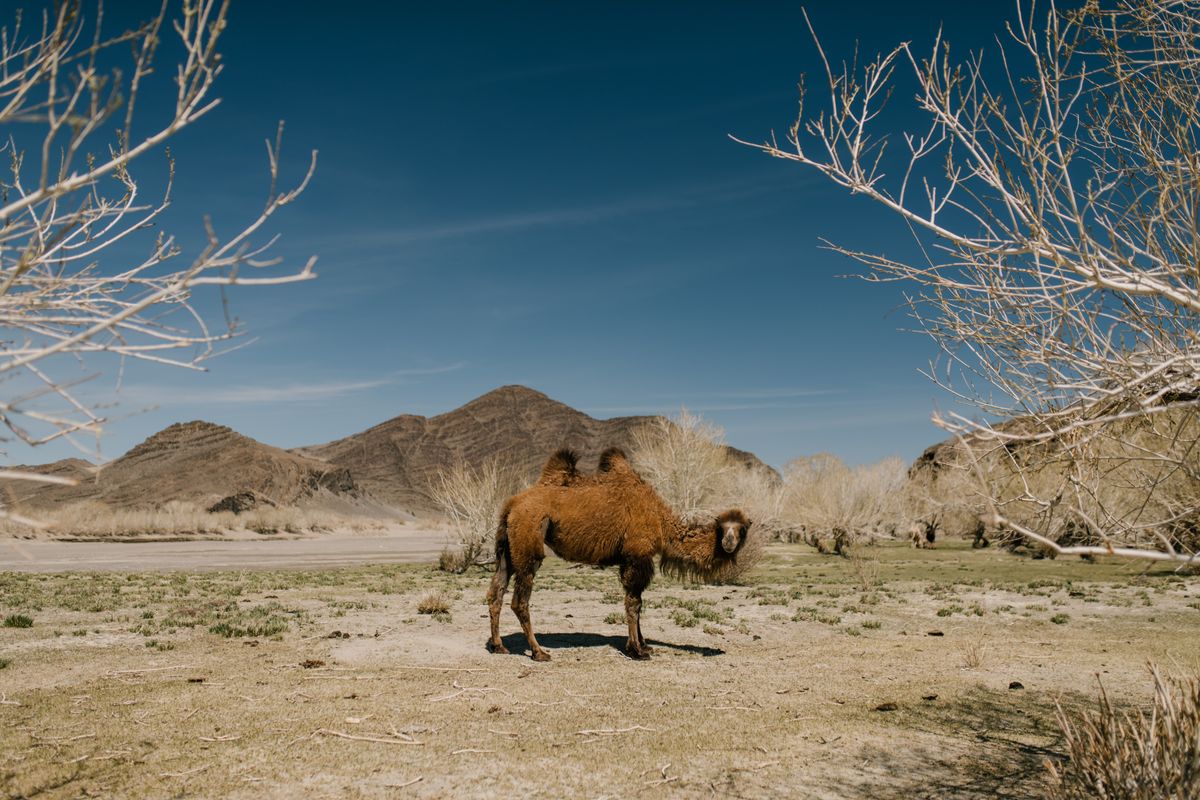
The lead camel folded down onto her front knees before the herder had said a word about loading, and that told me more about the morning than the weather report I'd checked twice on my phone. A Bactrian camel that kneels early and stays down while a stranger circles her with baggage is a camel that has done this a great many times and objects to none of it. Her ears stayed loose, not pinned. Her cud kept working the whole time. I have treated enough spooked, ill-used stock to know what a camel decides to tell you with her ears, and this one had already decided we were fine.
We had six camels in the string, two carrying gear and four carrying nothing but their own good opinion of themselves, and the herder, a man named Tsend who has run this route out of Ömnögovi for eleven years, walked at the head rope rather than riding it. That is its own kind of information. A herder who leads on foot for the first hour is checking gait, not making time, and by the second hour every animal in the string had settled into the same unhurried four-beat walk, necks low, no jostling for position. Nobody was posturing. In eleven years apparently nobody has needed to.
Tsend's wife put down salted milk tea and dried curd before we'd finished unsaddling, and I judged the camp the way I judge any camp, by how the animals behaved around the food rather than how the food tasted to me. The dogs sat. The camels, hobbled nearby, didn't strain the rope once. A place that feeds its animals on a schedule produces animals that aren't hungry enough to make a scene about a stranger's dinner, and that is a better character reference for a household than anything printed in a guidebook.
Diagnosis for day one: nothing here was hungry, nothing here was frightened, and a string that calm at the outset generally stays calm for the rest of the trip.
Day Two: Camels on the Singing Dunes
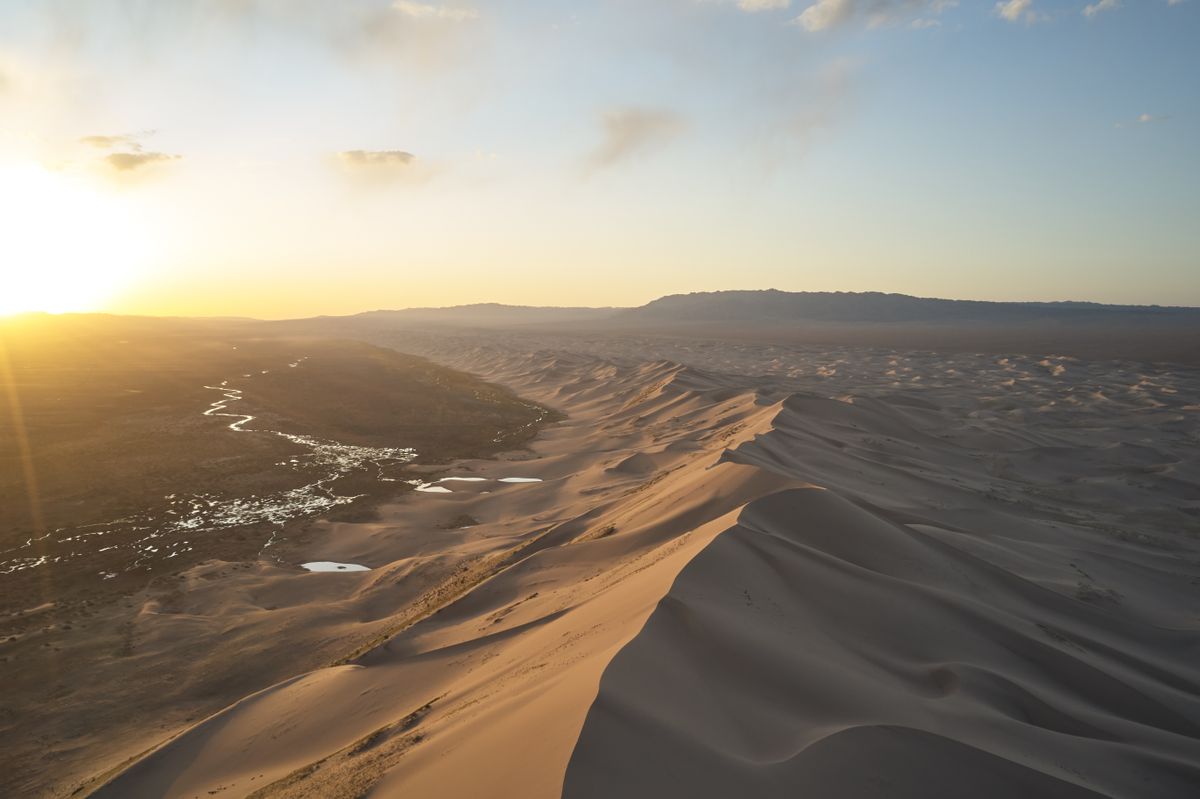
The camels changed their walk the moment the ground changed under them, wide splayed feet spreading further on the soft face of the first dune, necks dropping lower for balance rather than grazing. Nobody had to teach them that. A Bactrian foot is built for exactly this kind of give, and watching one find its footing on a steep slope of loose sand is the closest thing I know to watching a specialist do the one thing they were built to do.
Khongoryn Els run for a long stretch along the southern edge of the range, dunes stacked high enough to lose a rider's silhouette against them, and partway up the second one the wind found an angle it liked and the whole face began to hum, a low sound with no obvious source, the reason locals call this the singing sand. The camels didn't react to it at all, which is its own answer to whether it's alarming. These animals cross a temperature range in a single day that would put most livestock in a clinic, baking by early afternoon and hard frost possible ten hours later, and a sound in the sand is not high on their list of concerns.
At the base of the dunes the Khongoryn Gol cuts a green ribbon through all that orange, and the string drank there in an order I've come to expect from working animals, oldest first, no shoving, the younger ones waiting their turn at the bank without being told. Herd order like that isn't taught in an afternoon. It's the residue of years of nobody needing to fight for water.
A tour group from a different camp arrived at the same overlook while we watered the camels, twelve of them off one van, and they did the thing I have seen exactly this many tourists do at exactly this kind of view, which is bunch up tight at the crest, jostle for the same six feet of railing-less sand, and go quiet and wary the second the person next to them moved first. It is, without exaggeration, the identical behaviour of a herd bunching at a narrow watering point when one animal startles, except a spooked horse has better reasons and recovers faster.
Diagnosis for day two: the dunes sing, the river runs cold and green under all that heat, and the only herd that spooked today walked in on two legs.
A spooked horse has better reasons than a tour group and recovers faster.
Day Three: Camels Among the Flaming Cliffs
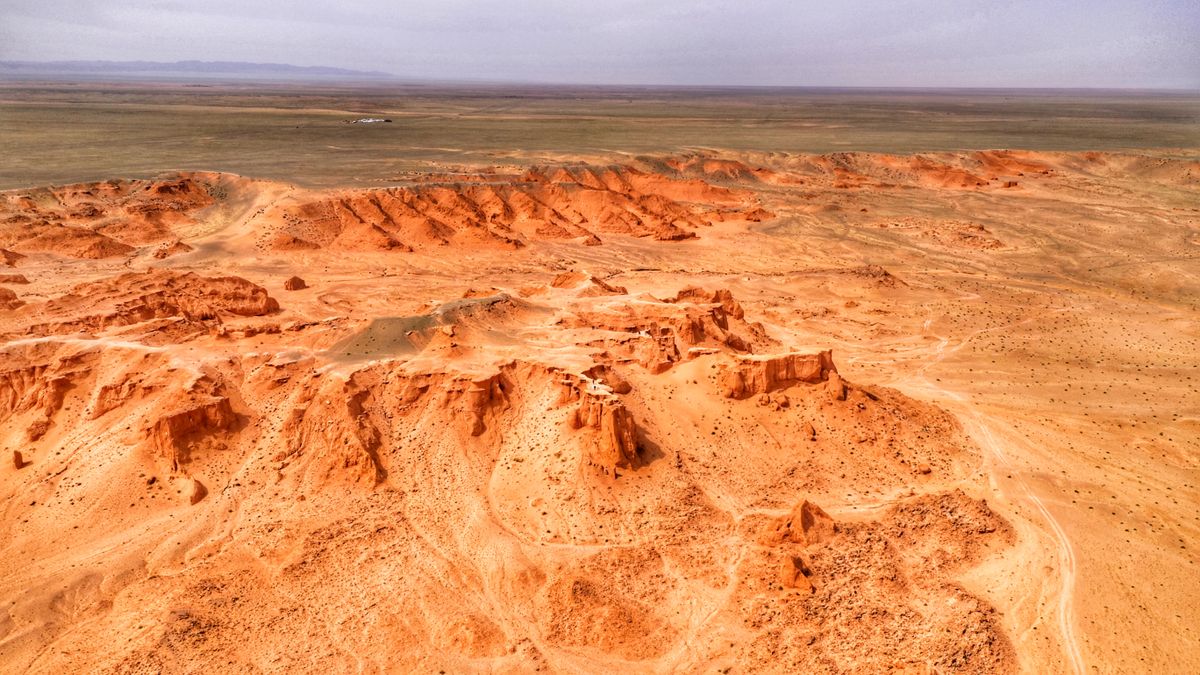
One of the camels balked at the first red outcrop of Bayanzag, not out of fear exactly, more the flat refusal of an animal that has decided the footing looks wrong before a human has bothered to check, and she was right, the scree there shifts underfoot in a way the dune sand never does. I let her pick her own line around it. A vet learns early that an animal's objection to ground is rarely about nerves. It's usually about the ground.
The rock goes the color of a healing bruise in the late sun, red and orange in bands, and it was on this same eroded ground that an American Museum of Natural History expedition under Roy Chapman Andrews found the world's first confirmed dinosaur egg nest, back in nineteen twenty-three. They were looking for early humans and found nests instead, which strikes me as the sort of correction the Gobi hands out regularly to people who arrive certain of what they'll find.
Decades later, in nineteen seventy-one, diggers working the same formation uncovered two animals locked together exactly as they died, a Protoceratops and a Velociraptor mid-combat, buried mid-argument by a collapsing dune. I think about that pair more than I probably should out here, two animals so committed to a dispute that a sandslide couldn't separate them. Every camel in our string would have simply walked away from that argument, which is either a comment on dinosaurs or a comment on camels, and I know which one I'd put my money on.
Herders still run camel strings across this exact formation, the same red ground the egg nest came out of, and the animals working it today are judged the way animals have always been judged out here, by coat, by gait, by whether they flinch at a stranger's hand near the girth. A camel with a matted, patchy coat and a wide-eyed refusal to be touched belongs to someone who hasn't been minding it, dinosaur bones or no dinosaur bones underfoot. Ours, coats still glossy going into the cliffs at the end of a three-day trek, told me plainly enough whose hands they'd been in.
Herd report
Watch the ears before the itinerary: a camel with loose, unpinned ears at loading time is telling you the truth about the operator.
Pack for the swing, not the season: Gobi days can run from baking to hard frost inside twelve hours.
Let the animal pick the line on scree near Bayanzag; a camel's refusal there is information, not stubbornness.
Drink where the herd drinks: the Khongoryn Gol oasis at the dune base is the reliable water on this route.
Final diagnosis: three days, six camels, and not one of them gave me a single genuine worry, which out here, cliffs full of old bones and all, is the best report a vet could ask for. ■