In the Orkhon Valley, the Horses Set the Itinerary

Days One and Two: The Horses That Already Knew the Trail
The horse flicked one ear back toward the diesel groan of our van before I'd even finished tightening the girth, decided the noise wasn't worth the other ear, and went back to cropping grass. That's the whole temperament test right there, and it took about four seconds.
We'd covered the seven hours from Ulaanbaatar that morning in a shared UAZ-452, the old Soviet van every driver here calls a bread loaf, the pavement giving out somewhere past the town of Lun and the rest of the road running gravel and grass track into Övörkhangai Province. Kharkhorin, the small town built where the old Mongol capital of Karakorum once stood, was still an hour off when I met the horse I'd be riding for the next three days.
My guide, Tsogt, is twenty-six and has been sitting on horses since before he could recite his multiplication tables, which is a truer credential than any brochure offers. Sixty thousand MNT a day gets you the horse, the saddle, and Tsogt's undivided, occasionally amused attention while you remember how a body is supposed to sit on one. Mine remembered slowly.
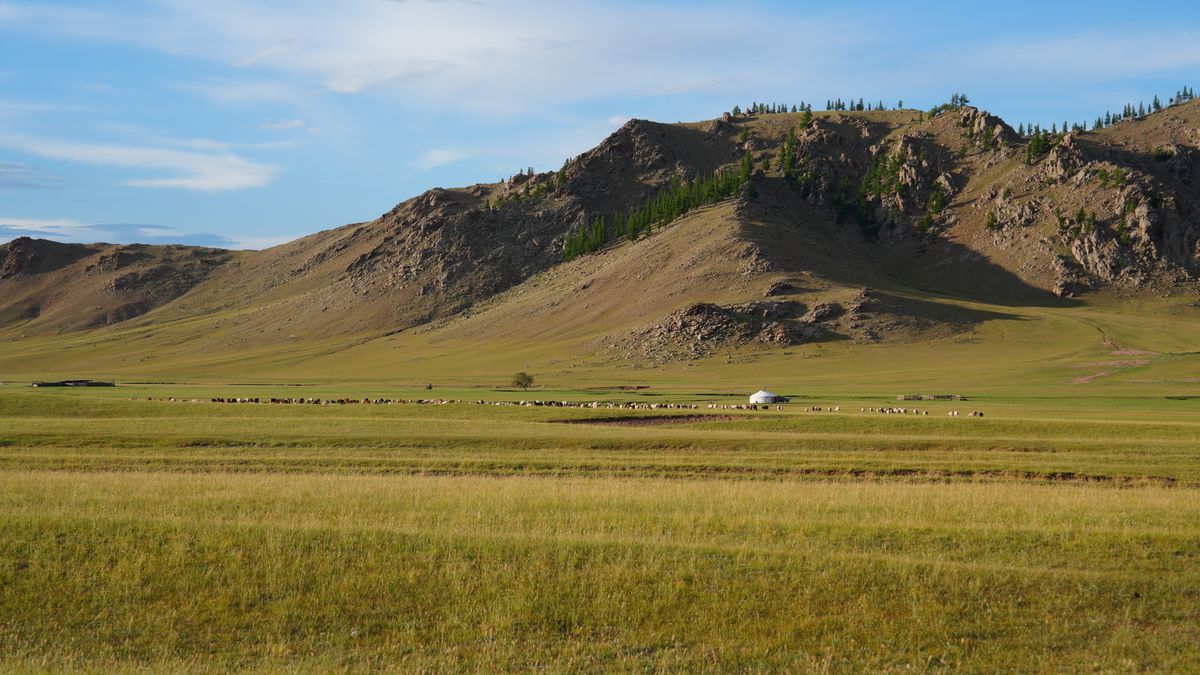
We rode out along a track that shadowed the Orkhon River, Tsogt's horse choosing the driest ground a full stride before I'd have picked it myself, ears working independently like a pair of small radar dishes. Marmot holes are the real hazard on this stretch of steppe, not scenery, and a horse that watches its own feet is worth more out here than one that watches the view. By the time the sun dropped toward the Khangai range we'd covered maybe twenty-five kilometres and made camp near a bend where the water ran slow enough to trust.
Diagnosis for day one: a horse that flicks its ear at a diesel engine and goes back to grazing has seen worse than us, and a valley that raises horses like that isn't worried about its visitors.
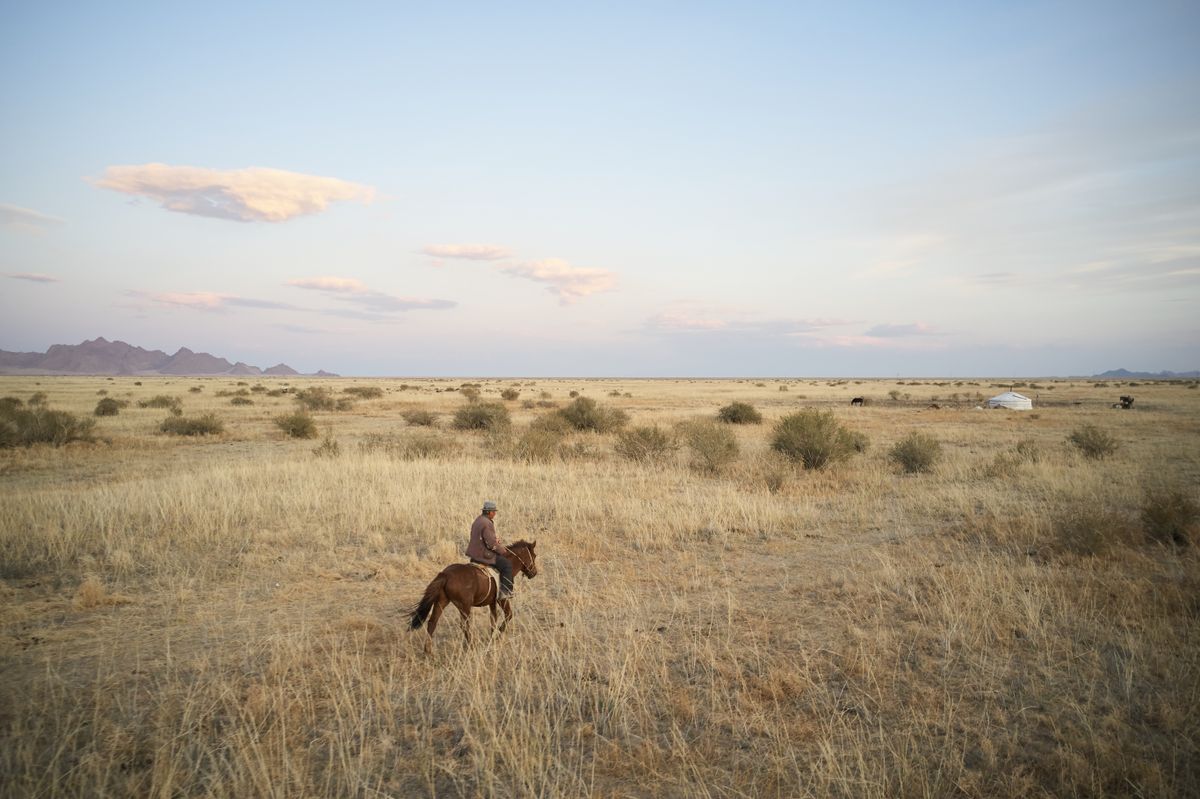
Day Three: The Goats at Milking Hour
The goats started complaining about the cold at half past five, well before any human in the ger had formed an opinion on the hour, and Uyanga was out among them with a bucket before I'd worked out which of my boots was which.
We were staying with Uyanga, her husband Baatar (no relation, it's about the most common name in the country), and their two sons. Forty-five thousand MNT bought a bed in the guest ger, dinner, and breakfast, which by Ulaanbaatar hotel math is close to nothing and by any fair math is a family opening their home to a vet from a country they'd never heard of before this week.
I judge a household by how its animals behave around strangers, and this one passed easily. The family dog, a rough-coated mutt I never learned a name for, greeted me by ignoring me completely, which in a working dog is close to a clean bill of health. Dinner was khorkhog, mutton and potatoes cooked with fire-hot stones dropped straight into the pot, washed down with airag poured from a wooden barrel that had clearly served a hundred travelers before me.
Diagnosis for day three: any home where the animals aren't nervous is a home worth trusting, and I'd trust this one with a sick horse, which from me is the highest compliment on the menu.
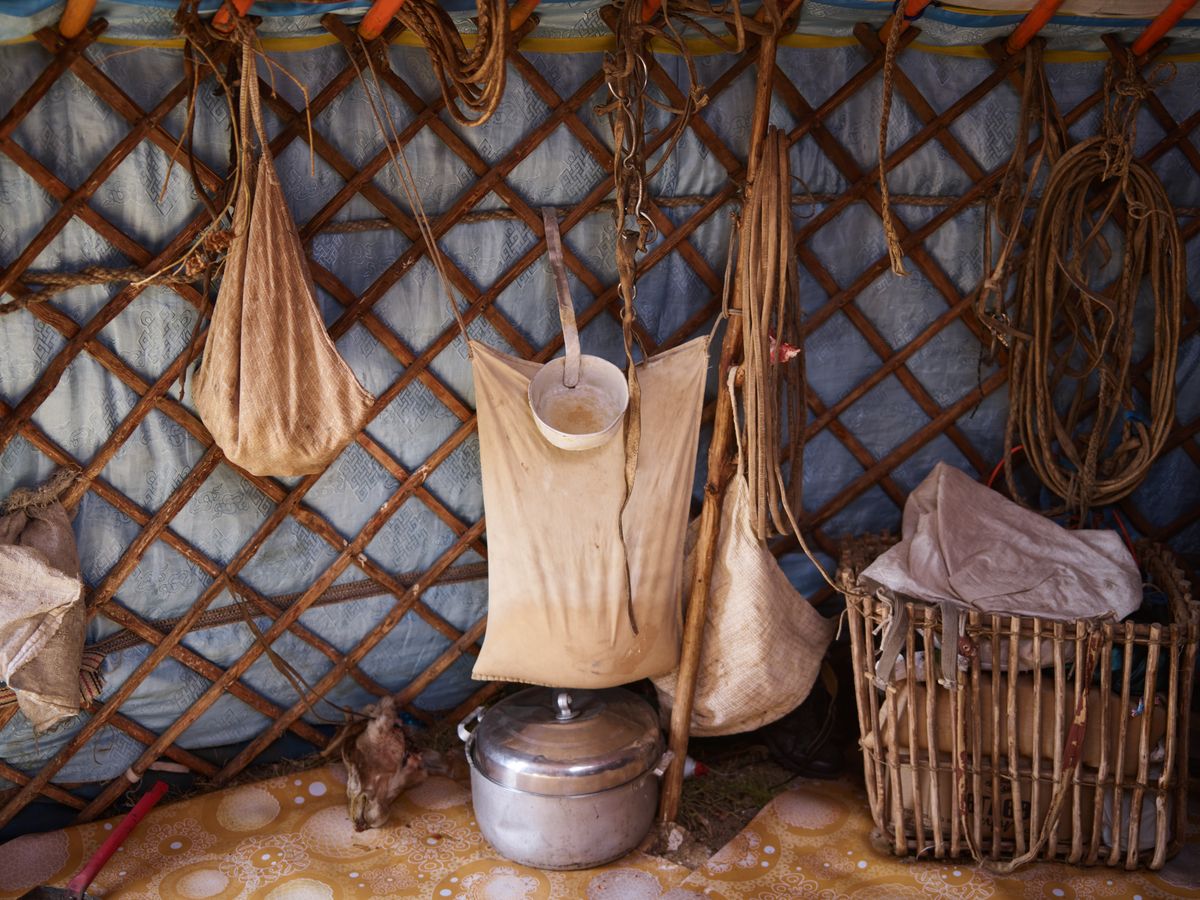
A ger holds a family, its animals' whole inventory, and no wasted space for anything else.
Day Four: The Dogs Who Guard a Dead City
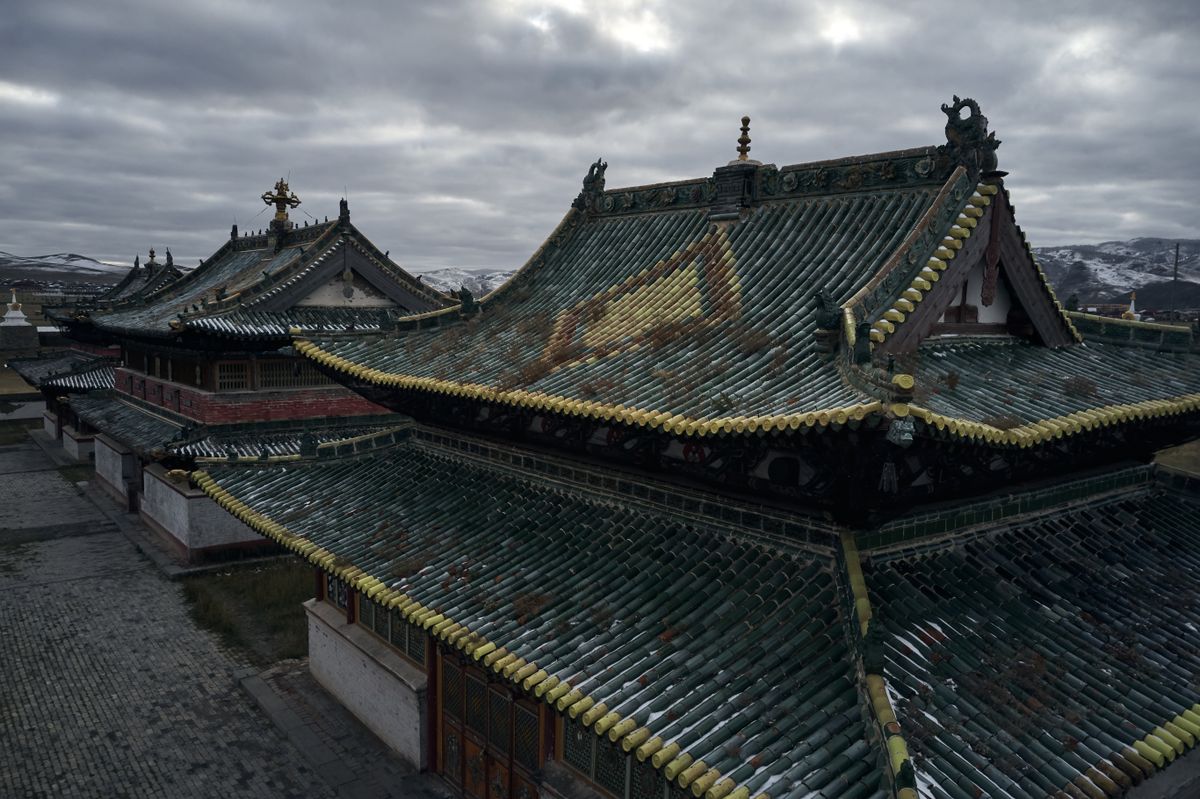
Two dogs were asleep in the shade of Erdene Zuu's outer wall when we arrived, unbothered by the tour buses idling twenty metres off, and I trusted that more than I trusted the sky, which couldn't decide on rain.
Karakorum was the Mongol capital under Ögedei Khan in the 1220s, and almost nothing of it stands above ground today. When the city fell out of use, local monks quarried its stones to build Erdene Zuu Monastery in 1586, so what you're looking at is a sixteenth-century Buddhist compound built from the bones of a thirteenth-century one. The monastery's outer wall carries 108 stupas, one for each bead on a Buddhist rosary, and I counted maybe a third of them before losing track watching a temple cat ignore all of us with total professional indifference.
The entrance gate had backed up into the kind of scrum you get at a watering hole at midday, everybody wanting through at once and nobody willing to go first. I stood at the back working out which tour group was the dominant herd and which was just waiting its turn. Once inside, the crowd thinned out fast, because most of a herd doesn't actually want to be wherever it's going, it just doesn't want to be left behind.
Diagnosis for day four: a monastery built from a dead city's leftover stone, guarded by two dogs who couldn't be bothered to open an eye, is in no danger of forgetting what it's for.
Five days, Orkhon Valley, in MNT
Day Five: Two Hundred Horses Deciding Where to Go
The herd came over the ridge above the Orkhon River at a dead run not long after sunrise, no rider driving them, just two hundred-odd horses that had decided among themselves it was time to move to new grass. The ground carried the sound of it before I saw a single one.
Herd report
Approach any horse in the valley from the front left and let it see your hands before you touch it. A horse that can't see you coming will read you as a threat, and it won't be wrong to answer with a hoof. Inside a ger, don't step on the wooden threshold, step over it. Both rules exist for the same reason: you're a guest in someone else's territory, whether that someone has four legs or two.
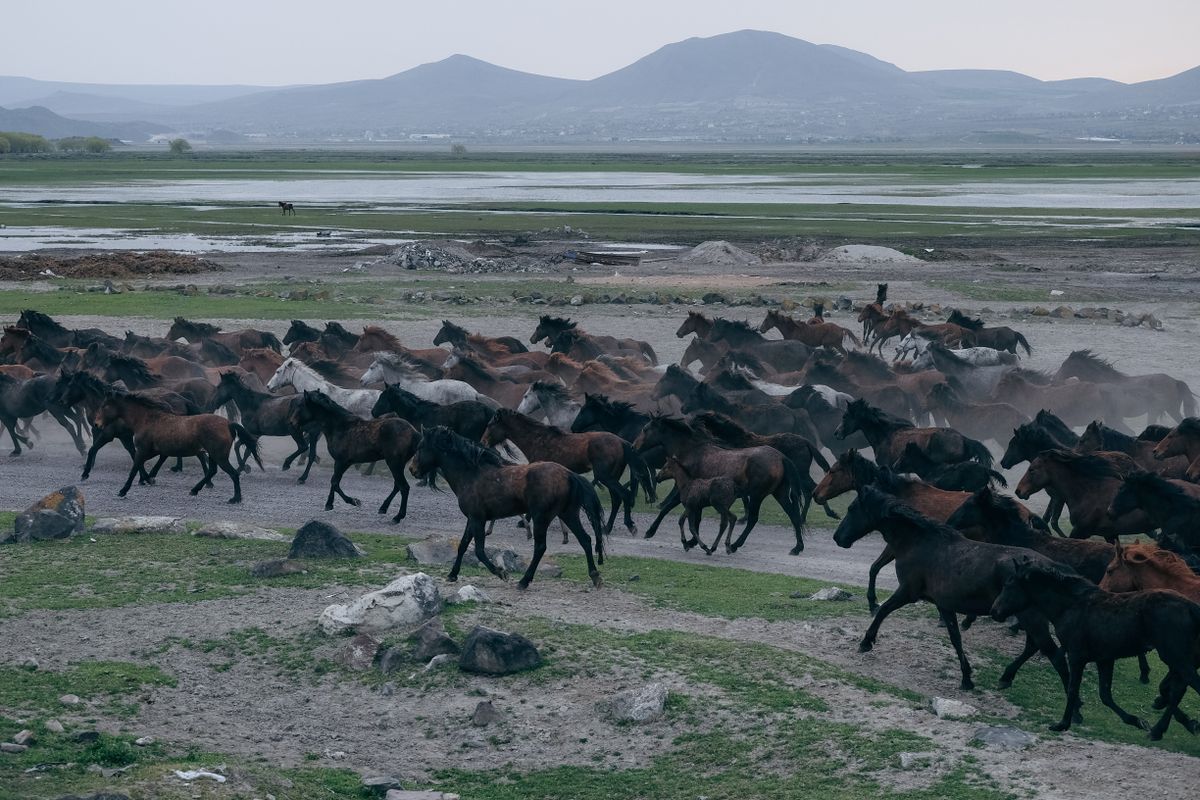
Tsogt said the lead mare in that herd had been making that call for three years running, and nobody argues with her, not the stallion, not the family that owns half of them. Watching two hundred animals decide something together and get it right, with no vet in the building, did something to me after a career spent deciding what's wrong with animals for a living. No tidy thought arrived to close it with. Tsogt mentioned the ger frame needed packing before the wind picked up, so I went and did that instead.
Diagnosis for day five, and for the trip: a herd that can run itself well doesn't need me, and neither, it turns out, did this valley. ■