The Layover Tier List: Four Airports, Filed From the Departure Board
Four airports where I sat out real delays, ranked from Singapore Changi down to Amsterdam Schiphol by what each did for me between gate and boarding.

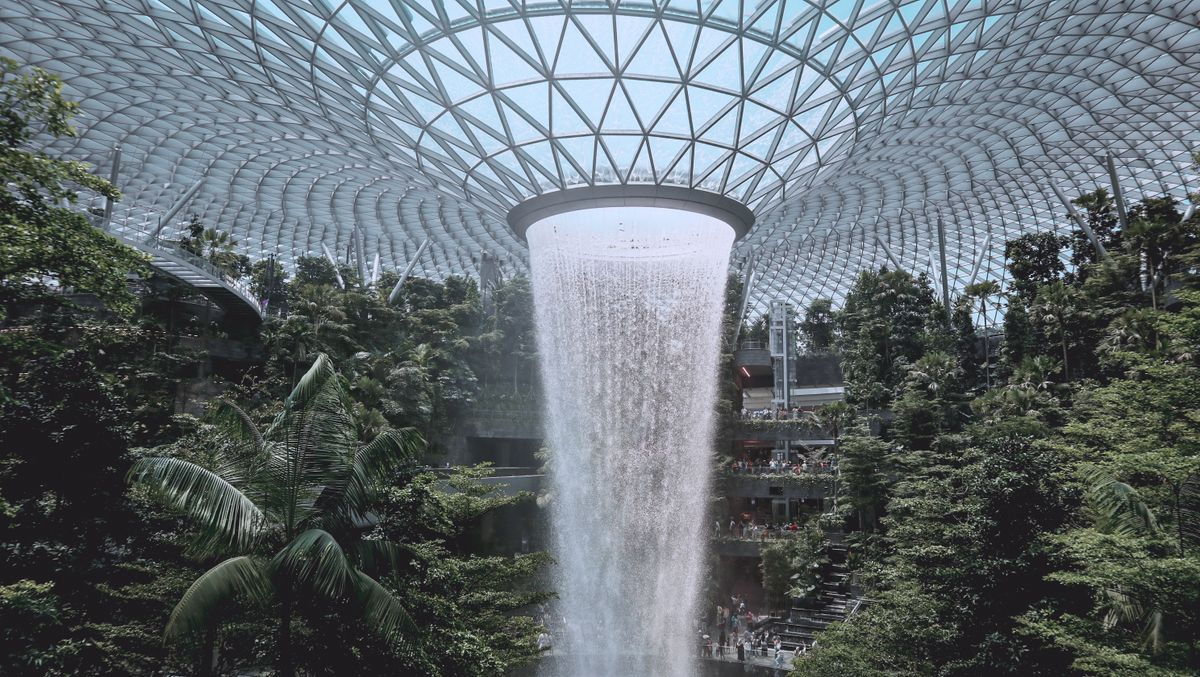
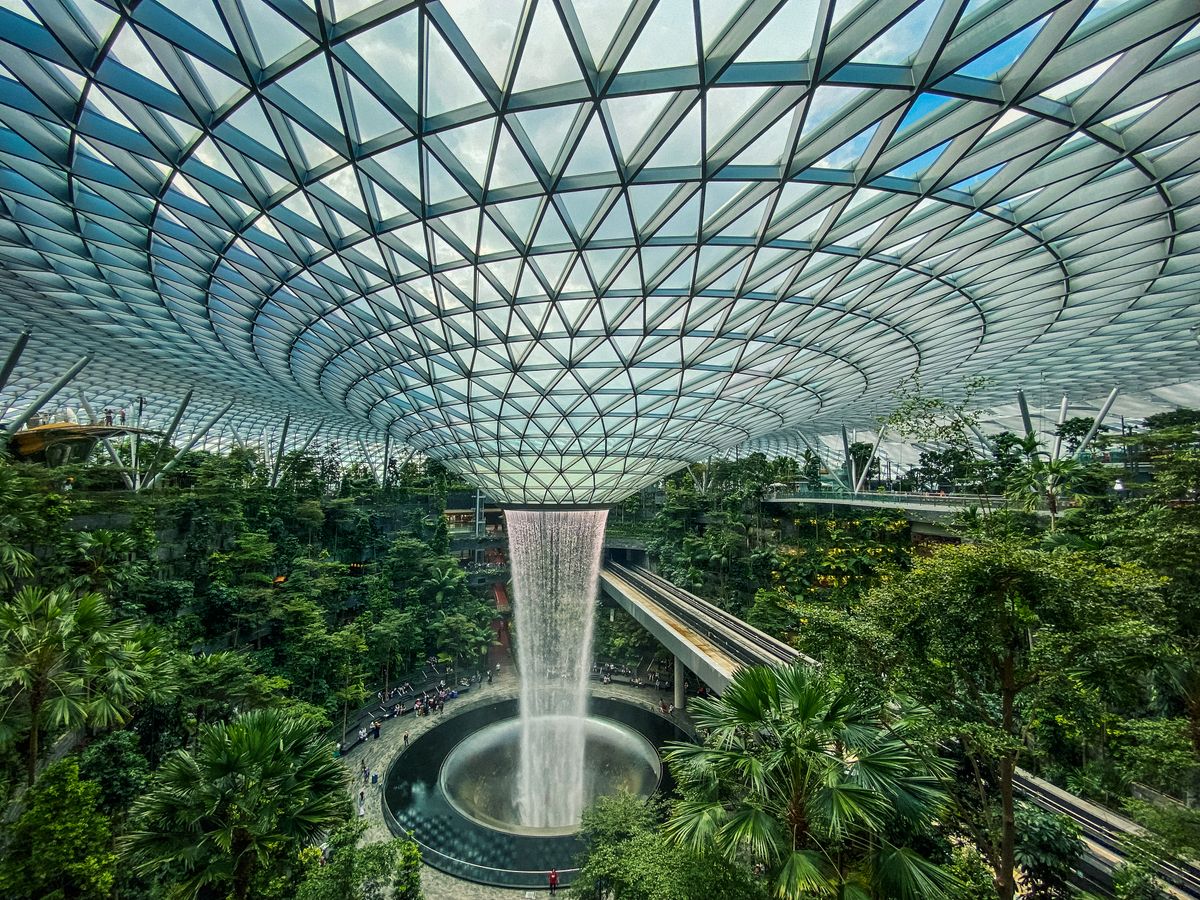
The Rain Vortex, the indoor waterfall at Singapore's Changi Airport, drops 40 metres through an opening in a glass dome, and the first time I stood under it my connection to Auckland had already been cancelled once and delayed twice. That trip is where this ranking started, because a delay shows you how an airport looks after people once the schedule falls apart.
Each of the four airports below held me through a real delay. The test is what the terminal did for me between a gate change and a boarding call, and what it cost to wait well instead of badly.
S-Tier: Singapore Changi, the Layover That Ruined the Rest
My connection stretched from eight hours to eleven, and I spent most of them under that waterfall answering emails on a bench with better wifi than my flat in Beirut. Jewel, the glass-domed garden and shopping complex around the falls, opened in April 2019 on the public side of the airport next to Terminal 1, so reaching it meant clearing Singapore immigration, and clearing it again on the way back to my gate. It's the only airport on this list where a delay felt like an upgrade.
The light and music show on the waterfall runs at 8pm and 9pm on weeknights, with a third at 10pm from Friday to Sunday. I booked a block in a YOTELAIR cabin on Jewel's fourth level, where four hours is the shortest stay on offer, and it's the only nap pod I'd pay for twice; the mattress was firmer than my bed at home and the door locked.
Changi also runs a free 2.5-hour guided city tour for transit passengers, with registration booths in the Terminal 2 and Terminal 3 transit halls. It needs a layover of 5.5 to 24 hours, bags checked through to your final stop and a passport that lets you into Singapore; my eleven hours qualified, but I'd already given the day to the dome.
What Changi Costs on a Layover
To stand under the waterfall, you clear Singapore immigration first.
A-Tier: Madrid Barajas Terminal 4, Almost Perfect
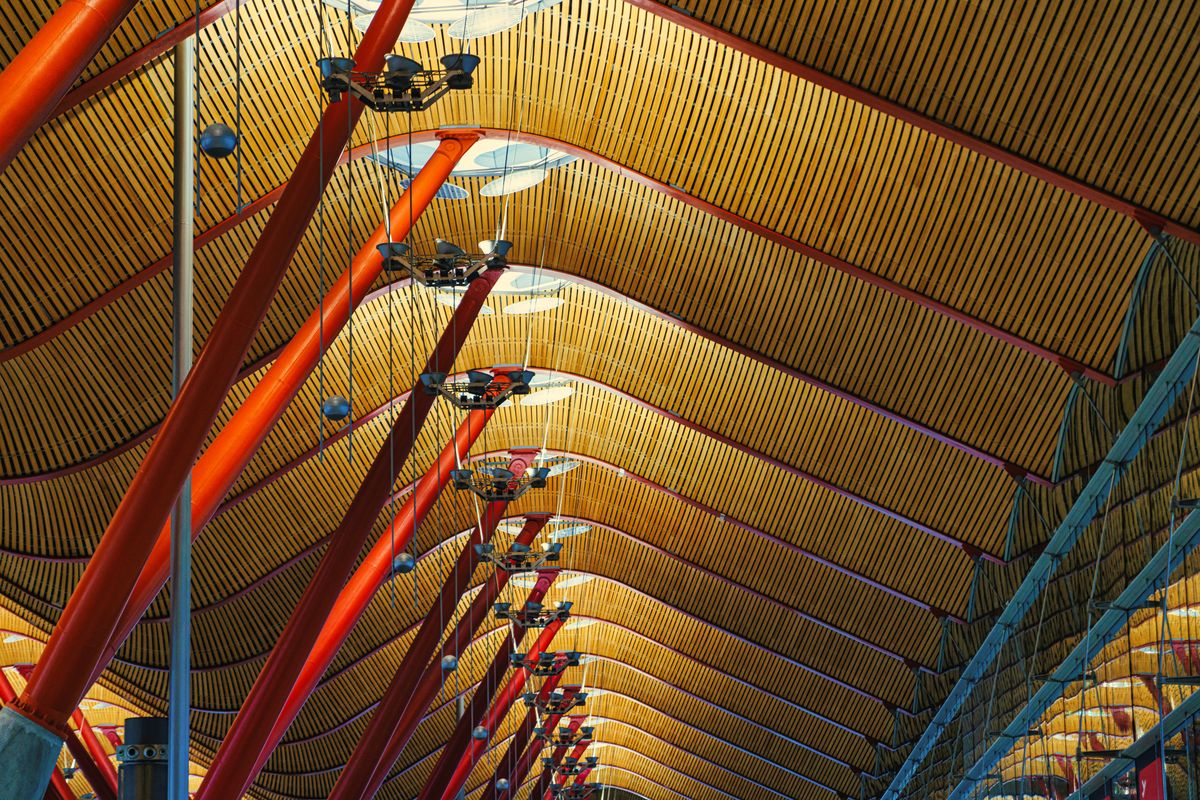
Terminal 4 at Madrid's Barajas airport paints its steel support columns in a graduated scale along the building, blue at the north end, yellow in the middle and red at the south, and a five-hour layover in 2023 was the first time I noticed a terminal using colour as a map, so you can tell where you are without reading a sign. The wave-shaped roof overhead is lined with strips of laminated bamboo.
Guidebook shorthand credits Barajas to Richard Rogers alone. The terminal was a joint design: Richard Rogers Partnership won the 1997 competition together with Estudio Lamela, a Madrid architecture firm, and I correct the solo-genius version every time I hear it. At the wine bar past security I had a glass of Ribera del Duero, a red from the Duero valley north of Madrid, and then a second before boarding.
What keeps Barajas out of the top tier is the trip to T4S, the satellite building that handles non-Schengen flights, which sits about 2 km away and is reached by a driverless underground train. Passport control waits at the other end, and the one time I cut a connection close it cost me forty minutes with no fast lane worth the name.
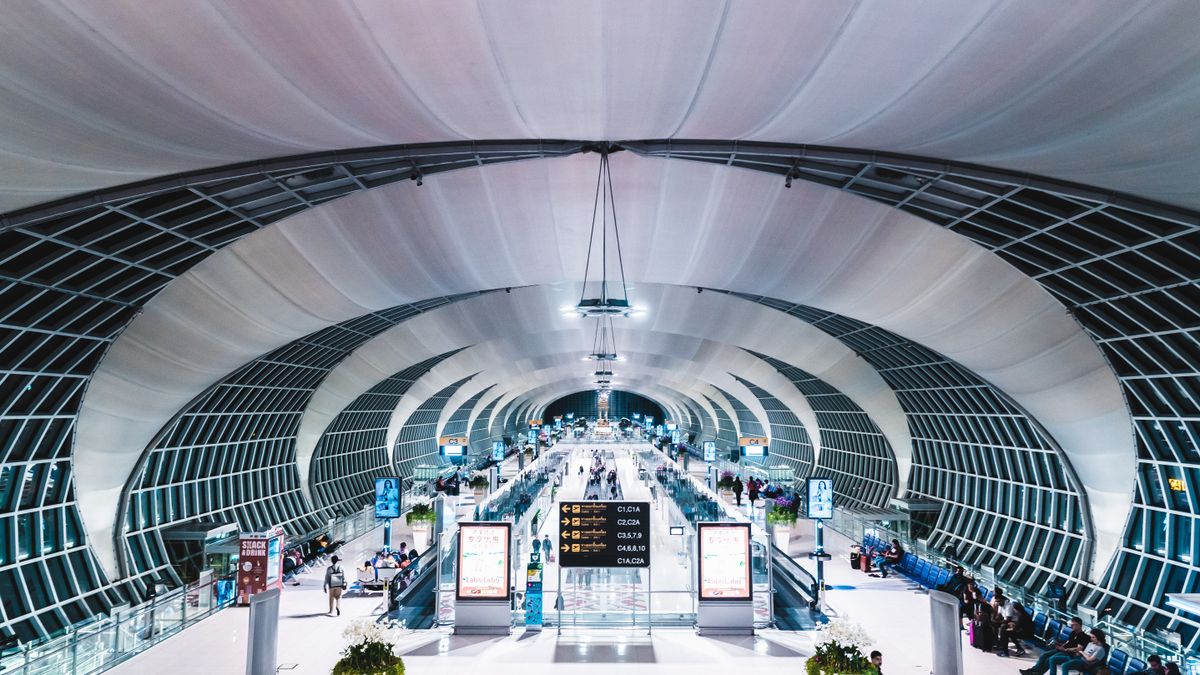
B-Tier: Bangkok Suvarnabhumi, Good Bones, Bad Queues
At the foot-massage stalls in Suvarnabhumi, Bangkok's main international airport, a woman two chairs down from me fell asleep mid-treatment during a delay in 2022, and the masseuse kept working without a pause. The airport opened in September 2006, years behind its original schedule, and its airside concourses give a stalled schedule plenty to do; the trouble starts when you try to leave.
Suvarnabhumi is Sanskrit for 'golden land', a name King Bhumibol chose for the airport. Before that, the project went by Nong Ngu Hao, after the cobra swamp the runways were built over.
The immigration hall is what holds Suvarnabhumi at B. The one time I left the airport on a long layover, the arrivals queue took forty-five minutes, and the departures queue on the way back in was no shorter.
Staying Airside at Suvarnabhumi
If your onward flight is already checked in, follow the transfer signs to the transfer security checkpoint and go straight to your gate; you never join an immigration queue. Leave the airport only on a layover long enough to absorb the arrivals queue going out and the departures queue coming back.
F-Tier: Amsterdam Schiphol, the One I Now Route Around
In June 2022 the security queues at Schiphol, Amsterdam's international airport, ran out of the terminal and along the pavement outside, after the airport ran short of security staff. The milder version I sat through later that summer still left me in a security line backed up into the check-in hall, and a two-hour buffer before my flight out turned into a real question of whether I'd make the gate.
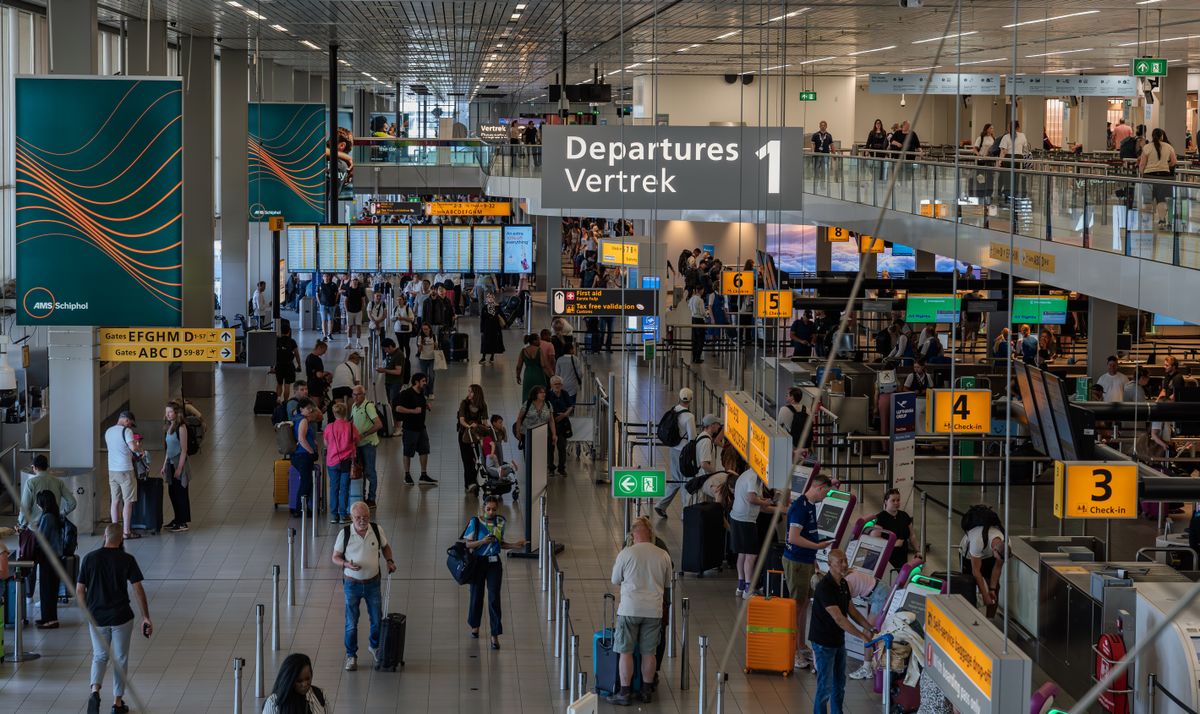
Tourists usually hear that Schiphol means 'ship hell', after the ships wrecked in the Haarlemmermeer, the inland lake that was drained to make the land the airport sits on. Schiphol's own history traces the name to a 15th-century word for a marshy patch where people went to gather wood, no drowned navy required. KLM's minimum connection time there is 50 minutes for non-Schengen flights, which assumes queues that behave; the ones I stood in that summer did not.
Standing in that line got me no insight into crowd management, only a missed lounge booking and a bag of vending-machine stroopwafels, thin Dutch waffles glued together with caramel syrup, eaten at the gate. I now book connections through Madrid or Singapore whenever the fare lets me. ■