A Street-Cook's Verdict on Kerala's Monsoon Backwaters

The smell reaches the jetty before the boat does. Coconut oil going smoky in a flat iron pan, mustard seeds cracking like they're offended by the heat, curry leaves dropped in a beat later so they blister instead of burn. I'm standing in Alappuzha in the middle of a June downpour, sandals already ruined, watching a woman on a moored kettuvallam start a fish curry I'm going to judge against thirty years of running my own cart. She has no idea. That's how I like it.
Rain on a Rice Barge, Coconut on the Fire
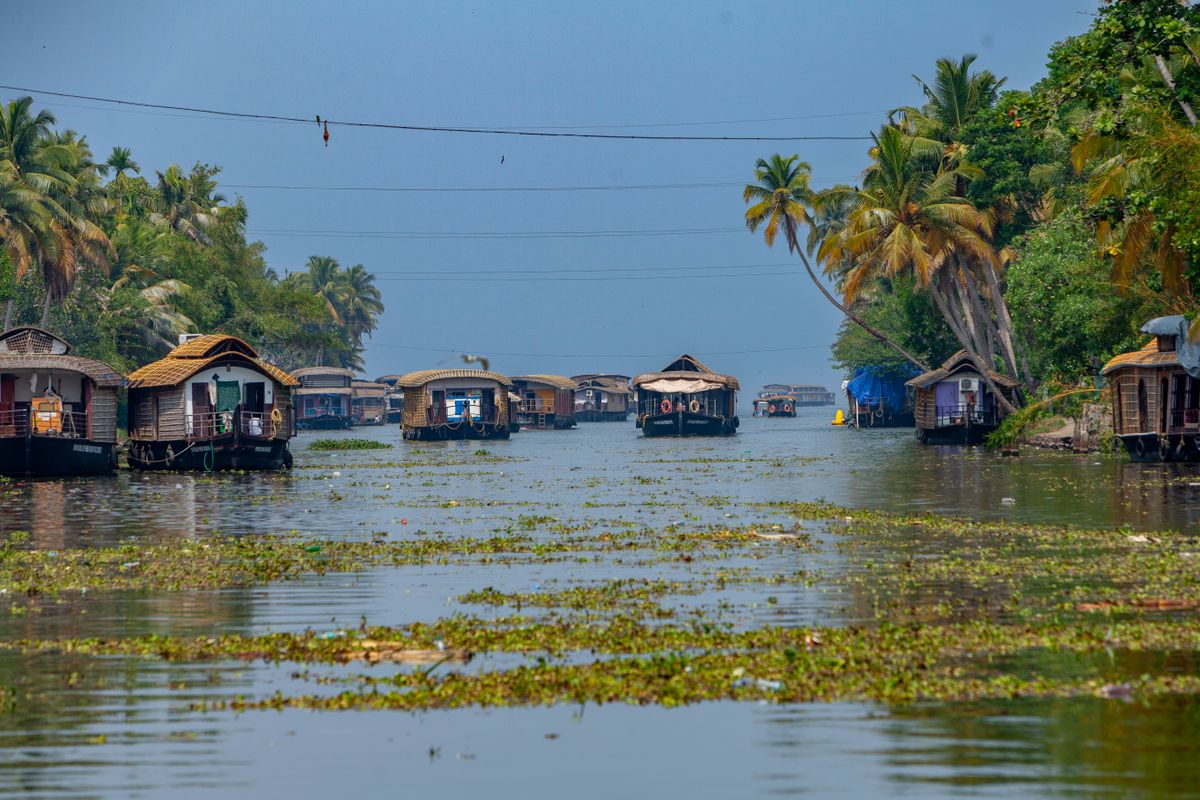
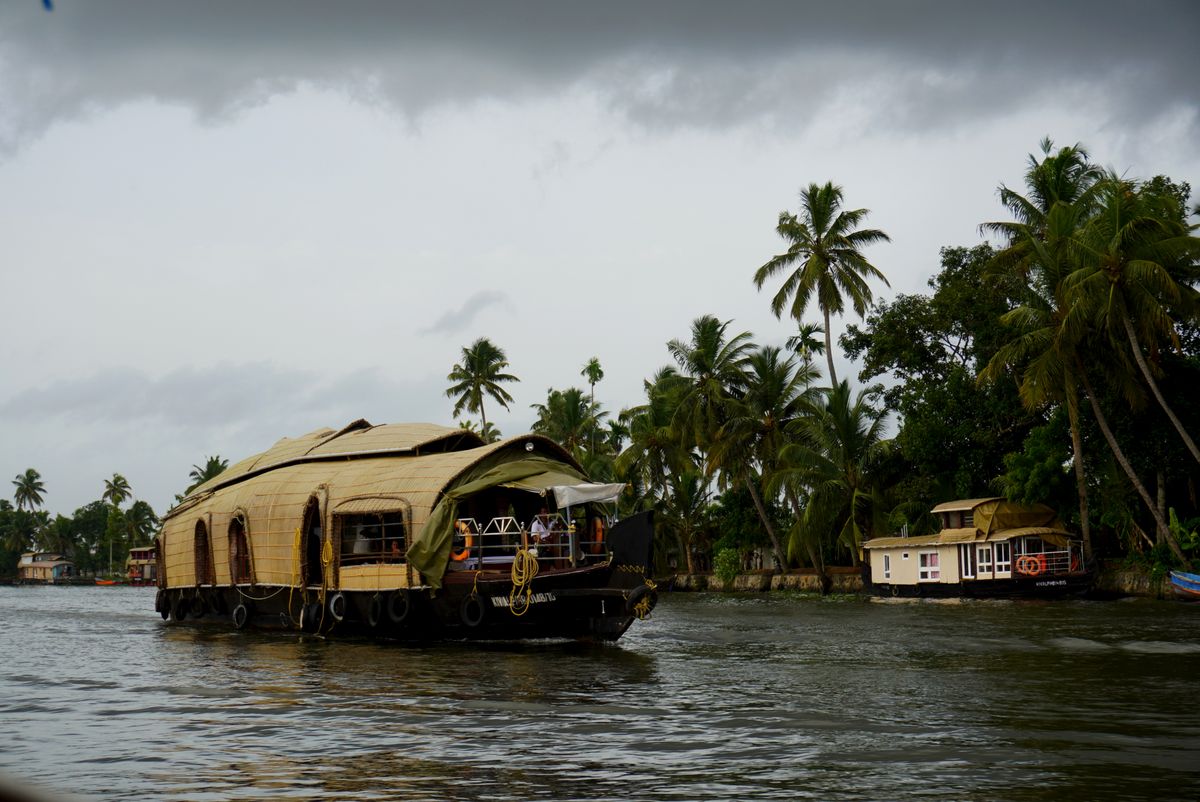
Kettuvallam means boat tied with knots, and it shows. No nails in the hull, just anjili wood planks lashed to arched ribs with coir rope, the whole thing sealed with a resin boiled down from cashew shells until it doesn't leak a drop, though the thatched roof over the kitchen leaks in three places and everyone on board has made peace with it. These boats hauled rice and coconut husk up and down the backwaters for a couple of centuries before someone worked out tourists would pay more for the ride than any rice merchant ever did. The kitchen is a plank at the stern, one gas ring, a knife that's seen better decades.
The cook, a woman named Sherly who's done this run more monsoons than she'll admit to, works the way I do when the lunch rush is already late. Mustard seed into hot coconut oil first, a lid held over the pan to stop the pops reaching her face, then curry leaf, dried red chilli, sliced shallot. That's the vagharane, the temper, and it's the one move in Kerala cooking I'd steal outright, oil doing the work before anything wet touches the pan, same as my own five-spice going in before the broth. The fish goes in last and gets maybe six minutes, no more, so it holds together instead of falling apart into the gravy. Coconut milk comes in only after the pan is off the heat, because on the boil it splits, and once it splits there's no fixing it, only hiding it under more coconut.
Sherly's souring agent is kudampuli, a black, smoked rind that goes into the pot whole and comes out tasting like something between tamarind and an ashtray, in a good way. My own broth doesn't sour, it just gets bitter herbs and time. Hers is faster and sharper. I'd cook this at the cart if I could get kudampuli shipped to Vietnam without it costing more than the fish. Nine out of ten, and the tenth point is only missing because the rain got into the rice.
Off the heat, or it splits, and once it splits there's no fixing it.
Kuttanad's Narrow Water, Slow as a Simmer
Past the main channel the backwaters narrow into Kuttanad, canals barely wider than the canoe punting me through them, palm leaves close enough on both sides to touch. The paddy fields here sit lower than the water beside them, which means somebody is always bailing, always pumping, always losing a slow argument with the monsoon. Ducks move through the shallows in a loose column, a boy behind them with a long pole doing nothing I could see except being present. Every house along the bank has a step down to the water and a woman doing something at it, washing, scaling fish, rinsing rice.
A stall no bigger than a market cart is frying kappa chips over charcoal, the smell sharp and starchy, cassava sliced thin enough to see light through it before it goes into oil already dark from the day's work. I ask for the other kappa, the mashed kind, and get a bowl of boiled tapioca pounded rough with raw coconut, green chilli, and a shallot temper stirred through at the end so it stays crunchy instead of going soft in the mash. It isn't smooth, and it isn't meant to be. The boil marks are still in it.
My cart does a version with fried cassava chips and nothing else, because Hanoi doesn't grow the kind of coconut you can grate raw and fresh the way they do here. This mash beats mine, and I don't say that about food twice in one trip. I'd cook it if I had a coconut scraper like the one bolted to the stall owner's bench, a metal star on a stick you straddle like a low stool. Mine would need a blender and would taste like a blender.
A Toddy Shop's Fish Curry, No Menu, No Apology
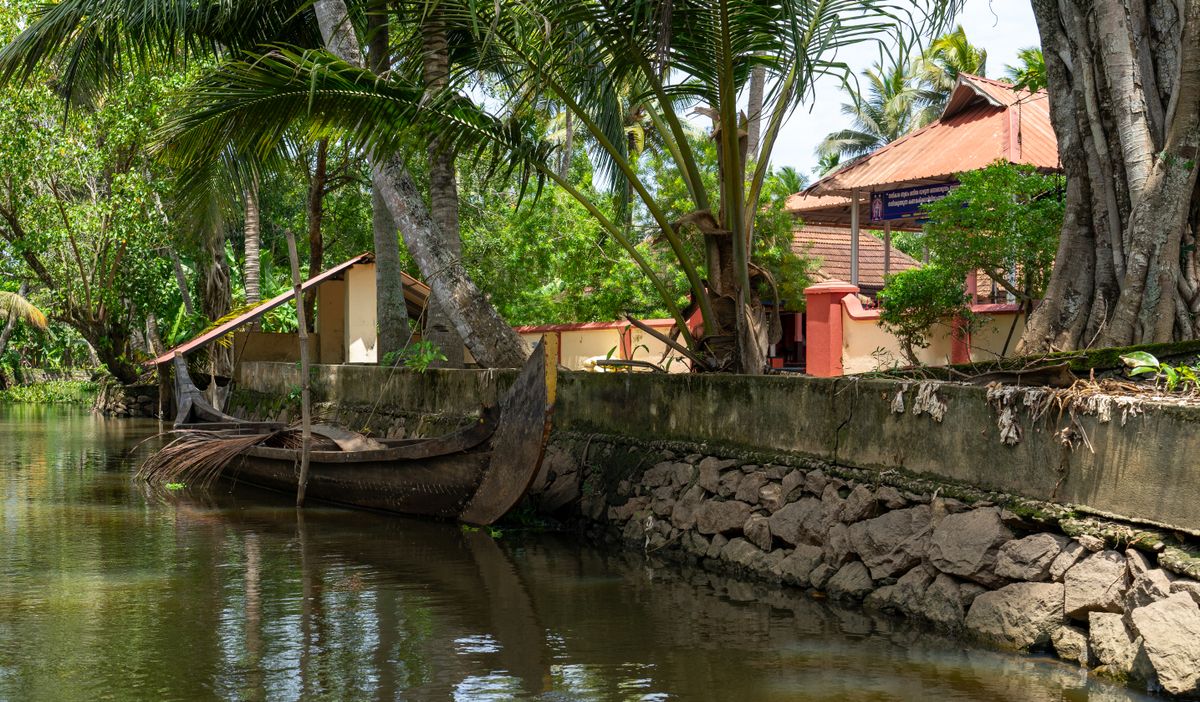
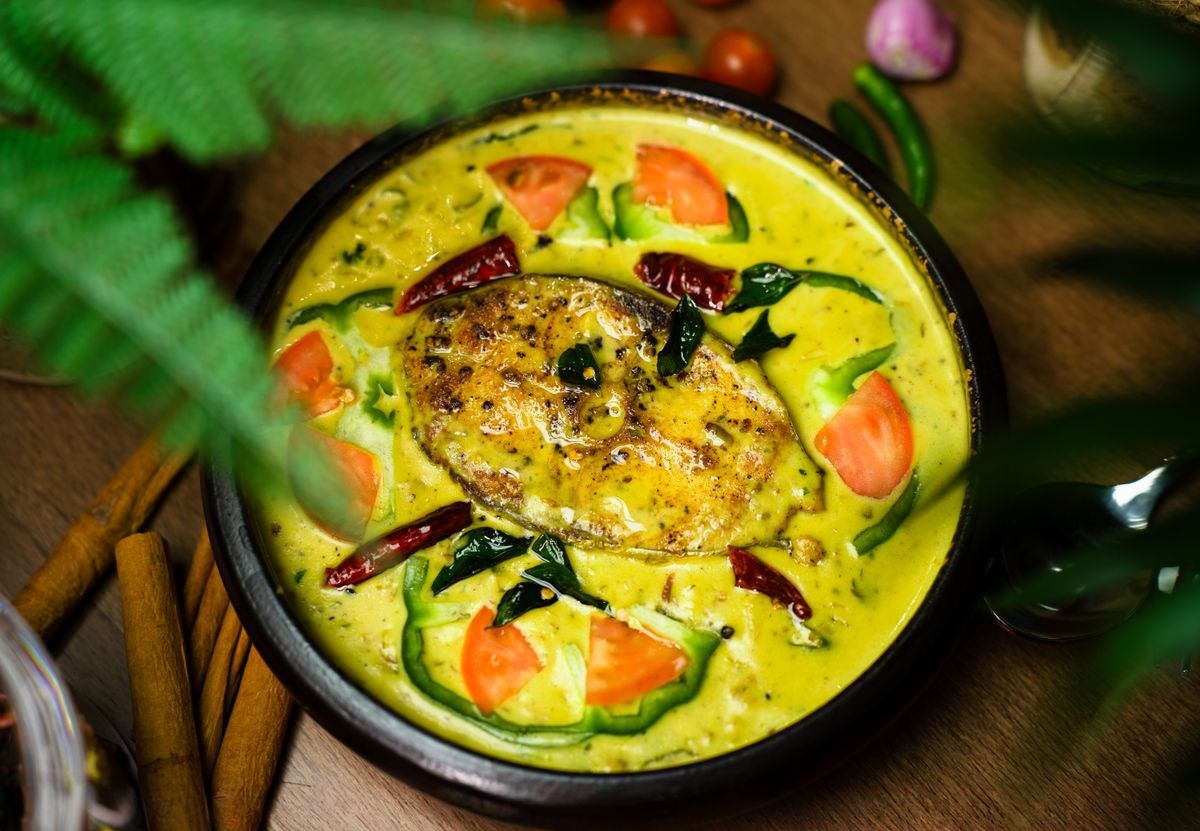
Toddy shops don't post a menu because there's usually one curry and it's whatever fish came in at dawn. The one we stop at outside Alappuzha smells sour before I'm through the door, palm sap gone loose and yeasty in a plastic drum out back, and under that the deeper sour of fish curry that's been resting in a clay pot since morning. Tappers climb the coconut palms twice a day to collect the sap before it ferments past drinking, and by evening what's in the drum is cloudy, faintly sweet, mildly alcoholic, gone if nobody drinks it that day.
The curry's in a manchatti, a wide clay pot that does something to sourness a steel pan won't, holding the heat low and even so the kudampuli has hours instead of minutes to work into the fish. It comes with matta rice, the parboiled red kind that holds its shape against a curry this wet, and a side of green chilli nobody asked for and everybody needs. I eat with my hands because a spoon here would be an insult. My own fish gets a hot pan and four minutes, char on the outside, done before any sourness has time to build. This is the opposite dish, patient where mine is fast, and I'd need a clay pot I have no counter space for to even try it. Eight out of ten. The toddy earns its own two points.
What It Cost
The Spice Stall Where I Did the Sniff Test
Black pepper first, because it's the smell that carries furthest, a stall by the Alappuzha boat jetty with sacks open to the rain under a tarp, peppercorns gone from green to black in some and staying pale in others depending how long they dried. The vendor bites one open to show the oil on his thumb, says the pale ones are milder, picked before they ripened, and charges the same for both since most buyers can't tell by eye. Cardamom pods come next, pale green and papery, cracked open on request to prove they're not empty, which apparently happens enough that people ask.
Monsoon Backwater Notes
June to September is the main backwater monsoon: heavier rain, but lower houseboat rates and quieter canals than the dry-season crowds.
Toddy shops are cash-only and informal. Ask locally for one serving fresh toddy that day rather than stock that's sat too long.
Ask for meen curry made with kudampuli if you want the sour, sharp version. Sweeter versions swap in tamarind instead.
Pack real rain cover, not an umbrella. Houseboat roofs and canoe seats don't keep pace with a proper monsoon downpour.
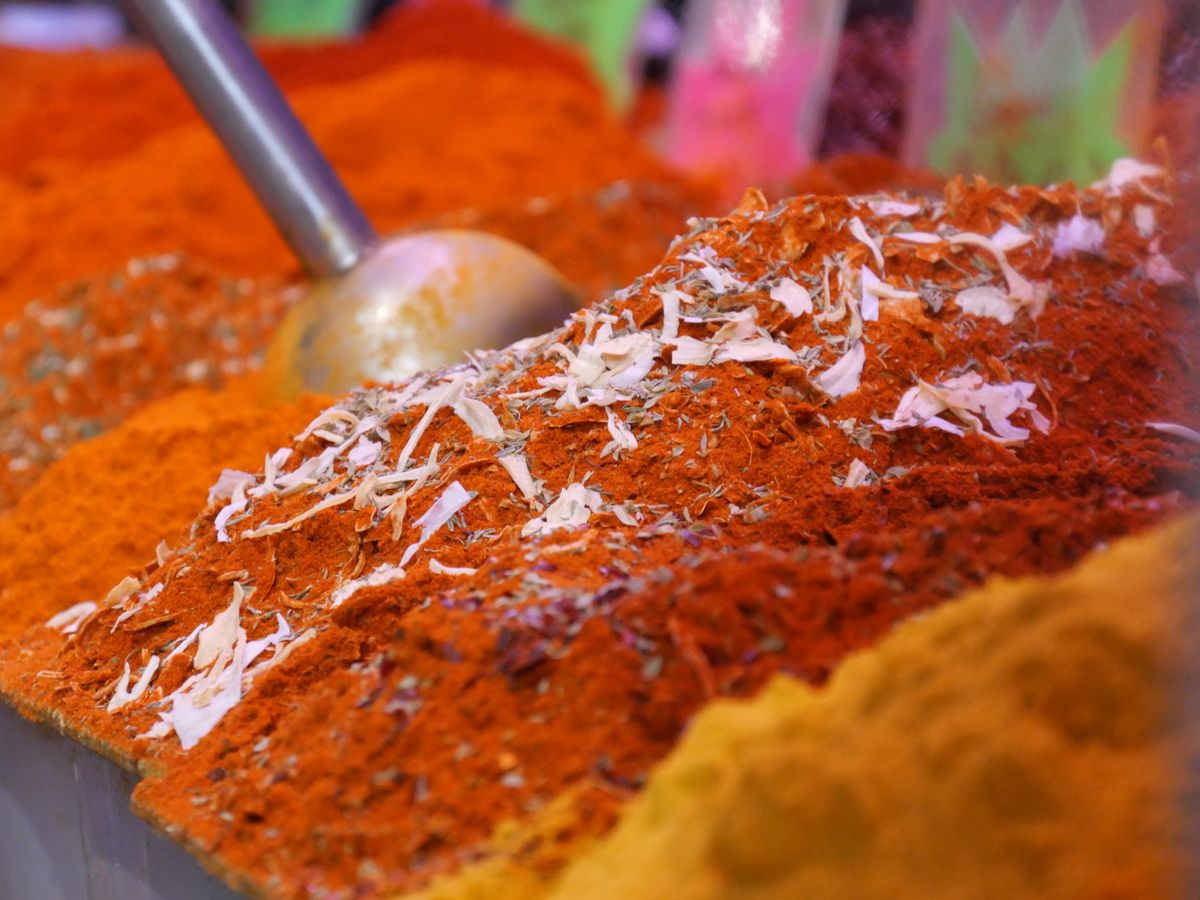
Curry leaf here comes in bunches still on the stem, sold by the fistful, meant to be used within the week before it turns bitter, nothing like the dried version I've seen in jars back home that tastes like nothing at all. My own five-spice is four ingredients ground once a month and kept in a jar for a hundred bowls of broth. Kerala cooking wants its spices fresher than that, whole until the moment they hit hot oil, ground to order if at all. I wouldn't switch my cart over to it, the volume doesn't allow for buying curry leaf by the day, but I bought a bag of the pepper to take home anyway. Some things are worth losing an argument with your own system. ■