Carrying the Gourd Through Rajasthan's Pre-Monsoon Heat
Three desert cities, one thermos, and the same test for who pours and who hoards, run this time against chai instead of mate.
My thermos read about forty degrees by seven in the morning outside a guesthouse in Jaisalmer, already losing its fight with the day before I'd poured a single round, and I filled the gourd anyway because yerba that goes cold slow still beats yerba that goes cold in your hand. I was the only one pouring, same as I'd been every morning since Delhi. Three weeks into Rajasthan's pre-monsoon circuit and nobody had figured out what to do with a woman carrying her own gourd and bombilla into a country that runs on chai instead.
The plan was simple and, I understood by day four, a little stupid: cross the desert circuit during the worst heat of the year, Jaisalmer to the dunes to Bikaner, in the exact months locals leave if they can, April through June, when Barmer clears 47 degrees and the government posts red alerts for districts I could barely pronounce. I wasn't there for the temperature. I was there to see whether the same test I run at home, who pours, who shares, who lets the gourd die in someone else's hand, still told me anything true about a place that hands out its hospitality in glass cups instead of a shared straw.
First round: Jaisalmer's chai before I could ask
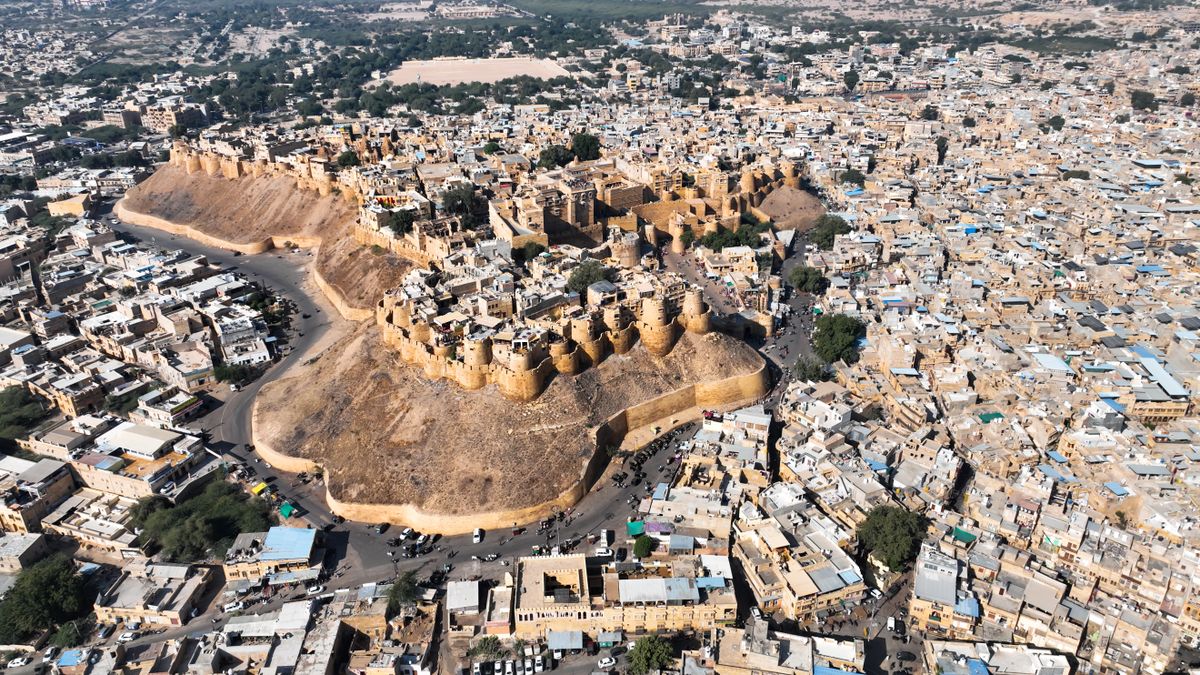
Ramesh runs a chai stall off a lane behind Gopa Chowk, in the shadow of Jaisalmer Fort's sandstone walls, the whole hill gone the color of the inside of an egg yolk by nine in the morning. He works a pot the size of a bucket over a gas ring, ginger and cardamom going in by feel, and he had a glass in my hand before I'd stopped to ask directions, let alone order. I hadn't said a word. He just poured, the way you'd pour for someone who'd clearly been walking a while, and pointed me toward the fort gate with his free hand.
I owed him a round for that, so I dug the thermos out of my bag and held the gourd out once he'd finished with the morning rush, yerba fresh, water still close to right. Ramesh looked at the straw like I'd handed him a plumbing fixture, laughed, took it anyway, and drank without asking what it was first. He passed it back, didn't wipe the bombilla, didn't make a show of trying it for my benefit and setting it down after one sip the way some people do when they want credit for politeness without the follow-through. He asked for a second draw before I offered one. Pass, and not a close one.
Jaisalmer Fort still has families living inside its walls, laundry strung across seven-hundred-year-old ramparts, a school and a temple tucked among the havelis, which is the only reason the old city under it doesn't feel staged. Ramesh's stall sits at the bottom of that hill, chai first, sightseeing after, and I understood by the second glass that the fort was going to be the least useful thing I saw all morning for reading the place.
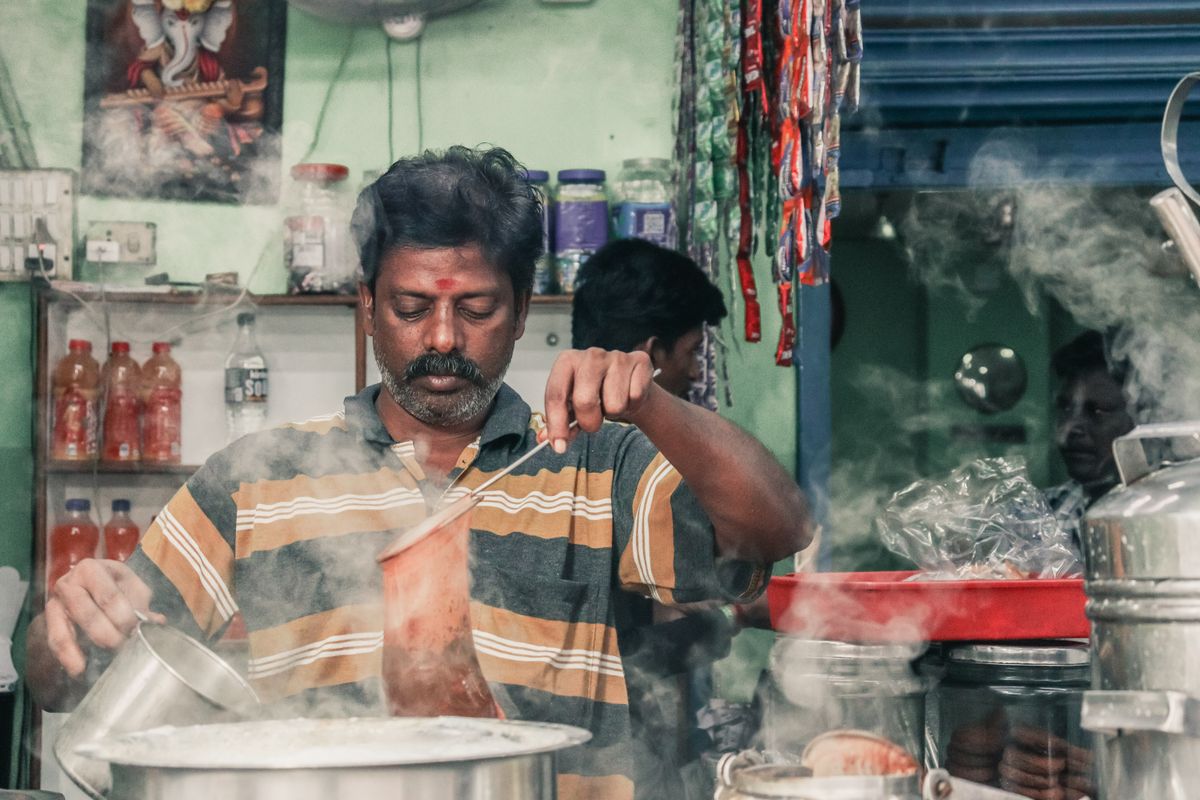
He drank from a stranger's straw before he knew what was in it. That's the whole test.
— cebadora's notes
Midday leg: the road toward the dunes
By noon the thermos was undrinkable in the other direction, water gone hot enough to cook the yerba into mush inside twenty minutes instead of drawing it slow, and I gave up on rounds entirely between eleven and four, same rule I'd follow at home in a heatwave, except home doesn't hit 47 degrees the way Barmer did the week before I arrived. The jeep out toward Sam had no air conditioning that worked past first gear. Our driver, Bhanwar, kept a burlap-wrapped clay pot of water wedged behind his seat, sweating through the cloth, and refilled everyone's bottle from it twice without being asked.
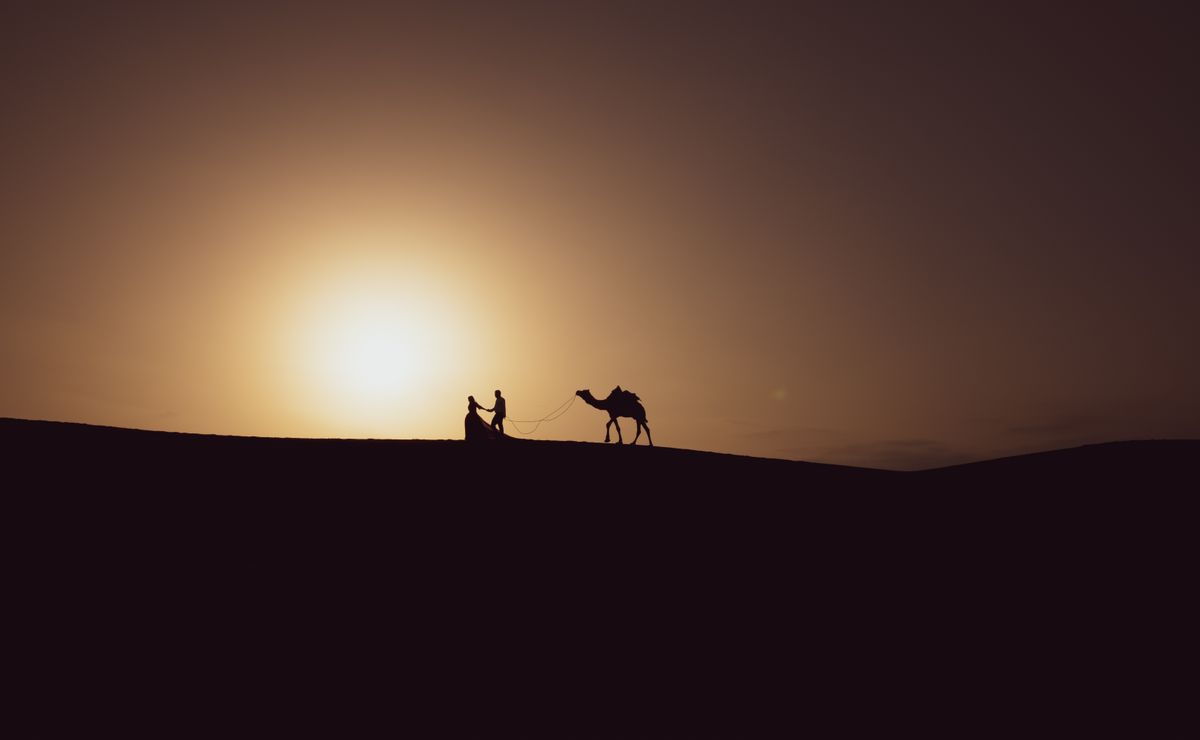
At the dunes a camel guide named Suresh walked us out past the last fence for sunset, the kind of heat that sits on your neck like a hand even after five, sun dropping into a haze the color of a bruise. He carried one steel bottle for himself and never once turned it toward the four of us sweating through the walk, not when we stopped to let the camels breathe, not when a German kid in our group asked outright. Fair enough on its own, water is water and he had a route to walk twice more that evening. But he'd spent the whole crossing calling us friends, señor this and madam that, big performance of warmth for the tip at the end. Warm with his mouth, dry with his bottle. Fail, same shape as Walter on the Rambla, different desert.
The camels didn't complain, Suresh said, because they'd stopped sweating hours before we ever loaded up. I believed him. My own shirt had stopped sweating too, gone stiff and pale with dried salt by the time we turned back, which the clinic pamphlet at our hotel later told me is not a sign of doing fine.
Gourd notes
Pre-monsoon runs roughly April to June; peak heat is 12pm to 4pm, when even a good thermos won't hold a drinkable round.
Barmer, Jaisalmer, and Bikaner regularly cross 45C in this window; Barmer has recorded over 47C, Jaisalmer around 47C, Bikaner around 46.6C.
Move before 8am or after 6pm. Everything else is for sitting still, in shade, with water you didn't have to ask twice for.
Carry more than plain water. ORS or any electrolyte mix earns its weight faster than a phone charger does.
Evening round: a courtyard in Bikaner
The Bhandari family runs a guesthouse inside an old haveli in Bikaner, red sandstone courtyard with a swing seat hung from carved brackets and enough shade by six that I could feel my own pulse slow down for the first time since Jaisalmer. Kamla, who runs the kitchen, had a tray out before I'd set my bag down: two glasses of chai, water, a plate of bhujia nobody asked me to pay for.
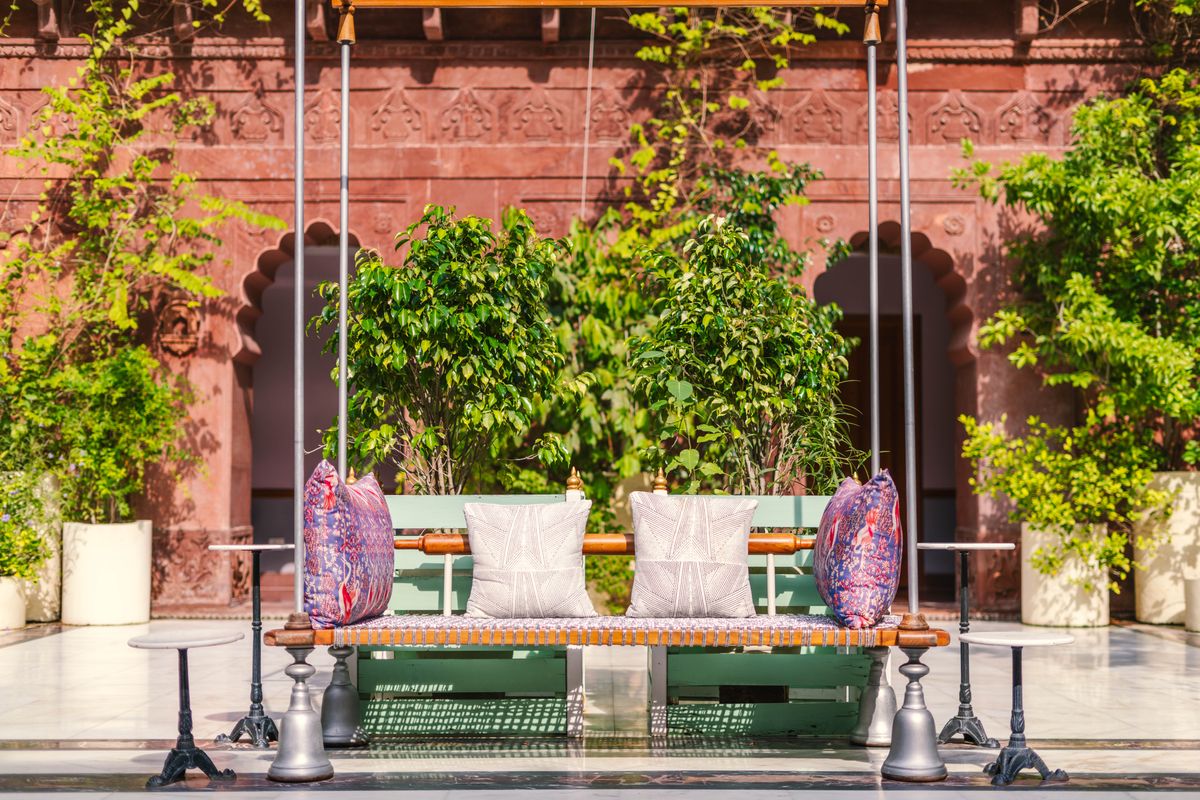
I offered the gourd once we were both sitting, more out of habit than plan by that point. Kamla took it, drank properly, made a face at the bitterness she didn't hide for my sake, and told me straight it was worse than the neem she takes for her stomach. Then she poured me a second chai without asking, refilled it a third time an hour later when I wasn't looking, the pot appearing and disappearing at my elbow like she'd been doing it her whole life, which she had.
Three weeks of chai arriving before I asked for it, across four cities, and only Ramesh and Kamla ever traded it for a pull on my own straw without turning it into a performance either way. Suresh gets the same mark as every warm talker who keeps their own bottle close. Pass for the chai stall and the courtyard, fail for the dunes. The test doesn't care that the drink was different. It never has. ■