Two Crossings: Suva Harbour by the Rules of the Road
A Bosphorus ferry captain trains for open water in Suva's working port and applies the same right-of-way rules that keep tankers off pedestrians back home.

First Leg: Out of the Royal Suva Yacht Club
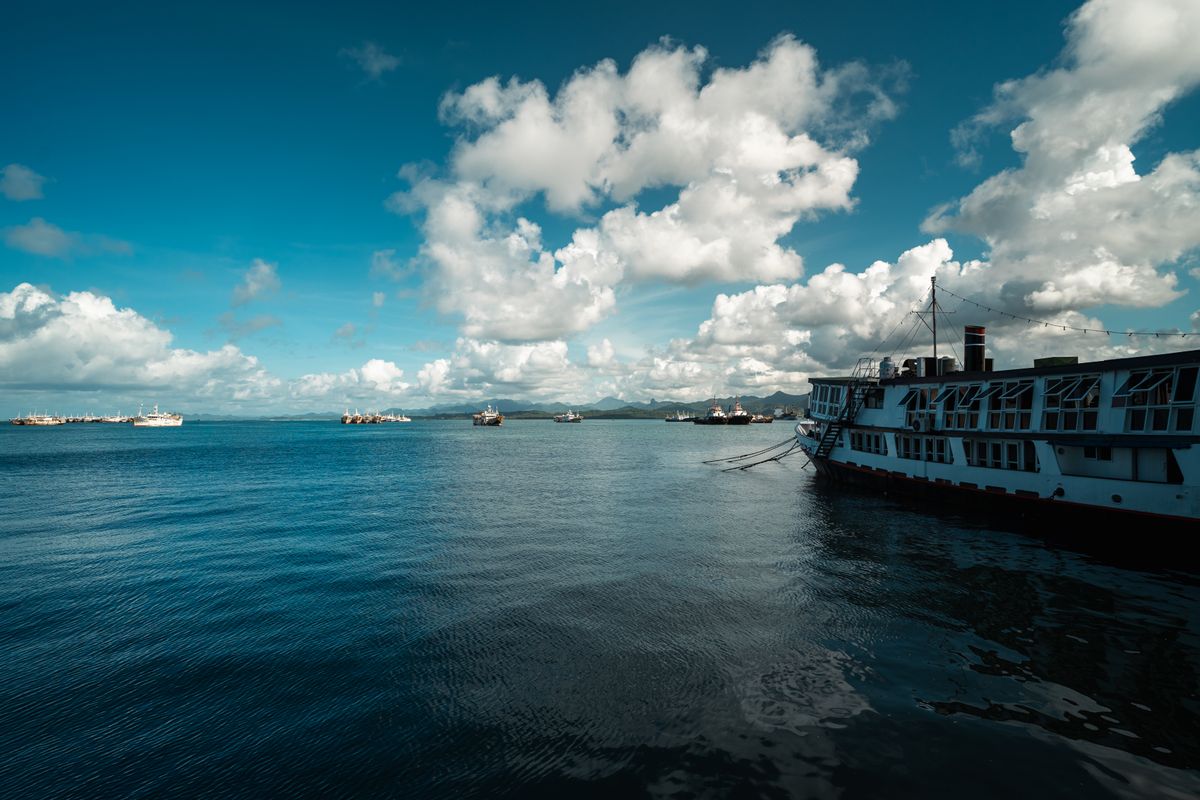
Current was slack against a falling tide the morning I put in off the Royal Suva Yacht Club, the kind of slack that still drags a swimmer sideways if nobody corrects for it. Boat traffic was already working: two harbour tugs repositioning near the container wharf, four or five outrigger canoes cutting across toward Nukulau Island, and a bulk carrier sitting off the fairway waiting on a pilot boat.
The Royal Suva Yacht Club sits on the western shore of the harbour, dinghies racked along a seawall that has taken more cyclones than most of its members can list from memory. Nobody at the club mistakes the water out front for a lap pool.
Suva Harbour moves cargo in and out of Fiji's capital the way the Bosphorus moves tankers past Istanbul, except the channel here runs tighter and the working wharf sits closer to where a person would actually want to swim. Cranes worked steadily behind the clubhouse the whole time I was signing in.
Container stacks ran three and four high along the town wharf, offloaded from ships that don't slow down for a training session. I counted eleven vessels at anchor or alongside that first morning, more than I've seen queued off any single terminal on the Bosphorus on a slow weekday. A harbour moving that much tonnage past a swim start line is not a detail to note once and forget.
Registration ran off a folding table near the club's dinghy park, and the queue for it stayed informal until a photographer walked straight down the line to get a shot of the water, camera up, not looking at anyone she was cutting off. A queue that has already formed puts the party crossing it in the wrong, whatever her reason for crossing. She didn't know it, and the swimmers waiting to sign in didn't say anything, just closed the gap behind her the way you'd close over a wake.
Out past the club moorings a tug crossed the fairway to take up a berthing position off the container wharf, engines up, no signal given because in a working channel none was owed. The outrigger paddlers held back and let it through without being asked. A vessel constrained by a berthing assignment inside a commercial harbour is the stand-on vessel over paddlers with nowhere urgent to be, and the canoes did the correct thing on their own.
Briefing ran short: stay inside the marker line, follow the kayaks, don't argue with anything bigger than you. Two safety kayaks patrolled that day, one working each flank, radios open to a committee boat anchored off the start.
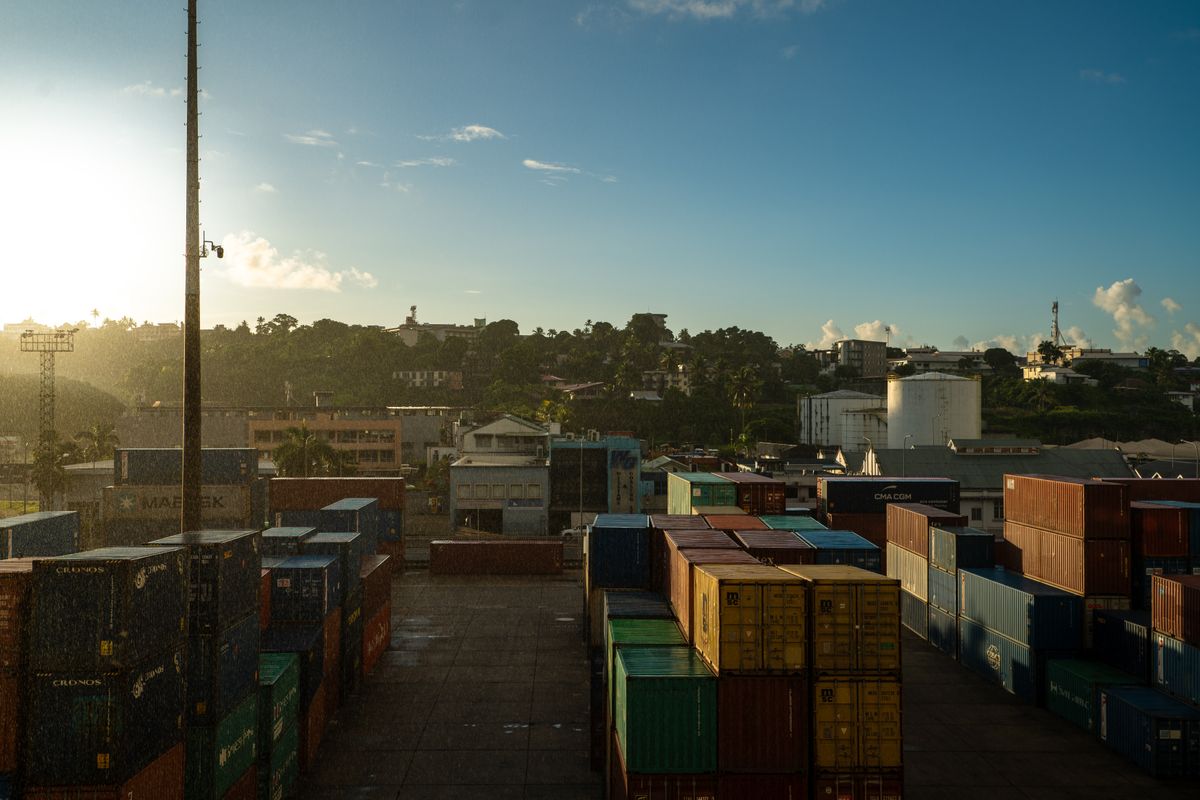
A queue that's already formed makes anyone crossing it the give-way party, camera or no camera.
Second Leg: Across the Channel
Current had turned by the time the main group started, pushing gently against an incoming tide rather than sitting slack, and traffic in the channel had thickened to match the morning shipping schedule. A second bulk carrier had come off anchor and was making way toward the wharf, engines down to steerage speed, a harbour pilot boat running close on her port side.
We started in a loose line off the club's dinghy racing buoy, close to thirty swimmers in orange caps strung across open water. Suva hosted open water swimming before, during the 2016 Oceania Swimming Championships held in the area that June, and the harbour has not gotten any smaller or quieter since. What has changed is that the shipping schedule doesn't pause for an age group start.
A swimmer is not a stand-on vessel around commercial shipping, and it matters that people training here understand that plainly rather than assume the water belongs to whoever got in first. A bulk carrier under way in a working channel has limited ability to maneuver or stop, draft that puts her keel close to the bottom of a dredged channel, and no realistic way to alter course around a swimmer she may not see until close range. The give-way obligation sits with the swimmer every time, not because the rule is unfair but because only one party in that crossing can actually do anything about it in time.
By the second buoy the pilot boat had closed to inside a hundred metres of our line, holding a course parallel to it rather than crossing, which in harbour terms is about as close as a working vessel gets to announcing her intentions without a radio call.
captain's notes
Give way to anything that can't give way to you, orange cap or not.
A pilot boat holding a parallel course is already telling you her intentions.
Safety kayaks are meant to patrol the lane, not sit in it.
Treat a formed queue like a channel: whoever crosses it yields.
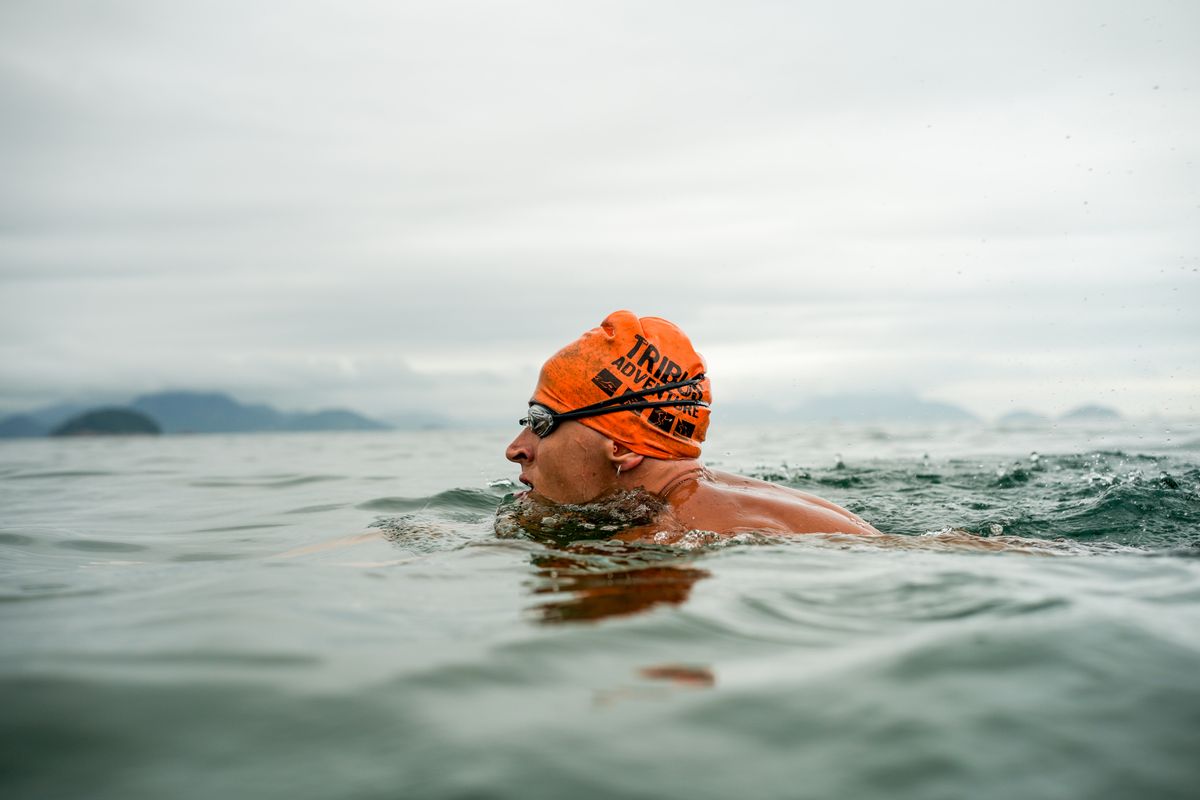
The pilot boat crossed our line about two hundred metres off the club, throttled back, and put herself between the second carrier's bow and the nearest swimmers before anyone had to think about it. That's a pilot boat doing her job, not a near miss, and calling it chaos would skip past the fact that the crossing was handled correctly by everyone with the tonnage to hurt somebody.
One of the safety kayaks drifted into the swim lane to hand a swimmer a bottle, forcing three others to break stroke and go around her. A kayak sitting still in the middle of a lane she's meant to be patrolling, not blocking, is the give-way vessel against swimmers holding a straight line, and the kayaker apologized before anyone had to point it out.
Two legs, two different problems, and the same answer both times. The photographer cutting a registration queue was in the wrong. The pilot boat covering her ship was in the right. The kayaker blocking the lane was in the wrong and knew it fast. None of it amounted to chaos, because chaos is what you call a crossing after you've decided not to work out who had right of way, and in Suva Harbour that's always workable if you bother to do it. ■