Vava'u: The Whales Hold Their Own Slot
In Vava'u, swimming with humpbacks runs on the same separation rules I spent a career enforcing overhead, just measured in boats and minutes instead of aircraft and miles.

0600 Briefing: Vava'u Sector, Whale Season Live
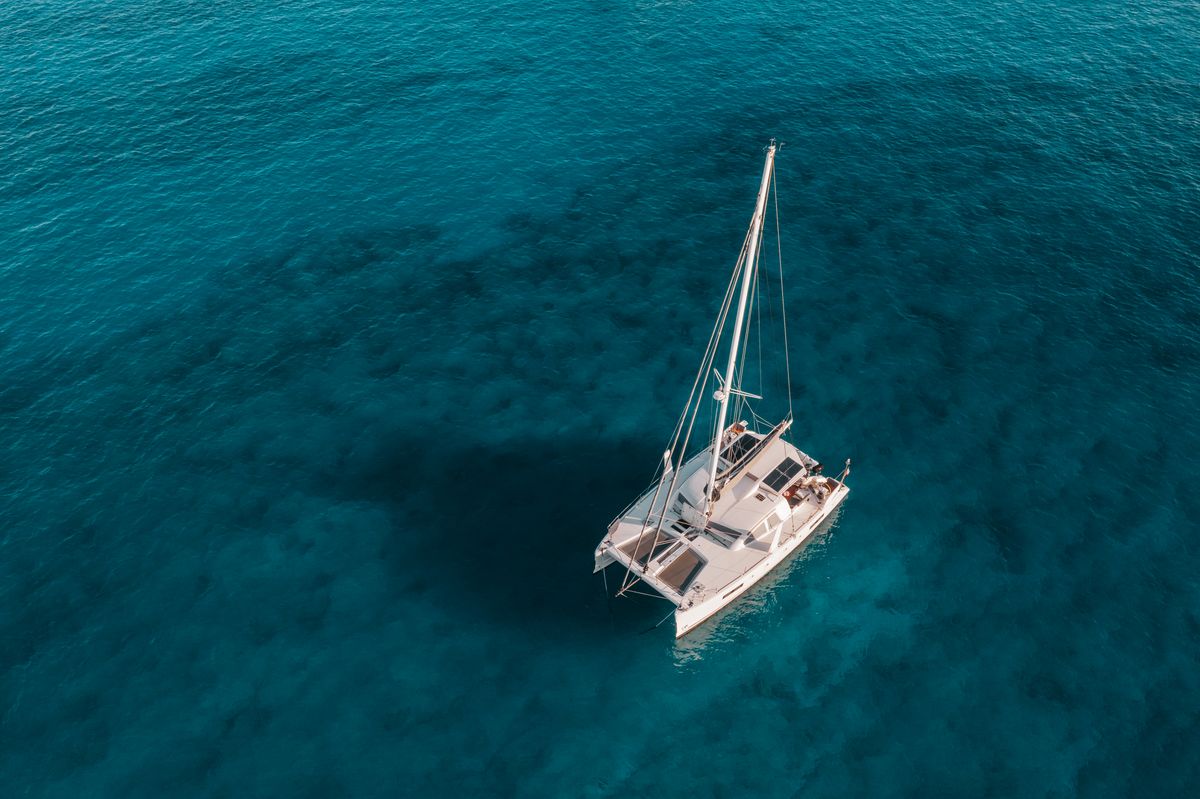
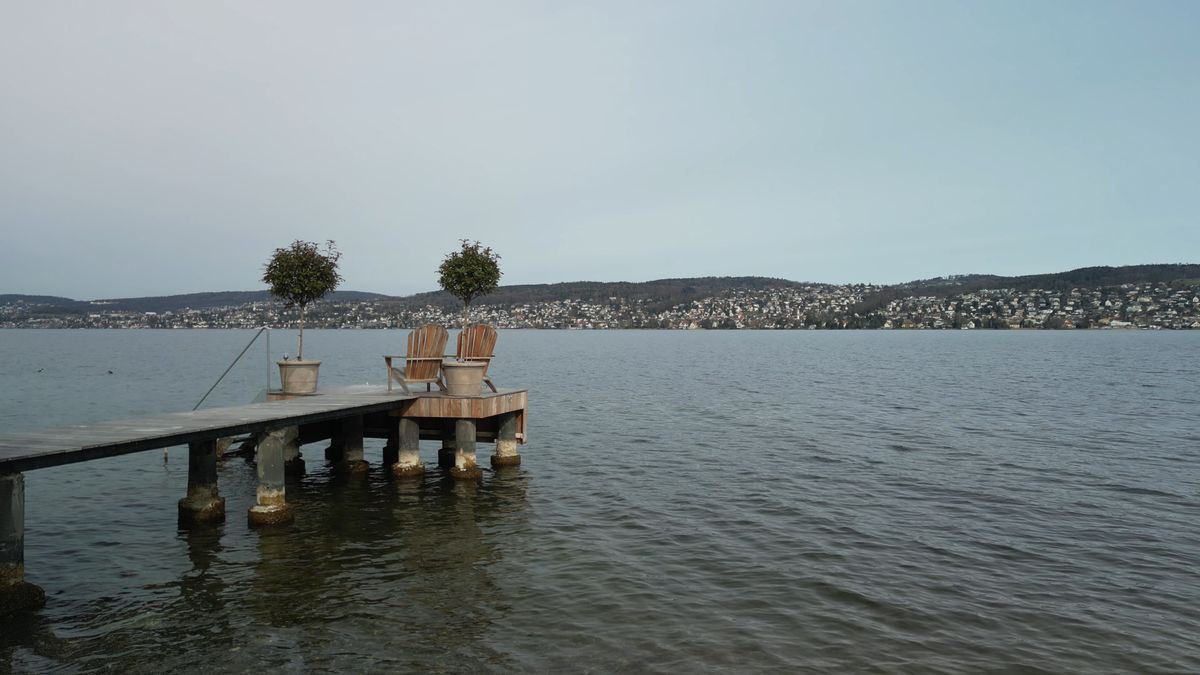
One boat, alone on the water. The one-operator-per-pod rule, seen from directly overhead.
0612 on the wharf at Neiafu, twelve minutes past the operator's printed 0600 start, and the briefing didn't open with currents or weather. It opened with numbers. Four swimmers in the water per boat, one guide, no more. Two boats permitted on any single whale at a time. One licensed operator per pod, full stop, no swapping in once another boat has called it. Twenty six years of stacking arrivals over an approach corridor taught me to recognise a separation standard the moment I hear one read aloud, and this was a separation standard, just written for water instead of air.
Vava'u runs its swim season from roughly mid-July to mid-October, nested inside Tonga's wider government window of July 1 through October 30. Late August put us close to the middle of both, which the operator confirmed twice, once in the briefing and once again over the radio once we'd cleared the harbour markers. A window with a start date and an end date behaves like a runway slot. Miss it and nobody reschedules the whales for you.
The mechanics of it read like a sequencing exercise. A boat spots a pod, radios the sighting to the fleet, and by license and by call order becomes the operator of record for that whale. A second boat may hold nearby, in visual range, waiting its turn, but only two vessels are permitted on any one animal regardless of how many others are circling the wider bay. Everyone else stands off. It's a holding pattern with an ocean instead of a stack of altitudes, and the same rule applies both places: you get a slot, you don't get to skip it because your charter paid more for the day.
The government issues a fixed number of whale-swim licenses for Vava'u, and it isn't generous with them. Our operator, six seasons on this boat, said new licenses had been effectively closed for years, the kind of scarcity that keeps a queue honest rather than long. Without the cap, four boats could converge on one tired pod inside twenty minutes. With it, we spent close to forty minutes holding at a stand-off distance from a mother and calf already claimed by another operator, watching through binoculars, waiting for our own sighting to call in over the same channel.
By 0651 we'd logged our first confirmed pod, thirty nine minutes after departure against an itinerary that promised sightings within the hour. Read one way, ahead of schedule. Read the way that matters, on time for the whales, who hadn't filed a plan with anyone.
Vava'u Sequencing, By the Numbers
Season: officially July 1 to October 30 across Tonga; Vava'u runs mid-July to mid-October within that window.
In-water cap: 4 guests plus 1 licensed guide per boat, per whale.
Boat cap: maximum 2 boats on any single whale at once, one licensed operator per pod.
Encounter length: 90 minutes once a boat is with a whale.
Mandatory break: 1 hour before new swimmers can enter the water with that same whale.
Daily boat limit: 7 hours on the water, all encounters included.
A separation standard, just written for water instead of air.
1140 to 1310: One Encounter, Logged
0715, boarding call at the same wharf, dive bags checked against a manifest the crew read aloud twice, mask and fin sizes matched to the same list twice more. Nine names, two crew, one boat, everyone accounted for before the lines came off. Whale season fills every seat it's licensed for, and the manifest count is the first control point of the day, well before anyone gets near a whale.
Four hours of searching and standing off followed, most of it spent well back from other boats already working a pod, our guide narrating the etiquette of it the way a controller narrates a stack. Nobody crowds a working encounter. Nobody calls a whale that already has an operator of record. We drifted, engine idling, for stretches of eighteen and twenty two minutes at a time, the kind of holding I used to assign rather than sit through.
1140, radio call from our guide: pod confirmed, cow and calf, single male escort, our boat cleared to enter. The mandatory one hour break behind another operator's earlier encounter with the same whales had run its full sixty minutes, clocked against a wristwatch rather than a guess, before that clearance came through.
Turnaround Notes: What the Break Actually Buys You
The hour after an encounter isn't downtime, it's the next boat's clearance window opening.
Ask an operator how many years they've held their license; scarcity means the older ones know the sector best.
Boarding manifests get checked twice for a reason. Show up with your own gear list already sorted.
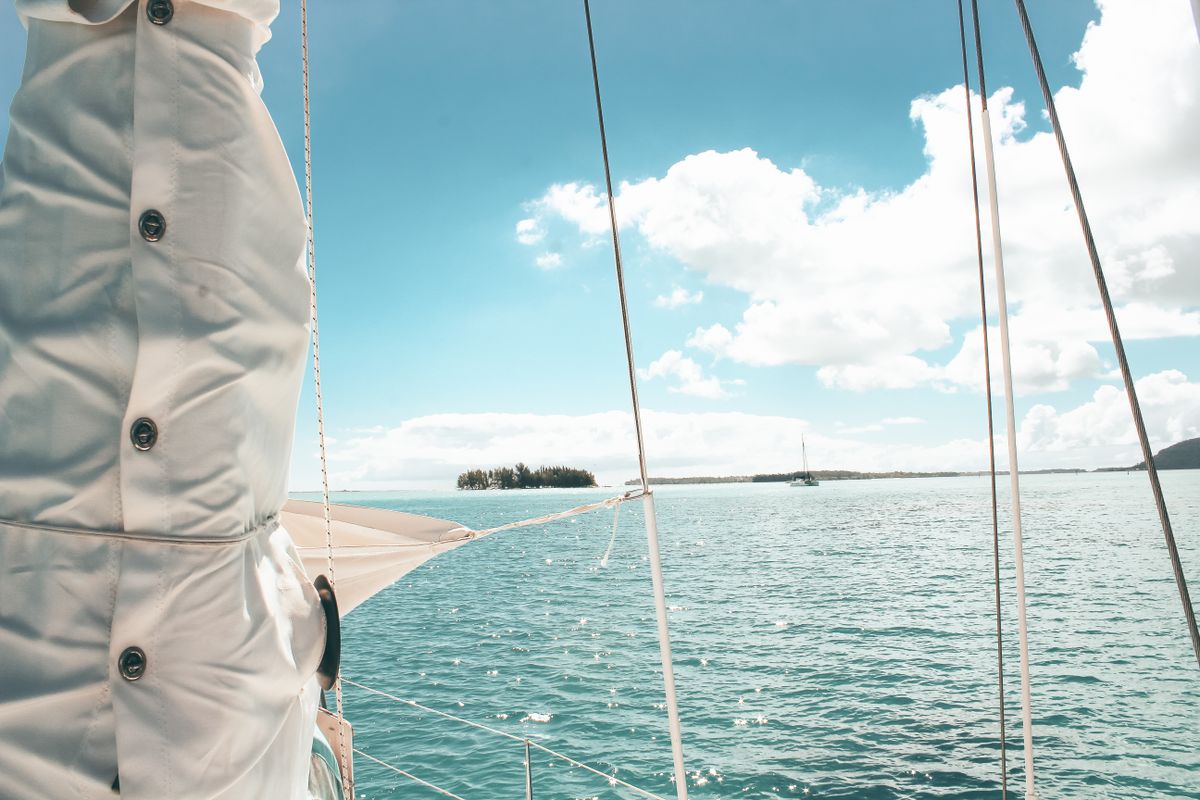
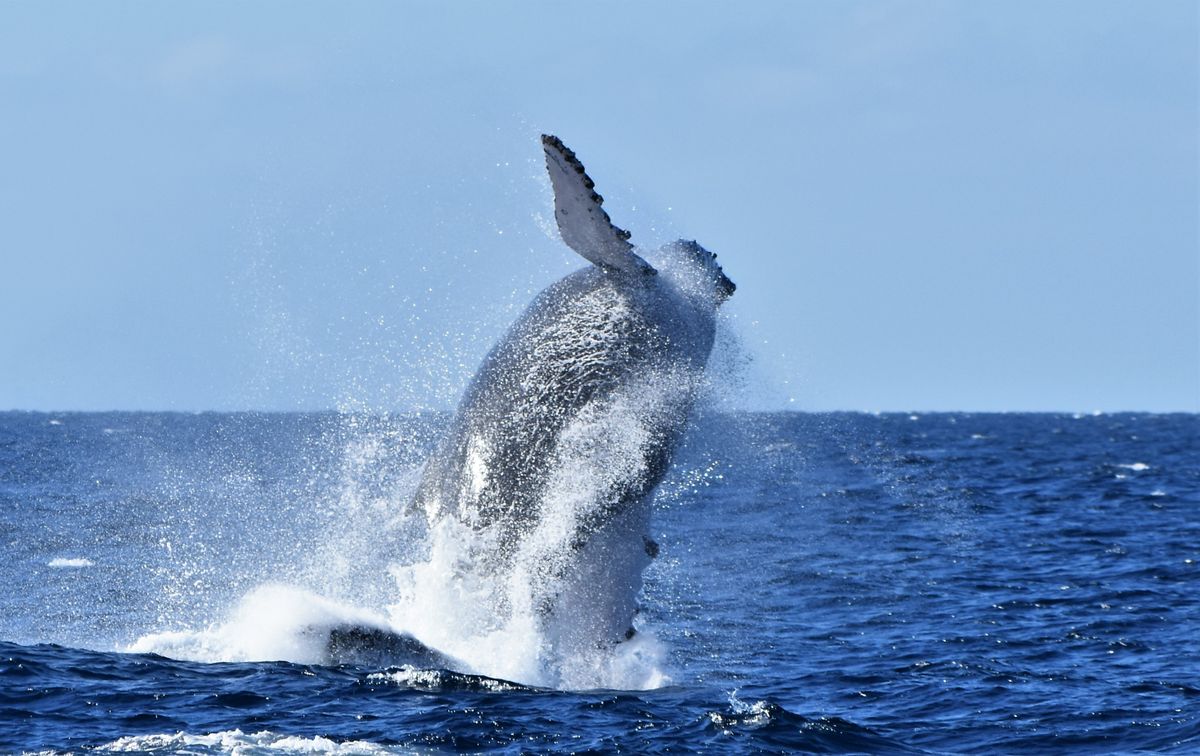
In the water at 1142, four of us and our guide, a line from the tender the only rule anyone repeated twice. The calf surfaced eleven metres off, closer and sooner than either of us expected before the first pass. Ninety minutes was the allocation. We used sixty four of them before the whales moved off toward open water on their own schedule, encounter closed early by the animals rather than by the clock.
One mishap for the log. A crew member handed me a mask fitted for someone two sizes smaller, sorted out at the swim step inside ninety seconds once I surfaced coughing and pointed at my face rather than at anything more alarming. The guide logged it as a gear mix-up, no re-entry required, no injuries, the sort of note that would have closed a file in any tower I ever worked.
Once we climbed back aboard at 1246, the guide radioed the encounter closed and started her own sixty minute clock before any other boat could put swimmers in with that pod again. Seven hours is the daily ceiling for a boat on the water. Ours logged five hours forty by the time we tied up, comfortably inside it, no extension requested from anyone.
Dock lines secured at 1310, against a printed return time of 1300. Ten minutes down, inside the kind of margin I wouldn't have logged as a delay back when delays came with wings. The day ran on schedule. The whales ran on theirs, and for sixty four minutes, ours matched it. ■