The Chief's Whistles: Full Time on Tongatapu's Blowhole Ledge
A community editor walks the five-kilometre limestone shelf at Houma, where wind and swell turn the Mapu'a 'a Vaea blowholes into thirty-metre spouts.

Arrival: Reading the Houma Ledge
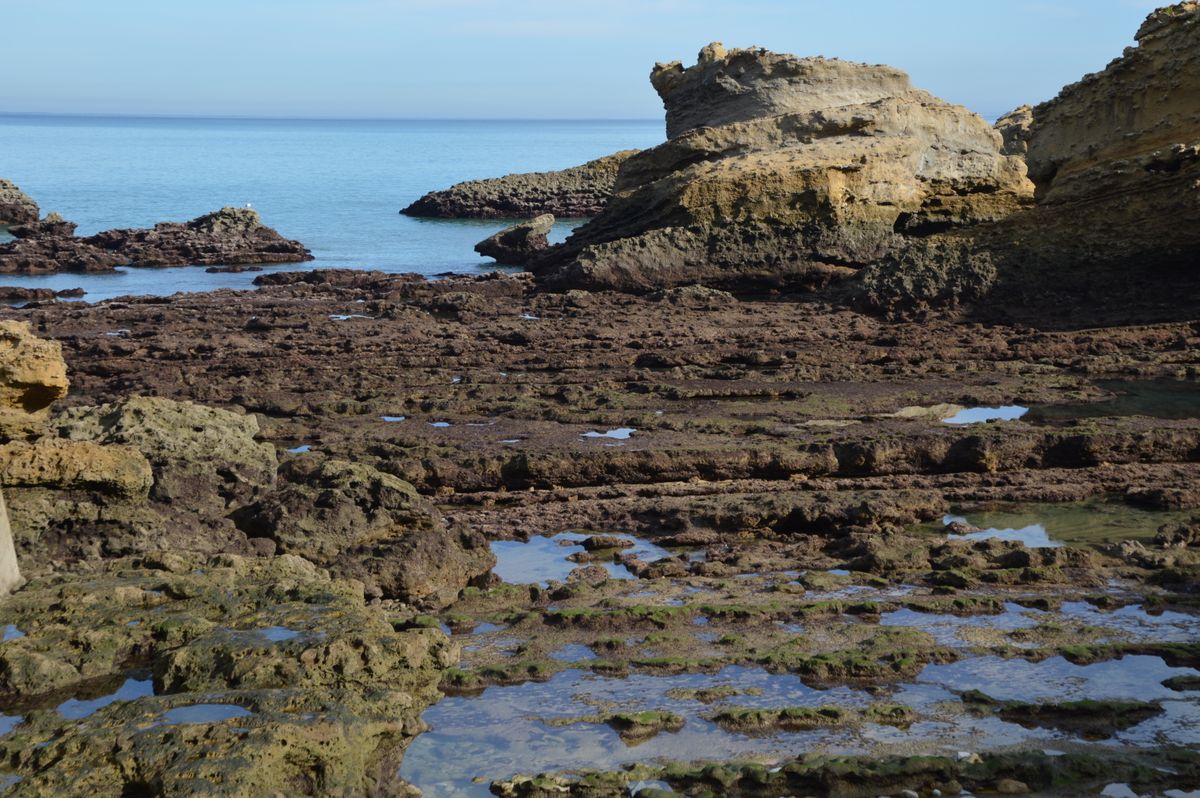
First whistle of the day, and it's barely a whisper. A thin plume off a vent no bigger than a drain, gone before you've got your phone up. Early minutes. Feeling it out.
This is Houma, south coast of Tongatapu, twenty-odd minutes out of Nuku'alofa on a road that goes from tar to gravel to not much at all. The van's aircon quit somewhere past Vaini. Possession lost early, nobody's fault. You wind the windows down and play on.
Out on the ledge itself the game changes fast. This is a flat shelf of coralline limestone running close to five kilometres, not a cliff you climb, but don't let flat fool you. Wet in patches, glassy where the spray's been landing all morning, honeycombed with vents you don't always see until you're standing over one. Call it a fartlek session. Easy walking pace broken by short dead stops where the footing turns to soap.
First few blowholes along the eastern stretch throw up nothing more than a metre or two, more sneeze than spout. Locals walk dogs past them without a glance. Fair enough. Warm-up drills don't need an audience.
Call it twenty minutes of careful footwork, one near miss on a slick shelf that would've cost a wet sock at best, and half a dozen spouts too shy to earn a photo. Solid opening exchanges, nothing yet that tells you what the back half of this ledge has got saved up.
The Main Event: Chief's Whistles
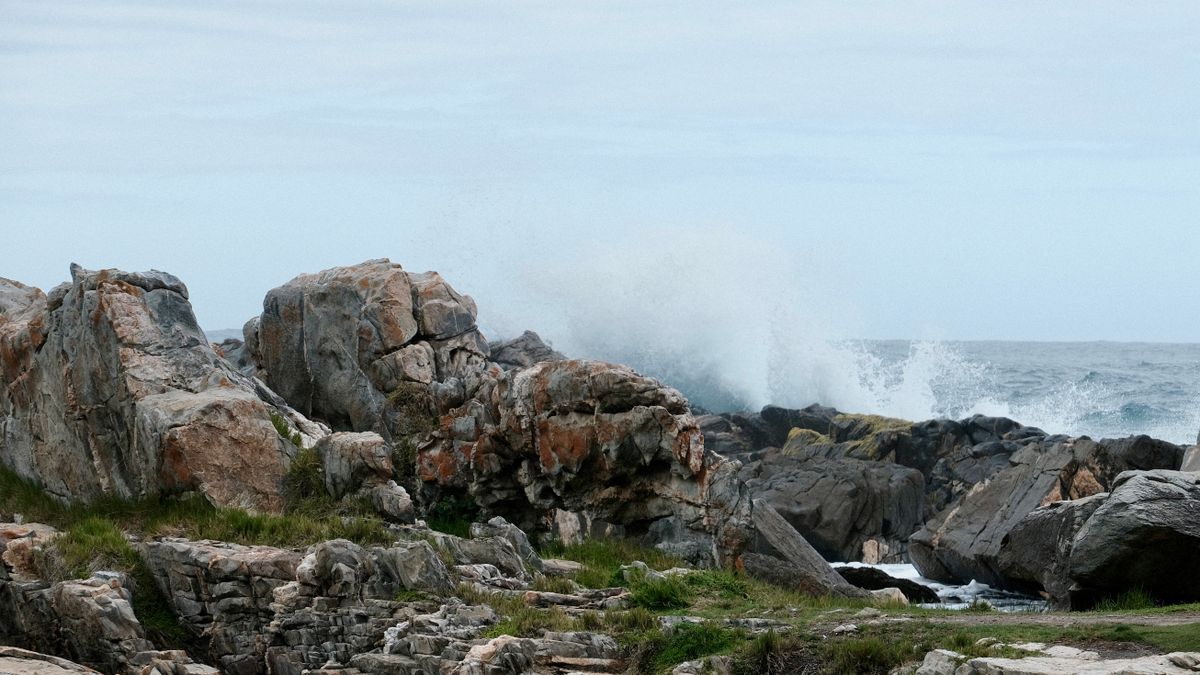
Half a kilometre on and the wind's picked up off the water, proper onshore push. You hear the difference before you see it. A low note underneath the surf, like someone testing a whistle they haven't quite got the hang of.
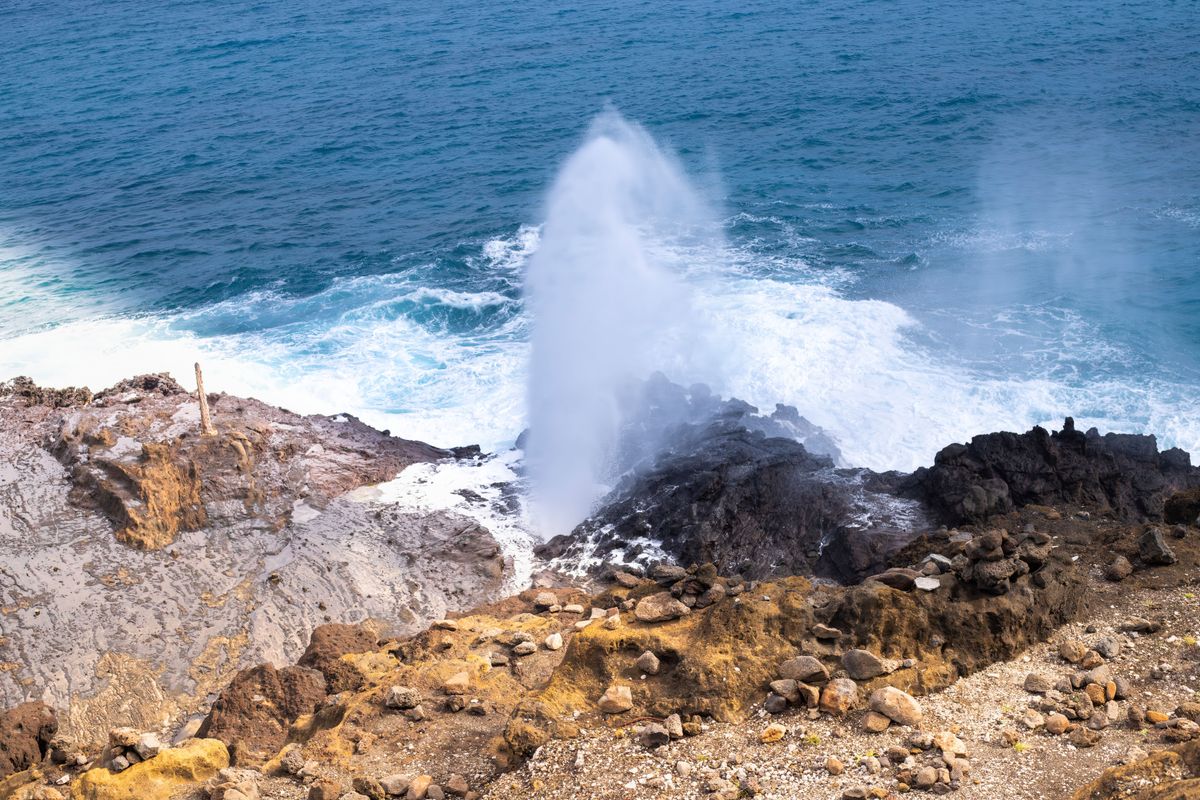
This stretch is the Mapu'a 'a Vaea proper, the Chief's Whistles, and with swell behind it the vents start firing in relay. One goes, then thirty metres down the shelf another answers, then three more at once further along. Water thrown twelve metres, fifteen, and on the biggest spout of the afternoon a clean thirty, straight up, hanging half a second before it falls back through its own spray.
Story goes a Tongan chief from the Vaea line used to come down to this exact stretch to sit and think, and the sound the vents made got compared to his own whistle, the one he used to call men in from the fields without raising his voice. Mapu'a 'a Vaea. Whistle of the Noble. Stand here on a windy afternoon with the swell up and the legend doesn't need explaining twice.
Best spout of the session cost a held crouch for the better part of five minutes, camera up, calves complaining, waiting on the swell set that was going to do something worth keeping. Good view, real toll, same as it always is. Rate the stretch itself a genuine conditioning session: start-stop sprints between vents, low stance for the shots, enough spray in the wind to have you blinking through half of it.
Call it forty minutes on the loud stretch, three spouts that cleared twenty metres by eye, one that had the whole group step back without discussing it first. Full contact, no draw, home ground doing exactly what it's known for.
Thirty metres of white water off the reef, and the whole ledge sounds like it's exhaling.
Full Time: Walking Back at Sunset
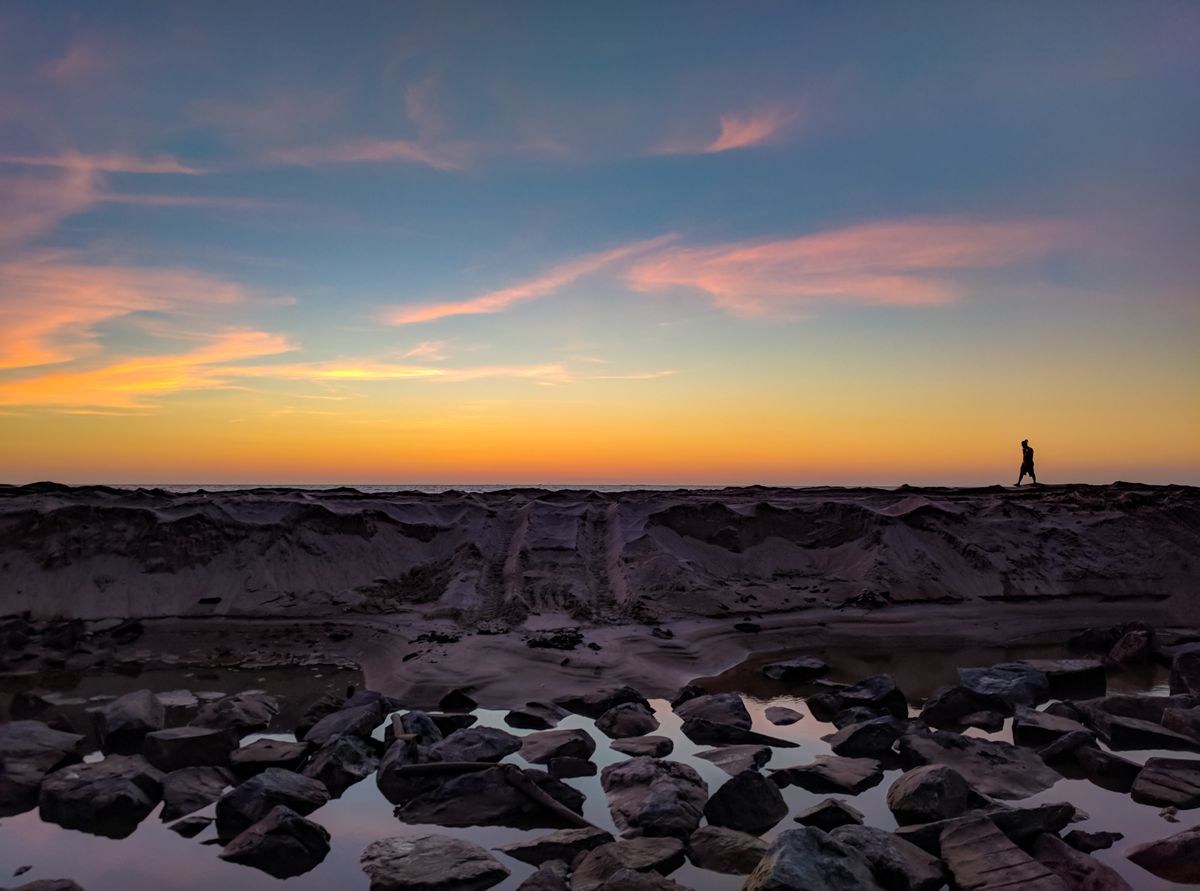
Light starts going around five, that low gold that turns the limestone the colour of a rugby jersey gone through one too many washes. The wind that was pushing the vents all afternoon starts to drop with it.
Walking back the spouts are quieter, most of them down to a cough now and then, tide easing off the shelf. Good time to actually watch your feet instead of the horizon. The ledge doesn't care that the show's winding down. It's still wet, still uneven, still happy to take an ankle if you stop paying attention because the light's nice.
Respect the Ledge
Reef shoes or grippy trainers, not jandals. The shelf punishes bare feet and slides sandals straight off.
Stay back from the vent edges, especially on a big swell day. The blast radius is wider than it looks, and the rock right at the lip is the wettest, slickest part of the whole shelf.
Check the tide and swell before you go. Bigger swell means bigger spouts, but also more of the shelf underwater and more places for a wave to reach further than you'd expect.
Watch kids and slower walkers near the vents, not because pace matters, but because footing does.
Full time on the Mapu'a 'a Vaea: five kilometres of shelf, one van with no aircon, two hours of proper footwork either side of forty minutes that earned the name Chief's Whistles honestly. Best score of the trip so far, and Tongatapu didn't even need the tide fully in to post it. ■