Grading the Yasawa Flyer: A Ferry-and-Swim Circuit, Stroke by Stroke
Five hours of ferry, four seconds of cave, and eleven honest minutes of swimming across Fiji's Yasawa Islands chain.

Leg One: Port Denarau to the Top of the Chain
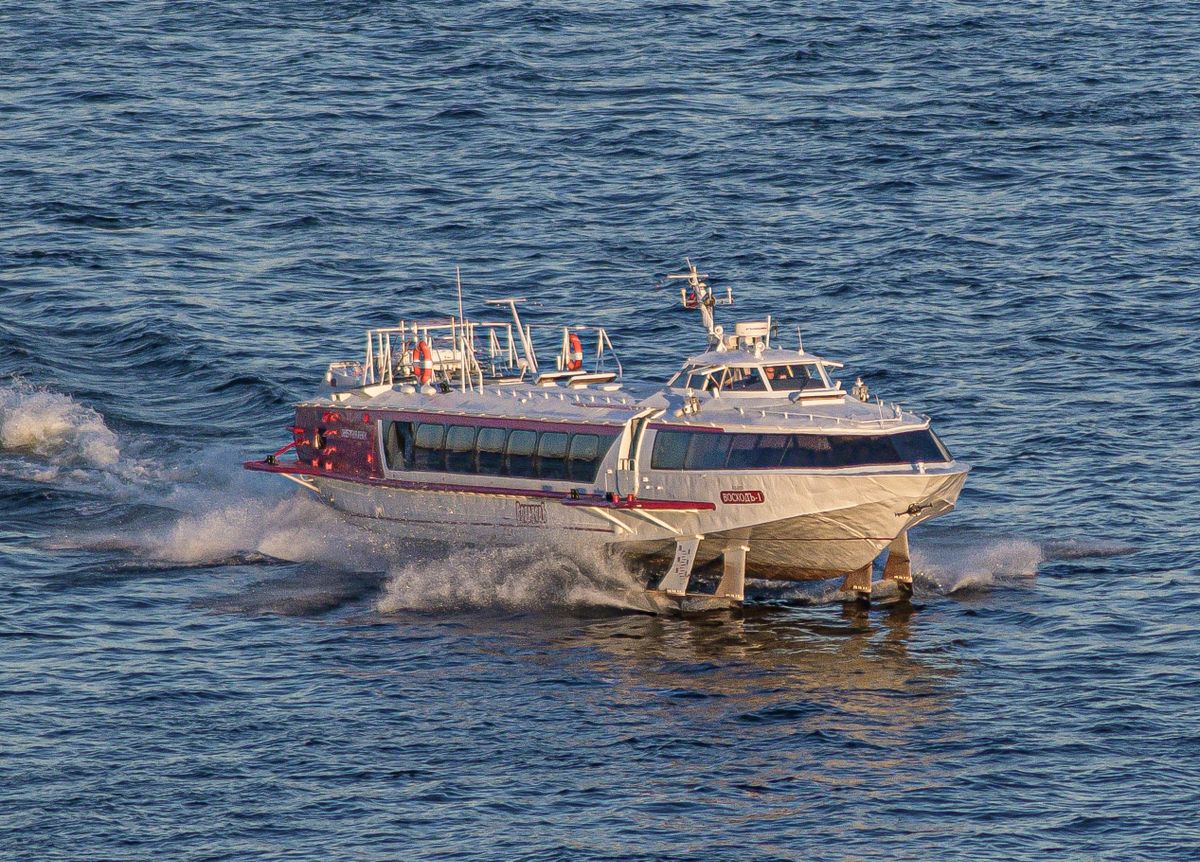
Port Denarau's marina reads warm and still at quarter to eight, water close to bath temperature against the pontoons, current nailed flat by the breakwater and not worth a second look. That's the last easy reading I get all day, because everything past the harbour mouth belongs to open water, and open water doesn't hold still for anyone's schedule.
The Yasawa Flyer loads by eight thirty for an eight forty five departure, and I treat boarding the way I'd treat a squad lining up on the pontoon before a session: check who's prepared, check what the water's doing, then commit. Bags stowed, seat picked on the open deck rather than the air conditioned cabin, because I want to watch the water change colour as we clear Nadi Bay and the reef shelf drops away under the hull.
Two hours out the swell builds to a long low roll, nothing sharp, current running with the boat rather than against it, which is the only reason the ride stays comfortable at speed. I watch the islands come up one at a time on the port side, each one a fresh sighting landmark, and log the colour shift as we cross from the murkier green of the mainland shelf into the clean blue that means we've reached the outer reef line. Four hours in, someone points at a shape on the horizon and asks if that's Sawa-i-Lau. It isn't. It's another two stops north, and I correct the sighting the way I would on any swim: kindly, and without letting it slide.
Five hours and change from pontoon to the top of the chain, and I haven't logged a single stroke of it. That's the honest split for the leg out: a fast, comfortable transit that earns you nothing except the right to get in the water somewhere worth grading.
Leg Two: Sawa-i-Lau, the Swim-Through
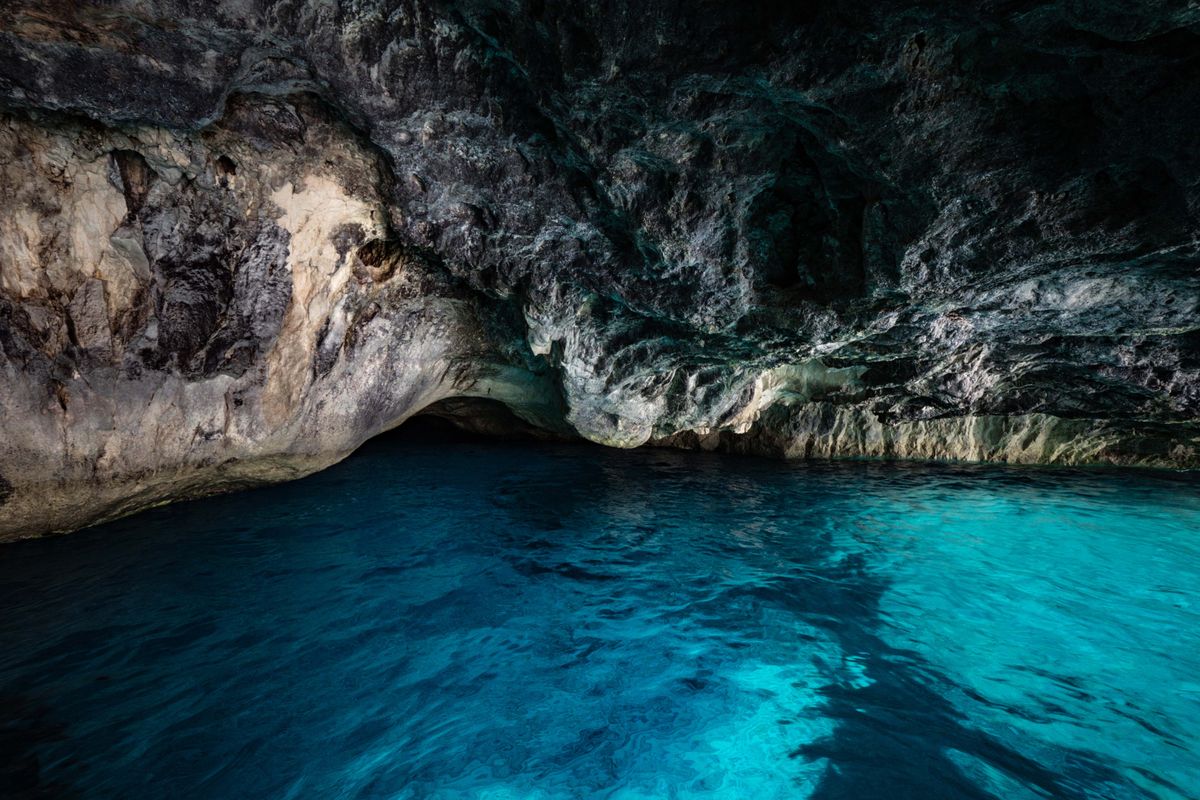
Sawa-i-Lau's bay sits at twenty eight degrees by the time the tender drops us at the rock steps, current dead calm inside the point, visibility running fifteen metres or better before the light gives out under the overhang. I'd brief a squad into this bay without hesitation: warm, sheltered, the cave mouth an easy sighting landmark the whole swim in. That's a grade I don't hand out often.
The first chamber is a wade more than a swim, thirty seconds across flat water under a ceiling that opens up thirty metres overhead, limestone gone soft and pale where centuries of rain have worked it. Tour groups stop here, take the photo, call it done. Fair enough, it's a genuinely striking room. But it's not the swim that makes this stop worth the fifty to eighty Fijian dollars South Sea Cruises charges for the shore excursion.
The second chamber sits behind a short submerged passage at the back wall, and this is where every guide's voice drops half an octave like they're about to send you through a washing machine. I ducked under, six strokes through a gap wide enough for one swimmer at a time, and surfaced in the dark chamber on the other side before I'd finished exhaling. Four seconds submerged, by my count, maybe five for anyone who pauses to enjoy the drama. I've coached ten year olds who hold their breath longer brushing their teeth. The chamber on the far side is worth the walk down the rock steps on its own, black water and a slice of daylight through a crack in the roof, but the passage itself is not the adventure the marketing wants it to be.
Total swimming time for both chambers, there and back, comes to under two minutes by my watch, the other twenty spent treading water in the first chamber waiting for a photo. Two minutes is the real split. Everything else is queue.
Sawa-i-Lau Side Trip
Coach's Notes
Confirm the second chamber is open and a guide is briefed before anyone goes under. It's a six-stroke swim-through, not a dive, but it's still a passage.
Time your breath, not your bravado. Four to six seconds submerged is the real number. If you can't hold that comfortably on land, don't hold it underwater either.
Wear reef shoes on the rock steps down to the water. The limestone is sharper than it looks in every photo.
Don't let the afternoon reef stop get cut for extra sand time. It's optional on most itineraries and it shouldn't be.
Four seconds submerged and six strokes total is the whole adventure the brochure sells you.
— Splits
Leg Three: The Reef Stop, Closing Splits
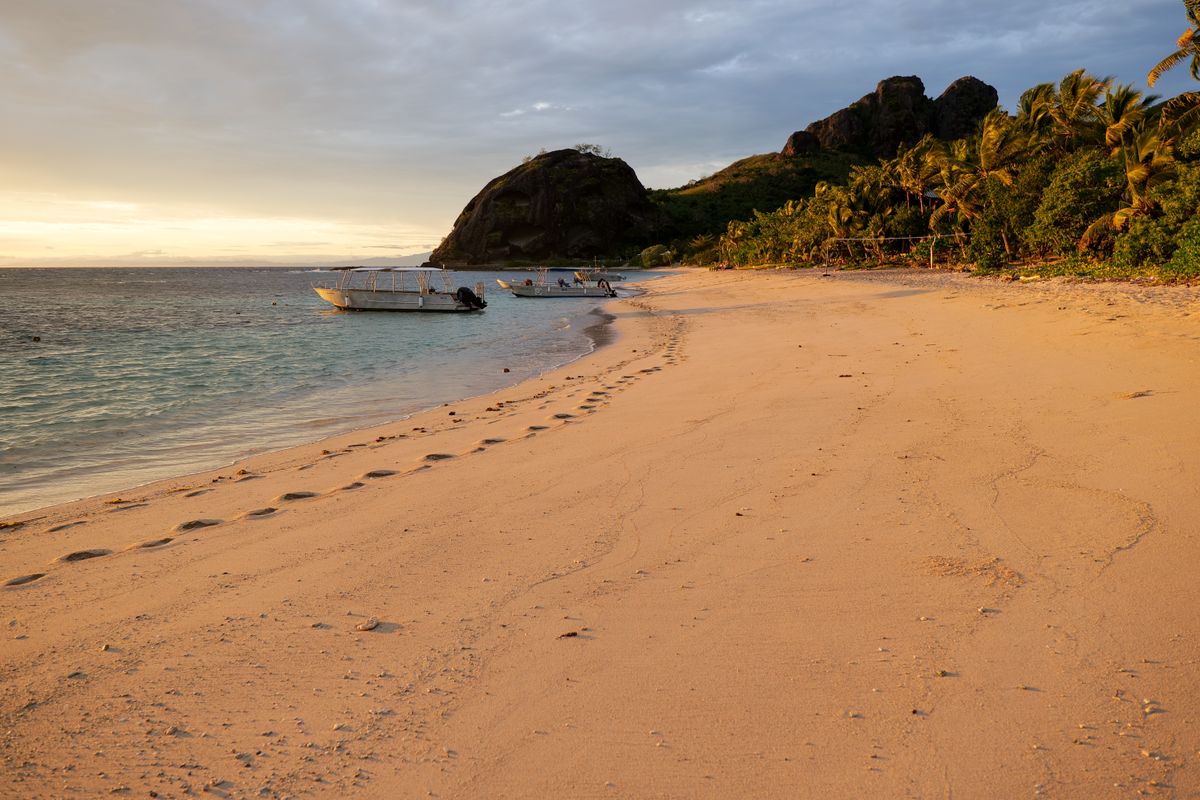
The afternoon stop reads warmer again, close to twenty nine degrees over the sand, current barely a push off the reef edge, and sighting is easy out to where the shelf drops from pale sand to dark coral in one clean line, maybe four minutes out at an easy pace. I'd grade this bay for a beginner squad without a second thought: warm, shallow, current too weak to argue with, the drop off itself the only landmark you need.
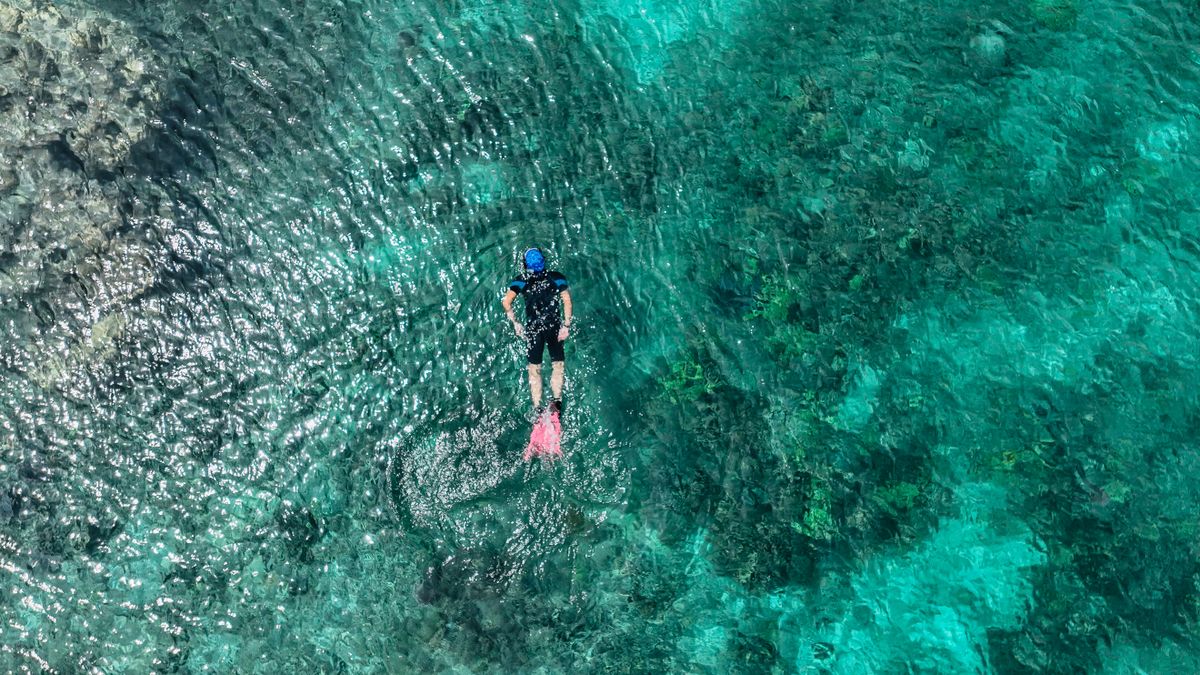
I swim the drop off twice, once fast to check the current holds as weak as it looks, once slow with a mask on to actually look at what's down there, parrotfish working the coral heads, a reef shark holding steady in the current line without much interest in anyone above it. This is the stop most of the boat skips in favour of the sand and a drink, which is their choice, but it's the best water of the whole circuit, and nobody's checking the conditions before they decide that.
Call the whole circuit sixteen hours door to door, boarding to the last tender back, and maybe eleven minutes of that spent actually swimming, four in the caves, seven off this reef. That's a poor ratio for a trip built around water, and it's also exactly why the eleven minutes matter as much as they do. Log the ferry as transit, the caves as adventure with the drama trimmed down to four honest seconds, and this reef as the leg you'd actually come back to Fiji for. ■