Three Pillows, One Long-Haul Route: What Actually Bought Me Sleep

The Protocol
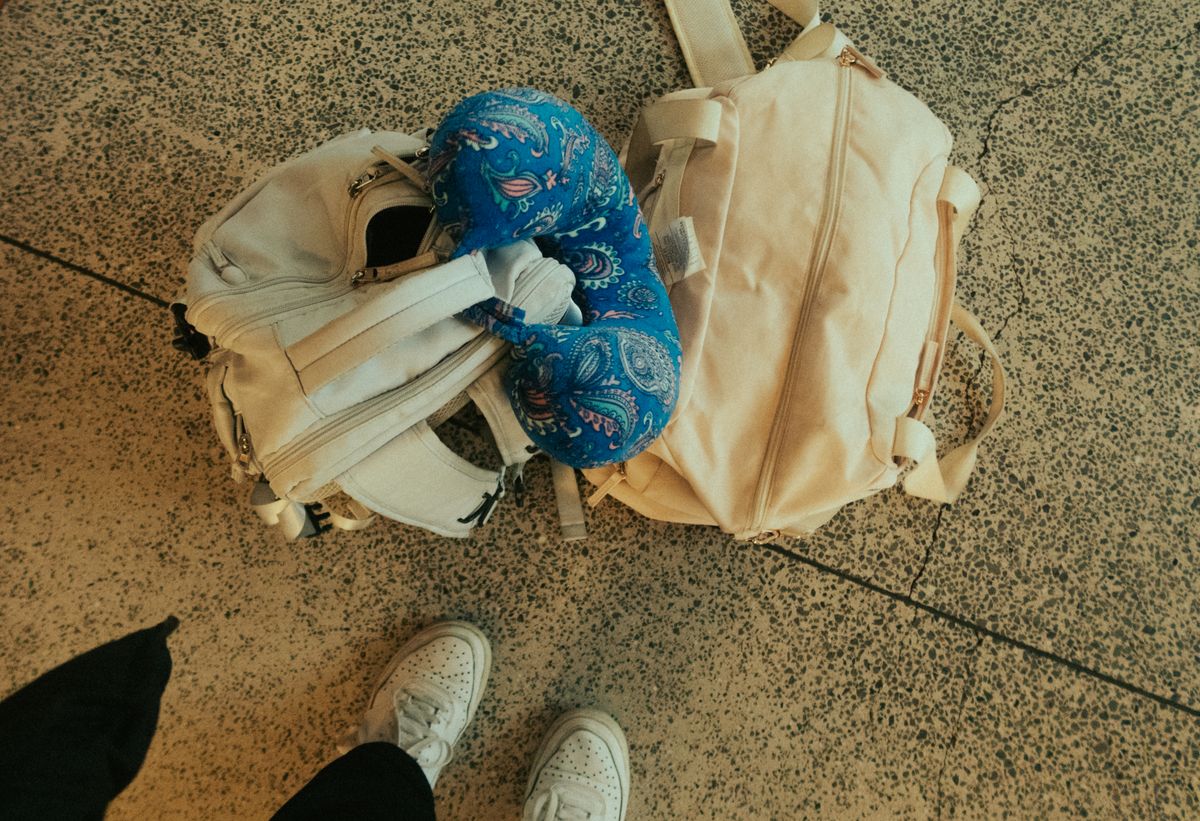
The inflatable, still packed, before the first of three flights.
Sample size: three pillows, three sectors, same route. Bogotá to Madrid, economy, roughly ten hours in a dark cabin depending on how long the crew leave the seatbelt sign on over the Atlantic. Same airline, same aircraft type, three assignments between March and June, which is the closest I could get to a controlled trial without buying six extra tickets.
What I actually measured, each flight: minutes from cabin-lights-down to real sleep, timed against my watch and not my phone, because a lit screen resets whatever the eyes were doing. Number of wake-ups, logged by killing the call light before I let myself check the clock, so I wouldn't lie about how many there were. Neck droop, read off the meal-service photo the crew always seem to take of someone slumped two rows over, using the headrest seam as a rough zero line. Total sleep, reconstructed on the ground from all of the above.
Two rows up on the first flight, a passenger had a neck pillow, an eye mask, compression socks and a travel diffuser laid out before pushback, and was still awake refreshing the flight map at hour four, gear fully deployed, sleep not observed.
None of this is a lab. It's a notebook, a watch, and three long-haul flights, which is still more testing than most of the pillows stacked on a departure-lounge shelf ever get before someone buys one on the strength of the packaging.
The Inflatable and the Foam
Standard inflatable, nylon cover
Flight one, seat 34C, middle. Lights down at 23:40 local. Asleep by 00:27, forty-seven minutes of lying still and listening to the engine note change under me. Woke five times before Madrid: twice from turbulence over the coast, three times from my own head sliding off the pillow's front horn.
The inflatable is the pillow everyone already owns, a horseshoe of ribbed vinyl with its own valve that packs down to the size of a folded sock. It works for the first two or three hours. Cabin pressure and body heat soften the air inside it faster than the packaging suggests, and by hour six the horns had gone slack enough that my head found forty degrees of lean against the headrest seam before I woke up again.
It weighs next to nothing and takes up no bag space, which is the entire case for it. Nobody buys the inflatable pillow for the sleep. They buy it because it fits in the seat pocket alongside everything else.
Memory foam, contoured
Flight two, seat 19D, aisle. Lights down at 22:55. Asleep by 23:28, thirty-three minutes. Woke three times, none of them from the pillow moving, because it didn't.
Foam holds a curve all night in a way vinyl and air never will, and the droop I measured against the same headrest seam stayed close to fifteen degrees for the whole flight. It's marketed on comfort and shape retention, rarely on temperature, and that's the part worth flagging. By landing the collar of my shirt was damp where the foam had sat against my neck for nine hours. It doesn't breathe. The inflatable, for all its faults, at least lets air move under it.
The standard sell on a U-shaped pillow, foam or air, is that it stops the chin dropping to the chest. Watch anyone actually asleep upright on a red-eye and the head goes sideways, toward the window or the stranger next door, not forward. The two front horns of the U spend the whole flight not doing the job they're shaped for.
Foam over air for anyone who stays in one shape past hour six. Air over foam for anyone who needs the space back in their daypack more than they need the extra sleep.
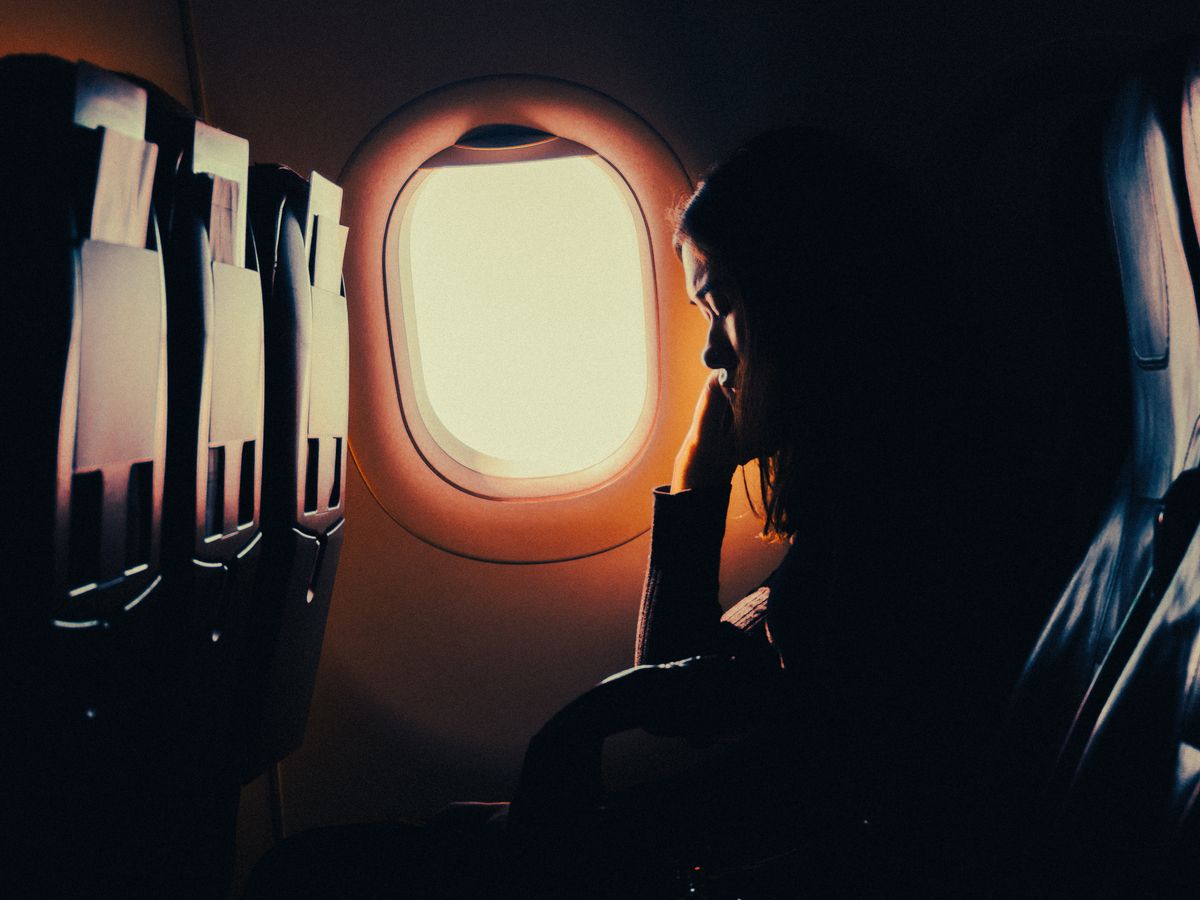
Foam didn't fall down overnight. It just made me sweat instead.
The Wrap, and What I'd Check Again
Flight three, seat 32A, window. Lights down at 23:10. Asleep by 23:29, nineteen minutes, the fastest of the three by a wide margin. Woke twice. Droop against the headrest seam read close to zero for most of the flight.
The wrap loops around the neck like a scarf, with a firm strip built into the fabric, and it held my head against my own shoulder well enough on its own. But I had a window and a wall that night, and a wall does a lot of the work a pillow gets credited for. I'd want the same wrap on an aisle seat, no fuselage to lean on, before I trust nineteen minutes as anything more than a number from one lucky seat assignment.
Field Verdict, Three Pillows
Inflatable, standard U: packs flat, first to fail. Forty-seven minutes to sleep, five wake-ups, deflated enough by hour six to lose the neck. Buy it for the carry-on space, not the sleep.
Memory foam U: holds its shape all night. Thirty-three minutes to sleep, three wake-ups, but it runs hot: worth it if you run cold in economy, skip it if you already sweat.
Wrap-style: nineteen minutes to sleep, two wake-ups, close to zero droop, but I had a window seat and a wall doing some of the work. Test it on an aisle before trusting the number.
What They Actually Cost
It packs flatter than the foam pillow and doubles as an actual scarf walking through a cold terminal at five in the morning, which the other two don't. Small point, but it's the difference between a thing that lives in your bag for eleven months of the year and a thing you leave at home after the second trip.
None of these prices are exact, and they move by retailer and by sale, but they're in the range I've actually seen at an airport shop or an online listing recently, rounded to something honest.
If I only get one more long-haul this year, I'm packing the wrap and booking the window seat on purpose, which is its own kind of cheating. Stuck in a middle seat with no wall in reach, foam beats air every time past hour four. The thing I still don't have a real number for is how much of the wrap's nineteen minutes was the pillow and how much was the fuselage, and that's the next flight's job. ■