Short Soaks, Then a Scrub, in Tbilisi's Sulphur Baths
The usual advice in the sulphur-bath quarter of Tbilisi, Georgia, is four to five minutes in the water at a time, then out to cool before the next round.

Dome count
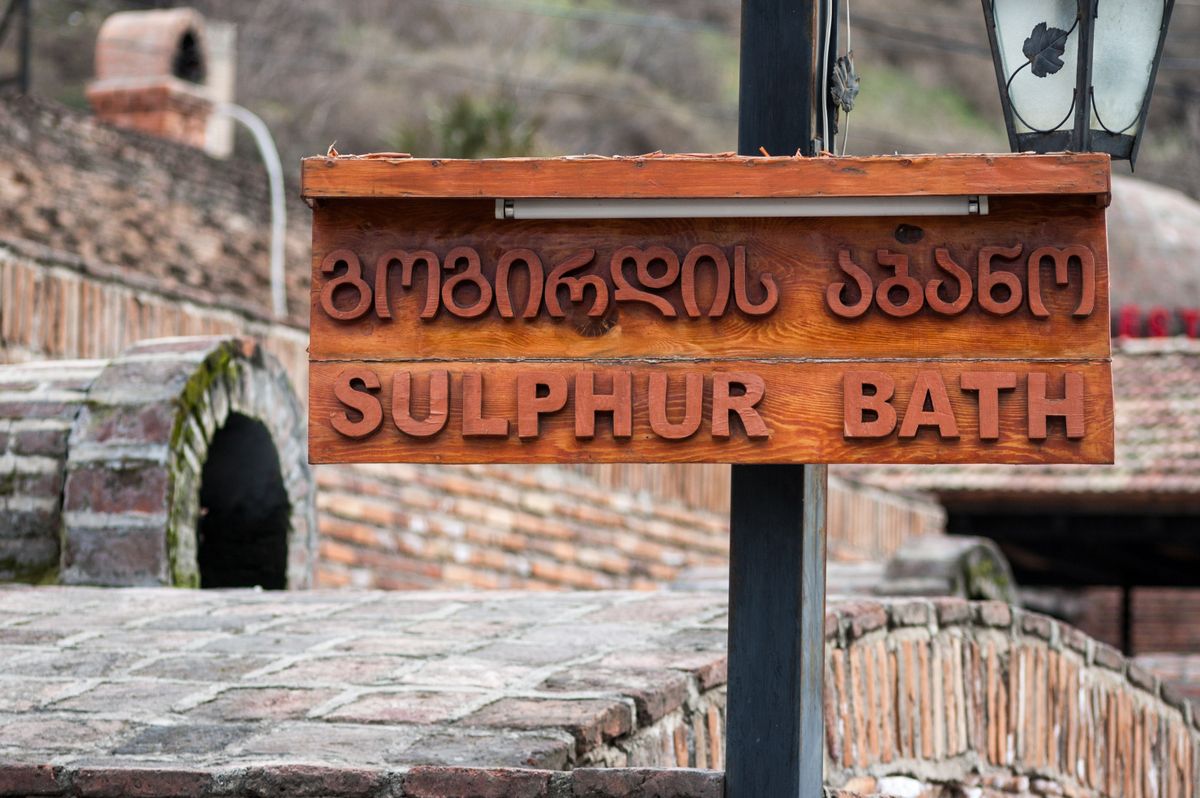
The sign at the corner of the lane; the brick humps behind it are bath roofs.
Four to five minutes in the water at a time is the usual advice in the sulphur-bath district of Tbilisi, the capital of the country of Georgia. The quarter is Abanotubani, a name that means bath district, on the east bank of the Mtkvari River, and the water there comes out of the ground naturally warm.
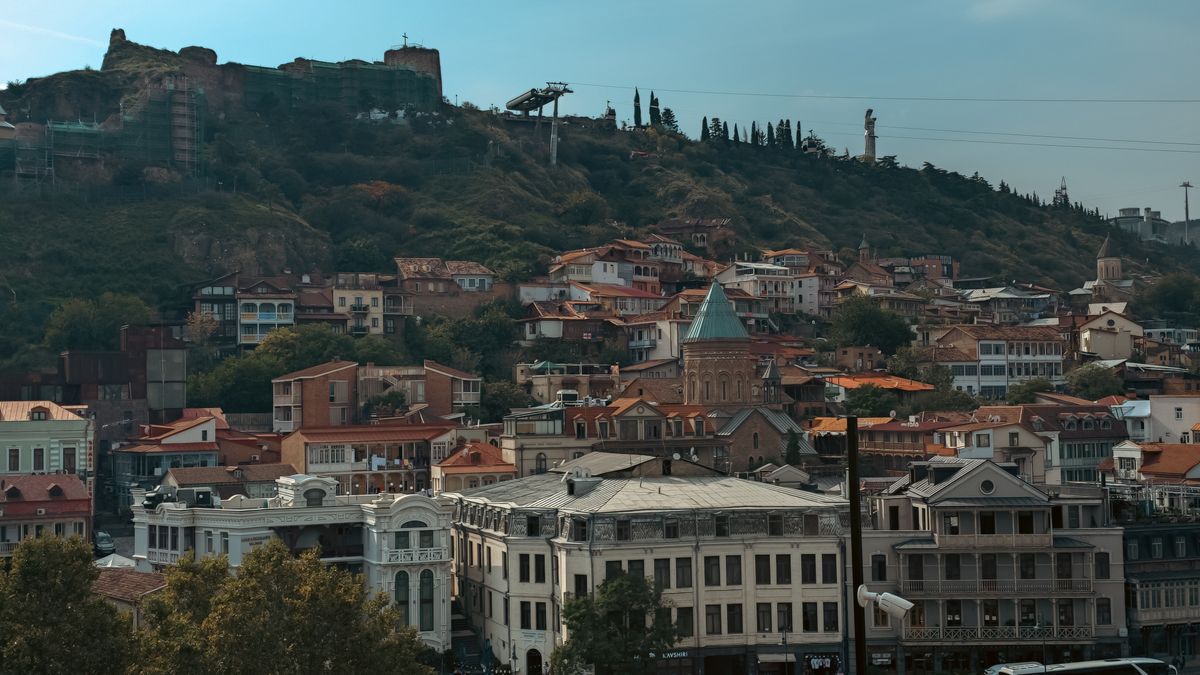
Drizzle was coming off the hill where Narikala, the old fortress, stands above the quarter, when I turned into the lane, and the smell arrived before the sign did: eggs left in a warm room, faint at the corner, stronger halfway down. A woman sweeping outside a doorway stepped aside and pointed me to the right door before I could ask. The brick humps behind the signboard are the roofs of the baths themselves, and I counted three from the corner, plus one chimney. A dog lay asleep against the warm side of a wall and did not move for two tour groups with lanyards or the cyclist who came through after them.
Tbilisi was founded in the 5th century by King Vakhtang I, and the legend is that he was so taken with the hot springs here that he cleared the forest and built the city on the spot. Its name, Tbilisi, means place of warmth, after the same springs. The Old Town, meaning the neighbourhoods inside the original city walls, was reconstructed in the 1970s and 1980s, which would explain why the lane outside the baths looks so tidy for a district this old.
Water reading
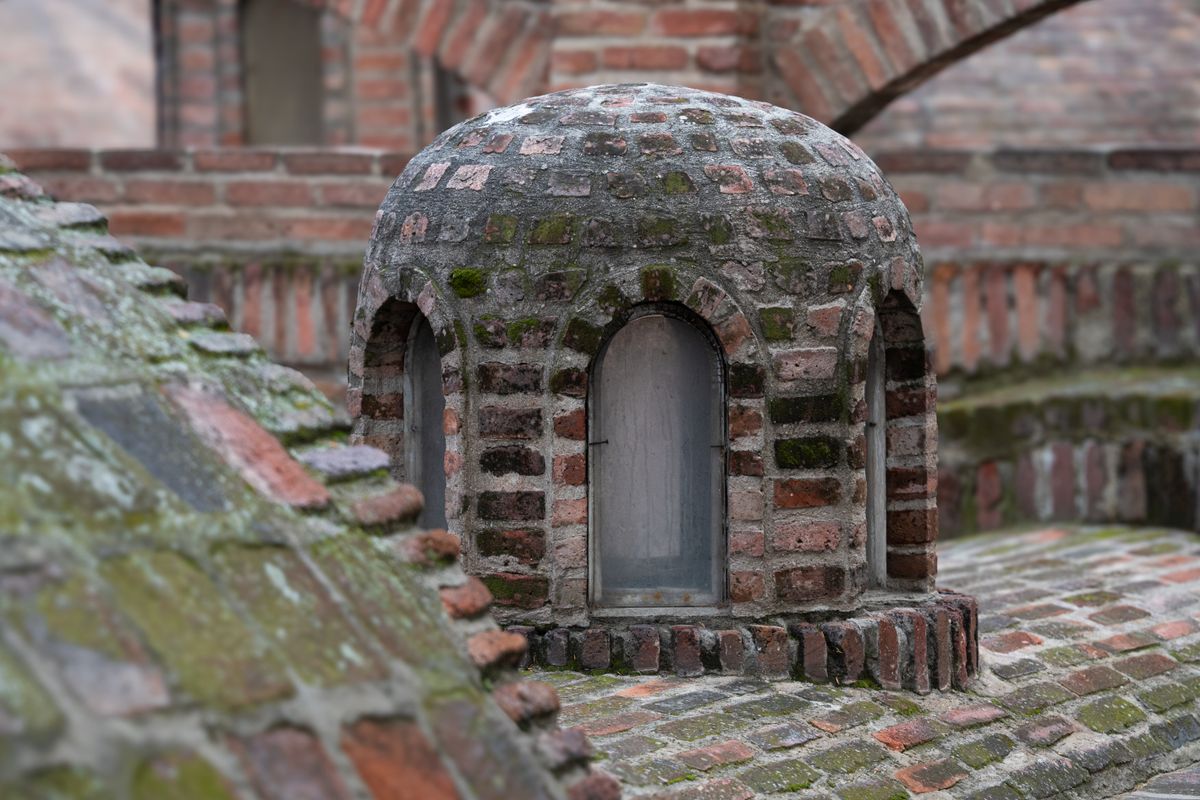
Water at 38 to 40 degrees Celsius on average, still, with one bather in it. Before I went in I stood on the brick paving above the bath rooms, where the domes come up out of the ground like molehills, and each one does two jobs: it lets daylight into the room underneath and lets the sulphur steam escape through the shuttered arches round its sides. Moss grows in streaks down the brick, and I would guess the steam is what keeps it damp. A man beside me photographed the dome, then his own shoes, then the dome again.
I had booked a private room, which comes with a dry sitting area for belongings, so the water was mine for the afternoon. Each soak went on my watch, and the first four minutes felt short. In the sea, water that is too warm means swimming a few metres out to colder water, but a bath has no colder side, so getting out is the only way to cool down, and I took three rounds with a rest in the dry area between each.
The attendant who showed me in had set a glass of cold water on the table in the dry area before I asked, and by the third round I had drunk it. Between rounds I sat there and listened to the building: water running somewhere, a tap in the next room, no voices. Verdict on the water: better taken in rounds than in one long sitting.
By the end of the 13th century, Tbilisi had 65 baths on record.
Scrub log
Kisi, the scrub: a textured mitt, dead skin off, usually 10 to 15 minutes. Levan, the mekise (the man whose job it is), came in after my third round. Once the first pass of the mitt had gone across my shoulders I saw the point of the short soaks, because skin that had spent three rounds in warm water came away under the mitt without argument, and by my watch the whole scrub fell inside the usual range.
He worked from shoulders to feet in long strokes and spoke only to give directions. 'Breathe out, now turn,' he said, and that was most of the conversation. When he finished he left a towel folded on the bench and closed the door behind him, and I sat in the dry area for a while before I dressed.
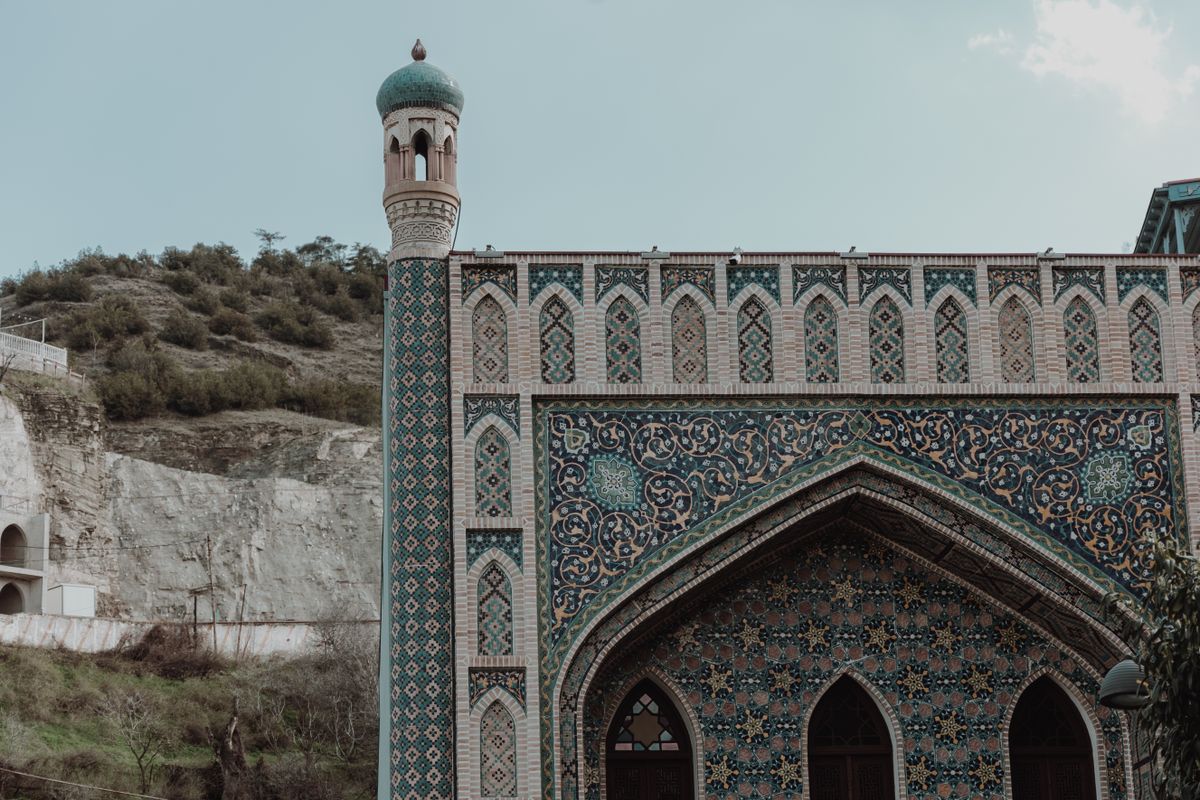
On the way out I passed the Orbeliani Bath, also called the Blue Bath for its blue tile mosaics. The other baths I had passed showed the street little more than their brick roofs, while this one has a whole tiled front and a turret capped in green, and a small group stood on one square of pavement photographing the turret. Among its guests was the Russian poet Alexander Pushkin.
field notes
Bring a swimsuit unless you plan to go nude; towels can be hired for a fee.
Public rooms are separated by sex. Private rooms have their own shower and toilet.
The water runs warmest in the morning, so a later slot is the gentler one.
Back at the corner the dog was where I had left it, on the warm side of the wall, and at dinner that evening the smell of the lane was still in my hair. ■