Thorong La: A Crossing Timed to the Wind, Not the View
At 5,416 metres the mountain keeps its own clock, calm before eight, dangerous after ten. Miss that window and scenery stops being the problem.

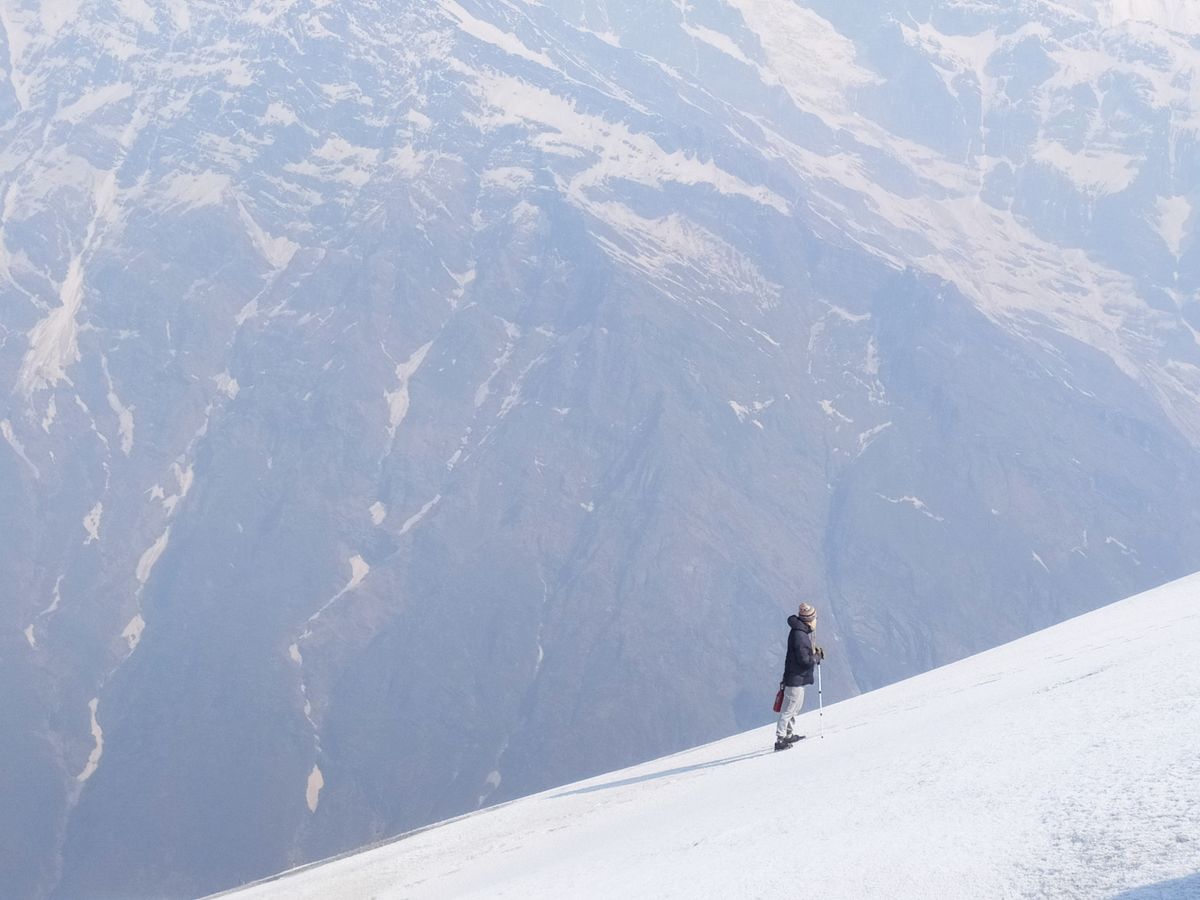
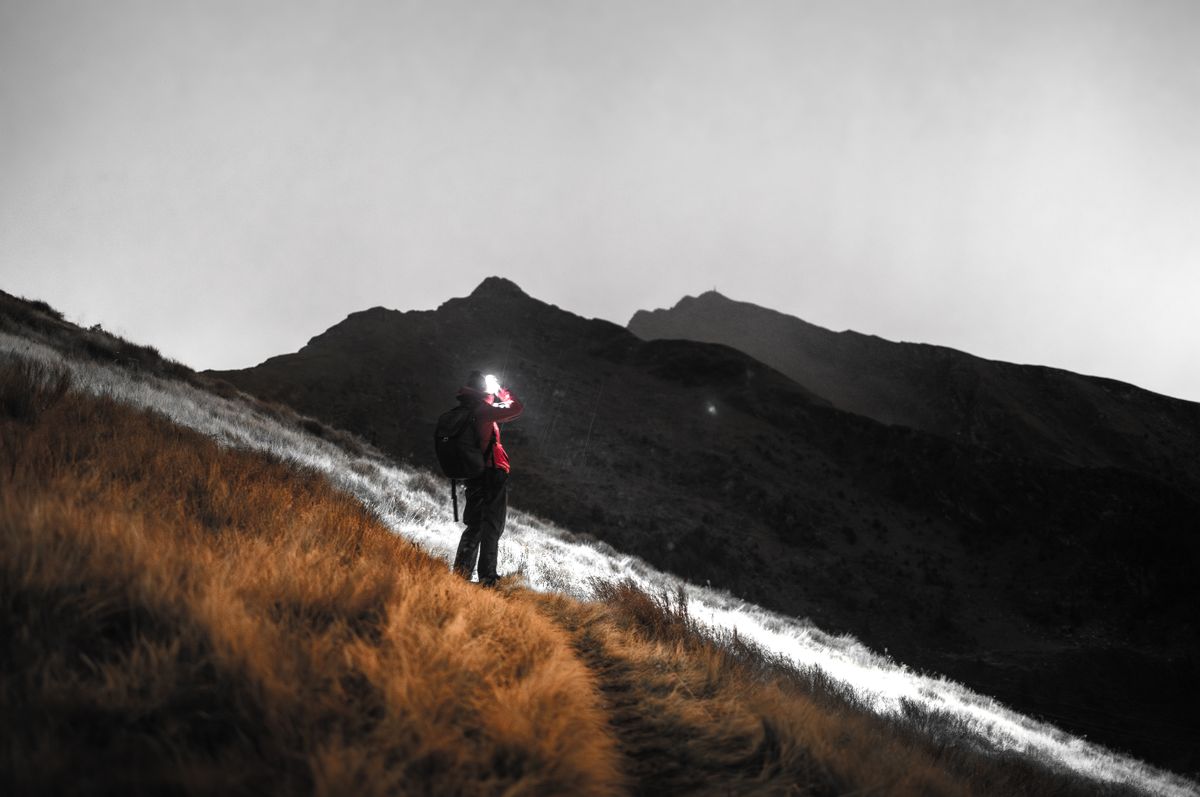
Minus eleven Celsius, wind calm, sky clear enough to count individual stars down to the horizon. That was Thorong Phedi's four a.m. bulletin, delivered to a courtyard of headlamps and half-laced boots well before anyone asked for it. Thorong La sits at 5,416 metres between Manang and Mustang, and the pass does not adjust its schedule for anyone's itinerary.
The Calm Window
The trail out of Thorong Phedi (4,450m) climbed into a line of headlamps, forty or fifty of them strung out ahead and behind, no wind to fight, no chill beyond the plain cold of the number on the thermometer. That distinction matters more than people think. Windless minus eleven is a manageable cold. Windy minus eleven, with any real speed behind it, is a different forecast entirely, and not one anyone was filing at that hour.
The queue at Phedi's gate looked less like herd instinct than like independent agreement: dozens of separate parties, none of them travelling together, all arriving at roughly the same four to five a.m. window because they'd each read the same wind schedule, or heard the same briefing from their own guide the night before. Call it convergent forecasting. Nobody needed to be told twice.
The stillness was not luck, it was the overnight setup. Clear skies overnight mean the ground keeps radiating heat away all night with nothing to trap it, air near the surface cools and settles, and without the sun up to drive any heating differential across the terrain, there is no engine to generate wind. Calm air at 4 a.m. on Thorong La isn't a gift. It's just the physics before the sun clocks in.
By the time the light behind the ridgeline started going from black to the flat grey that precedes any real dawn, that calm already had an expiration stamped on it, somewhere around three hours out.
The Ledges Wake Up
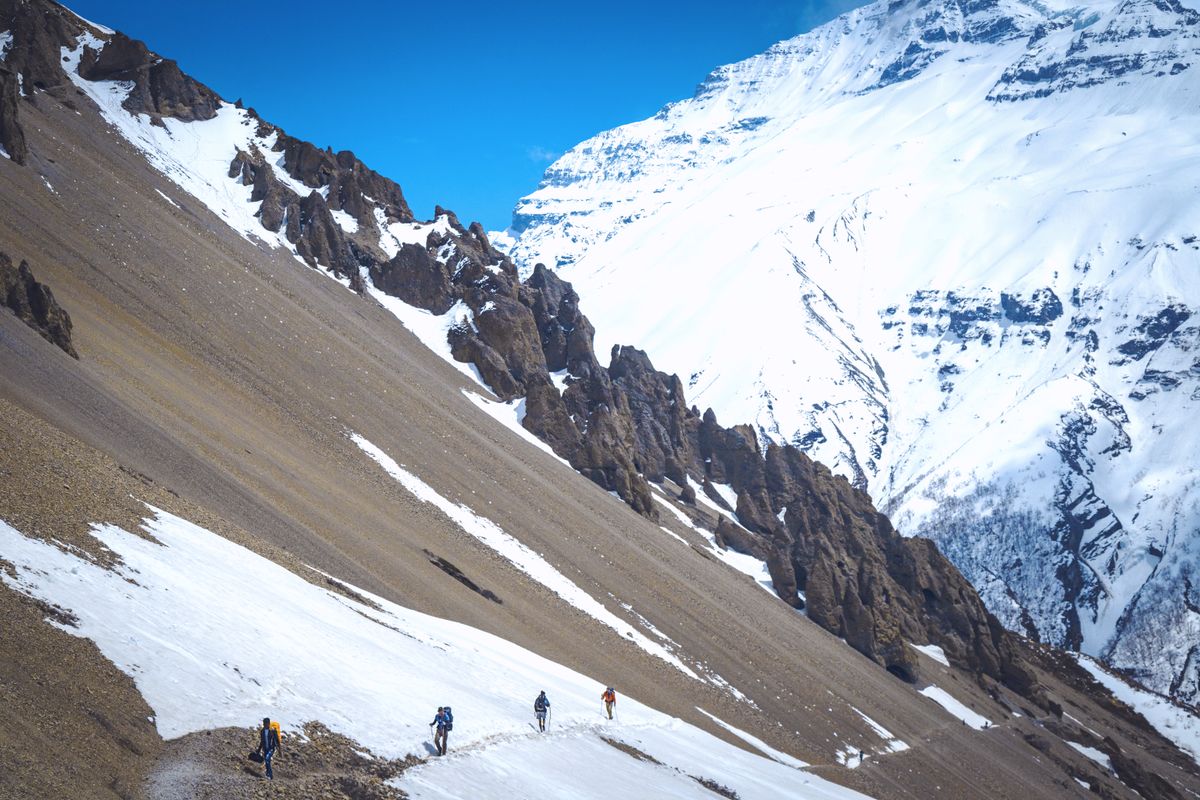
Around 8 a.m., roughly minus four Celsius, sky still hard blue with the kind of thin, high-altitude clarity that has nothing to soften it. The first real gusts showed up on the exposed ledges below the pass, not as a gradual increase but as a switch flicking, prayer flags that had hung dead still an hour earlier suddenly snapping flat.
The climb from Phedi to the pass is 966 metres in one push, no flat sections to recover on, and the ledges near the top are the part everyone warns you about. Guides on this route have a line they repeat to every group: the pass closes its gates by midday. It sounds like superstition until you run the numbers behind it.
What is actually happening is a straightforward heating differential. The Mustang side of the range, dry and rocky, warms fast once the sun is properly up. The Manang side, glacier-fed and shaded longer, warms slower. That mismatch builds a pressure gradient across the saddle of the pass through the morning, and the terrain funnels it, so what starts as a gentle breeze at 8 a.m. is a shove by mid-morning. The Kali Gandaki valley just below, on the Mustang side, has a reputation as one of the windiest trekking corridors anywhere for the same reason, run on repeat every single afternoon. Local folklore, actual thermodynamics, same forecast.
The summit cairn at 5,416 metres arrived a little before ten, strings of flags going nearly horizontal, the light by then flat and hard rather than the soft grey of departure, high sun with nothing to diffuse it at that altitude. Nobody lingered for a summit moment. The ledges just crossed were the exposed part, and the ones ahead on the descent's first switchbacks were about to become the same problem in reverse.
Ten o'clock was closing in fast, and the flags weren't decorative anymore, they were the instrument reading.
The wind schedule you're actually planning around
Leave Thorong Phedi (4,450m) or Thorong High Camp (4,880m) between 4am and 5am.
Wind is calm to light before roughly 8am on the pass.
It builds steadily from 9am to 10am.
After 10am, expect strong to severe wind on the exposed ledges near the summit.
Best crossing windows: spring (March to May) and autumn (September to November), the two stable pre- and post-monsoon periods for this range.
Thorong La doesn't run on scenery, it runs on office hours: open at dawn, shut by mid-morning.
Down Into the Rain Shadow
Past 5,200 metres and dropping, the temperature climbed back through freezing within the hour, humidity falling even faster than the altitude did. Wind was still up, still shoving from behind on the switchbacks, but it was a tailwind problem now instead of a standing-on-a-ledge problem, and that distinction is the entire point of leaving at four in the morning.
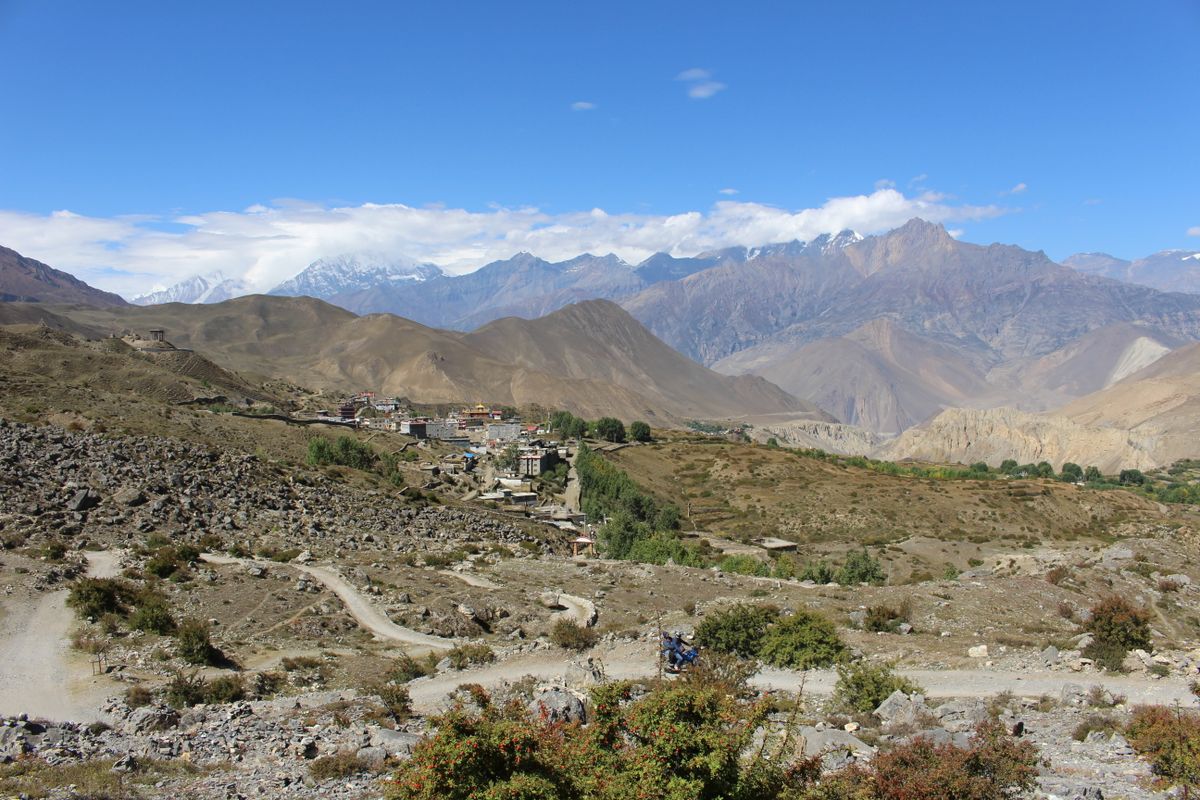
The landscape changed faster than the legs did. Behind, the Manang side had been glacier moraine and hazy white light bouncing off snow. Ahead, the Mustang side opened into bare brown hills, sharp-edged and dry, the light going flatter and harder with none of the haze that scatters it on the wetter side of the range. That's the rain shadow doing exactly what a rain shadow does, and it happens over the space of a few switchbacks rather than a few hundred kilometres.
Muktinath sits at roughly 3,800 metres, close to eleven hundred metres below the pass and, in every meaningful sense, a different climate. Whatever moisture survives the crossing from the Annapurna side gets wrung out on the way up, and Mustang is left dry for most of the year. It's not a scenic contrast so much as an atmospheric one, glacier basin on one side of a five-thousand-metre wall, high desert on the other.
Behind us on the pass, tomorrow's four a.m. group was already locked into the same itinerary at Phedi. Their bulletin will read almost identically to today's, calm before eight, building by ten, strong to severe on the ledges soon after. That's not a warning, it's just tomorrow's forecast, and it's the only reason this crossing works at all. ■