The Loop, Logged: El Nido in the Wet Season
A field count of El Nido's lettered island-hopping tours, run in August when the water is honest instead of postcard blue.

Sea State at Corong-Corong
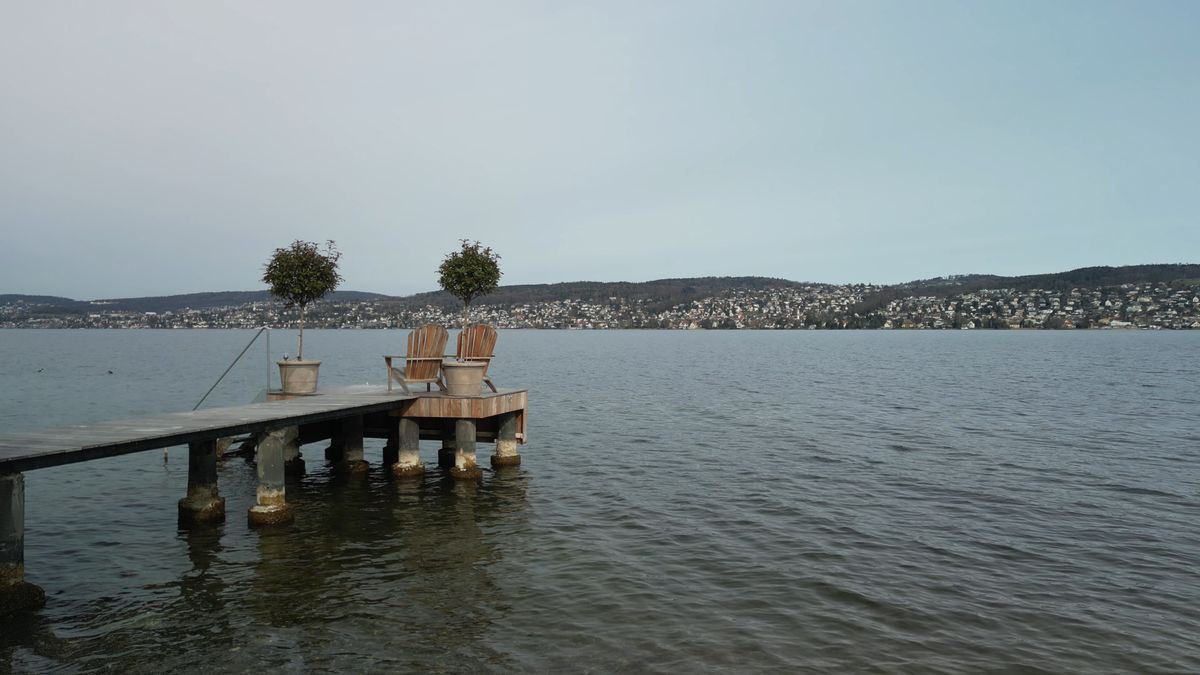
Corong-Corong pier, seven forty in the morning, sky the flat grey of a held breath and staying that way past nine. Sea state inside the reef line: chop under half a meter. Outside it, more. This is the southwest monsoon, mid-August, not the season on the tour operator's laminated menu board, and the difference shows in the water before it shows in the weather.
El Nido sits on the Bacuit archipelago, a run of limestone karst islands off the northern tip of Palawan, and the archipelago does not close for the wet season. The boats still go out. December through May is the calm water stretch, the one photographed for the brochures, glass clear and blue to the bottom. August is the other six months, and nobody puts those on the wall of the dive shop. I came in August on purpose. A field reading taken in the easy season only tells you what the easy season looks like.
The Fleet, Lettered and Fixed
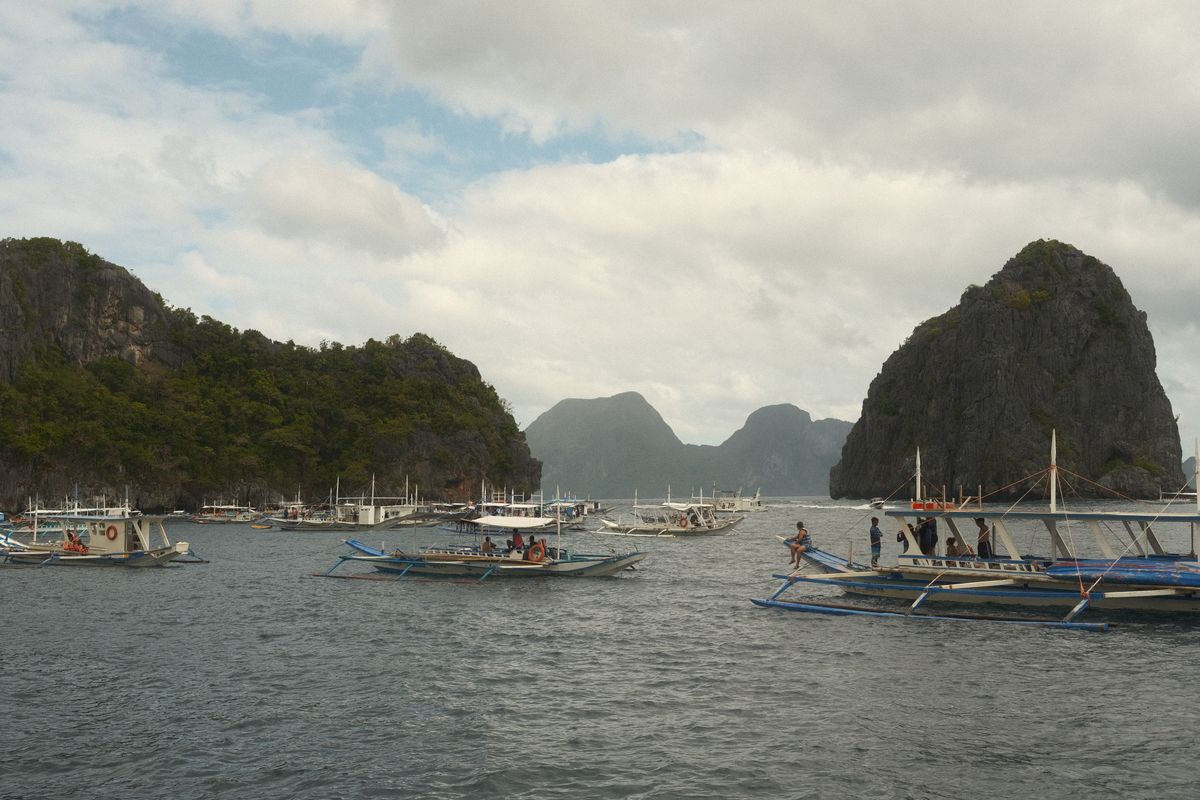
Bancas queue by letter, not by island, before the day's four routes peel off from the same pier.
Bancas moored along the pier at low tide, counted hull by hull: twenty-six, double-outrigger, each one stencilled with a registration number and a cooperative name in paint that has been touched up more than once. Not a private charter among them. Every hull belongs to one of the town's boat associations, and every association runs the same four routes.
The routes are lettered, A through D, and the letter is the whole itinerary. Tour A runs Big Lagoon, Secret Lagoon, Shimizu Island, and Seven Commandos Beach for somewhere between 1,200 and 1,400 pesos a person, lunch included. Its counterpart, Tour D, runs Small Lagoon, Nat-nat Beach, Cadlao Lagoon, Pasandigan Cove, and Paradise Beach for around 1,200. You choose a letter at a booking window, not a set of stops. There is no version where you ask the boatman to skip Shimizu and linger at Seven Commandos instead. The cooperative sets the order and the timing, and every banca on a given letter that morning is more or less doing the same loop within twenty minutes of the others.
The letter price is the floor, not the total. Every visitor pays a one-time Eco-Tourism Development Fee of 400 pesos, good for ten days, before setting foot on any tour. Big Lagoon adds its own 200 peso entrance on top of that. Getting into Big Lagoon at all means a kayak, since the entrance is too shallow and narrow for the banca itself, and the kayak runs another 150 pesos a head if you didn't bring your own paddling arms and a rental agreement. None of this is hidden. It is only additive, one small counter at a time, and the total by lunch is larger than the number quoted at the booking window.
Lunch on Tour A is fixed too, plated on whichever beach the cooperative has scheduled for that slot, not chosen from a menu. The boatman times the whole loop around it: four stops, one lunch window, back at the pier by early to mid afternoon regardless of which of the four routes you drew.
Call it what it is: a scheduled circuit with a coastline attached, run tighter than most bus timetables I've logged. Reliable, well organized, and not a place to expect improvisation from the crew. Good for a first look at the archipelago. Bad for anyone who wanted the boat to itself.
Tour A, One Person, Before Tips
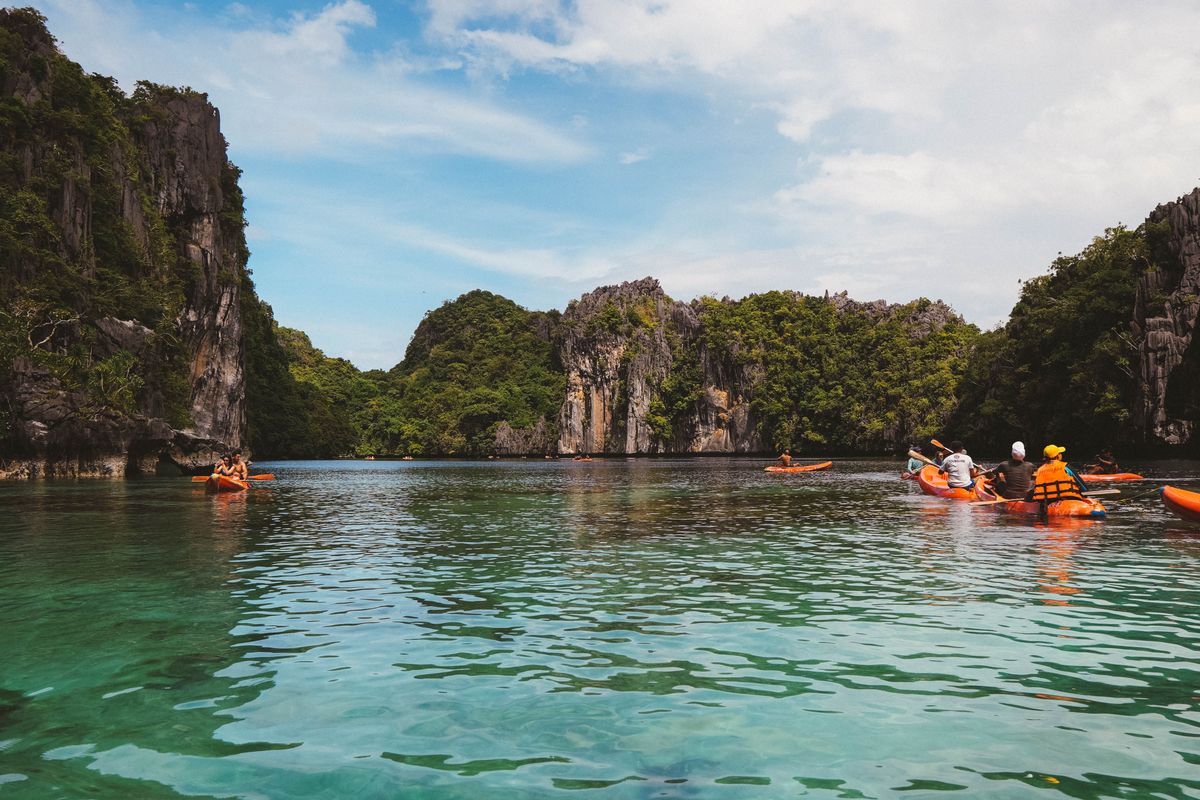
Big Lagoon, Entered by Kayak
Visibility at the Big Lagoon kayak launch, mask down, arm's length test: about three meters before the silt cut it off, the runoff line from the last night's rain still hanging in a faint brown layer over clearer water underneath. That is a wet season number, not a flaw in the lagoon. The postcard shots of Big Lagoon reading glass clear to a visible bottom are dry season photographs, taken December through May when the runoff stops and the water has months to settle. Sold as the lagoon's permanent condition, which it is not. It is the lagoon's best six months, photographed and reused for the other six.
The lagoon itself is entered through a gap in the limestone barely wider than two kayaks passing, water shallow enough over the sill to see the paddle blade scrape close to rock on a low swell. No banca goes through it, and no one swims it in from open water. You queue at the mouth, kayak or small paddle boat only, and go through single file behind whichever tandem ahead of you is still working out which one of them steers. Inside, the karst walls go straight up, cut sheer enough that the shade line across the water is almost a ruler edge by midmorning.
The rock itself reads differently up close than from the boat. Tide notches cut horizontal bands into the limestone at what must be several water level marks, the lower ones smoothed to a shine, the higher ones rougher, drier, holding a stubborn few fig root systems that have worked into the cracks. This is not new erosion. It's a record, and it's one nobody selling the postcard version bothers to point out, since a jagged tide notch reads less flattering in a square crop than blue water does.
Secret Lagoon, Named and Metered
If you're going in the wet season
Morning tours have the calmest window; afternoon squalls are common August through October and cooperatives will reroute or cancel with short notice.
Pack the ETDF receipt, paper or the app confirmation. It gets checked at more than one stop, not just the first.
Rented dry bag or not, assume the kayak into Big Lagoon will splash you at the sill regardless of skill.
Big Lagoon is a room you paddle into, not a view you walk up to.
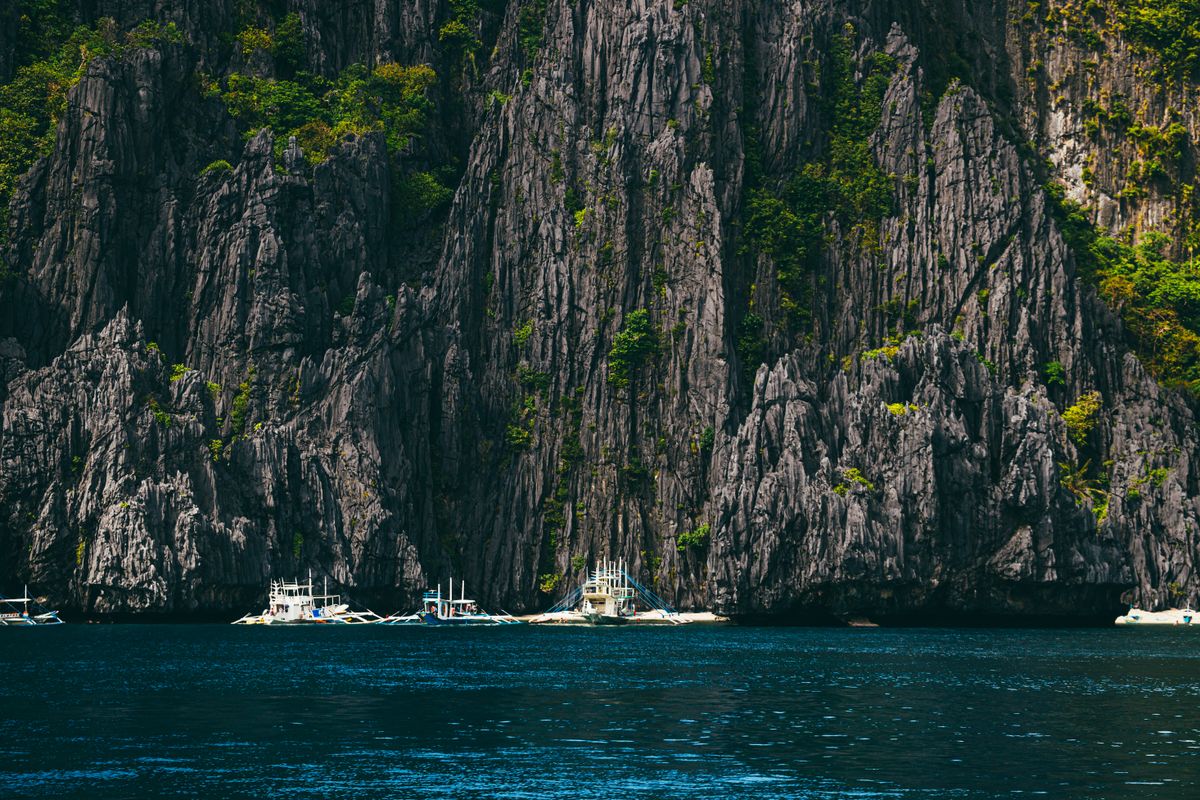
Worth the queue once, less for the water's famous clarity, which is a dry season claim, than for the walls around it, which don't need a calm sea to be impressive.
Boats holding position outside the Secret Lagoon inlet, counted from our own banca's deck while we waited our turn: nine, engines cut, drifting close enough to touch gunwales. Nine is not a secret. The lagoon has a signpost, a ticket table, and a set order on the Tour A itinerary, and every hull on the water that morning is arriving on the same schedule I am. The name predates the crowd, or the crowd came for the name. Either way, calling it secret now is like calling a toll road hidden because the entrance is behind a bend.
Logged at the swim-through leading into the lagoon over roughly twenty minutes: one specimen photographed mid-jump four separate times by four separate members of the same travel group, none of the four takes apparently satisfactory; one dry bag opened, inspected, and resealed without anything removed from it; one snorkel worn on the forehead like a headband for the full twenty minutes, never lowered to the intended position. Water depth at the swim-through, my own reading off the rock edge: waist deep on me at the shallowest point, closer to chest on the shorter members of the group still finding that out in real time.
What I'd actually check on a return trip: whether the queue count holds at nine outside the wet season, or whether Tour A boats stagger their arrival better once the water's calm enough to add a fifth departure slot in the morning. Nine on an August low traffic month suggests a busier number in February, and I don't have that number yet, only the shape of the guess.
Secret Lagoon earns the swim, not the name. Go for the enclosed light through the karst opening, not for any sense of having found something the ticket table hadn't already logged. ■