Betel Nut Stands and Night Markets: Sixteen Days Around Taiwan
Sixteen days on a rented scooter around Taiwan's coast, from Taipei's night markets past a half-closed Taroko Gorge to Tainan's banyan warehouse.

In my mother's family I'm the American cousin; at my father's table I'm the Taiwanese one.
Taipei: familiar and strange (days 1-3)
Landing at Taoyuan Airport with my US passport felt like cheating. The immigration officer started in English, switched to Mandarin when she looked up at my face, and went back to English once I fumbled the tones, which is roughly how every family dinner of my childhood went.
I slept in a capsule hotel in Ximending, a pedestrian shopping district full of teenagers, because nothing says finding yourself like a pod. At 11 PM the shops there were still open and still playing K-pop, and the smell of stinky tofu (fermented bean curd, deep-fried, and detectable from a block away) was losing a fight with fried chicken cutlets.
Taipei 101 and other obligations
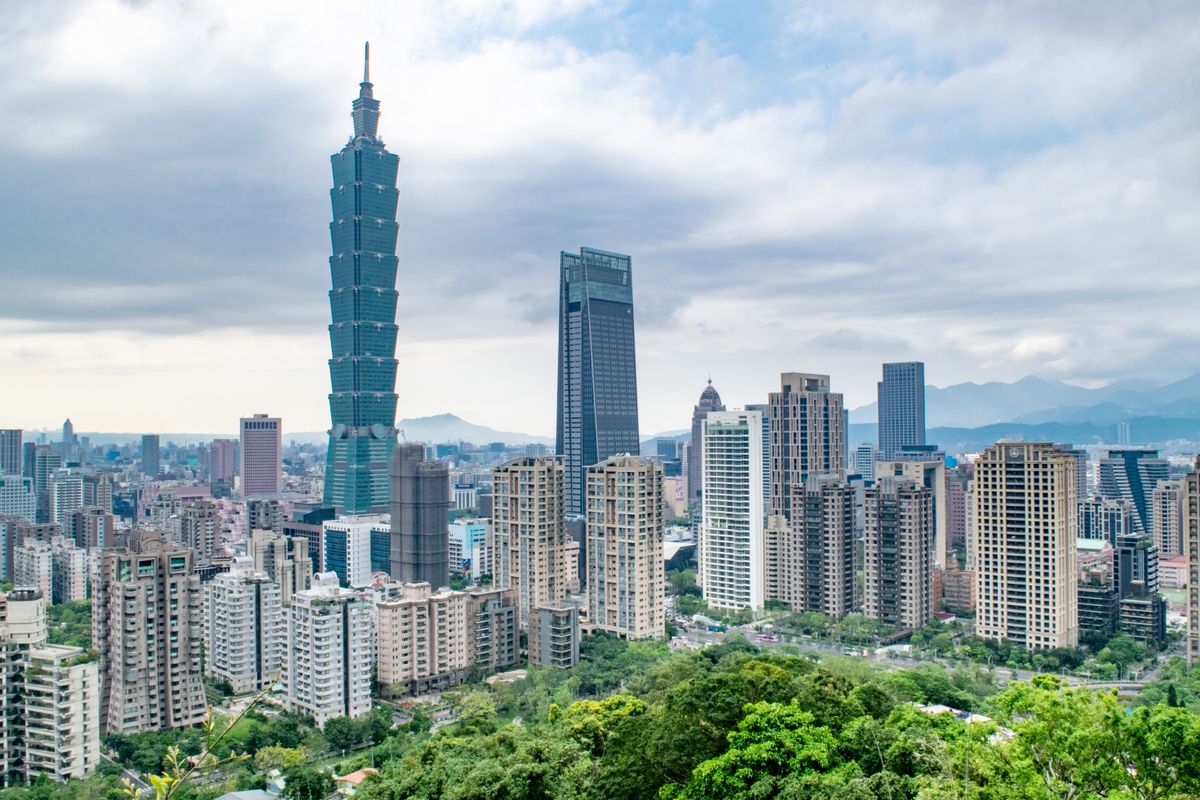
Yes, I went up Taipei 101 (TWD 600 for the 89th-floor deck). The lift from the 5th floor to the 89th takes 37 seconds, and my ears popped on the way up. The better view was indoors, where families turned their backs on the skyline to take selfies with the damper, a 660-tonne gold steel ball which swings against the tower's movement in typhoons and earthquakes.
Din Tai Fung, the Taipei dumpling chain, has a branch in the tower's basement with a long queue; the original shop on Xinyi Road now only does takeaway. I ordered xiaolongbao, soup dumplings pleated by cooks working behind a glass wall, because it felt legally required, and they ruined every other dumpling for me.
The real Taipei: night markets and alleys
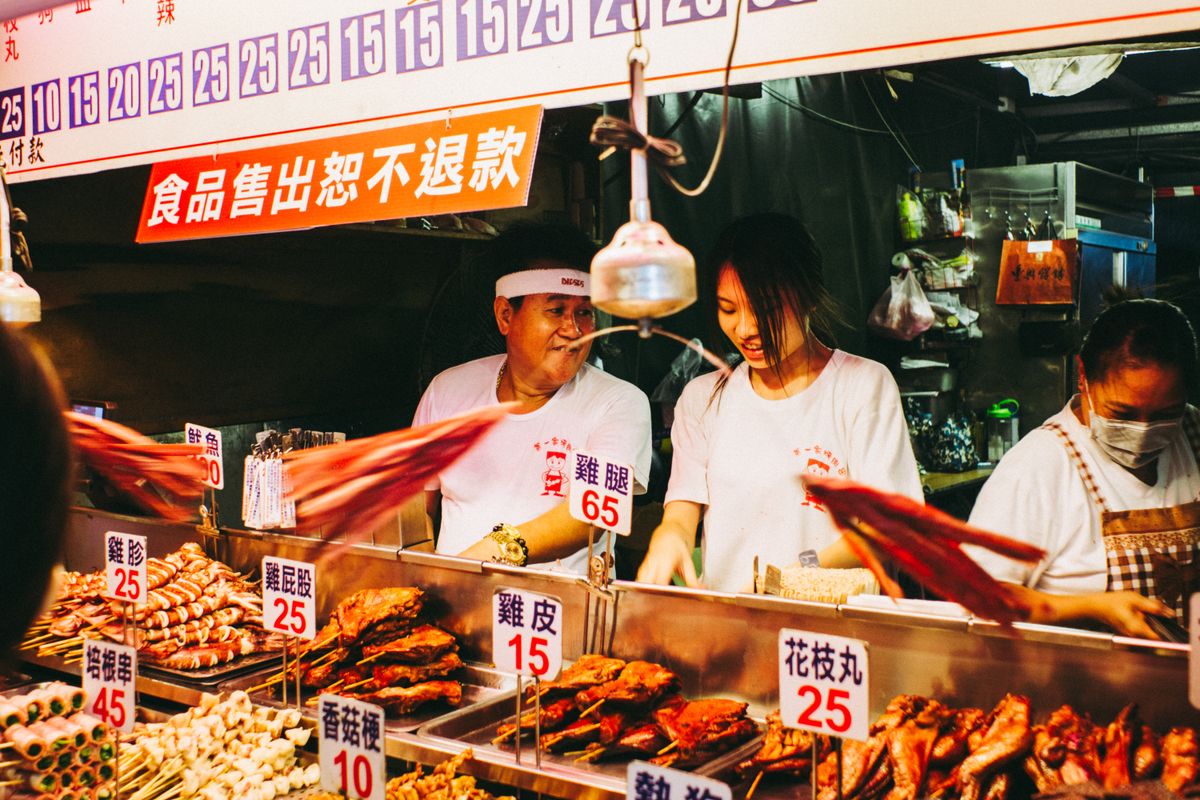
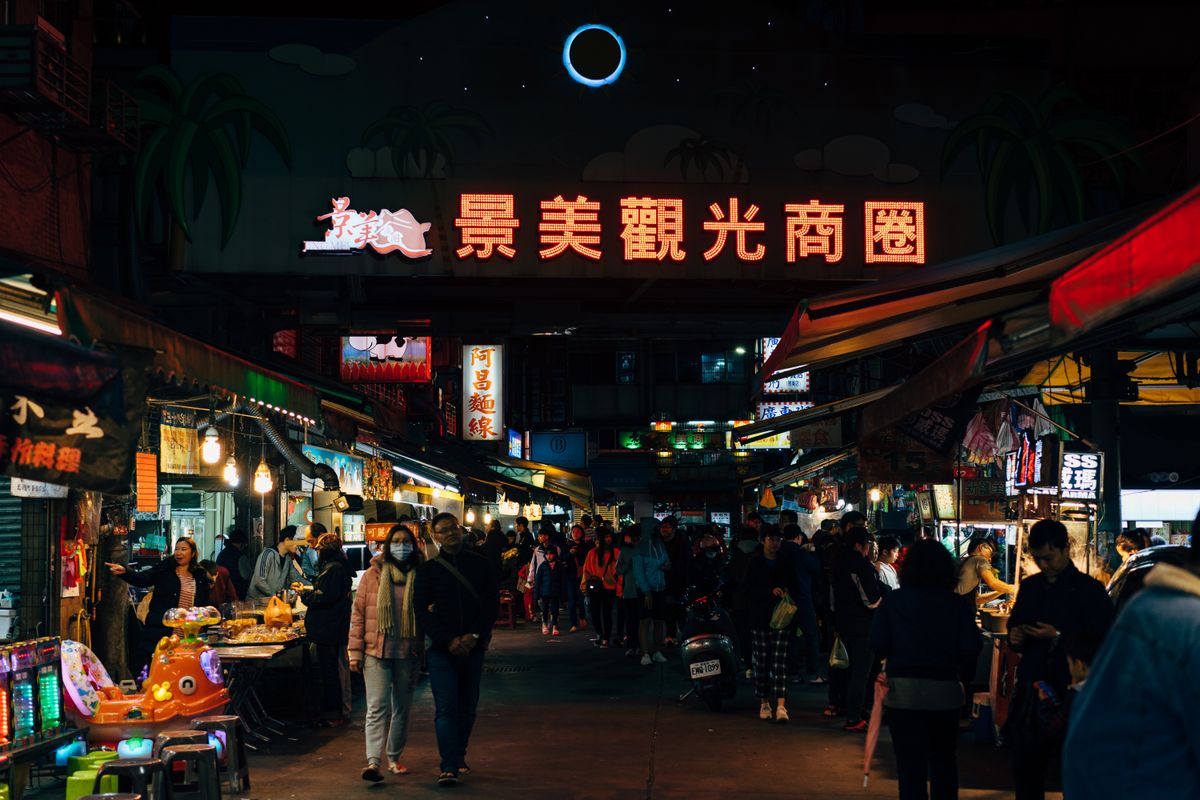
Raohe Night Market runs down a single street in Songshan, starting at the gate beside Ciyou Temple, and it's the one I'd send a friend to before Shilin. The stall right inside the gate sells Fuzhou black pepper buns, baked on the inside wall of a charcoal drum oven, with a crisp bottom and a pork and spring onion filling hot enough to burn your mouth. Bite the edge first.
I rented the scooter in Zhongshan, a district just north of Taipei Main Station: a 125cc Yamaha and a helmet that had seen better decades, handed over once the shop had checked that my International Driving Permit covered motorcycles. The plan was clockwise, down the east coast first, with the mountains on my right and the ocean on my left.
The northeast coast: Jiufen to Hualien (days 4-6)
Taroko National Park
Entry to the park is free. The visitor centre at the gorge mouth is open, and so are the Dekalun Trail and the short walks around Tianxiang, but Shakadang Trail, Swallow Grotto and the Zhuilu Old Road have been closed since the April 2024 earthquake with no reopening date. Check the Taroko National Park website before you go, because the road schedule changes.
Highway 2 hugs the coastline like it's afraid of falling into the Pacific. My first stop was Jiufen, an old gold-mining town stacked on a hillside above the sea, which fans tie to Spirited Away, a link Studio Ghibli has denied.
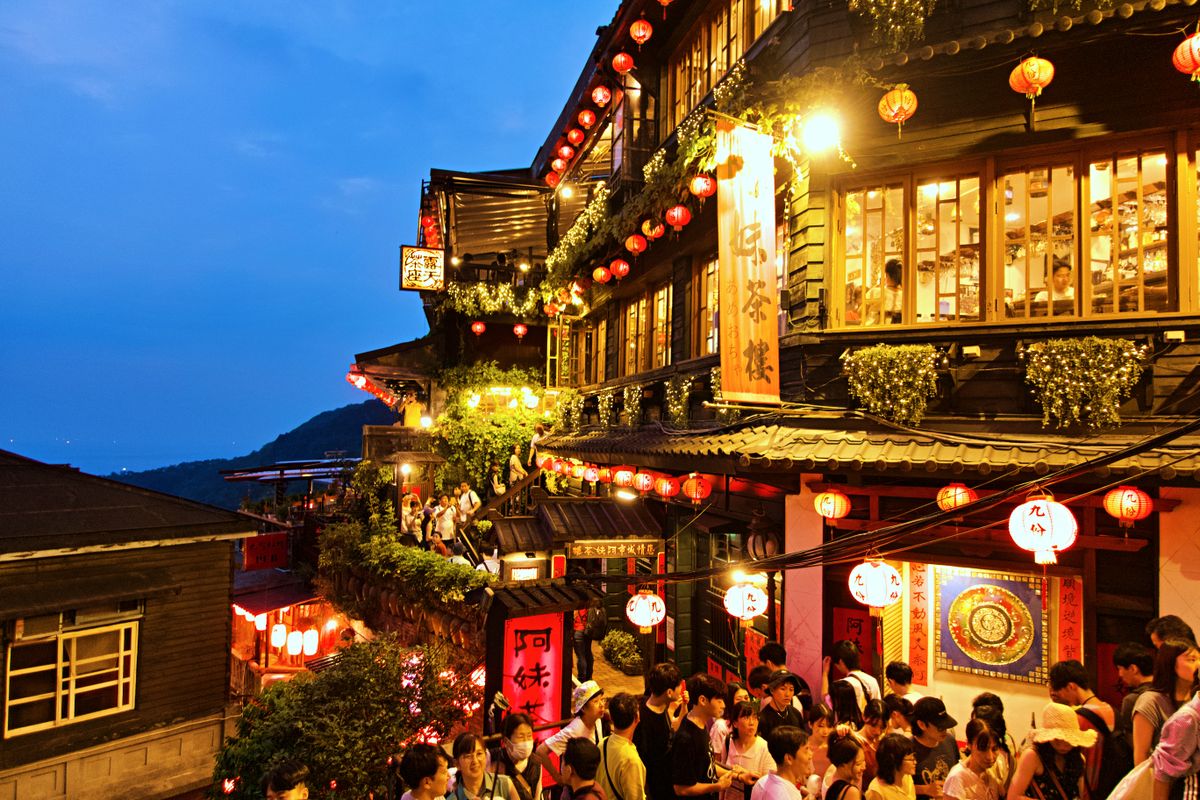
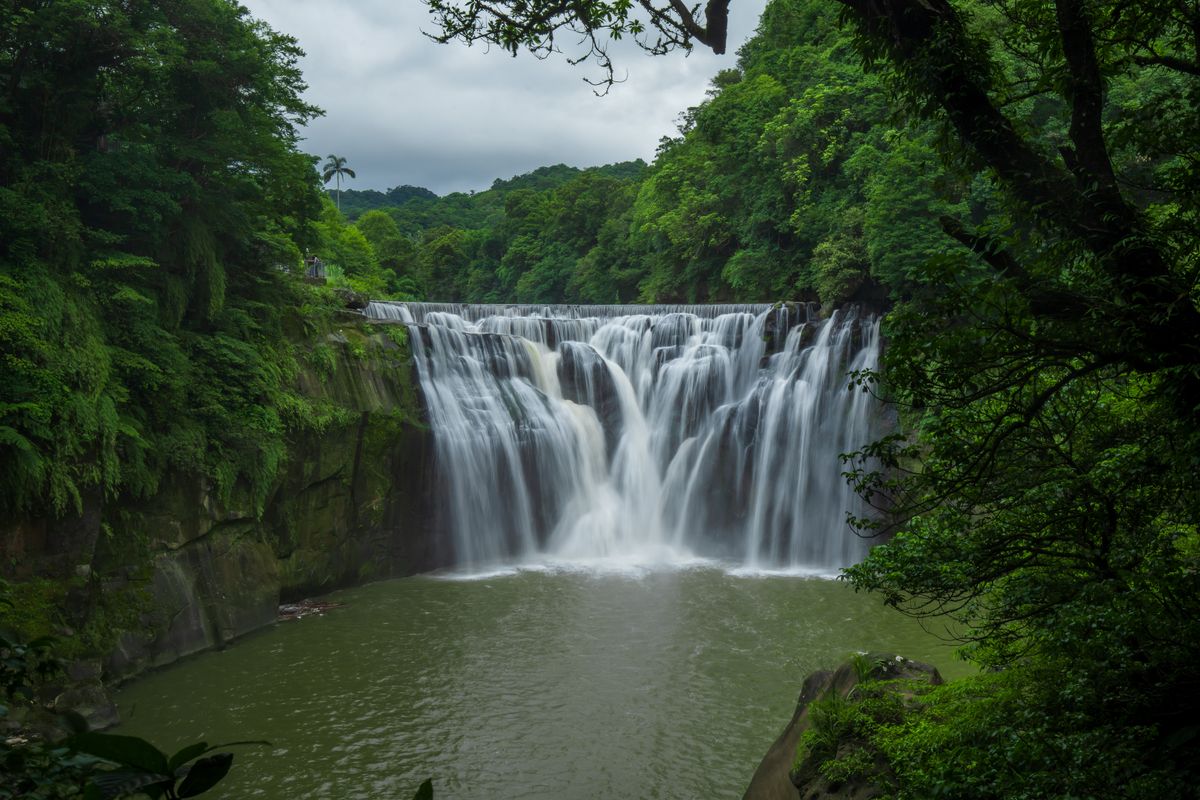
Jiufen Old Street fills with tour buses from Taipei later in the morning, so I got there at 8 AM. The red lanterns and wooden teahouses do look like the film if you squint past the crowds, and from the balcony of A-Mei Tea House, the lantern-hung building in every photo of the town, I watched fog roll over the mountains while my tea went cold. On the way out I took a detour inland to Shifen Waterfall in Pingxi, the broadest falls in Taiwan.
Bitou Cape, whose name means nose-tip cape, is the northeast corner of the island, and the trail over it is free. Sandiao Cape, a little further along Highway 2, is the true easternmost point. The wind on the headland was strong enough that I walked leaning into it, and a man was flying a homemade kite patched with tape off the cliff edge as if he did it every morning.
Taroko Gorge: marble walls and closed trails
The road into Taroko, Highway 8, runs between marble cliffs that rise straight up on one side and drop to the Liwu River on the other. Since the April 2024 earthquake the gorge section has opened to traffic only in a few set windows a day, so I waited at the barrier with a line of tour buses for the early-morning slot.
Eternal Spring Shrine, with a waterfall pouring out from beneath it, commemorates the 226 workers who died building the Central Cross-Island Highway through these cliffs. It has been closed since the earthquake, but you can still see it from the road.
Hualien City's Dongdamen Night Market has a lane of Indigenous food stalls, where I ate grilled wild boar sausage and drank millet wine, a cloudy, sweet brew from the east-coast tribes. I went back for a second sausage.
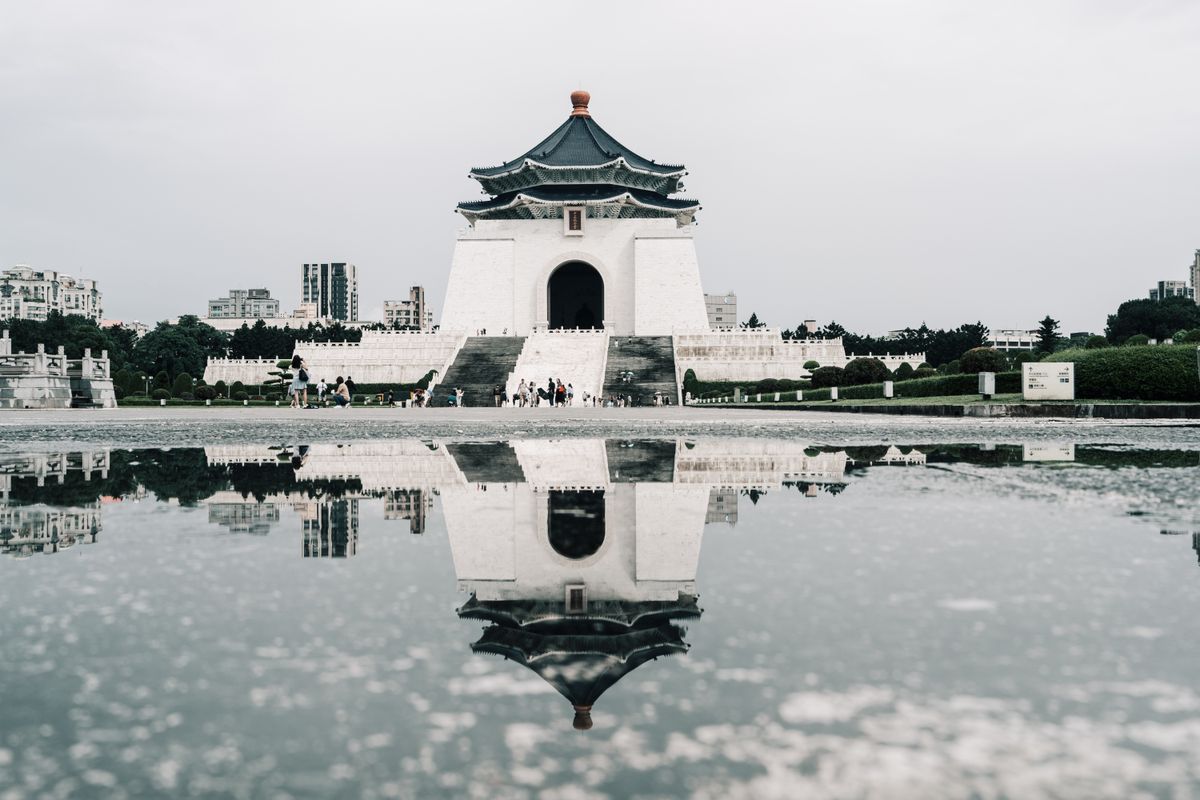
Back in Taipei, Chiang Kai-shek Memorial Hall. Its blue roof has eight sides because eight is a number tied to good fortune.
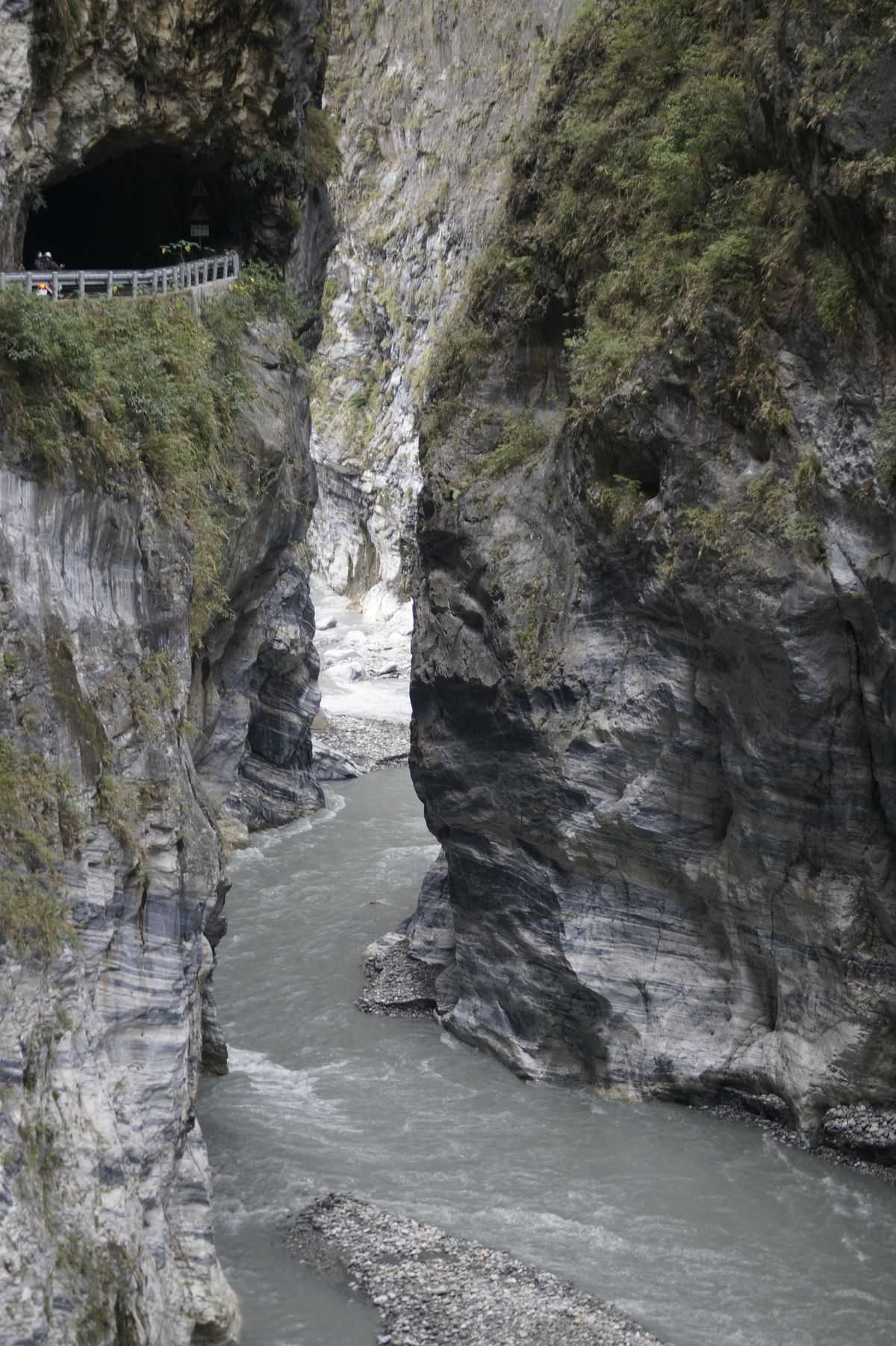
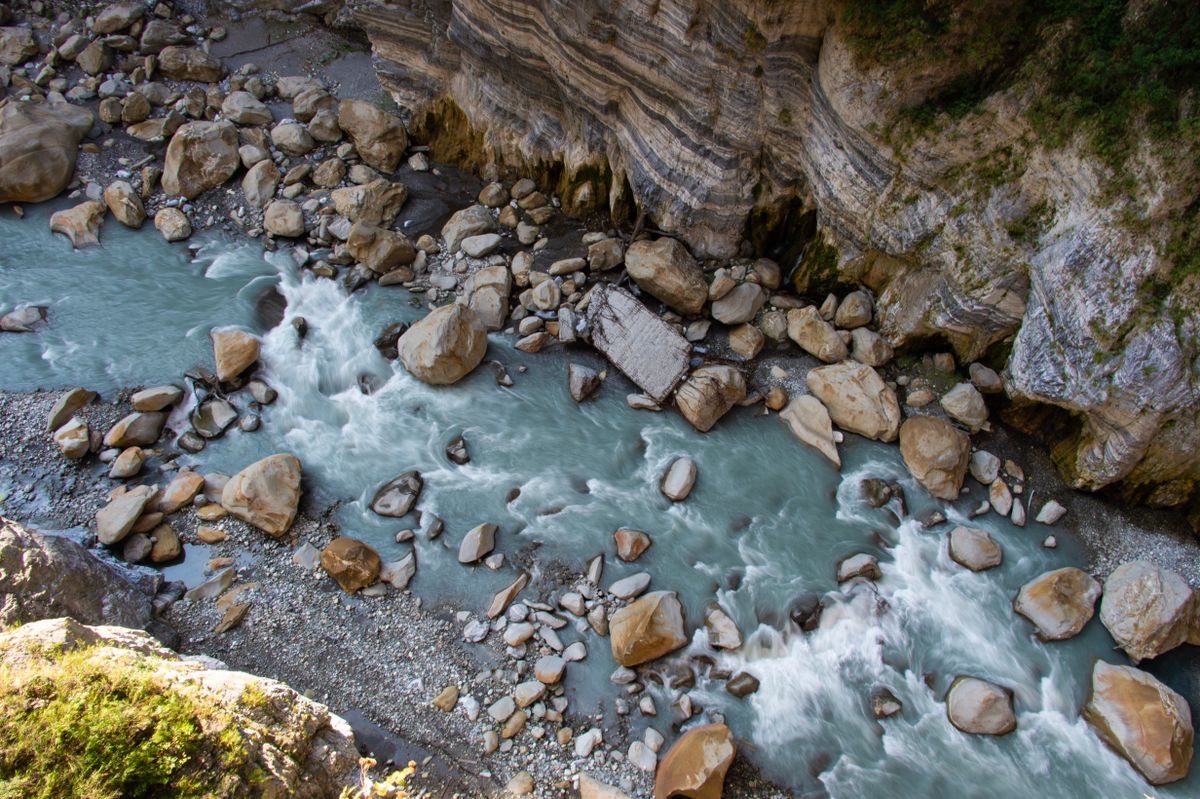
The Liwu River between Taroko's marble walls, with an old walkway cut into the cliff above. Many of these paths have stayed closed since the April 2024 earthquake.
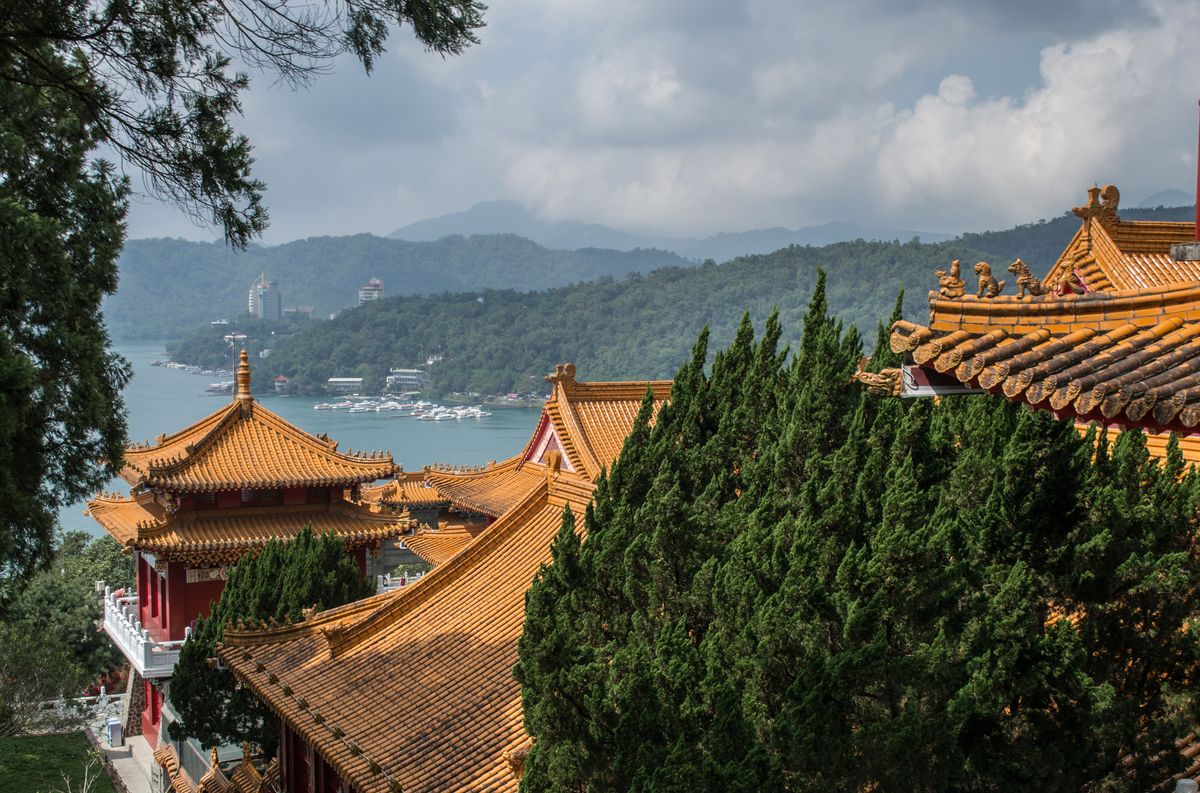
The east coast: where the mountains meet the sea (days 7-9)
Highway 11 runs south from Hualien to Taitung along a coast where the mountains drop straight into the Pacific, which meant I kept pulling over just to stare. Glass-fronted betel nut stands, selling the mildly stimulant palm nut wrapped in a leaf, sat at the roadside between villages.
Sanxiantai, an islet named for three Taoist immortals said to have rested there, is joined to the shore by an eight-arched footbridge that rises and falls like a dragon's back. The bridge has been shut since 4 May 2026 for repairs to 40 years of salt corrosion, with work due to finish at the end of 2027, so at sunrise I walked the pebble beach on the shore side instead and watched crabs on the dark volcanic rock.
Dulan, an Amis village on the coast north of Taitung, has turned into a surf and art town, and I stopped there for fuel and stayed the afternoon. Its old sugar factory is now a café and gallery, with coffee served in the former office and local artists' work on the walls, and on Saturday nights it hosts a concert and a craft market.
Taitung City had fewer tourists and more ordinary life than anywhere since Taipei. Tiehua Music Village, an open-air live music venue with a craft market, is free to walk around and comes alive after 6 PM, and the band I caught mixed Indigenous drums with electric guitar and sang in Mandarin and a language I couldn't place. I understood maybe 40 percent and stayed for the whole set.
My mother's Taiwan and my tourist Taiwan kept turning out to be the same road.
The south: tropical endings (days 10-12)
I rounded the southern tip at Kenting, the national park that covers the bottom of the island, where Taiwan goes tropical: palm trees, beaches and resort prices.
Eluanbi Lighthouse (TWD 60) stands white against the sky on the cape at Taiwan's southern end, and the gift shop sells it back to you on postcards. I bought three.
Houbihu harbour, near Nanwan, has a row of seafood stalls where you point at what looks good and they cook it or slice it as sashimi, for well under resort prices. A bowl of fish soup appeared on my tray without my asking, and I finished it.
Longpan Park tip
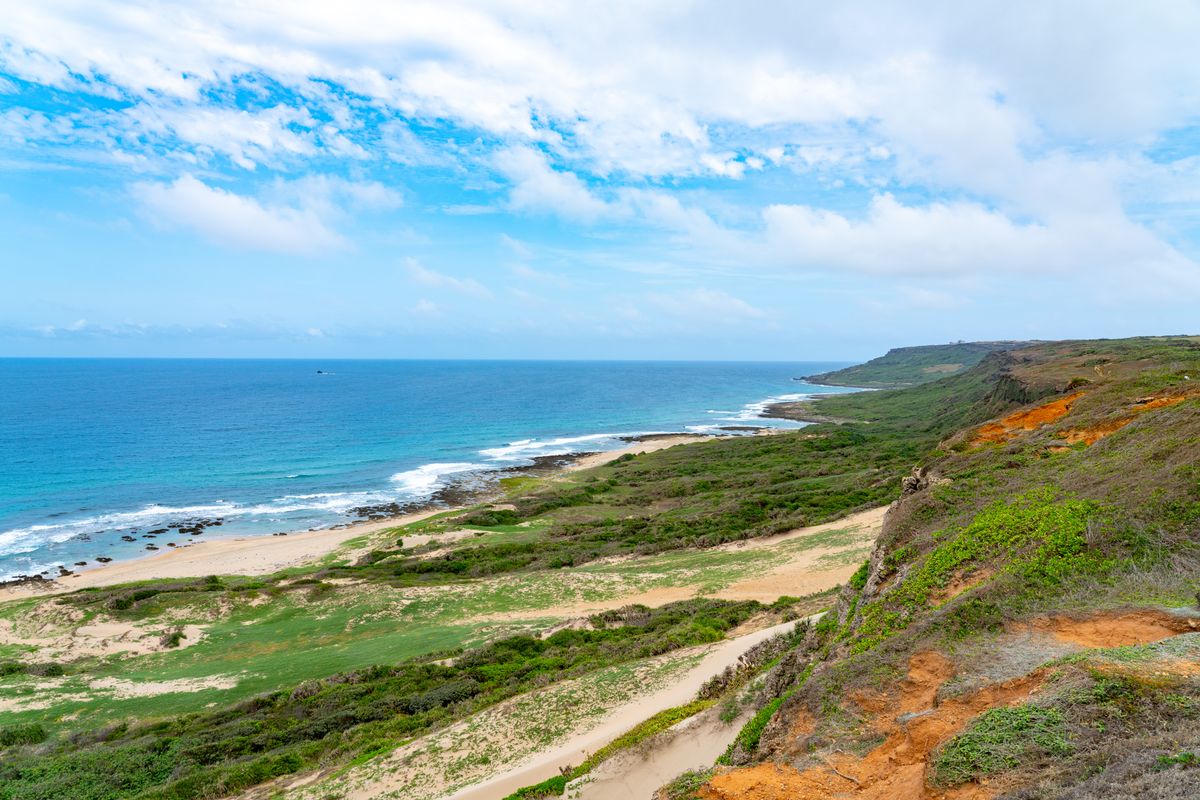
Longpan Park, a short ride east of Eluanbi, is free: a coral limestone plateau of wind-flattened grass that ends in sheer cliffs above the Pacific, and I saw no fence along the edge. A photographer was shooting a couple in wedding clothes near the drop while the bride's dress filled like a sail. The wind blows hard there all year, so stay well back from the edge.
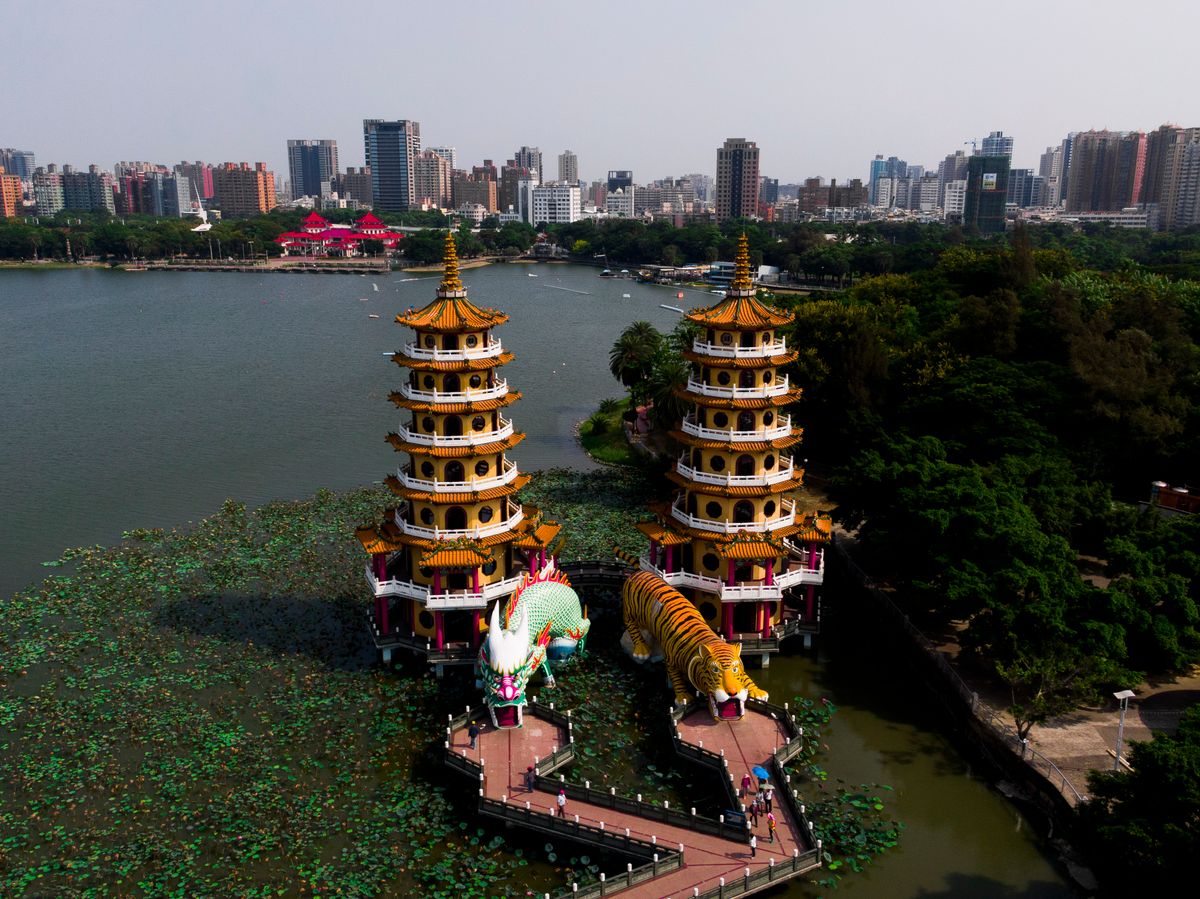
The west coast: industrial poetry (days 13-15)
The ride north through Kaohsiung and Tainan is the coast people call ugly, with Highway 17 running past factories, fish farms and concrete for long stretches. I liked it more than I expected, because nobody had dressed it up for visitors.
In Kaohsiung, Formosa Boulevard MRT station has the Dome of Light over its concourse, a glass ceiling 30 metres across made from 4,500 panels of art glass. I stood under it longer than I have stood in most museums.
At Lotus Pond the Dragon and Tiger Pagodas are free, and the walk through them is a small ritual for turning bad luck into good. An old woman at the tiger end was handing a sweet to everyone who came out. Mine was stale, and I ate it anyway.
Tainan was Taiwan's capital until 1887, and in its old centre the temples seem to outnumber the convenience stores.
Anping Tree House (TWD 70) is a former warehouse of Tait & Co., a British trading firm, abandoned after the Second World War and taken over by banyan trees whose roots now grip the walls and whose canopy has become the roof. Walkways and steel stairs run through it, and kids were playing hide-and-seek among the roots.
Shennong Street is a Qing-era lane of narrow wooden shophouses that now hold galleries and cocktail bars. I bought a box of incense at one of the older shops and the scooter smelled of it for two days.
Full circle (day 16)
I returned the Yamaha to the shop in Zhongshan with 1,247 km on the trip meter. The man at the counter walked round it slowly, checking for scratches, and found none worth mentioning.
What I have so far is this: Taiwan runs on convenience stores and scooter exhaust, with Indigenous bands on electric guitar, night markets a few streets from Michelin-starred restaurants, and temples sharing walls with karaoke parlours. It is my mother's Taiwan and my tourist Taiwan, and most days I couldn't tell which one I was in.
On the last morning I bought a tuna rice ball at the 7-Eleven by the rental shop, the same one I'd eaten on day one, and it tasted exactly the same.
My mother wants to know whether I came back more Taiwanese, and I haven't answered her yet.
The trip in numbers
Identity crisis status: ongoing, with better snacks.
Maya Chen-Williams is a freelance writer based in Portland. Her next loop of Taiwan will go counterclockwise. ■