Four Days to Salkantay Pass, Logged Against the Itinerary
A control-tower veteran audits the Salkantay trek's official timetable against what actually happened at 4,630 metres.

Day 2, 0500: Wheels-Up for the Pass
Before the trailhead
Book at least two nights in Cusco (3,400m) before starting the trek
Ascend gradually where the itinerary allows it, the pass is the one day that won't
Carry water and a headlamp for the early departure, camp breakfasts run before full light
Breakfast was quoted for 0500 at the Soraypampa camp, packs zipped by 0520, boots on the trail by 0530. The kitchen tent served at 0512, twelve minutes down, and the group was moving by 0538, which put the whole morning eight minutes behind a schedule nobody had actually seen written down anywhere except the guide's phone.
Two nights in Cusco came before any of this, logged as required hold time rather than sightseeing. The city sits at 3,400 metres, which is already higher than most travellers have stood in their lives, and the point of the hold is dosage: let the body adjust before it has to work. Coca tea on request, a slower pulse at breakfast than at dinner, nothing dramatic. Anyone who skipped the hold and stepped off a plane straight onto this trail was, by the numbers, cleared for a difficult day.
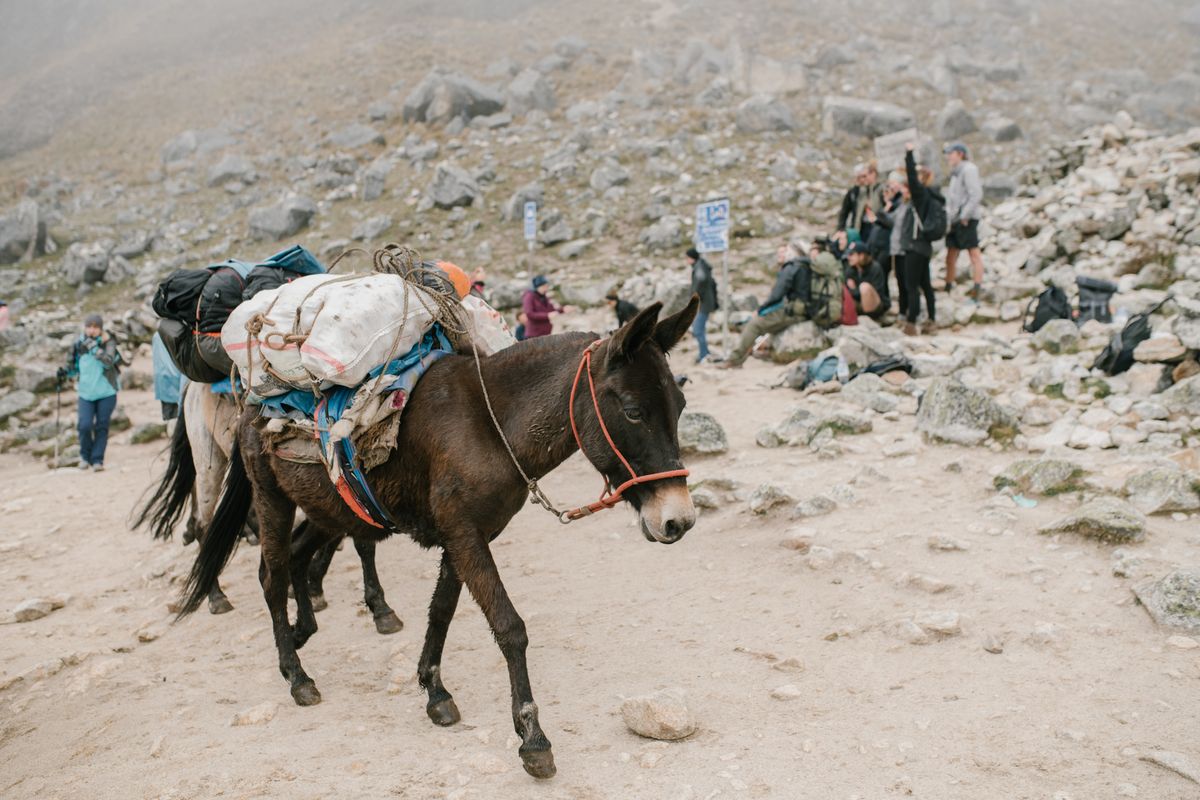
The mules left camp forty minutes after the hikers, loaded with tents, the kitchen gear, four days of food for a dozen people. By the second rest stop, a flat shelf below Humantay's ridge line, they had already passed everyone on the trail. The muleteer walked behind at a pace that made the whole hiking party look like traffic holding on approach, waiting its turn to reach the same gate.
Morning leg logged at fifty-eight minutes over the briefed time by the first checkpoint, most of it eaten by the eight-minute breakfast delay and a slower-than-briefed pace on the switchbacks below camp. Off schedule, but inside tolerance. Nobody turned back.
Forty minutes late leaving camp, the mules still arrived first. That is a schedule, not luck.
Day 2, 0930: Salkantay Pass, 4,630 Metres
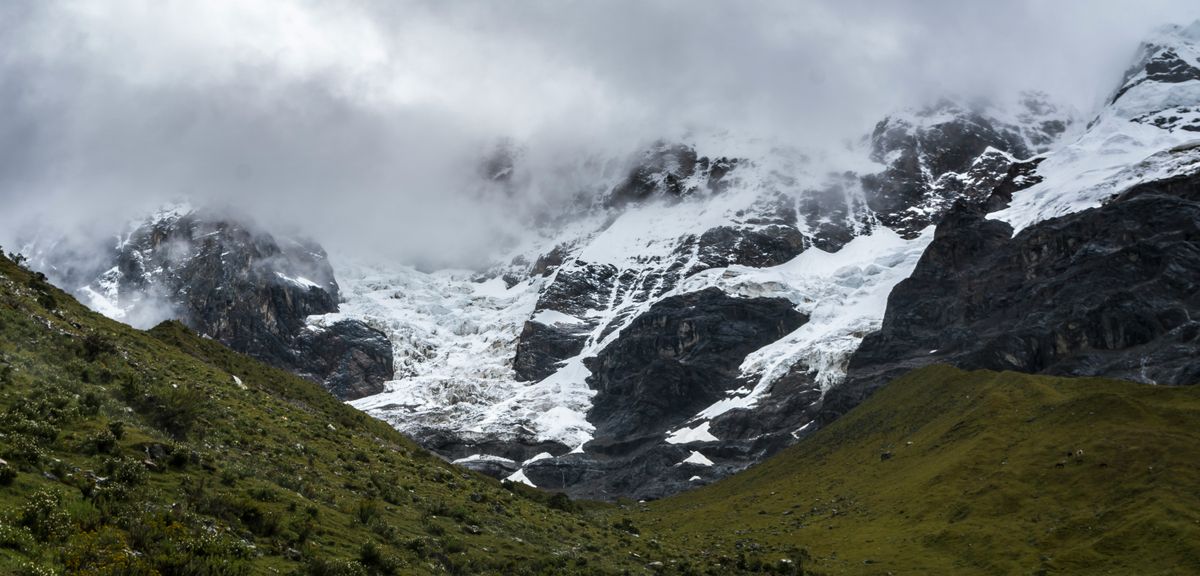
Nevado Salkantay, cleared of cloud for under ten minutes at the col.
The guide briefed the final push from the last rest stop to the pass at roughly three hours. It took three hours and forty-one minutes, measured against his own watch, which he checked twice and did not dispute. Altitude does that to a timetable. Nobody was moving fast, and nobody who tried stayed ahead for long.
Salkantay Pass sits at 4,630 metres, about 15,190 feet, the highest ground on the whole route to Machu Picchu by this road. Nevado Salkantay itself rises behind it to 6,271 metres, the second-highest peak in the Cusco region, glaciated the whole way up. For most of the final approach it stayed behind cloud, then cleared for something under ten minutes right at the col, long enough to log the summit and not much longer.
At the pass itself, small stacks of stones stood in a rough queue along the ridge, apachetas left by trekkers ahead of us, each one somebody's marker that they had made it this far and were logging it the old way. The group added one, unhurried, the first unhurried thing anybody had done since 0530.
Three hours and forty-one minutes against a three-hour briefing reads forty-one minutes down. At 4,630 metres that is not a delay worth logging as one. The pass runs on its own clock, and every group that crosses it gets sequenced through at whatever pace the altitude assigns.
Day 2, 1300: Descent into Chaullay
Departure from the pass was called for 1230, fifteen minutes after the group photo and the last of the coca leaves were handed round. Actual departure ran to 1247, seventeen minutes down, the only delay of the whole day that had nothing to do with altitude and everything to do with cameras.
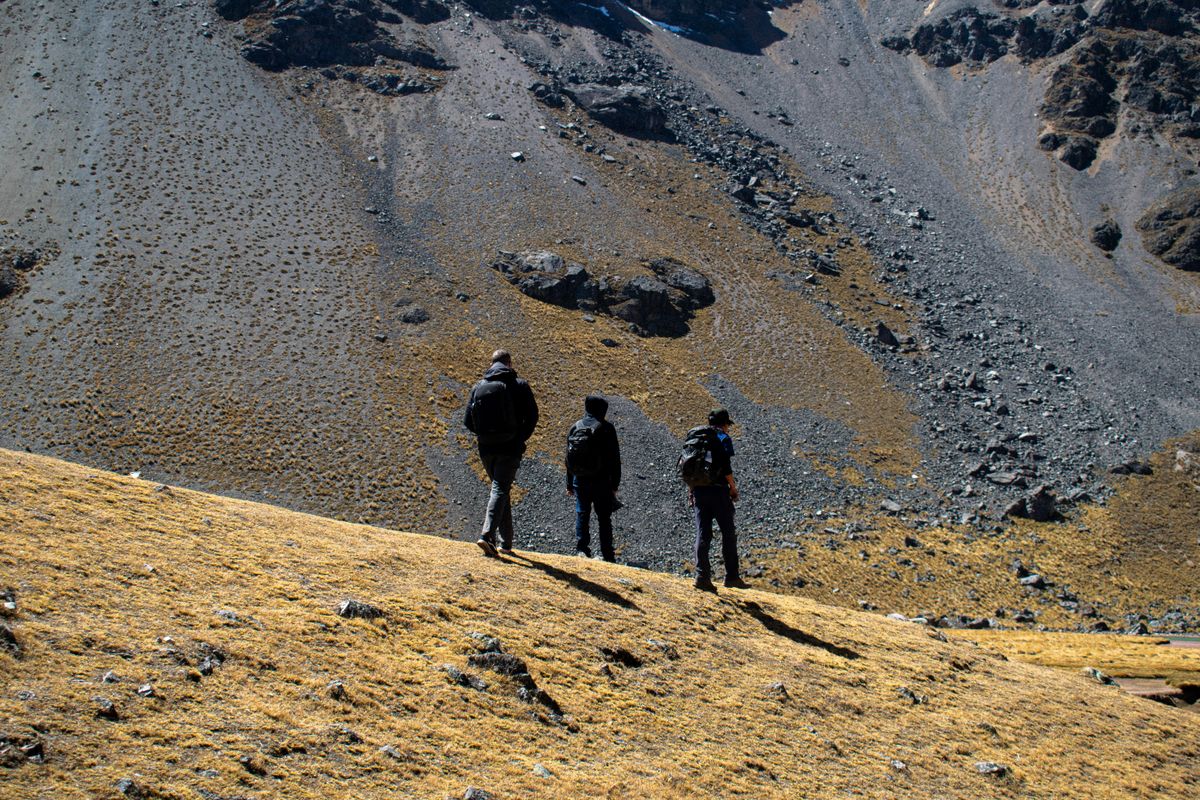
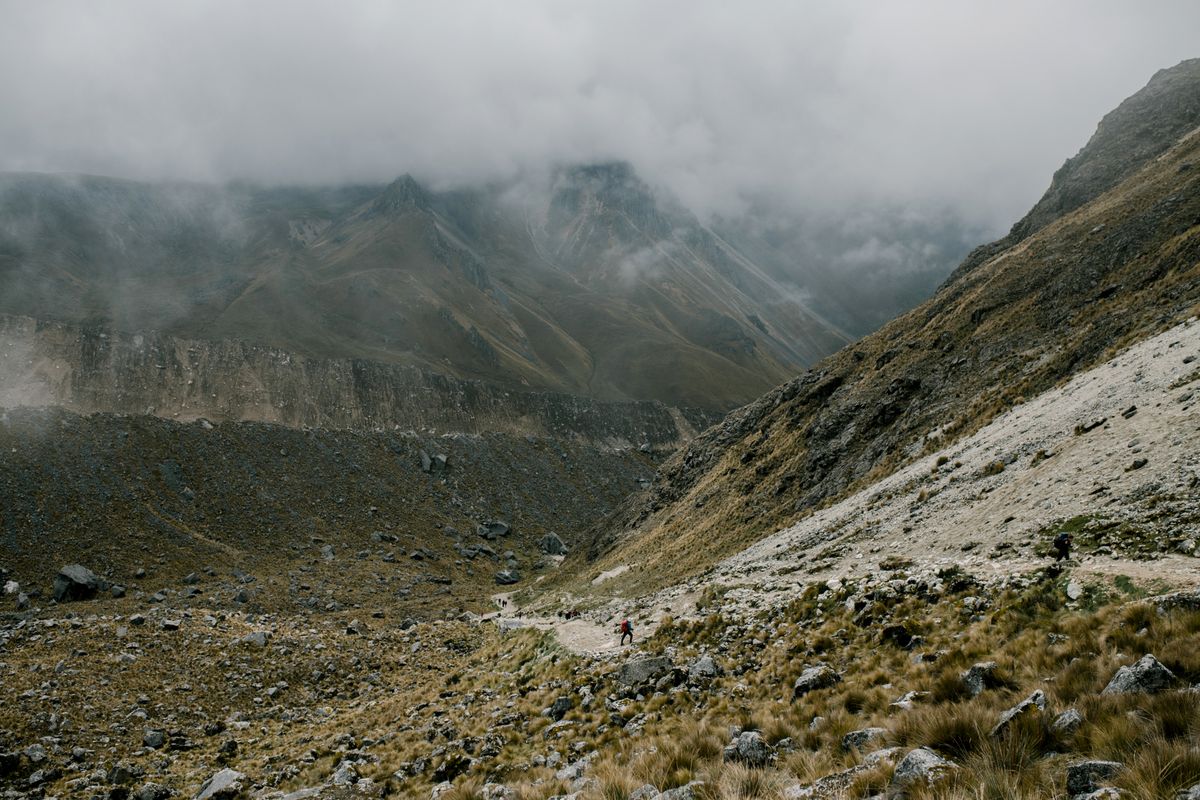
The descent toward Chaullay drops fast, and the terrain answers just as fast. Inside two hours the grey scree and thin grass of the high pass gave way to green, then to something closer to jungle, the air thick enough to feel like a different flight sector entirely. By the time camp came into view the group had shed jackets, gloves, the wool hats bought in a Cusco market three days earlier for a climate that no longer applied.
Camp at Chaullay logged in at 1706, against a briefed arrival of 1630. Thirty-six minutes down for the leg, on top of the seventeen lost at the pass and the fifty-eight lost that morning. Call it just under two hours over the sum of every briefed time issued that day, across roughly eleven hours on the trail. For a route that climbs from 3,900 metres to 4,630 and back down past 3,000 in a single working day, that is inside tolerance, not outside it.
The mules were already unloaded and grazing by the time the last hiker walked into camp. They had made the same ascent, the same pass, the same descent, with less complaint and no wool hats, and beaten the whole schedule by the better part of an hour. Day 2 closed off-schedule by the clock and on-schedule by the only measure that mattered at 4,630 metres: everybody crossed, and everybody came down the other side. ■