The Sacred Valley Terraces Run on a Schedule Nobody Wrote Down

Pisac
The voucher said 0600, hotel pickup, San Blas district, Cusco. The minibus logged in at 0614. Fourteen minutes down before the day's plan had properly started, and the first of several on this itinerary.
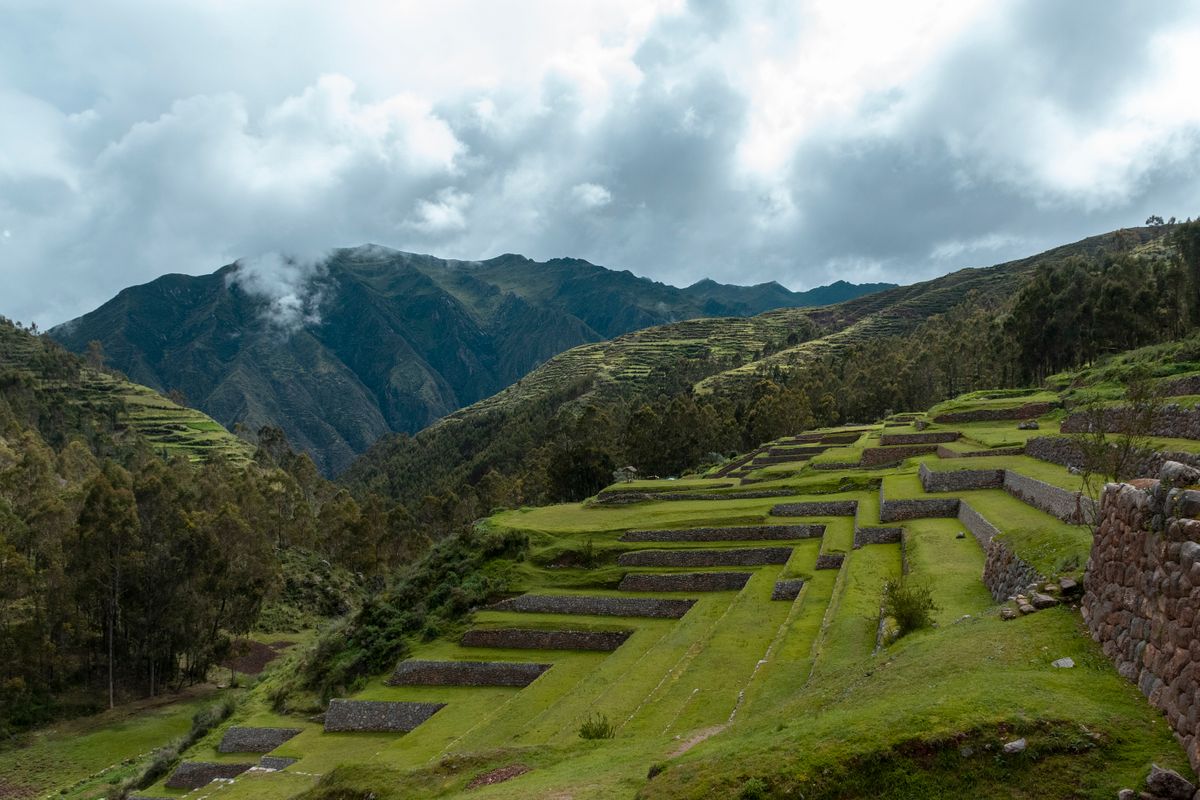
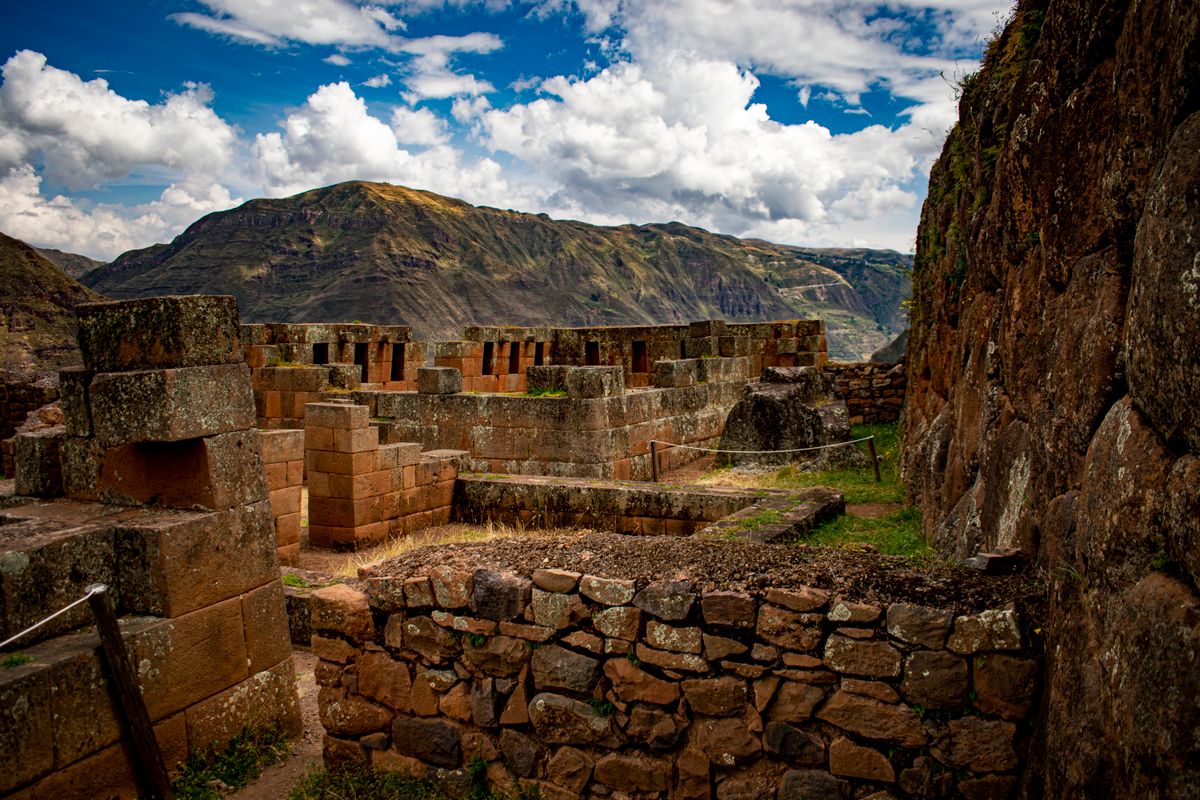
The road out of Cusco climbs before it drops, fifty minutes of switchbacks into the valley floor at Pisac. Terraces start above the town and keep going, cut into a hillside so steep that from below the walls look stacked rather than carved. Farmers still work the lower rows. Upper rows are fenced for foot traffic only, which is where the boleto turístico gets checked.
The guide's estimate for the terrace walk was twenty minutes, gate to gate. Queue at the ticket checkpoint alone ran past that, then the path itself, switchback after switchback, added another stretch the estimate hadn't priced in. Thirty-four minutes by the time we cleared the top row, plus a short scramble past a llama that had claimed the widest viewing platform and wasn't moving for anyone's schedule.
Fourteen minutes down at pickup, another fourteen over at the terraces. Not a crisis. Moray was still two hours off, and the day had that much room to spare.
Moray
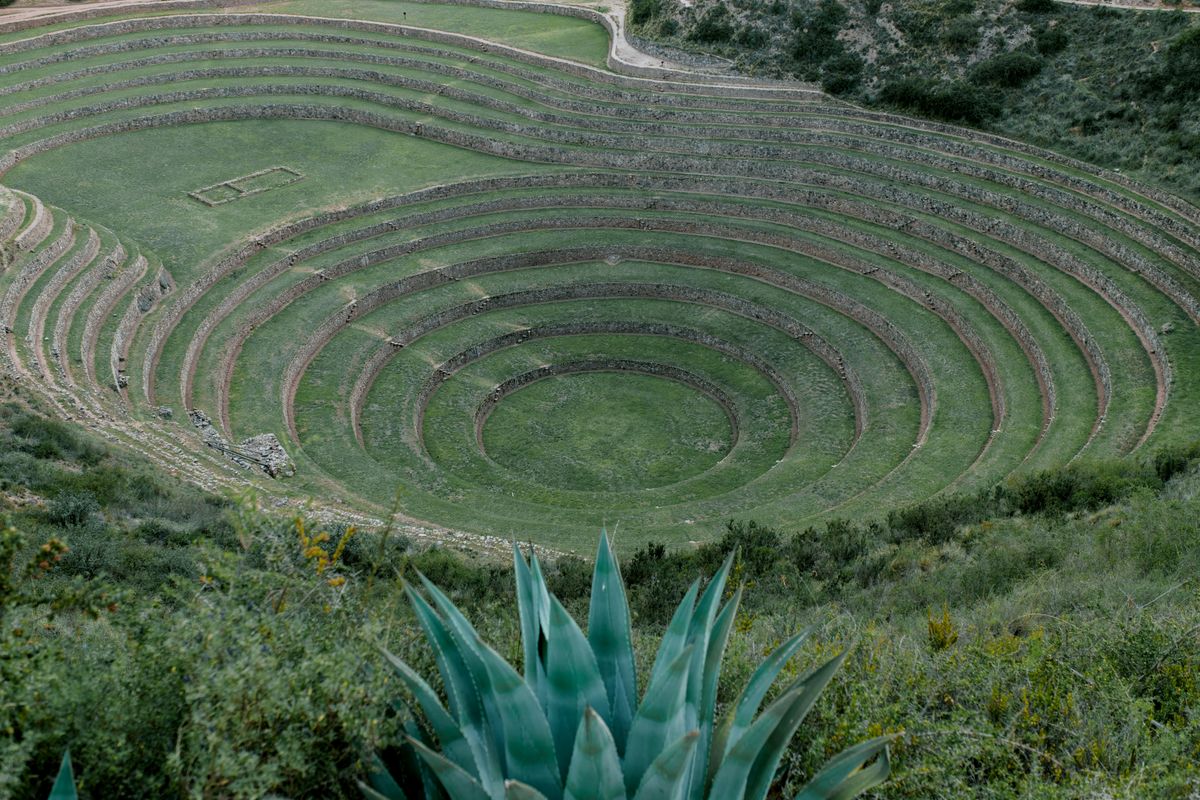
Pisac to Moray runs a little over an hour on the valley road, longer with a stop for photos at the overlook everyone stops at. The guide had priced the terrace circuit at forty minutes. It took sixty-six, mostly queued at the rim viewpoint behind a tour group working through a single guide's explanation in three languages, one after another. Twenty-six minutes over, entirely explainable, no one's fault in particular.
Moray isn't a ruin so much as a piece of equipment. The terraces run in nested rings down into a natural bowl in the land, deep enough that the growing conditions at the bottom read like a different altitude band from the rim. Going theory: it functioned as an agricultural testing station, crops trialled ring by ring to see what would grow where before anyone planted a hillside for real. Whether or not that's precisely what it was, it's built like something with a purpose, not like something built to be looked at.
By the time the van left Moray's gate, the day was fifty-four minutes down against the morning's original schedule: fourteen at pickup, fourteen at Pisac, twenty-six at the rim. Recoverable, the driver said. He'd been proven right before.
Running the loop before the buses do
Pisac before 0700 beats the Cusco tour vans, which land closer to 0900.
Moray's rim viewpoint queues up fast after mid-morning; earlier is shorter, not just quieter.
The boleto turístico covers Pisac, Ollantaytambo and Moray on one ticket. Maras is billed separately, at the gate.
Maras keeps its own closing time, earlier than the other three. Worth checking before it goes last on a loop.
The terraces have been running on schedule since before anyone was keeping one.
Maras
Moray to Maras is quoted at half an hour on the itinerary, a short hop between the two sites that share a valley wall. The van made it in nineteen, the road running straight and mostly downhill for once. Eleven minutes back in the day's favour, the first gain since the pickup.
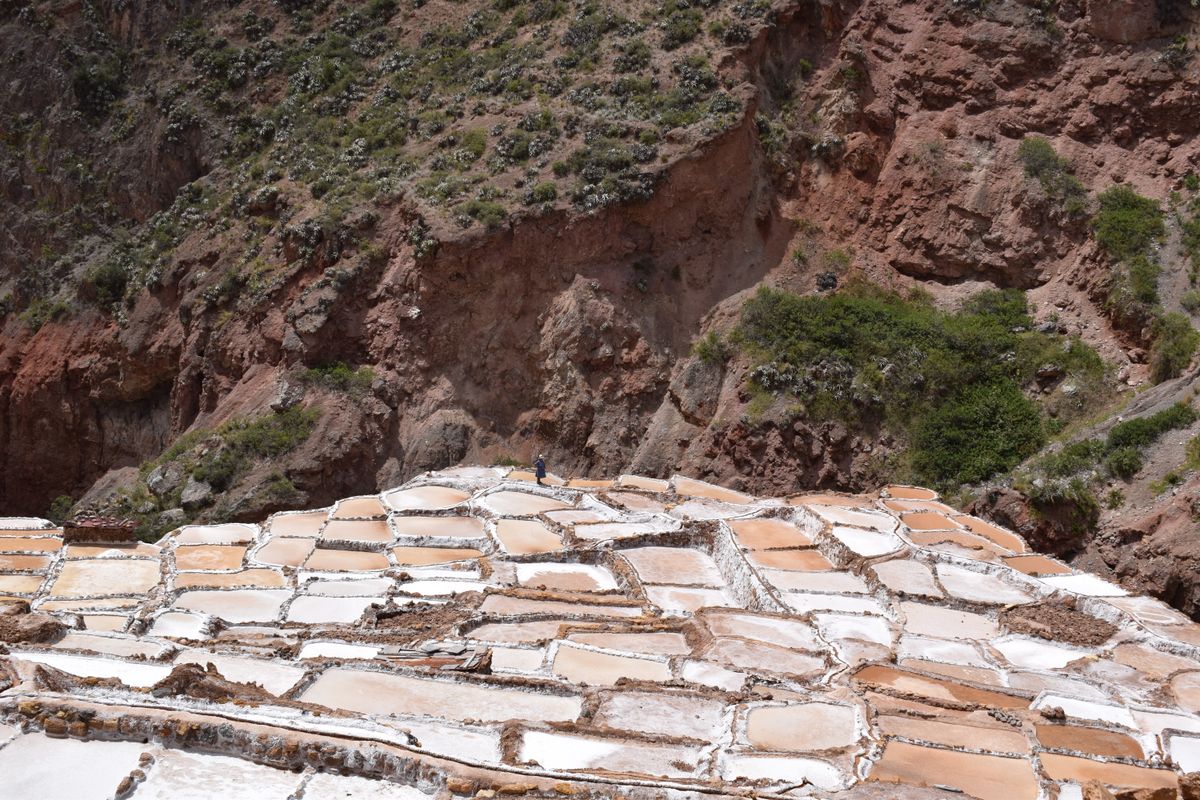
The salt pans start where a spring comes out of the hillside, salted by whatever it passes through underground, and from there the water is walked pool to pool by gravity alone. Nobody built pumps because nobody needed to. The pans have been worked since before the Incas arrived in this part of the valley, and the families who hold rights to individual pools still run the rotation between them, opening a gate here, closing one there, letting the next pool take its turn.
Signage at the entrance quoted the walking loop at forty-five minutes. It took fifty-eight, most of the excess spent standing at one gate watching a worker time the flow between two pools by eye, no meter, no valve marked with numbers, just a wooden board lifted and dropped at a moment only he seemed to be tracking. Thirteen minutes over, and worth every one of them.
Eleven minutes gained on the drive in, thirteen lost at the pools. The day's deficit sat at fifty-six minutes against the voucher, which is close enough to where it started that the morning's schedule was, in its own way, holding.
Ollantaytambo
The itinerary quoted fifty minutes for Maras to Ollantaytambo. Driver made it in thirty-three, the road dropping out of the salt-pan valley and rejoining the main river route without a single stop. Seventeen minutes back, the largest single gain of the day.
Ollantaytambo's terraces climb the fortress hillside in broad steps, steeper than Pisac's and built into a defensive slope rather than a farming one, though they were farmed too. What sets the site apart from the other three is what runs underneath it: a channel system, Inca-built, still carrying water down through the terraces and into the town below. Ollantaytambo is one of the few settlements in the valley that has been continuously lived in since Inca times, and the canals are still doing the job they were cut for, no restoration needed to keep them working.
Sacred Valley, by the ticket
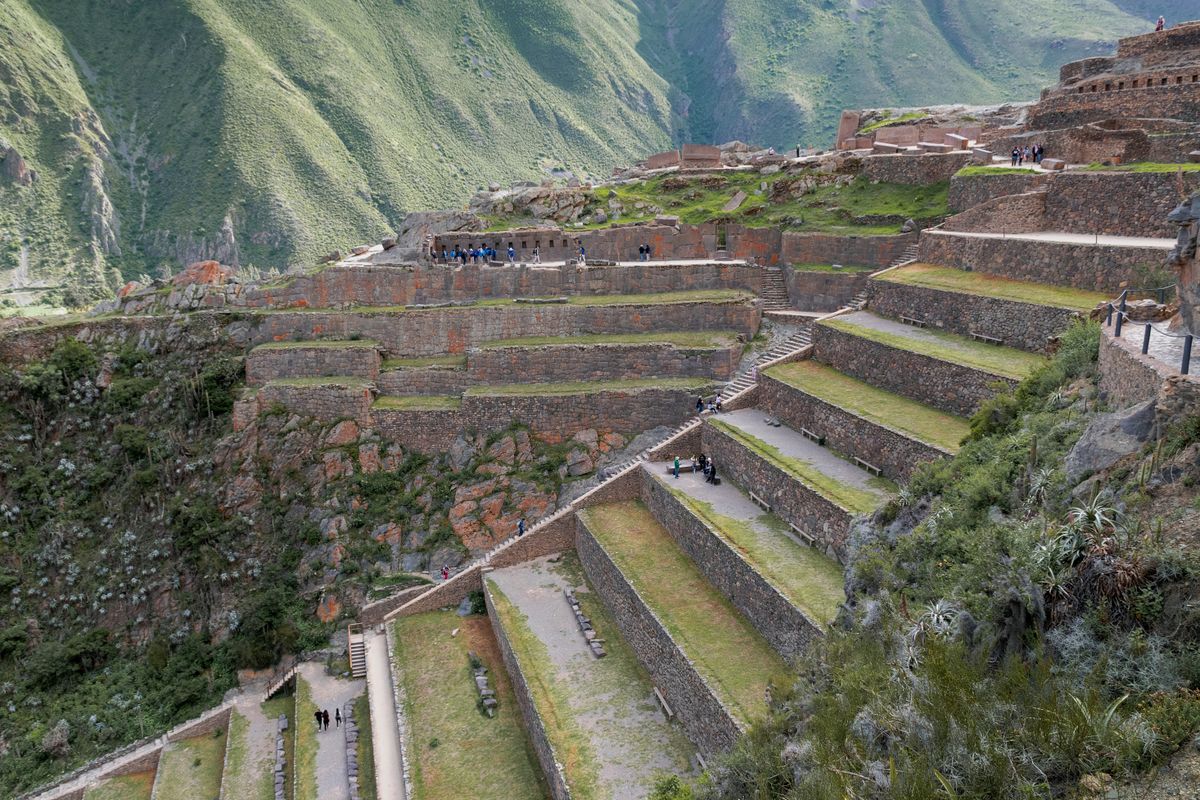
Walking the terraces here after Moray and Maras puts the engineering in order: growing conditions tested at Moray, salt harvested at Maras by gravity alone, and at Ollantaytambo, the water that made both possible, still moving through channels cut for a purpose that never stopped needing doing.
The itinerary had built ninety minutes of slack into the afternoon for exactly this kind of day. Thirty-nine of it got used, the deficit still standing from the morning's queues even after the two fast drives clawed some back. The train to Aguas Calientes was scheduled to leave Ollantaytambo at 1832, boarding closed at 1817. We were on the platform at 1809, eight minutes ahead of that closure and thirty-nine behind the voucher printed that morning. By the only schedule that still mattered, on time. ■