Reading the Rift: A Potter's Hands on Reykjanes's Fissures

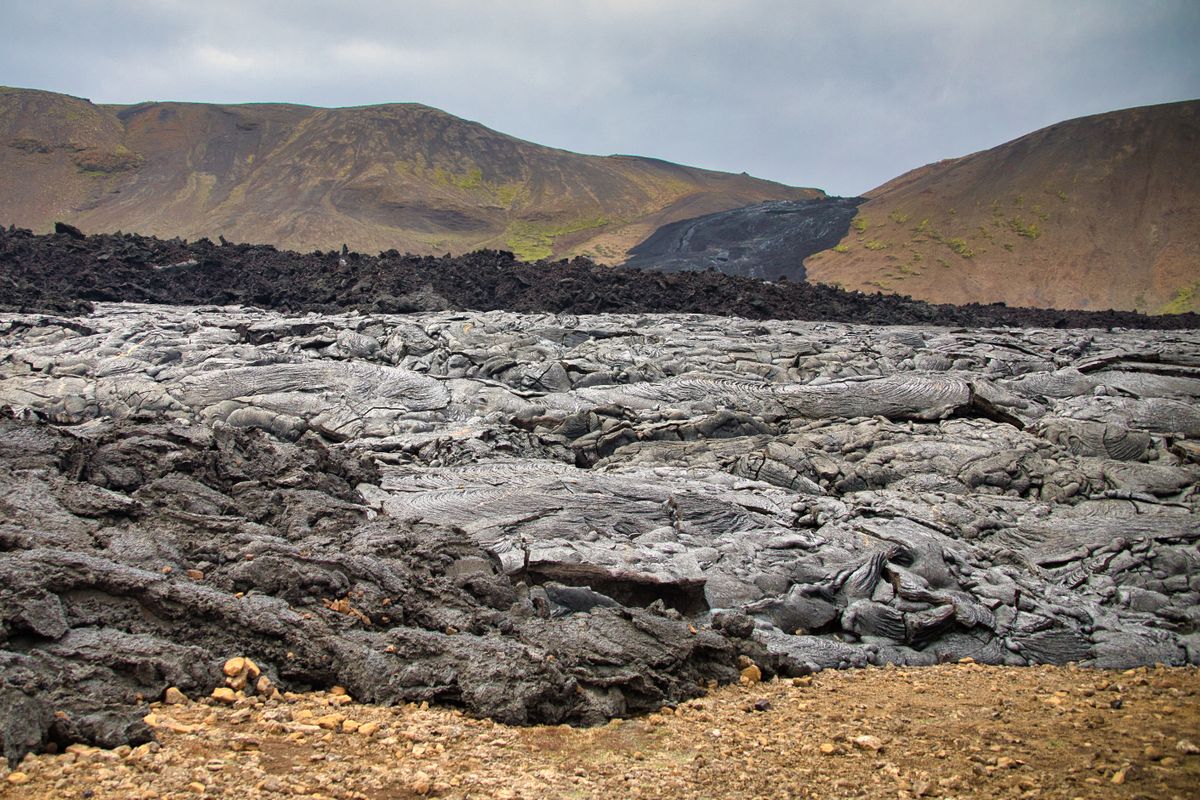
The first stone I picked up at the edge of the 2023 lava field weighed less than I expected, which told me before I even looked how much air had gotten trapped inside it. Clinker black, sharp under the pad of my thumb, pocked with holes the width of a knitting needle where gas had boiled straight through the melt on its way out. I have pulled test tiles from my own kiln with that same starved, bubbled look when the reduction goes wrong and a glaze foams instead of flowing, except my ruined tile cost an afternoon and this one cost the town of Grindavík a great deal more. Only once I had turned the rock over twice in my palm did I stand up and register where I was actually standing.
Clinker and Glass
Reykjanes sits directly on the Mid-Atlantic Ridge, the seam where the North American and Eurasian plates are pulling apart, and for once the guidebook language was not exaggerating. You can see the rift as a shallow trench running through the moss before you ever get near the new rock. The fissure eruptions that opened the Sundhnúkagígar crater row started in December 2023 and forced the whole town of Grindavík out of its houses, and by the time I walked the marked path in July the ground had gone quiet again, though the guide with me said it does that in fits, weeks of stillness between bursts, and nobody on the peninsula speaks of it as finished.
The surface underfoot changes character within a few steps, and I found myself reading it the way I read a test shelf pulled hot from the kiln. Ropey pahoehoe lay in folds like a glaze that skinned over before it stopped moving, smooth enough to run a bare hand across without drawing blood. A few metres on it turned to aa, all broken clinker and glassy barbs, the kind of surface that never fully melted through, underfired in the geological sense, and it caught on the pad of my glove instead of sliding past it. I would grade the pahoehoe a good pour. The aa I would grade a kiln that never got hot enough, and I mean that as a compliment to neither the mountain nor my own failed batches.
My cardigan sleeve caught on one of the aa barbs at the wrist, a small definite tear, the kind of hole no amount of pretending mends on the walk back, and I kept going without stopping to look at it because there was nothing to be done about it there.
Grey Slip, Boiling
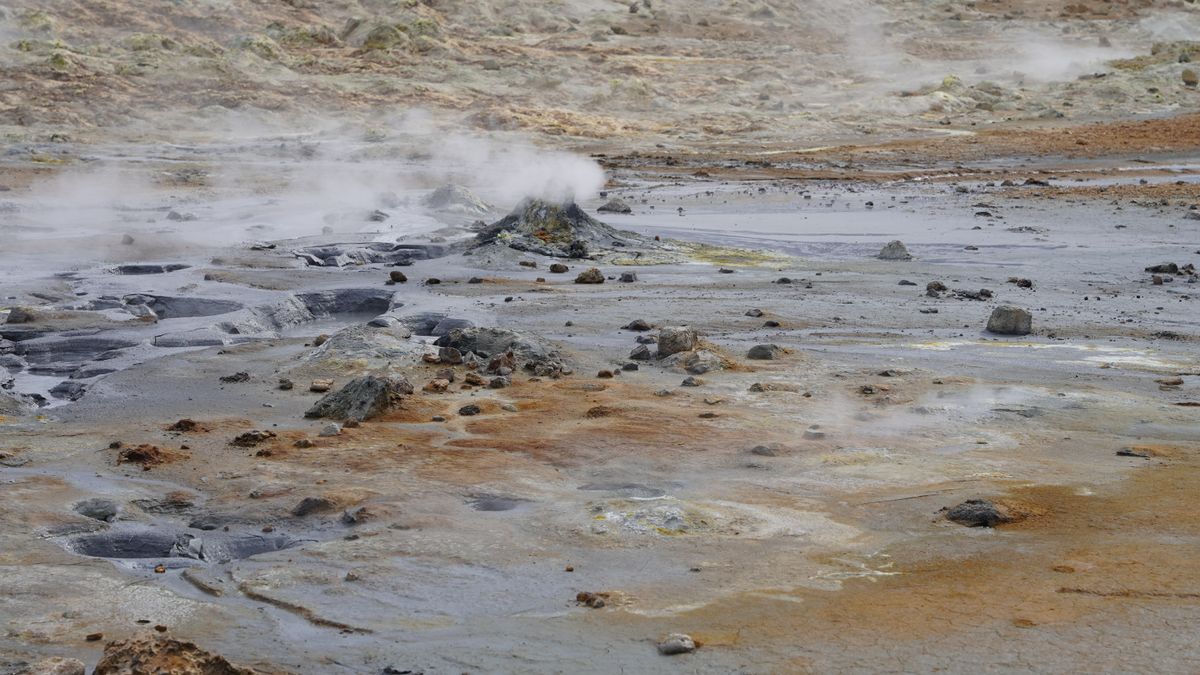
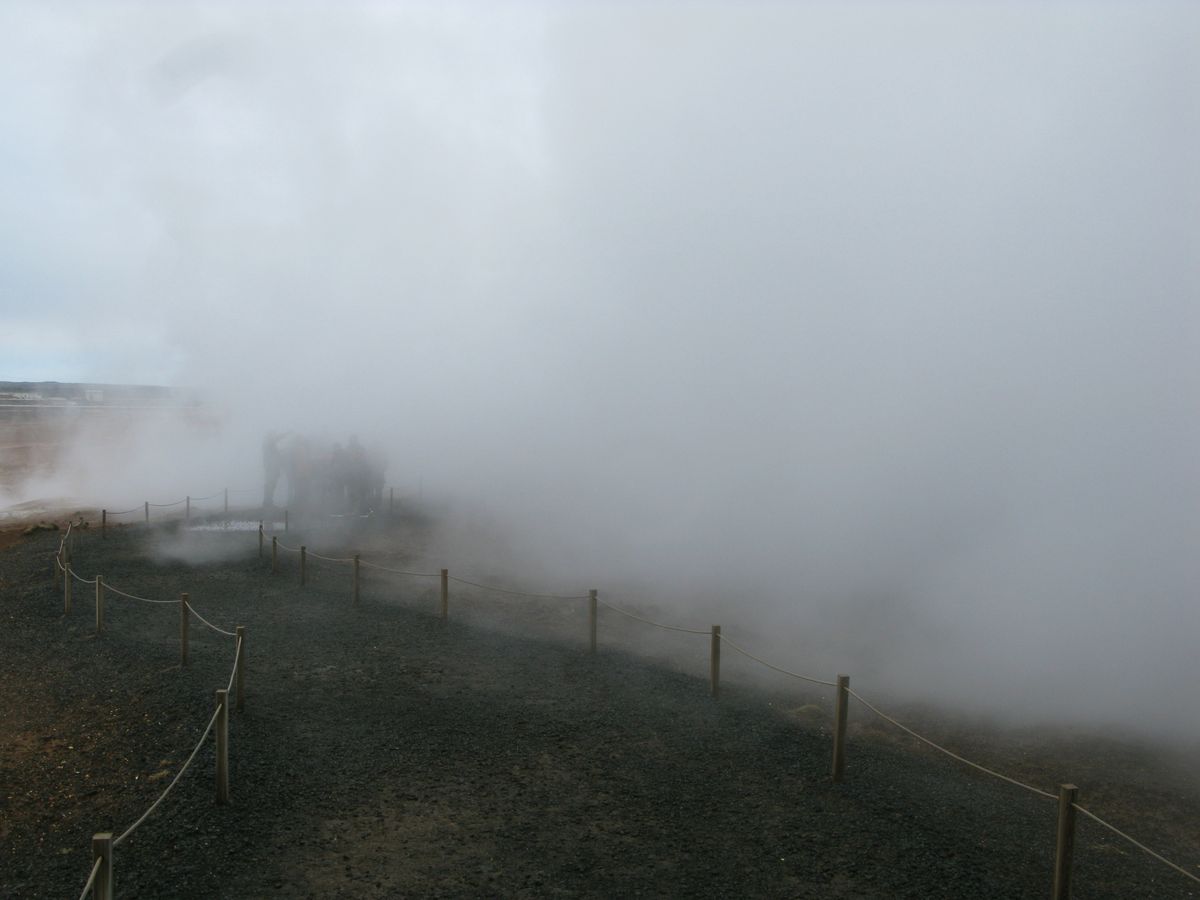
The mud at Gunnuhver moved like an underworked slip, grey and constantly turning over on itself, throwing up small domes that collapsed with a wet slap every few seconds. It is the largest mud pool and geothermal field in Iceland, and it carries the name of a ghost, Gunna, who according to local telling was driven into the pool by farmers centuries ago and has been boiling there since. Steam came off the ground in sheets thick enough to lose the boardwalk rail at ten metres, and the smell of sulphur worked its way into the wool of my cardigan and stayed there for two days after.
Along the boardwalk edge the ground had crusted yellow and rust orange where sulphur and iron had come up together and dried, and up close the crust had the same crystalline bloom I get on a shino glaze cooled slowly in the kiln, sharp little clusters instead of a flat skin. A studio glaze like that takes me eight hours of controlled cooling to grow. This ground has had considerably longer.
I leaned in too close reading a warning sign and the steam fogged my glasses white, which meant I did the last stretch of boardwalk half blind and trusting the rail rather than my own eyes.
A glaze that never sets is still working. So is this ground.
Rust and Cast Iron
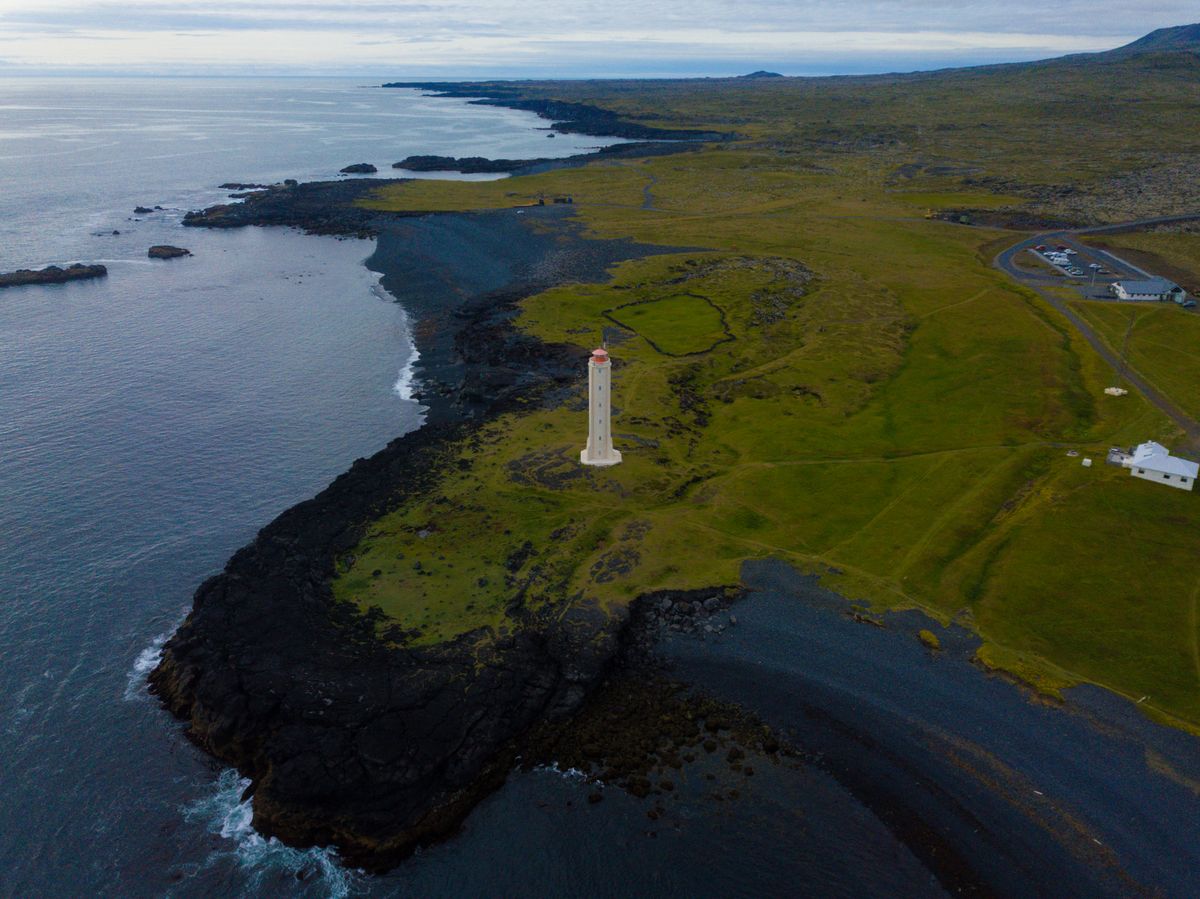
The lighthouse door hinge was pitted with rust so deep my thumbnail caught in it, cast iron gone the colour of a dried oxide wash, the kind of corrosion that takes decades of salt wind rather than a single firing. Reykjanesviti stands near the peninsula's southwestern tip and is considered the oldest lighthouse site in Iceland. The original tower went up in 1878 and lasted less than thirty years before erosion and earthquake damage brought it down. The tower standing now, the one under my hand, dates to 1908.
Below the lighthouse the coastline is black basalt cut into shelves and stacks, and the rock there reads differently again, dense and fine grained where the lava field had been full of holes, closer to a well vitrified stoneware than the starved clinker up the road. Waves came in against the stacks and threw spray high enough to reach the path, salt drying white on the black rock in patches the way a kiln wash dries pale on a dark clay body.
The wind took my notebook page mid sentence and I chased it eleven steps down the path before my boot came down on it, torn at one corner now and printed with a boot tread I will be transcribing around for the rest of this piece.
what my hands learned
Leather gloves for the lava field, not wool. Wool catches on every barb and you lose a thread with every step.
Gunnuhver's boardwalk turns slick in its own steam. Slow feet, and keep one hand free for the rail.
The lighthouse point has enough wind to take a loose page or a glove before you notice it is gone. Weight down anything on paper.
Reykjanes, roughly