Reading the Ribeira: A Potter's Morning Among Porto's Riverside Stalls

Stone, Rope, and Wet Cobble
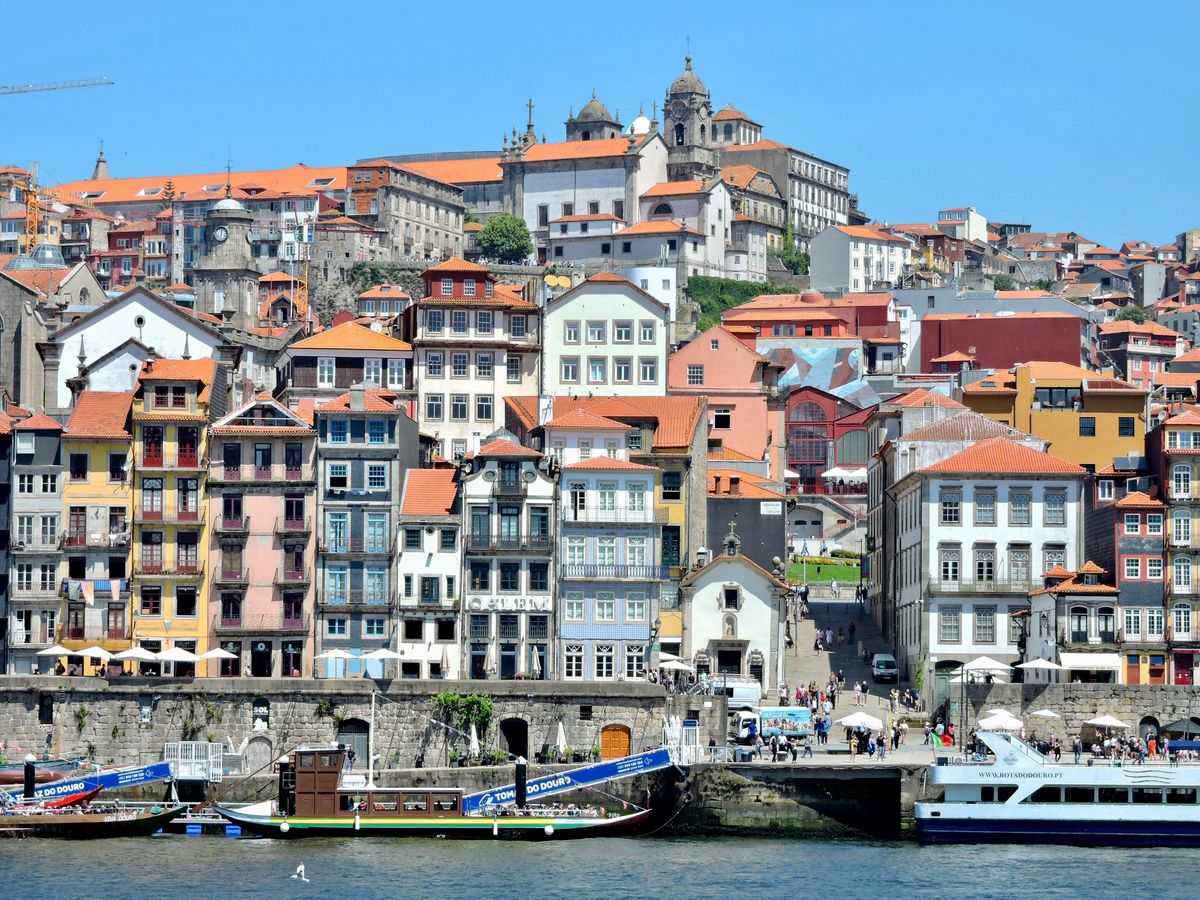
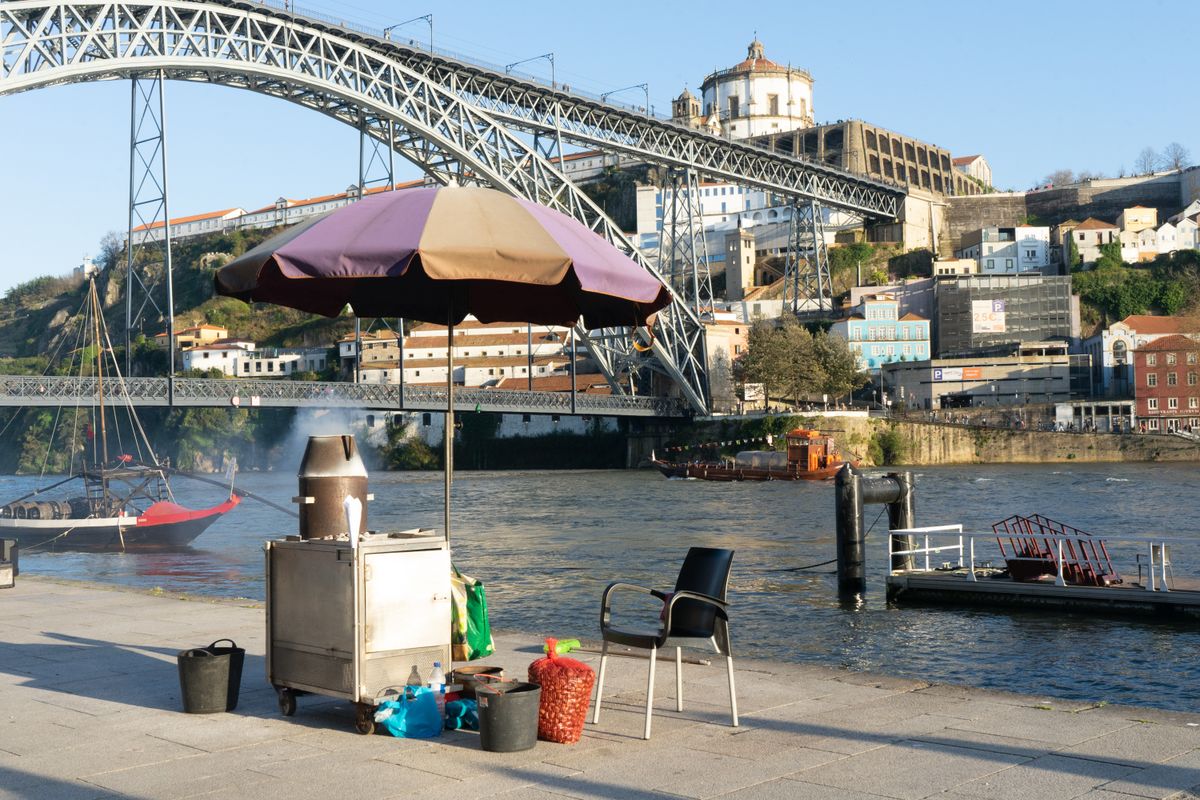
The cobbles were still wet under my boots at eight in the morning, granite worn round and slightly greasy the way three centuries of feet round a stone, with no sharp edge left on any of them. Coming down the ramp from Rua da Alfândega I put a palm flat against the low quay wall to steady myself, and the stone there was cold, gritty with salt, nothing like the sandstone bats I load into my own kiln shelf by shelf. Only once my hand had made sense of the wall did I look up properly and register where I actually was: the Cais da Ribeira, Porto's old riverside quay, the Douro flat and brown-green at low tide and the stalls only half-unpacked.
A vendor two pitches along was losing an argument with a canvas umbrella pole, its rope guys gone stiff and sun-bleached, and I watched the wind win twice before he finally pinned it down. Below him one of the tourist boats got up to look like an old rabelo cargo vessel chugged past empty, its flat hull barely disturbing the water this early, well before the crossings started properly.
By the time the stalls were three deep in visitors I'd had a bica standing at a zinc counter for ninety cents and a pastel de nata for one thirty, still hot enough from the oven to blister the roof of my mouth, which it did within one bite.
I set the empty cup on the wall to free a hand for my notebook and knocked it straight into the river; the umbrella man watched it sink without a word, which felt like the correct local response to a tourist's clumsiness.
Terracotta Skin
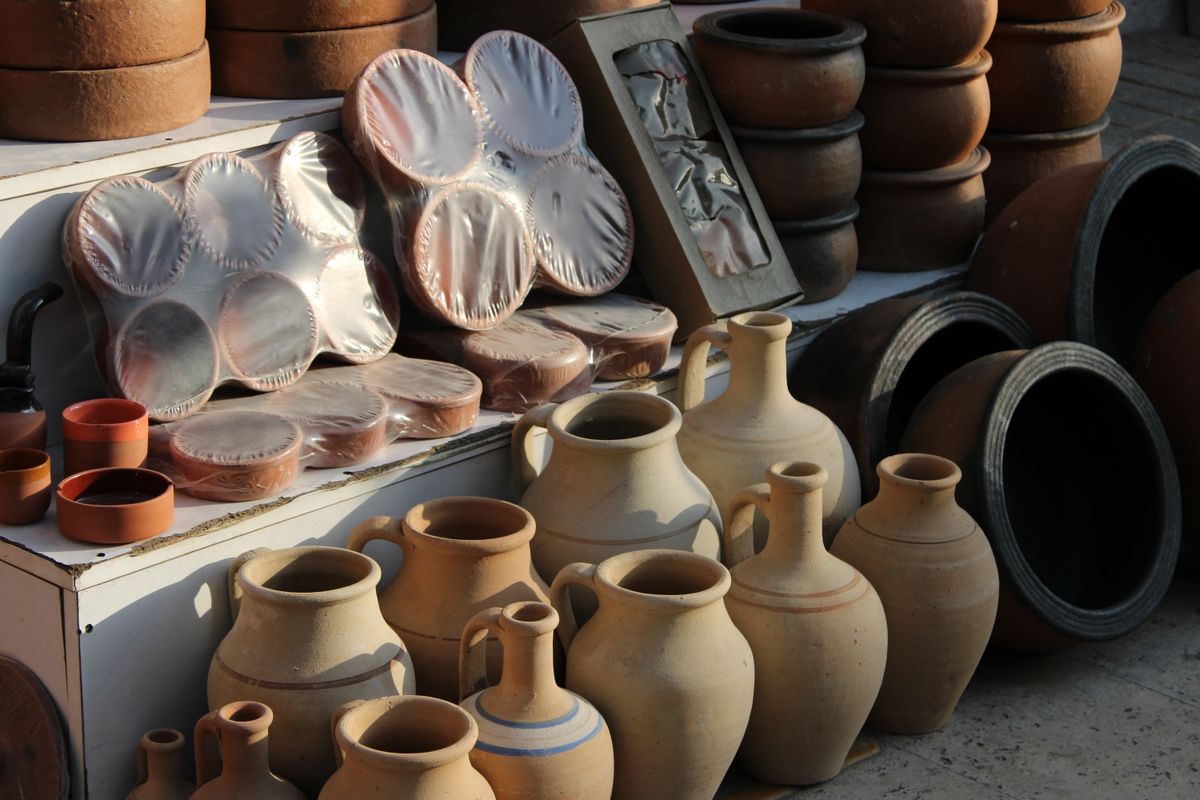
Unglazed terracotta has a particular dryness against the fingers, a scrape of tooth from the grog fired into the clay body, unmistakable before you even register the colour. I found it on a shelf of jugs two stalls past the tile sellers and thumbed the rim of one the way I check my own line on the wheel, only reading the little card afterward: Barcelos, hand-thrown, eight euros.
The throwing lines on the inside were honest, uneven in a way no mould leaves, thicker at the base than at the neck the way a tired potter's always runs, and I liked the piece more for it. Half the stall's stock had the dead-flat symmetry that means slip-cast in a two-part mould and finished with a wet sponge to fake a hand line; the tell is always the seam ghost at the handle join, unsanded on four of them.
I bought the eight-euro jug and a small unglazed dish for six, both fired at a low earthenware temperature that would crumble through a British winter but suits a Porto kitchen that never sees frost.
Packing the jug into my tote I put my thumb straight through a paper bag of roast chestnuts from the next stall along; the vendor charged me for the half kilo I hadn't meant to buy, and I ate the evidence walking away.
Blue Under Glaze
what my hands learned
Turn it over first. A hand-thrown foot ring is trimmed slightly off-round; a mould seam runs perfectly straight and only disappears if someone has sanded it hard.
Carry small notes. Card readers are common along the Cais now, but stallholders still round down for cash without being asked.
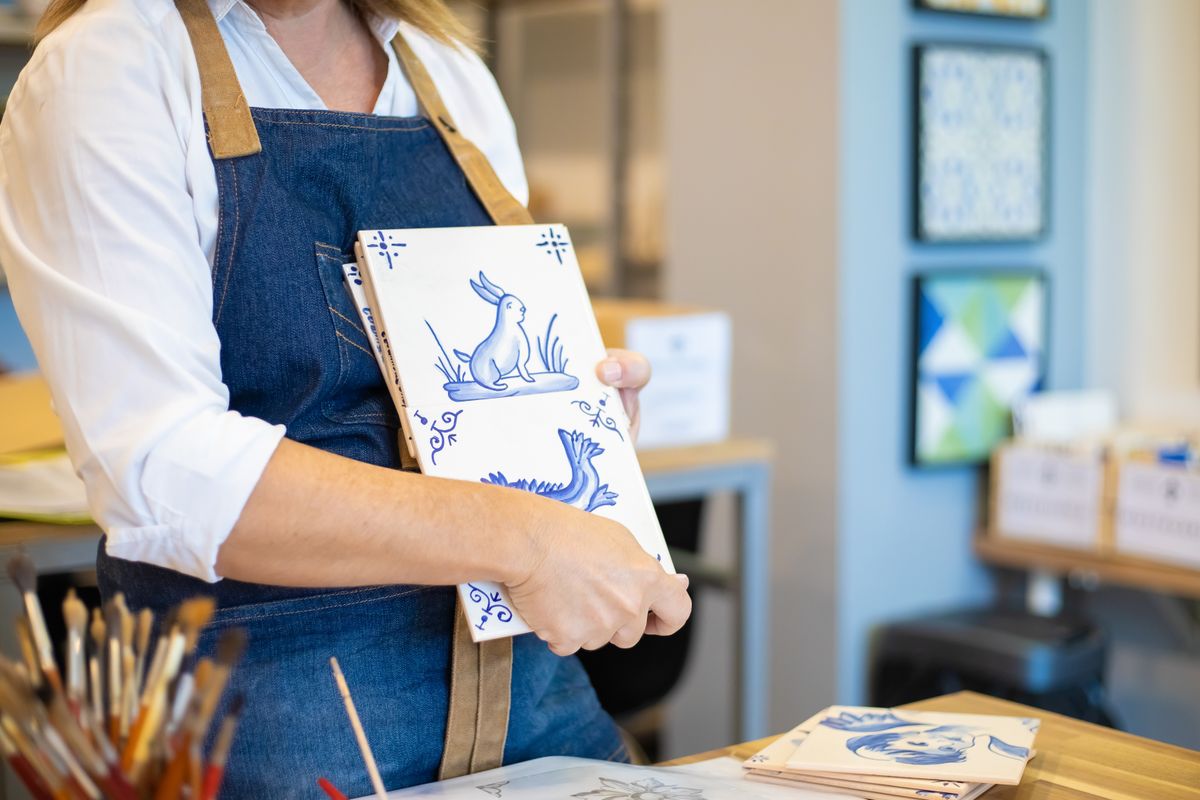
A fired azulejo has a specific hardness under a fingernail, glassy and cool no matter the air temperature around it, and the good ones carry a slight give at the edge where the tin glaze pooled thinner than at the centre. I found that edge on a rabbit tile propped on an easel outside a workshop doorway three stalls off the main promenade, well before I noticed the workshop had a name at all.
Inside, a woman in a denim apron was loading a tray of bisque blanks, and she let me handle a finished piece: a rabbit worked in cobalt oxide under a tin glaze, the brushwork loose and confident in the way that only comes from painting the same motif several hundred times. Cobalt holds its blue through the firing better than most underglaze colours I use at home, but it still bleeds if the brush carries too much water, and two of her rabbits had exactly that soft-edged bloom at the ear, which she had clearly decided to sell rather than smash.
A single tile ran twenty-two euros, unglazed magnets for eight; I did the arithmetic on eleven of them as gifts before I remembered the size of my suitcase and put the whole idea back on the shelf.
Reaching past a shelf of drying greenware to pay her I caught a stack of coasters with my elbow; she caught them before they hit the floor without even looking up from the till.
One morning at the Cais da Ribeira stalls
A glaze tells the truth about the fire whether you want it to or not.
Late Light on the Water
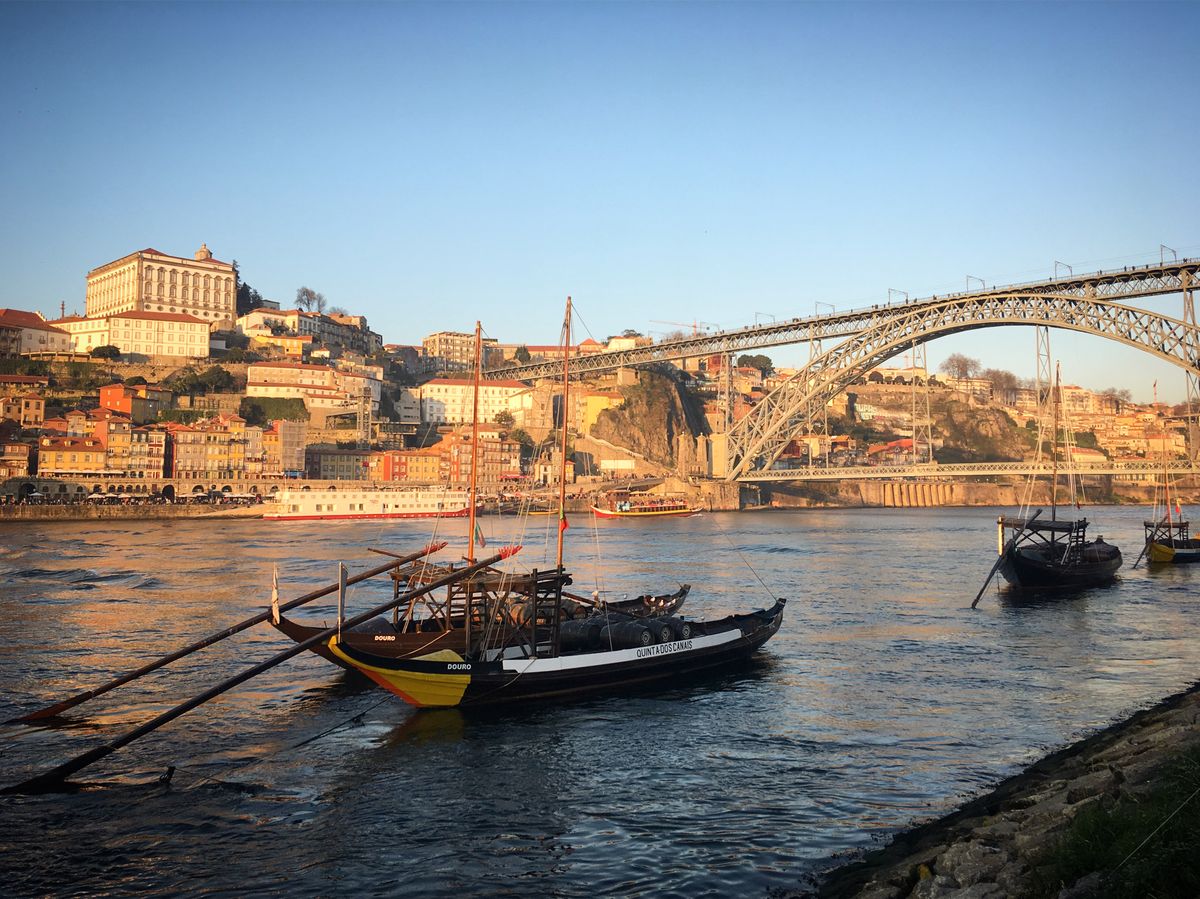
The tarred rope on a moored rabelo has a specific tackiness in late afternoon heat, sticky rather than wet, and it left a black smear across two fingers before I had worked out which boat I was actually touching.
The flat-bottomed boats lined up along the Gaia bank under the Dom Luís I Bridge are mostly replicas now, kept for the June regatta and for photographs, though for two centuries their working ancestors carried port wine barrels down from the Douro valley to the lodges in Vila Nova de Gaia across the water. By six the light had gone the colour of the terracotta on my own studio shelves, and the whole quay took on a warmth no bulb I own has ever managed to fake.
I didn't buy anything else, so I sat on the wall with tar still on my fingers and finished the last of the roast chestnuts, gone cold and slightly rubbery by then, and decided that was fine.
Standing up for the funicular I put the tar-stained hand flat against my white shirt without thinking, which is the sort of thing that only ever happens once you have stopped paying attention. ■