The Red Clay Villages: A Potter's Morning in São Pedro do Corval
In the Alentejo's largest pottery village, twenty-one family workshops fire the same red earth, and I graded every one of them against my own kiln.

Red Clay, Wet
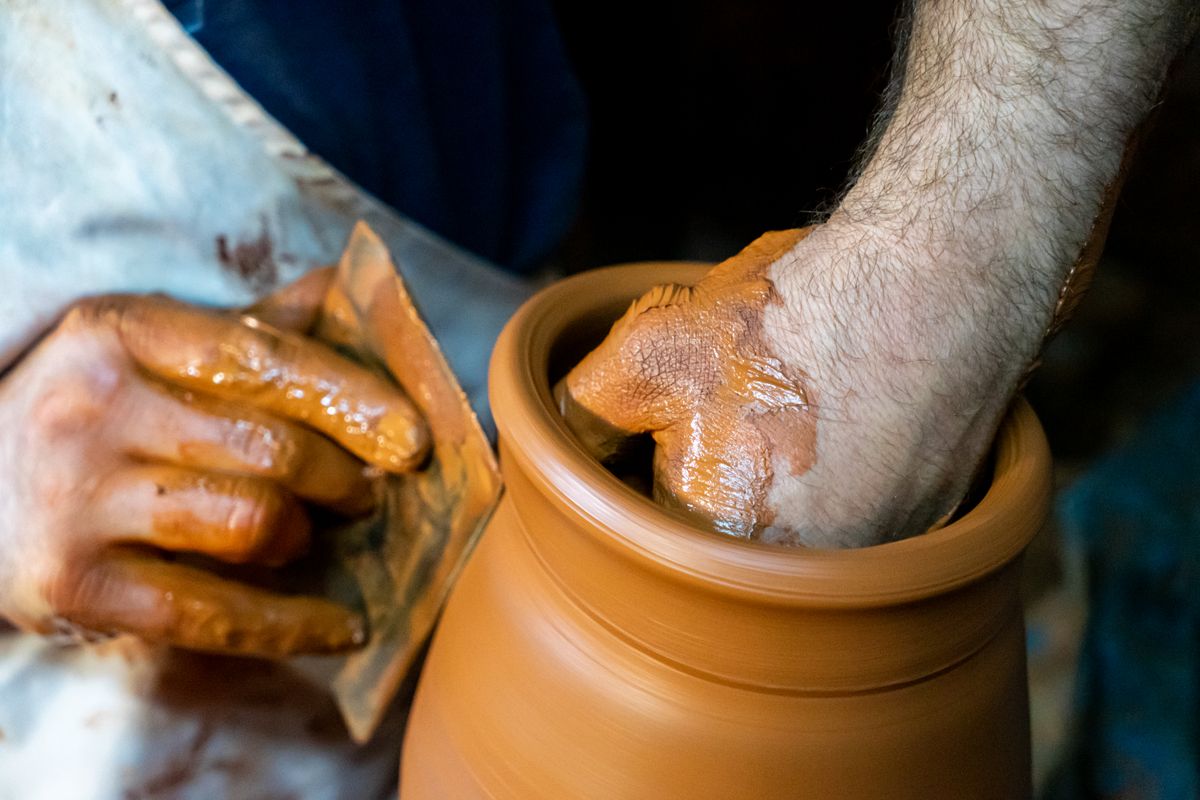
The clay was cool in a way that had nothing to do with the morning, that particular below-body-heat cool that terracotta holds when it has rested all night under a damp cloth, and I had my thumb into a fist-sized lump of it before I had even said good morning to the woman at the wheel. No grit, no short biscuity crumble that means someone let the mix dry a beat too long. Only once I had worked it through both hands, testing, did I look past her shoulder to the street outside and register that I was in São Pedro do Corval, the pottery village outside Reguengos de Monsaraz that everyone in the Alentejo trade talks about the way bakers talk about a good oven town.
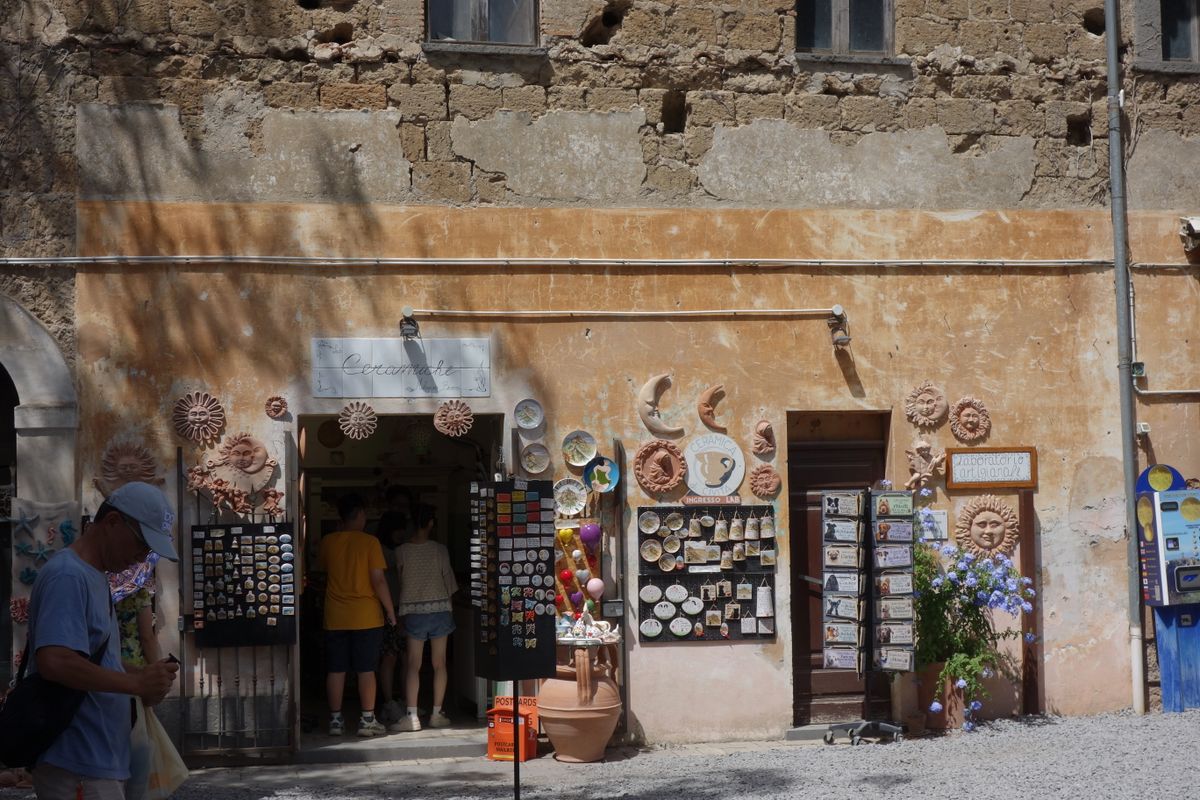
Twenty-one workshops are registered here, all of them small, all of them family-run on the same local terracotta the region has been digging since before anyone wrote anything down, and the potter at the first wheel I stopped at threw a jug in under four minutes without once looking at her hands. The walls came up even, thin at the shoulder, thickening properly toward the base the way a wall should when the weight is doing its job instead of the wheel doing it for you. I would put her throwing against my own on a good day and lose. That is not a sentence I write often.
What she was working wasn't some fashionable clay body chosen for a story. It's the same red earth that has come out of this ground since prehistoric potters worked the same deposits, and you can feel the difference between a clay picked for its history and one picked because it throws well and fires evenly. This one throws well. It also forgives a slow hand, which mine is not always, and takes a rib mark cleanly without tearing, which matters more to me than it probably should.
A good throw hides nothing. The wall always tells you how tired the hand was that made it.
— studio note
Ochre Ground, Cobalt Line
Ochre, Before the Brush
The plate was still faintly warm from a kiln two doors down, and under my fingers the ochre ground had a slightly toothy, unglazed matte to it before the scene went on, nothing like the slick glass-smooth surface I expected walking in. This was one of the workshops that keeps to the old rural scenes, a farmhand and a mule worked in browns and dull yellows around the rim, laid on with a brush thin enough that the painter was resting her whole forearm on the plate's edge to keep it steady. The line wobbled twice, deliberately, the way a hand allows itself to wobble when it has painted the same mule four thousand times and stopped needing it perfect.
I would grade the drawing generous and the glaze exacting, which is the right way round for a working craftsperson and the wrong way round for most of what gets sold as folk art. The brown underglaze had bled half a millimetre past the sgraffito line in two places, which I don't mind, bleed at that scale reads as hand rather than error, but the clear glaze over the top had pulled thin at one corner into a visible pinhole, and that I would send back to the kiln if it were mine.
Cobalt, Before the Line
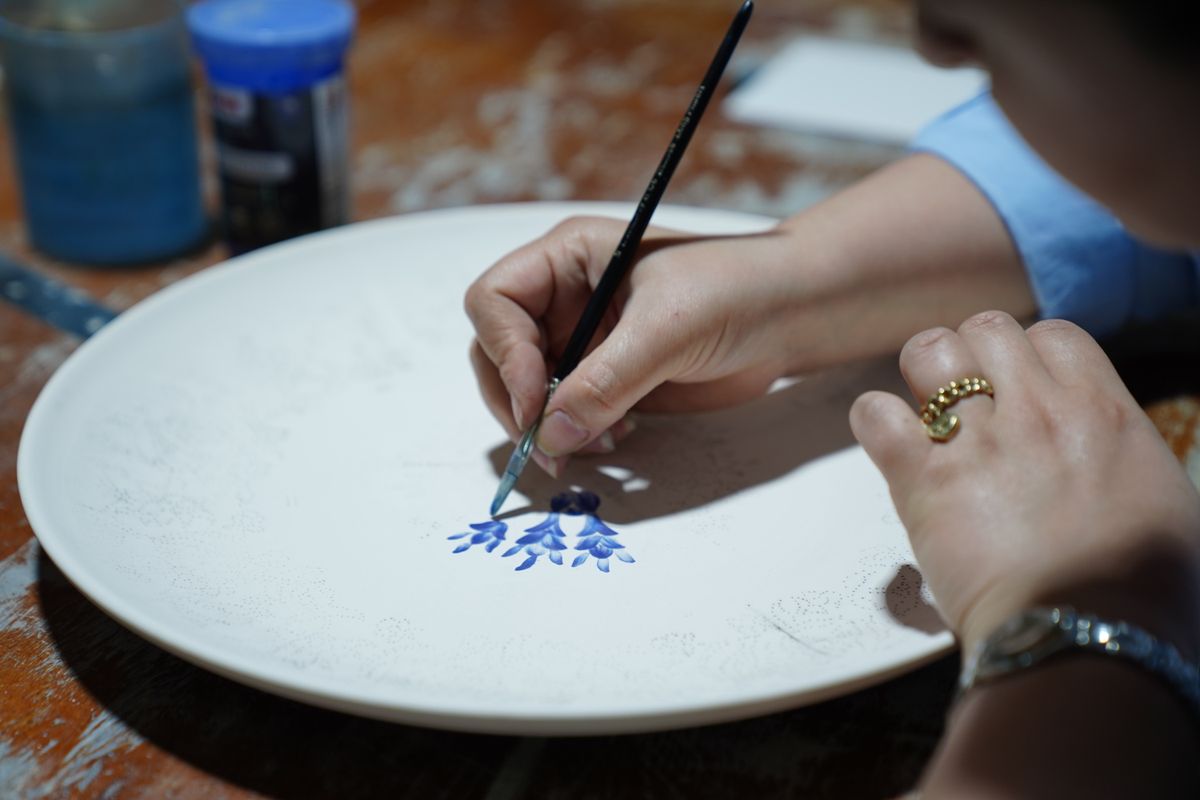
Two streets over the glaze under my thumb went from toothy ochre to a hard, cool white, fired glass-smooth with none of the tooth left, and I had to look twice to be sure it wasn't slip-cast before I found the faint spiral of the wheel still ghosting through the base. A different workshop, younger hands, no rural scene at all, just a single cobalt sprig, three petals and a stem, dropped onto the white glaze in maybe six brushstrokes.
Six strokes is a harder discipline than four thousand mules, because there's nowhere to hide a shaking hand inside six strokes. Hers didn't shake. The blue sat crisp at the edge with none of the ochre workshop's forgiving bleed, which I'd call the more exacting execution of the two, though I liked the ochre plate's intent better, an actual place and an actual mule, against a flower that could have been painted anywhere blue paint and a white glaze exist. Generous about both, exacting about neither in exactly the same way.
Woodsmoke and Firebrick
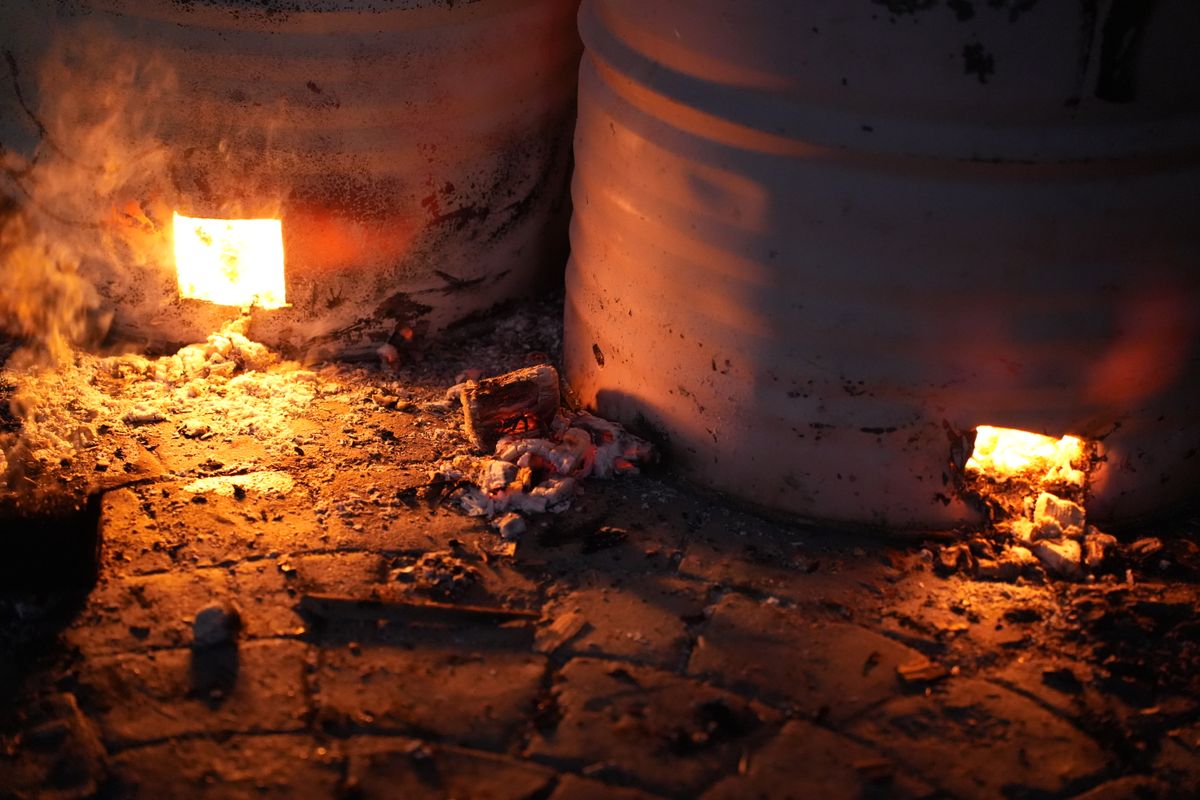
The brick around the firemouth was hot enough that I only meant to touch it once, a quick flat-palm test out of habit before I remembered these aren't electric kilns and the whole point of them is running hotter and rougher than mine, and I pulled my hand back with a thin red line across two knuckles that would be a small blister by evening. Wood-fired, the way most of the working kilns here still are, stacked with pine offcuts that go in fast and burn faster, chasing a heat curve no electric element could match and that nobody there seemed to think was remarkable.
The firing itself runs a day and a night for a full load, glaze pooling and moving in the flame path in ways no thermostat replicates, and the potter minding it that afternoon judged the temperature the way I judge mine when the pyrometer is broken again, by the colour of the light through the spyhole and nothing else. That's not romance, it's just how you fire a kiln you've fed a few thousand times. I trust that reading over most instruments I've used.
What My Hands Learned
Press a thumb into unfired clay before you buy anything: grit or a short, biscuity crumble means a rushed mix, no matter how good the painted scene on top looks.
Run a finger over a glaze edge. A crisp stop means a steady hand; a soft bleed a millimetre past the line isn't sloppy, it's just how brushwork reads at this scale.
Check the base for a faint spiral ghost from the wheel before you trust a shop's word that a piece is hand-thrown rather than moulded.
Don't touch the firemouth brick on a wood-fired kiln out of habit. I did. Once was the whole lesson.
Twenty-one workshops working the same red clay and the same rough wood heat sounds like it should flatten into sameness, and it doesn't, not once you've had your hands in enough of it to feel the different hours each piece kept. São Pedro do Corval earns the trade's reputation the unglamorous way, by volume of decent, honest work rather than any one dazzling piece, and that's the harder thing to sustain. I said as much to the potter by the kiln, gesturing with the tea glass she'd just handed me, and knocked the whole thing over my own boots without managing a single drop on her floor, which she found funnier than I did, and which is exactly the sort of thing that happens to me in every kiln that isn't mine. ■