Rajadamnern Plays Slow, Then Fast: Bangkok's Fight-Night Circuit
In Bangkok's stadium fight nights, the band decides how hard the room is allowed to listen before the fighters do.

Tuning Up Under the Roof
Rajadamnern, foreigner rates
Upper tier. around 1,000 baht
Ringside. 2,000-2,500 baht
Local rate, same seats. a fraction of the above
The first sound at Rajadamnern wasn't the crowd, and the crowd was already loud enough to complain about. It was a reed note, thin and a little sour, climbing over the shouts of programme sellers and the clink of an ice bucket being dragged past ringside. Somewhere behind the ropes a pi chawa was warming up, the oboe that would carry the melody for every fight that night, and underneath it two drummers were finding the gap between their instruments, the higher tua phu skittering ahead, the lower tua mia holding the floor. It's not unlike the give and take between a bodhrán and a fiddle back home, except this pair sits close enough to the ring that you can watch the sweat on a drummer's forearms.
Rajadamnern opened in 1945 and wears the year the way an old ballroom does, scuffed paint under a roof of fluorescent tubes, function over polish. It's billed as the world's first purpose-built Muay Thai stadium, and nothing about the place particularly disputes the claim; the ring looks bolted into the building rather than set up in it.
A tout at the gate had upper-tier seats going for 1,000 baht and ringside for something north of 2,000, and he named both prices before I'd said a word, the way a promoter reads a room. Thai regulars were filing in through a different queue for a fraction of that, programme rolled under an arm, settling into seats they clearly knew the sightlines of. Tourist money buys proximity to the ring here. Local money buys a Tuesday.
Then the band slowed right down for the Wai Kru Ram Muay, and the whole room slowed with it. Each fighter came out alone and knelt at the ropes, then circled the ring in a dance that's part prayer and part sizing-up, performed to the same stately phrase from the pi chawa fighter after fighter, corner after corner, no two versions quite alike. Nobody in the cheap seats was on a phone for this bit. It's the one part of the night that isn't for anyone in the room but the fighter doing it.
The band decides how hard the room is allowed to listen, and it decides slow first.
The Set List Finds Its Tempo
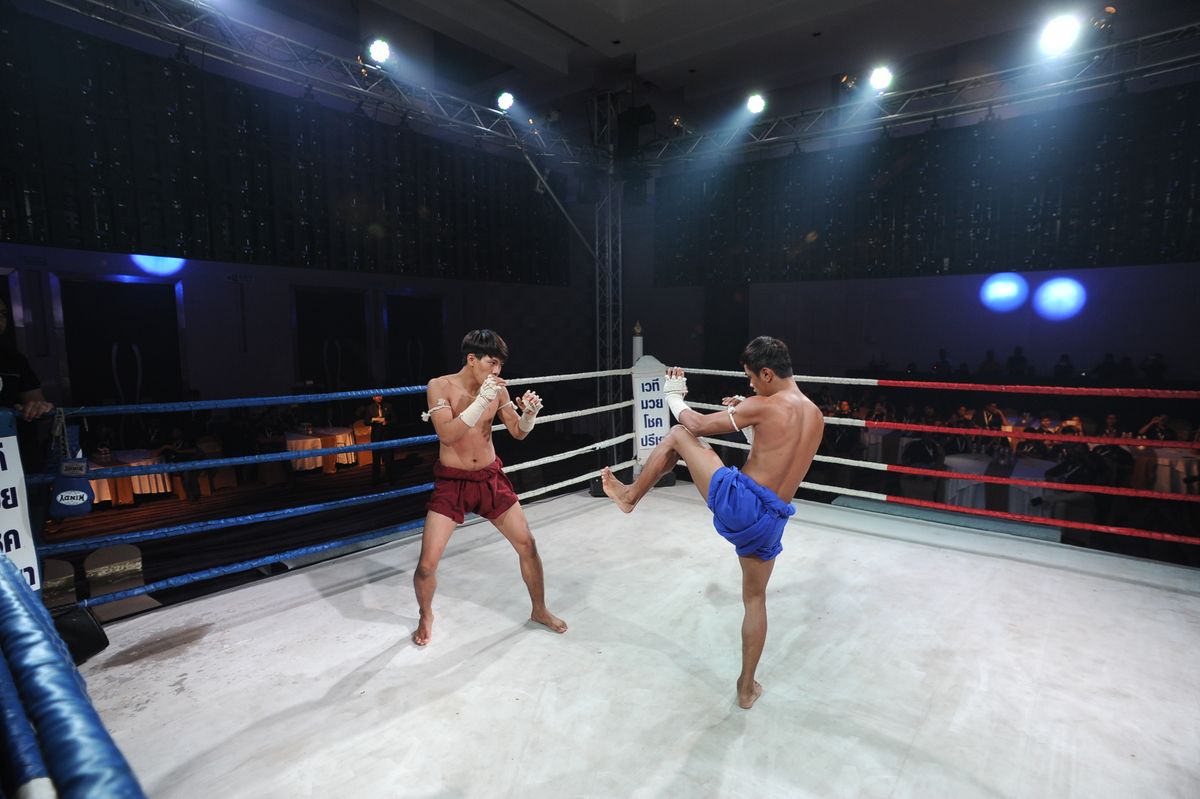
The undercard boxers did professional work without asking for more attention than a Tuesday deserved, the ching cymbals ticking along like a metronome nobody was leaning on too hard. Then the main event walked out and the pi chawa found a different register entirely, higher and more insistent, and the tua phu started dropping extra beats into the gaps.
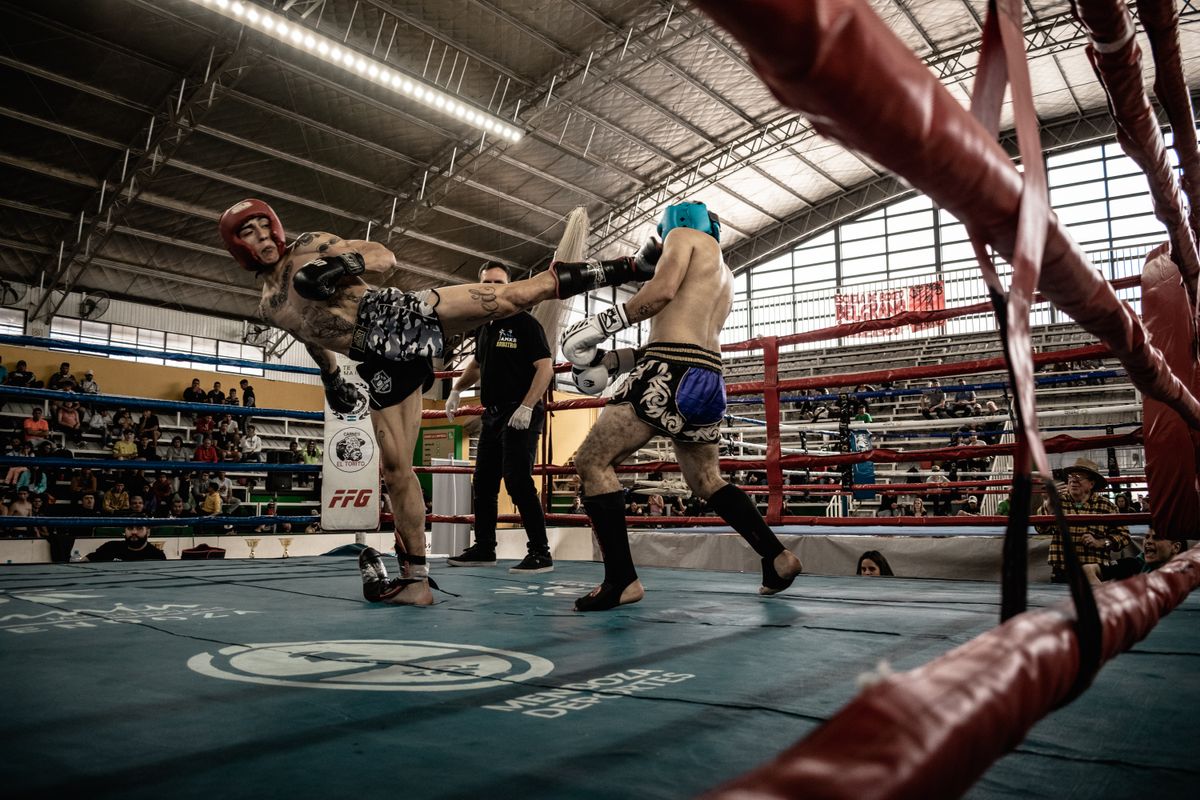
The bout that held the room was a welterweight in the red corner, a swallow tattooed low across one hip, against a taller southpaw in blue who'd clearly done his homework on the red corner's habit of dropping his right glove after a jab. The opening round moved at the tempo of the undercard, testing distance, the band matching it beat for beat. Round three didn't. The southpaw caught two knees in quick succession and the drummers caught them too, the tua phu cracking half a beat after each impact like a snare hit landing on cue, and by the middle of round four the ching had sped up so far past its round-one tempo it was basically keeping time for a different, faster song.
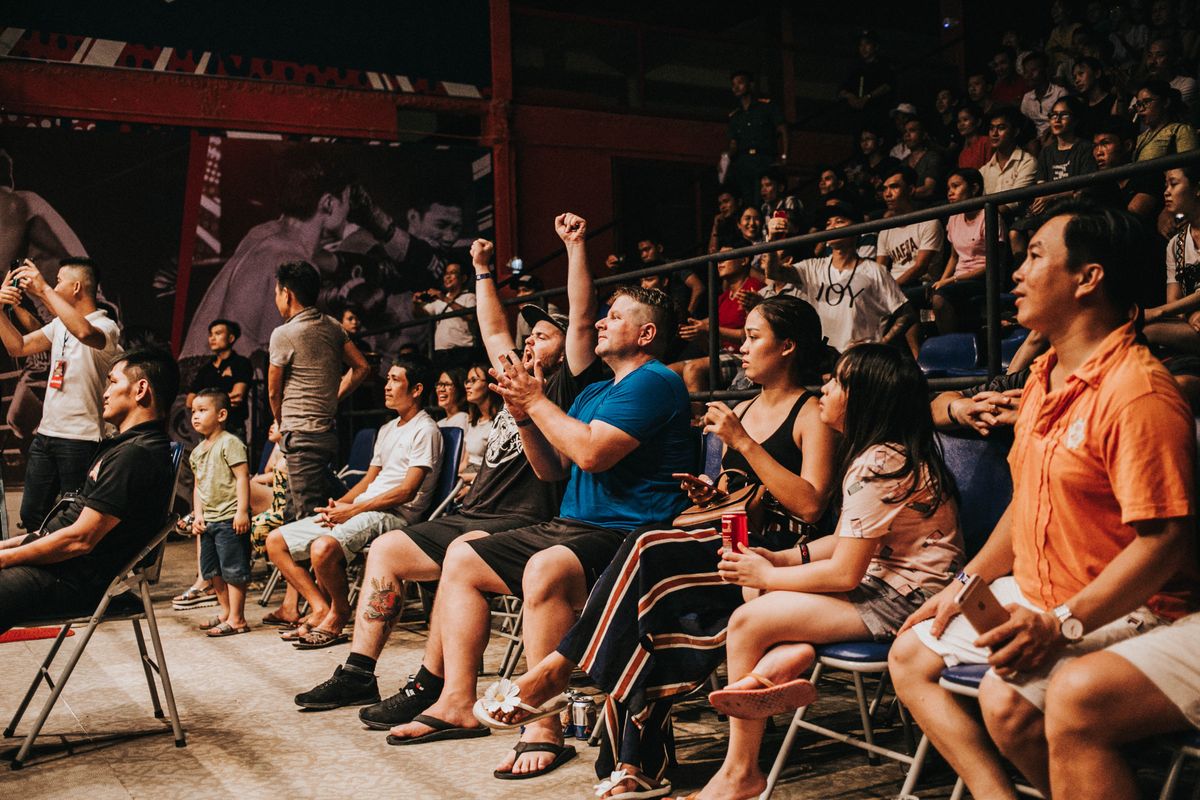
Around ringside the tourists photographed everything and cheered the knockdowns a beat late, still catching up to what they'd seen. Up in the cheaper seats the locals were ahead of the room, groaning at a missed opening before the commentator finished the sentence, some of them clearly here every week and treating the band like a home crowd treats its own anthem, background you stop hearing until it changes key.
The southpaw won it on a stoppage in round five, and the band didn't so much finish as run out of fight to follow, the pi chawa trailing off a phrase mid-note the second the referee's hands went up.
The Show Nobody Sells Tickets For
Off a side soi in the Dusit backstreets, a short walk from Rajadamnern, the first sound wasn't a reed instrument at all. It was the flat thud of a shin against a heavy bag, no ching, no tua mia, just that and someone's radio playing Thai country pop from a phone propped against a water bottle.
This was a gym, not a stadium, an open-air rig of bags and ropes under a corrugated roof, and the difference between here and Rajadamnern wasn't quality so much as audience. Rajadamnern plays a good show and knows its own running time: three-minute rounds, a ritual with its own choreography, a band that's rehearsed the shape of a fight before it happens. Here nobody was performing anything. A trainer in flip-flops held pads for a teenager who threw the same combination for forty straight minutes until his shin stopped landing crooked.
Before you go
Buy at the stadium box office, not from a tout outside the gate; prices there are posted and non-negotiable.
Arrive at least 30 minutes before the first bout. The Wai Kru Ram Muay opens the whole card, not just the main event, and it's worth seeing from the start.
Rajadamnern and Lumpinee between them run fight nights most days of the week, so a full week in Bangkok usually lines up with at least one card at each.
Nobody here is performing anything, and that's the whole appeal of the room.

Once a month or so the gym runs its own card in a rented hall two streets over, folding chairs instead of tiers, no ticket booth and no tout at the gate because there's nothing to upsell. A cassette speaker plays a recording of a sarama band, tinny and a little warped, because a card this small can't afford a live one. The fighters are fourteen, fifteen years old, some of them fighting for a purse that wouldn't cover a ringside seat at Rajadamnern.
A bantamweight built like a whippet caught a clean high kick in the second round of the night's last bout, and the small crowd of neighbours and training partners went up in a single sustained noise, no music under it at all this time, just the shout. That's the sound Rajadamnern spends four hours building slowly toward. Here it just happens, on a Tuesday, off a soi nobody outside the neighbourhood could find twice. ■