Chiang Mai, Round by Round: The Gym, the Steps, the Chedi
A Muay Thai trainer grades a gym session, 306 temple steps, and an old chedi by the same standard: conditioning.

Round 1: The Gym
Round one. Chin down, hands up, and don't burn your first breath on the walk to the ring, you'll need it for the pads.
The gym opens before the heat does, somewhere past five, when the ring ropes are still cold and the bags hang like something asleep. Skipping ropes slap the concrete, pads start cracking, a trainer calls a count in Thai and English at the same time. Then the bell goes and everyone stops mid motion, arms hanging, chests working.
I run pad rounds for a Canadian on a two week holiday who's never thrown a knee in his life. Elbow's too wide, I tell him, drop it, you're not swatting flies. Second try it lands clean, and I tell him that too, good, do it again. That's the whole job in one exchange: kill the bad habit out loud, then praise the good one just as loud, so the body remembers both.
People ask what separates a tourist gym from one that actually lasts. It isn't the mats or the sponsor banners on the wall. It's whether the fighters training at six are still upright at nine, running the same combination without the form falling apart by round four. This camp is built for the long haul, coaches rotating, water breaks timed, nobody chasing one flashy kick for a video and calling it a session. Some places down the road gas out by mid morning, all sprint and no plan, and you can watch it happen in how fast their fighters' hands start dropping.
By seven the humidity is doing its own work on everyone in the room, soaking through wraps, fogging the mirror, turning cotton shirts see through. Heat doesn't care how long you've trained. It adds a tax to every round regardless, and the fighters who last are the ones who've learned to breathe through that tax instead of fighting it on top of everything else.
Round 2: The 306 Steps
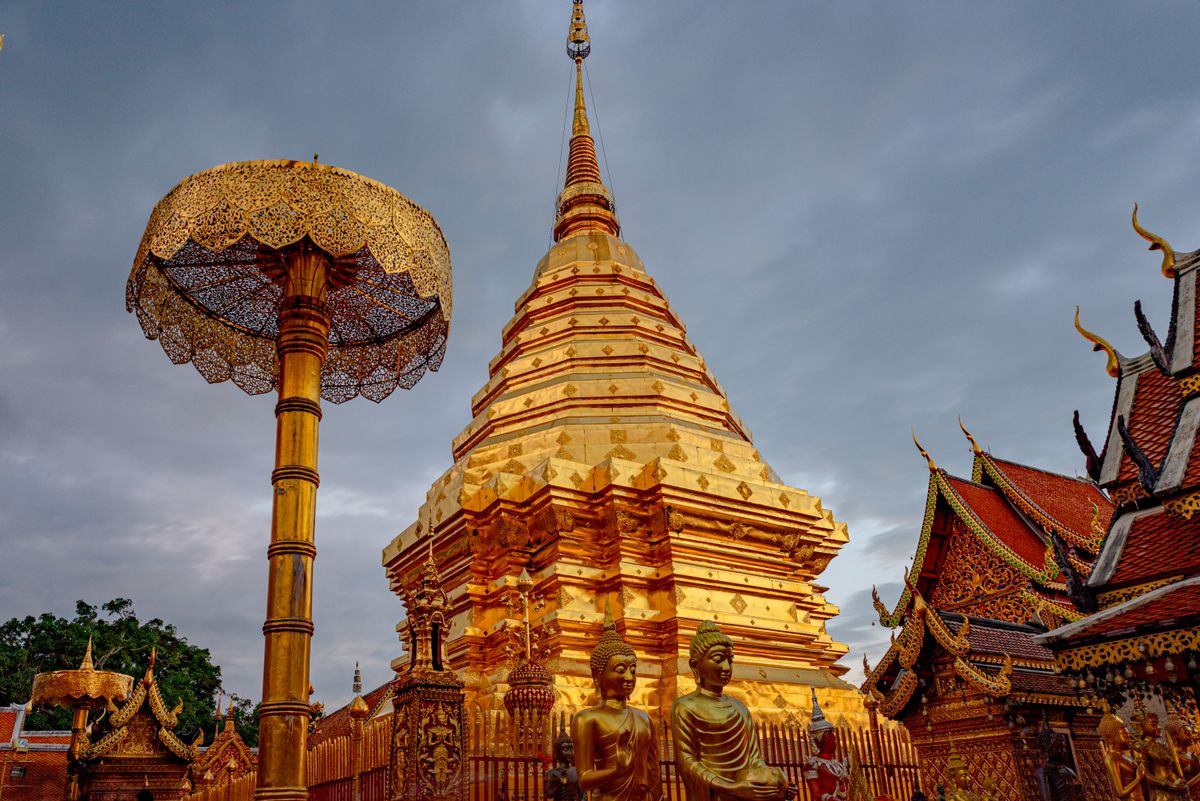
Gold catching the last of the climb's attention, right about where you stop counting steps and start checking your own pulse.
Round two. Different ring, same rule: chin down, shorter steps, and don't spend your legs on the first fifty stairs pretending this is easy.
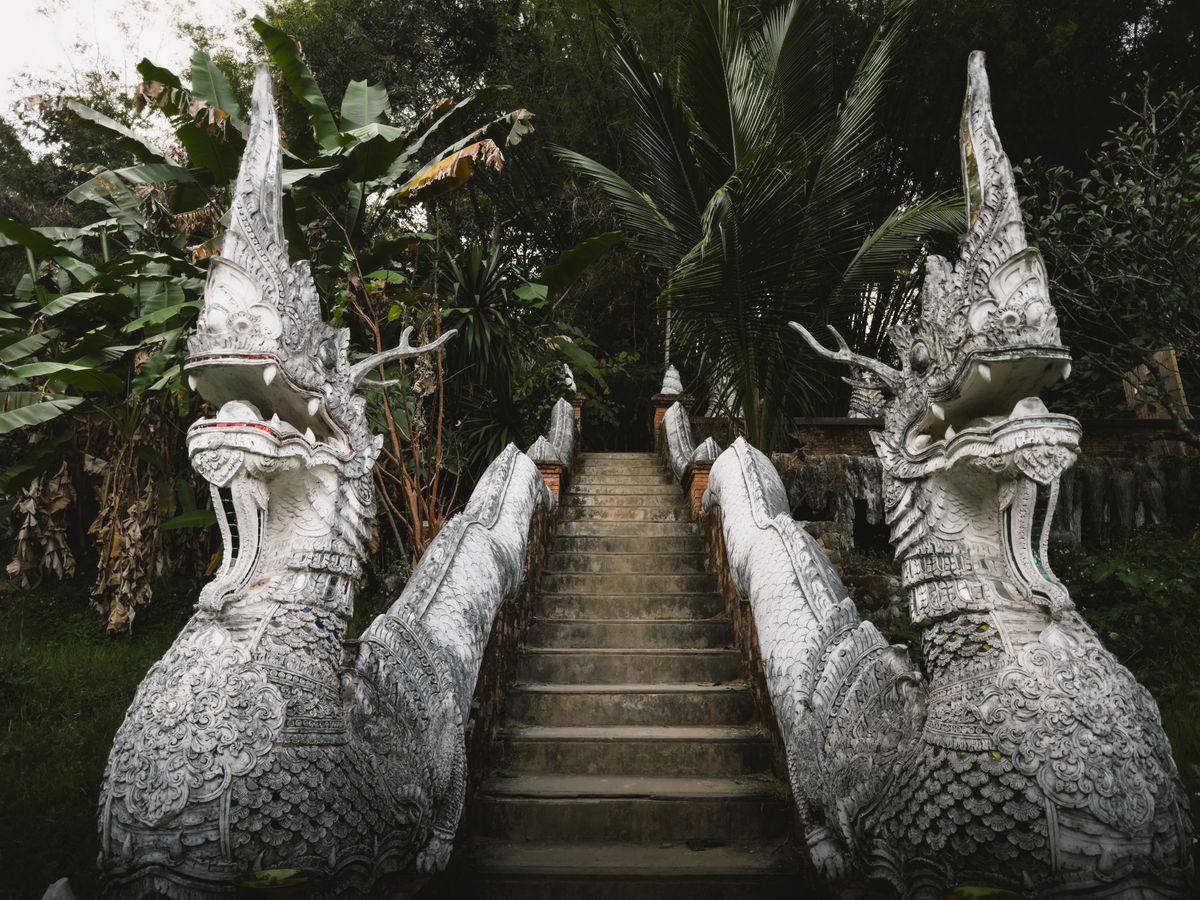
The naga staircase starts at the base of Doi Suthep like it's daring you before you've finished reading the sign. Two serpents run the length of the rail on either side, scales carved deep enough to hold shadow even at midday, and the steps climb straight up through the trees instead of switching back to be polite about it. Three hundred and six of them, uncounted by the sign, counted by everybody's legs about halfway up.
The real work starts somewhere near step eighty, where the shade runs out and the group I'm climbing with stops talking in full sentences. A woman two steps ahead of me starts taking them two at a time, then one, then stalls completely, hands on her knees, dragging air in through her mouth. Two at a time was the mistake. I tell her to drop to single steps, shorten her stride, and breathe out on a four count instead of gulping on the way up, and by step one fifty she's moving again without the rattle in her chest.
Most visitors skip the stairs entirely and ride the funicular tram up the other side, which is a completely reasonable call and also, from where I stand, the tell. The tram gets you to the same summit in under two minutes for a bit of small change, no wraps, no burn, no story to tell after. Nothing wrong with that. But if I'm grading the day itself for conditioning, the tram crowd arrives fresh and never learns what its own legs can do, while the staircase crowd gasses out somewhere around step two hundred and finds its way back only by dropping to single steps and controlling the exhale, not by muscling through more two-at-a-time bursts.
Step three hundred and six puts you level with the temple platform, gold spires catching whatever light survived the climb. Worth pausing on that top step the way you'd pause after a final bell, not to admire the view first but to let your heart rate actually drop back into range before wandering a sacred site gasping like you just lost a decision.
Whatever got you up those stairs, years in a gym, plain stubbornness, hill sprints back home, it all reads the same on the top step. The staircase doesn't lie about training age. Not much up here does.
The stairs don't care about your best day. They only ask what you've got on this one.
— corner call
Round 3: The Old City
Round three. Different pace entirely: shoulders down, breath slow, and don't walk through this next stop still chasing a bell that already rang.
Wat Chedi Luang sits inside the old city walls, a short walk from where the songthaews queue and the market stalls start setting up for evening. No sprinting required here. The compound holds one of the largest chedis in the north, and it was never fully rebuilt after an earthquake and a few centuries took pieces off the top, so what's left stands weathered brick over patched brick, missing its original spire outright.
Fight Notes
Train at the gym early, 5:30 to 7am, before the humidity adds its tax to every round.
Step 150 on the naga staircase is roughly where breathing goes ragged. Plan the pace change there, not after.
The funicular is a legitimate choice, not a lesser one. Just know which conditioning trade you're making.
Wat Chedi Luang covers shoulders and knees like any temple. Jet lag doesn't get you an exception.
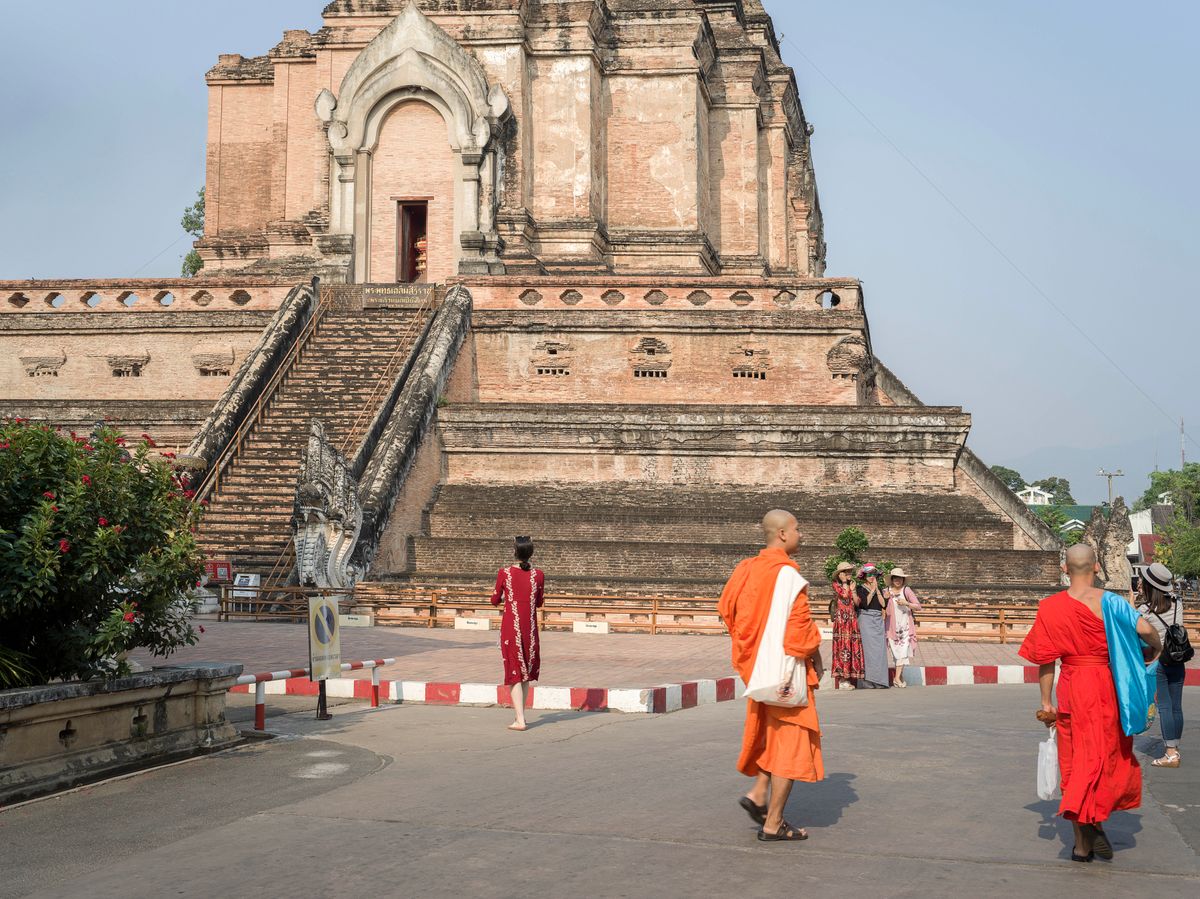
After a morning built entirely around output, pad rounds, three hundred and six steps, watching monks walk slow circuits around a half ruined stupa is its own kind of training. Stillness has a technique too, same as a stance does. You don't get good at sitting with something unfinished, a chedi missing its top, a body that's spent, by forcing it. You get good at it by staying in position and letting the discomfort pass through instead of flinching out early, which is the same instruction I give fighters who want to bail a clinch too soon.
If you're already planning to skip Round Two's staircase and go straight for a foot massage, fine, that's a legitimate call for a body that trained hard the day before. Just don't skip the walking here too. Recovery isn't the same as doing nothing, and a slow lap around this chedi beats another hour flat on a hotel bed every time.
Three rounds, three completely different definitions of fit, and Chiang Mai asks you to clear all of them in one day if you let it. Most visitors won't. That's fine. Just know which round you skipped, and don't call it a rest day when it was actually a missed one. ■