Krabi's Limestone Doesn't Wait for Dry Season: A Trainer's Read on Railay and Ton Sai
No road, no rope for half of it, and a wet-season read on what the karst actually costs a body.

Round 1. No road in, so cut the complaining early.
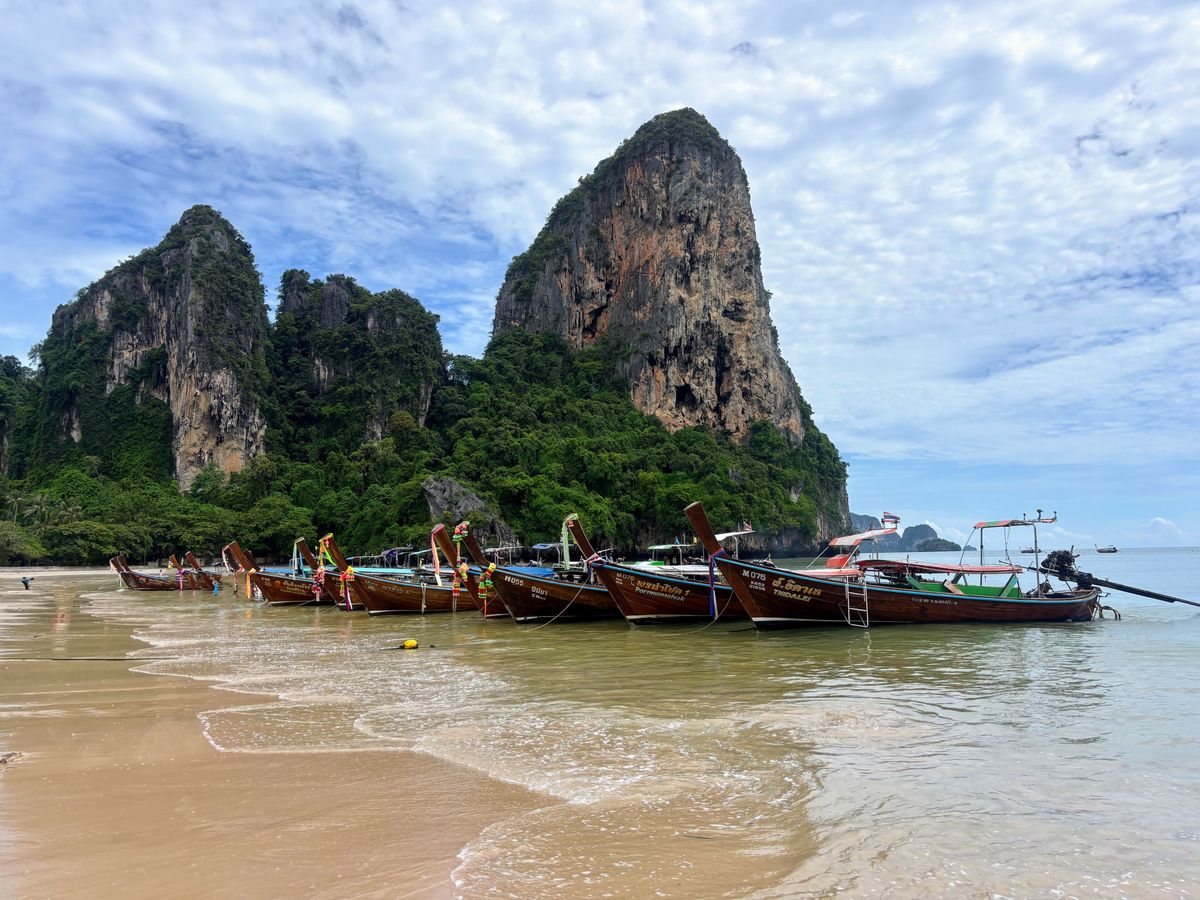
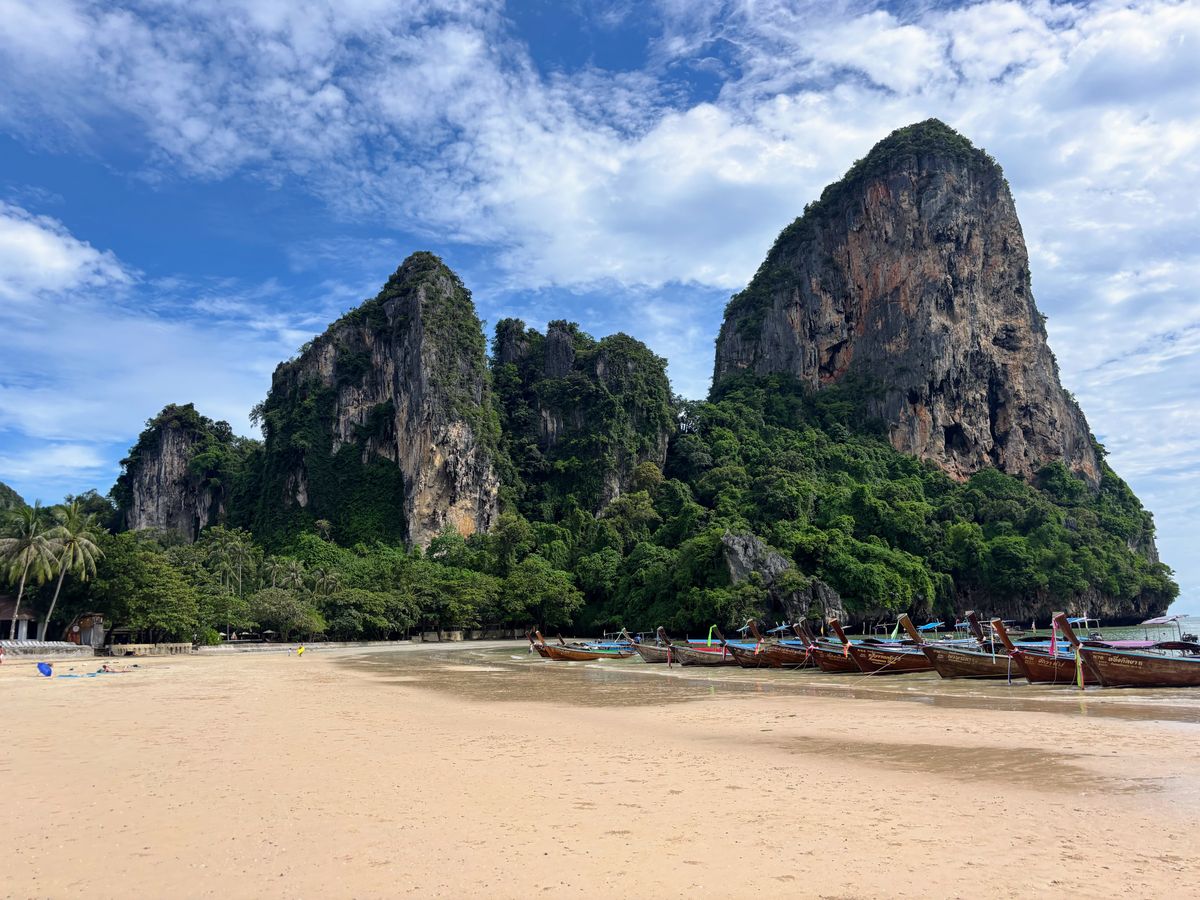
Longtail boats at Railay Beach, the only way in or out.
The engine cuts twice before it holds, and the longtail rocks sideways off Ao Nang pier with four bags, two paddleboards, and a driver who has made this run so many times he steers with one foot. No road reaches Railay. None ever has, since the limestone karst that walls off this peninsula from the rest of Krabi doesn't leave room for one, and that fact alone tells you more about the conditioning of this place than any brochure will.
Twenty minutes out, the cliffs start reading like a fighter's shoulders: wide at the base, corded through the middle, capped white where centuries of rain have bleached the rock. Railay, Ton Sai next door, and Phra Nang around the point are the three names locals use for what is really one long wall broken into beaches. From the boat it looks solid. It isn't. Water has been working these walls since before anyone kept records, and every overhang and pocket is a scar from a fight the rock has been losing slowly.
Ton Sai has the older reputation, a slower, grittier hangout for climbers who stay months instead of days, hammocks strung between palm trees and chalk bags hung out to dry on porch rails. Railay Beach runs the resort crowd, day boats and rented paddleboards, but the two are close enough that a ten-minute walk over the headland trades one crowd for the other.
The landing is a wet jump off the bow into ankle-deep water, bags held overhead, and I watch a line of arrivals do it wrong: heels first, weight back, nearly sitting down in the surf. Small fix, big difference. Land on the balls of your feet, knees soft, weight already moving toward the beach before your foot commits. Nobody teaches this. Everybody needs it.
By the time the boat idles back out for the next group, the walk up the sand has already sorted the newly arrived from the returning: one group flat-footed and slow in the heat, the other cutting a straight, economical line to the shade. Round one goes to whoever paced the first hundred meters instead of racing it.
Round 2. Grade the rock the way you'd grade a fighter.
Krabi's limestone carries more than 700 bolted routes, everything from a forgiving 5a scramble to the 8c test pieces that only get attempted by climbers who've already spent a season here building calluses. The classic multi-pitch lines sit around 6a, long enough to teach pacing instead of just grip strength. I booked a half-day with King Climbers, one of the longest-running schools on this stretch, because a good school reads a body the same way a good corner reads a fighter: where the fatigue is going to show up first.
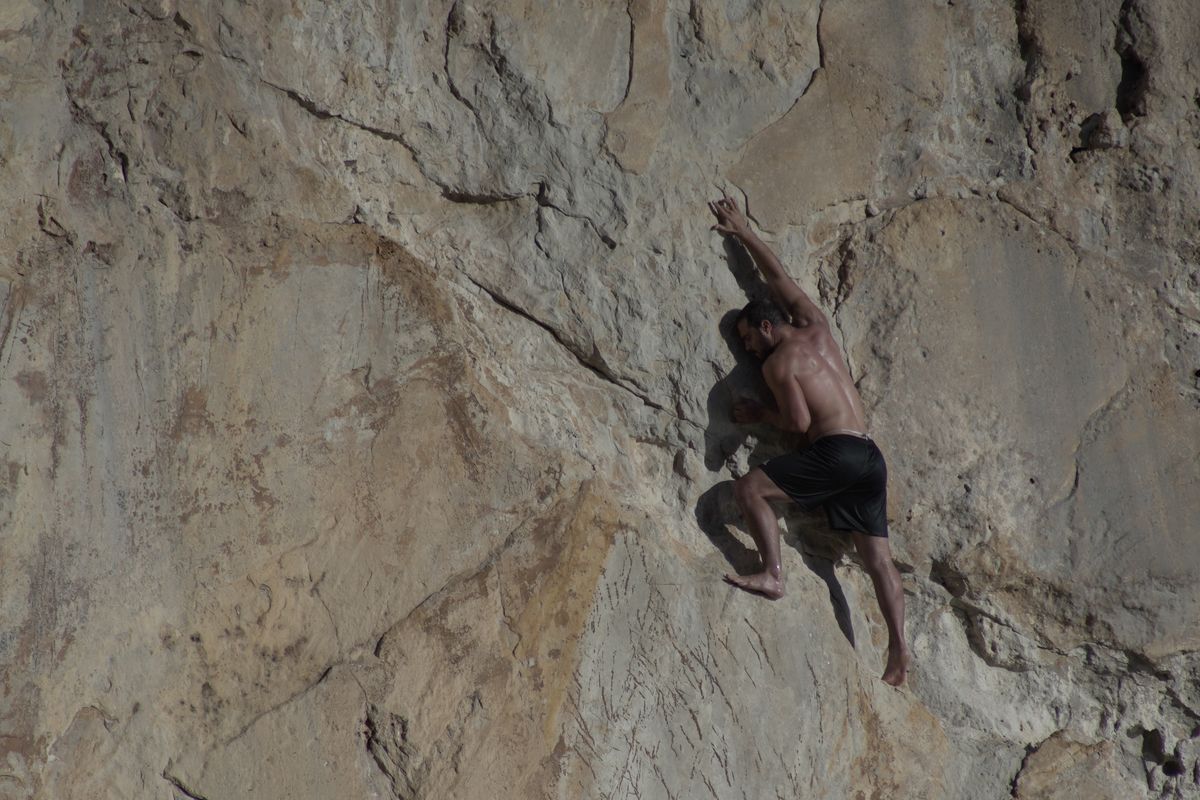
It's August, which means southwest monsoon, which means the rock runs slick under a film of condensation before anyone's hand has even touched it. Peak season here is November through April, cooler and drier, and there's no pretending otherwise. Humidity sits somewhere past soaked-shirt by nine in the morning. The limestone goes glassy in patches where rain has polished the calcite, and friction, the actual physics of a shoe staying on a foothold, drops fast once a route holds standing water.
One climber near me kept muscling through a slick 6a with his arms, cranking on every hold like it owed him money, forearms pumped out within four moves. 'Chalk won't fix a wet hold, it just soaks up your own sweat faster,' I told him, because that's the actual mechanism and it's worth knowing. Then, because he'd nailed his footwork on the crux above it without noticing: 'That last smear, though, that was clean. Do more of that and less of the arm-wrestling.'
The technical fix for wet-season Krabi isn't more chalk, it's redistributing the load. Smear instead of edge where the rock is glassy, since a flatter shoe surface finds friction a sharp edge can't. Slow the tempo between holds so a foot can test before it commits fully. Rest more often on the jugs instead of pushing through to the anchor, because a pumped forearm on slick rock doesn't recover, it just fails later and harder.
fight notes
Smear on wet rock, don't edge. Flat rubber beats a sharp edge when the surface is glassed over.
Chalk dries sweat, not standing water. Wipe the hold first.
Rest on jugs before the pump sets in, not after.
August is wet season on the Andaman coast. Fewer climbers and slicker rock, both true at once.
The rock doesn't care about your grade, only whether you can still hold on when it's wet.
Round 3. Decide when to let go before your grip decides for you.
Deep water soloing is Railay's signature move: climb a route straight up out of the sea with no rope, no harness, nothing between you and the water but however high your nerve holds out, then let go and drop. Hot Rock runs day trips built around it, sailing and kayaking and snorkeling stacked around the actual climbing, and the water under these walls runs deep enough that the landing is the easy part. The decision above it is not.
Twenty feet up a wall with your forearms cooking, the fight stops being about the rock and starts being about the clock in your own grip. Skin and tendon only hold a static load so long before they quit on their own terms, and the climbers who get hurt out here are usually the ones who wait for that instead of choosing it themselves. Let go while you're still climbing, not after you've already started to fall.
Not every route ends in a jump. Some climbers downclimb instead, the rope-free version of tapping out on your own terms rather than letting the bell decide.
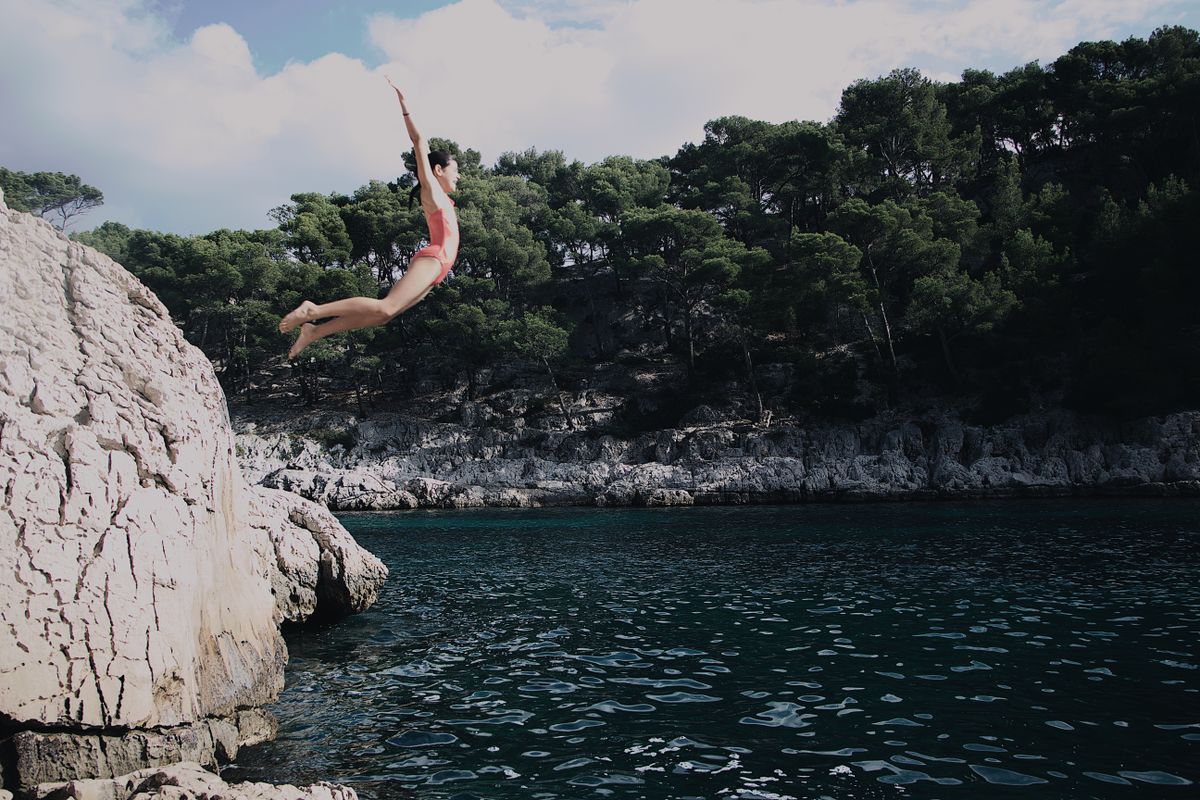
I watched a woman work a line past the point most people bail, arms shaking visibly from the boat, and she still picked her moment instead of having it picked for her: one more reach, a breath, then off, feet first, straight down. That's conditioning under pressure in its purest form, the same read I give a fighter in the last ten seconds of a round. Know your limit before it knows you.
Krabi in August isn't the postcard version of this place. The rock is slicker, the school days run shorter between rain squalls, and the boats out to Phra Nang are quieter than they'd be in January. None of that changes what the limestone is built for. Railay conditions you in three separate systems at once, legs on the sand, forearms on the wall, nerve on the jump, and a destination that trains all three without a road in or a rope required gets full marks in my book, wet season included. ■