Tiger's Nest and the Arithmetic of a Good Day
A Bhutanese field surveyor climbs 900 vertical meters to Paro Taktsang and scores the pilgrimage the only way she knows how, domain by domain.

Time Use
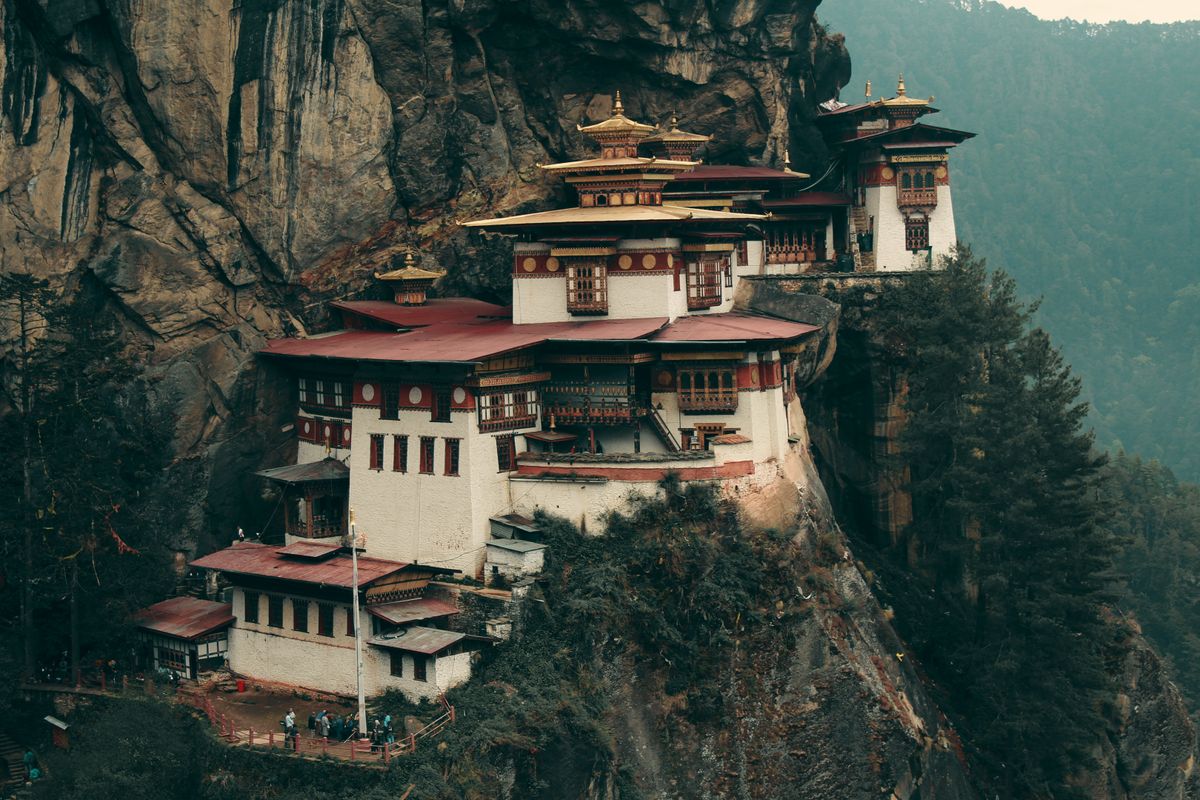
Does a four-to-six-hour estimate on a trailhead sign match what actually happens on the trail? At 7:40am the car park below Paro Taktsang already held eleven vans, two horses whose riders hadn't yet decided whether they'd ride, and a guide checking his watch like the mountain owed him a schedule. The sign promised a range. Nobody standing there believed the low end applied to them.
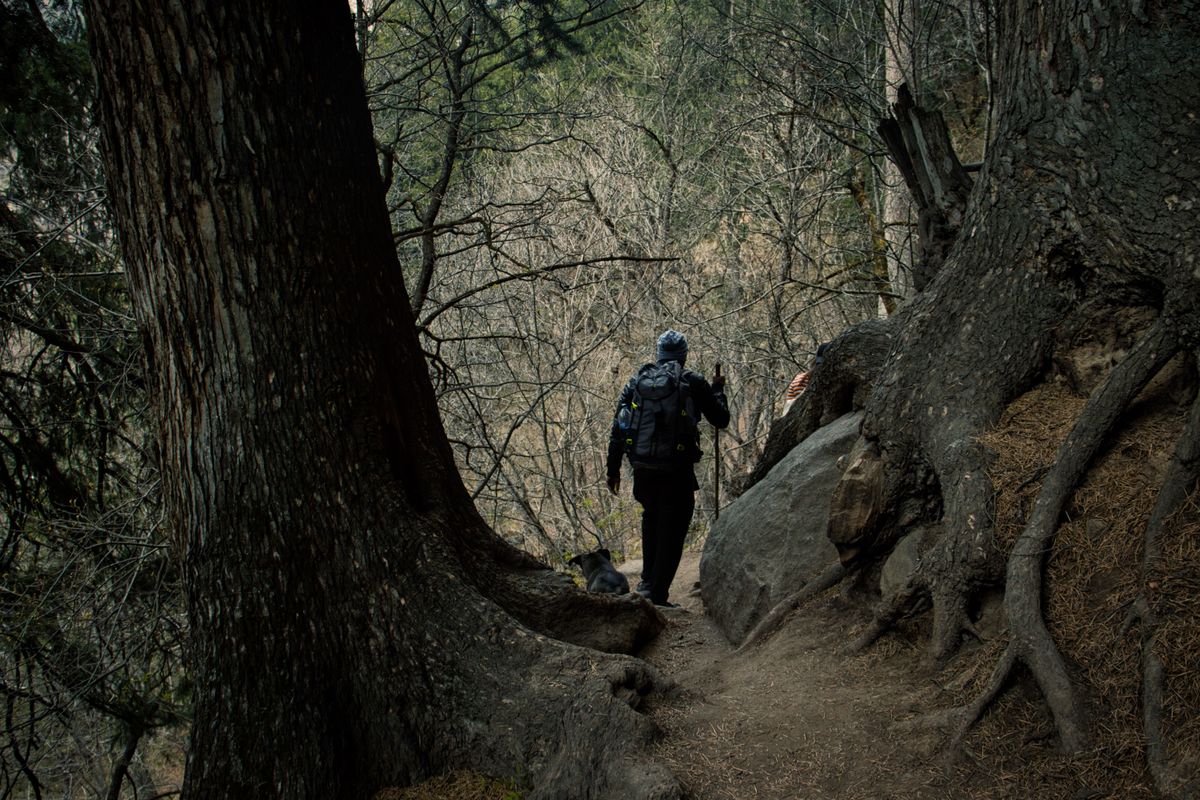
Bhutanese pilgrims moved past at a pace that never changed, up or down, the whole 7 kilometres to the monastery and back. A porter carrying a coil of rope for scaffolding repairs above the falls didn't pause once at the switchbacks where tourist groups stopped to photograph pine trunks. Tourists, by contrast, sprinted the first kilometre and stalled by the second, the gap between intention and lungs closing fast at altitude that starts around 2,220 metres on the valley floor and only climbs from there.
One boy, maybe seven, ran ahead of his grandparents at every rest stop, disappeared round the bend, then reappeared coming back down to check on them before setting off again, covering what looked like double the trail distance out of pure impatience with adult pacing. His grandparents never sped up. Neither did the trail seem to mind waiting for either version of them to catch up to the other.
Time Use as a domain measures whether a day's activities line up with how long people actually think they'll take. Call it a sub-index for expectation-to-actual duration variance: pilgrims and porters clocking in almost exactly at the pace the signage predicts, tourists overshooting early and paying for it on the back half, a boy doubling his own distance for reasons no survey form has a box for. Time Use, sub-index for expectation-to-actual duration variance: 7 out of 10.
Community Vitality
Do strangers extend small unprompted kindnesses to each other when there's nothing to gain from it? At the cafeteria roughly halfway up, where most of the trail's foot traffic collapses onto benches at once, the answer showed up in a shared thermos before it showed up in conversation.
The tea queue ran twelve people deep by 9:15am, and a woman from Thimphu ordered two extra butter teas and handed them back over her shoulder to a French couple who hadn't asked for anything, just looked cold. Nobody organized it. The thanks that followed stayed brief, the way exchanges go when neither party thinks they've done something notable. Community Vitality, sub-index for unprompted resource-sharing among unacquainted hikers, queue-to-kindness ratio: one act observed per roughly forty people in line, which is either a low bar or exactly the right one depending on which government you ask.
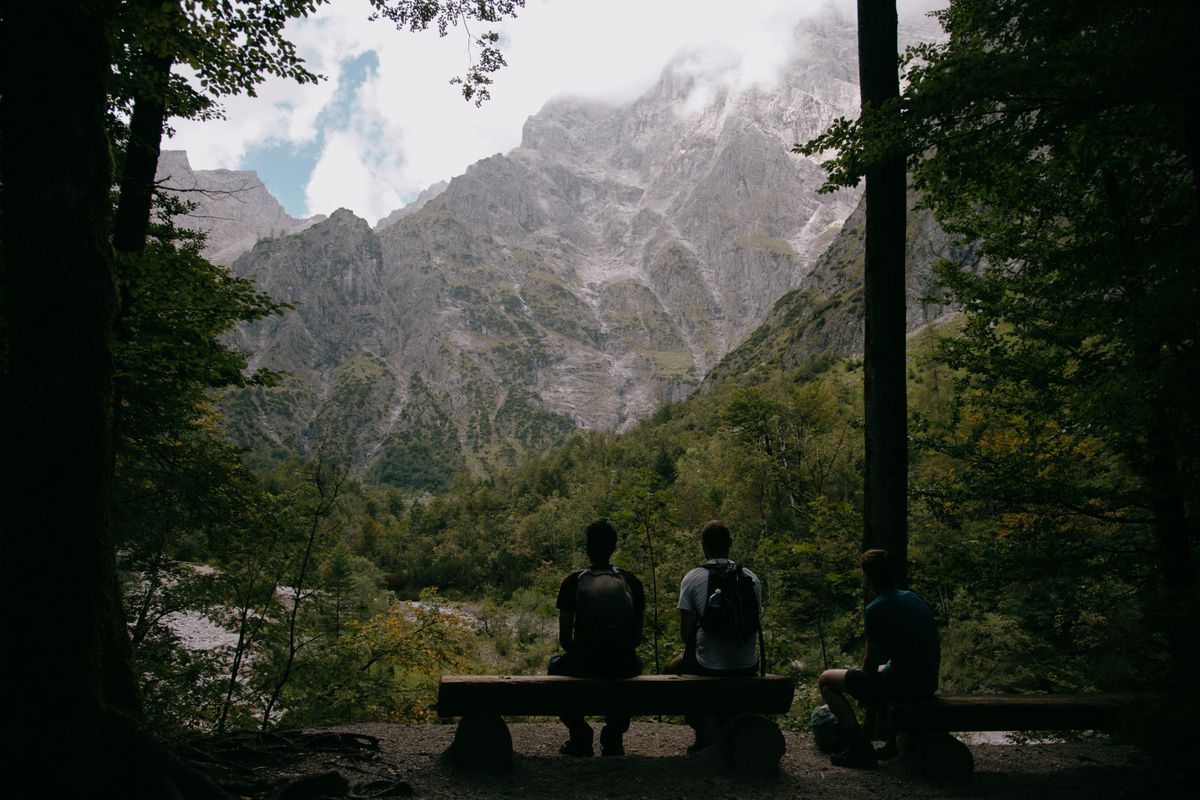
The benches at the halfway point don't require anyone to file paperwork, but they behave like they're being surveyed anyway: space made for tired strangers, snacks passed sideways, a Japanese couple splitting rice crackers with a Swiss hiker who'd run out of his own an hour earlier. Community Vitality, sub-index for unprompted resource-sharing among unacquainted hikers: 8.5 out of 10.
A shared thermos of butter tea is Community Vitality, not sentiment, showing its work.
— field notes
Living Standards
Does the infrastructure of a place hold up under what the place claims to offer? Past the cafeteria the trail drops into a gorge on stone steps before climbing back out to the monastery gate, and it's here that the four-to-six-hour estimate starts to feel less generous, whichever direction gravity currently has an opinion about.
At the final checkpoint before the monastery complex, a security guard runs a routine that hasn't changed in years by the look of the queue moving through it: phones into numbered lockers, cameras and bags the same, shoulders and knees checked without much comment, shoes off before the inner temples. Nobody's exempted, not the tour groups, not the two monks ahead of me in line for their own building. The system doesn't bend for status, which is either a design principle or the honest byproduct of having nowhere private to file the exception.
Inside, the cave where Guru Padmasambhava is said to have meditated after arriving on the back of a tigress in the 8th century sits behind glass and low light, and the 1692 construction date on the temple placard reads almost modestly next to it, as if 334 years were the smaller of the two claims being made in that room. No photographs exist of what's actually inside because none are allowed. That absence is its own kind of data point.
Surveyor's Notes
Phones, cameras, and bags go into lockers before the inner temple complex; carry nothing you need to explain to security.
Shoulders and knees covered, shoes and hats off, sunglasses off too, before entering the inner temples.
Budget the full 4 to 6 hours round trip, not the number a guide mutters at the trailhead.
The halfway cafeteria is the last real rest stop before the gorge steps down and back up to the monastery gate; use it.
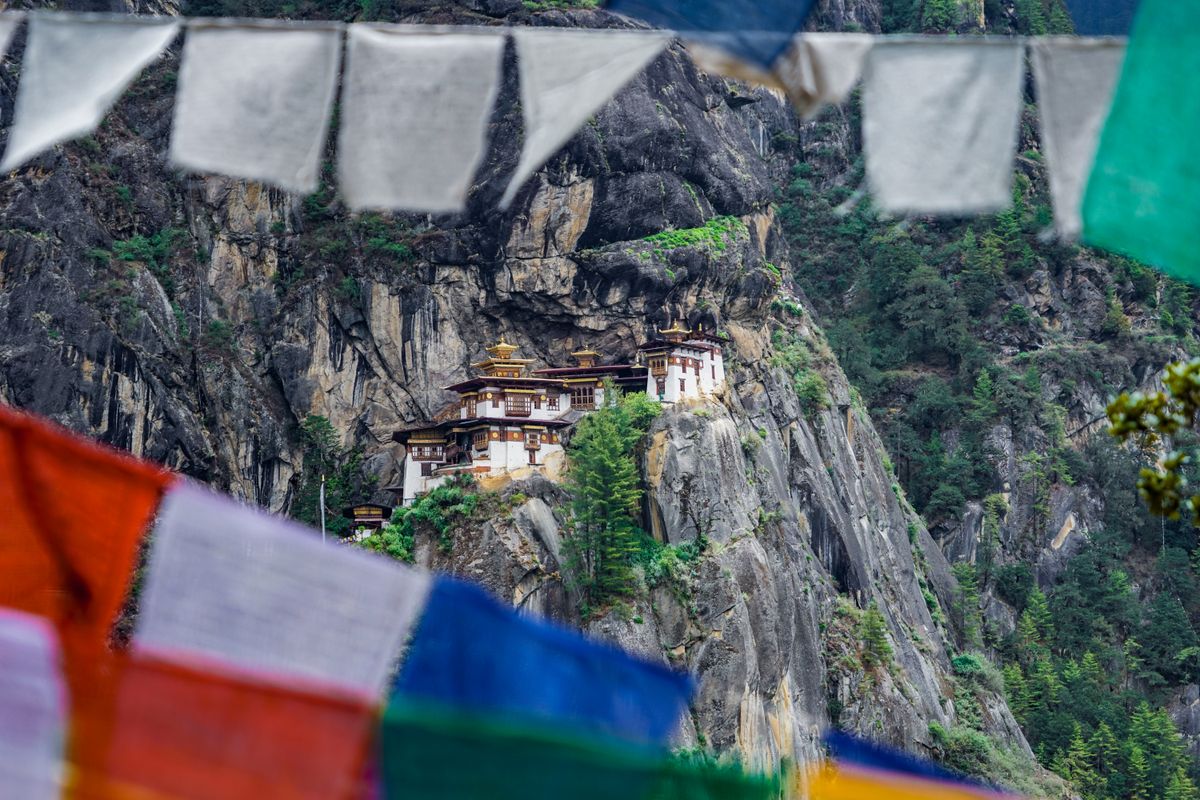
Living Standards as a domain usually tracks material things: housing, assets, income. Up here it's simpler: does the trail infrastructure, the checkpoint system, the locker that returns your phone in the same condition you left it in, match what a 334-year-old pilgrimage site promises to deliver on a Tuesday with eleven vans in the car park. Living Standards, sub-index for infrastructure-matches-promise ratio: 9 out of 10, the missing point held back because the queue for lockers on the way down took eleven minutes longer than the queue on the way up, and nobody surveyed had a good explanation for why. ■