Bumthang in autumn: old temples and a farmhouse supper
Bumthang, in central Bhutan, has farmhouses that greet visitors with butter tea and one of the country's two most ancient temples.

Bumthang is a district of four high valleys in central Bhutan, and people go there for its old temples and for a night in a farmhouse. I run a lodge in Nepal, where I read guests by what they leave on their plates, and on this trip the plates went back emptier than I expected. I went in autumn, after the harvest, when the fields up in the valleys had been cut to gold stubble and a handful of white houses with dark timber stood out on their own among them.
Stop one: the lhakhang

We waited on the step until the monk had finished at the window.
Breakfast on the first morning was in Jakar, the main town, and most plates came back with the egg gone and the toast left, which to me means people expecting a long day. The plan was the temples around the town on foot and by car, a night in a farmhouse, and a walk the next morning before leaving.
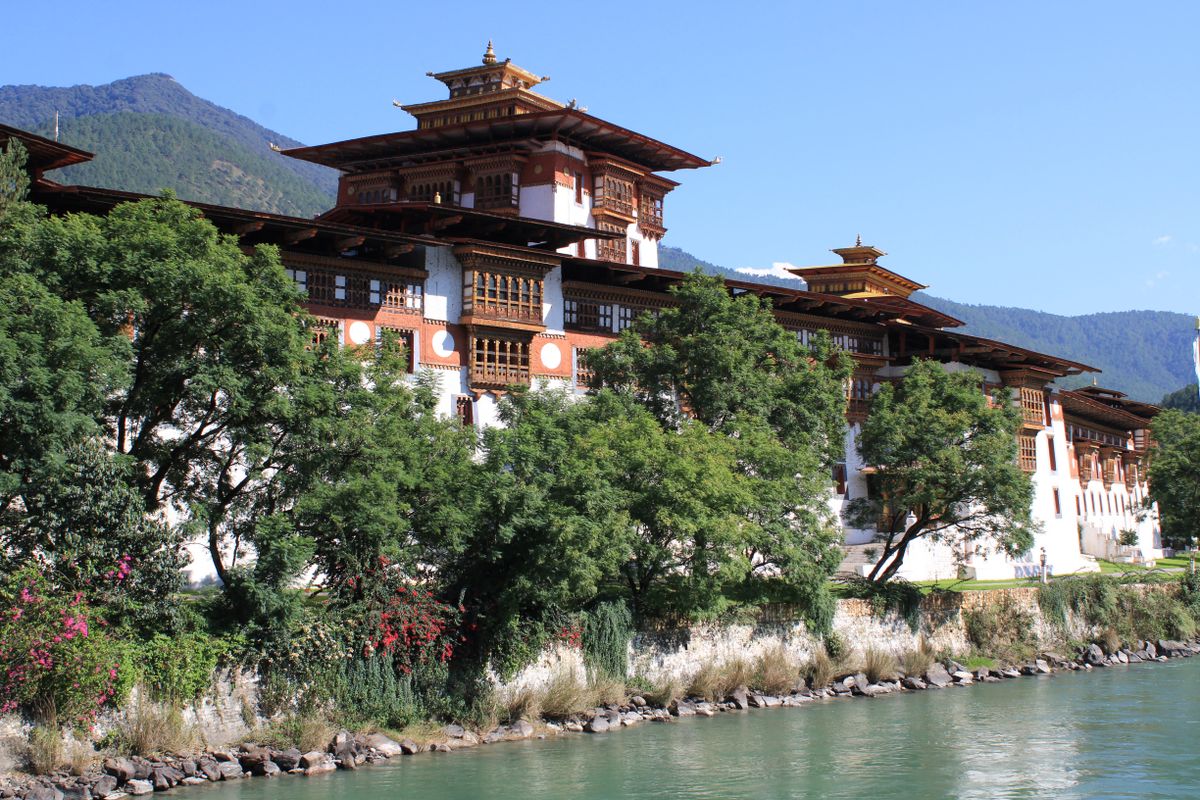
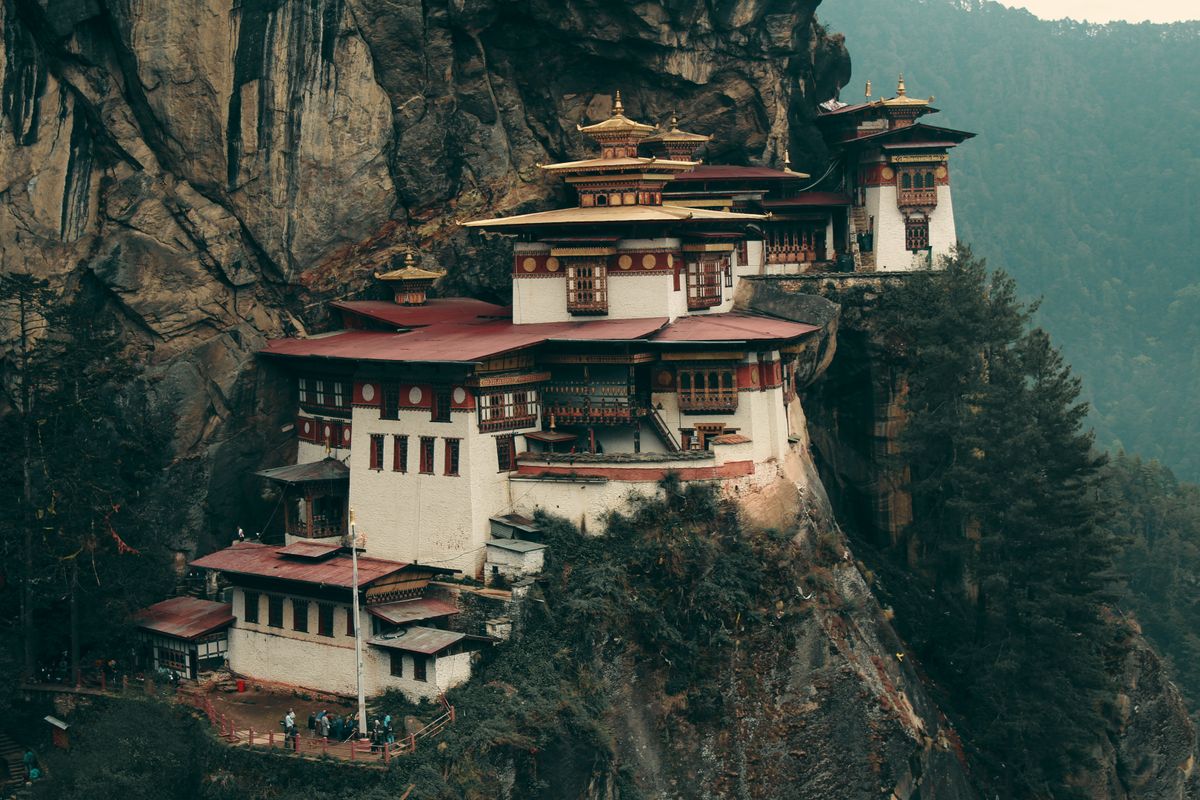
Our first temple, or lhakhang, was Jambay Lhakhang. The story is that in the 7th century the Tibetan king Songtsen Gampo raised 108 temples on a single day to pin an ogress to the earth forever, and this is one of them. It is counted among the two most ancient temples in Bhutan. An old woman went round the outside wall ahead of us with a thermos under her arm, stopping now and then to rest, and nobody hurried her.
At one temple that morning a monk stood at a painted window with his back to us and a steel bowl on the sill by his feet. I wanted to know what had been in the bowl, which is a lodge owner's question, and I did not ask.
The second temple was Kurjey Lhakhang, a complex of three buildings and the resting place of the remains of the first three kings of Bhutan. Guru Rinpoche, a Buddhist teacher revered across Bhutan, is said to have left a print of his body on the cave at Kurjey. Below the wall a family had spread a cloth on the grass and were eating rice out of one pot, and the children had finished before the grown-ups sat down.
On the way back to the car a man in our group said the next morning's walk would be nothing. I guessed he would sit down on the first wall he found.

Stop two: the farmhouse
The plates went back from supper in two kinds, our host's bare and ours with a ridge of chillies along the rim, because we had eaten around them and called it flavour. We had arrived in the afternoon, past a stone farmhouse on the same slope with a horse grazing below its fence, and Pema, who kept the farmhouse where we stayed, put a cup of suja in my hands at the door. Suja is butter tea, and a farmhouse offers it to visitors when they arrive.
Supper was ema datshi, a dish of cheese, butter, onion and hot dried chillies served over rice, and that is where the chillies on our rims came from. By dark the mist had come down off the forest and the cold had sent everyone inside, where the room smelled of wood smoke.
Before supper Pema got a hot stone bath ready, a tradition farmers have kept for centuries to relax stiff joints and muscles. Herbs gathered in the forest go into the water, and she carried an armful up from the trees at the edge of the yard while I watched. I did not get in.
The man in our group left most of his rice and said he was fine. I did not think he would be first at the door in the morning.
Pema topped up my suja whenever it fell below halfway, and watched whether I finished it.
Stop three: the valley
Breakfast plates came back clean, egg and all. Wheat bread and honey were on the table, and both are among Bumthang's main farm products.
The farmhouse is a short drive from Jakar, which sits at 2,470 m, so we took the last morning's walk slowly, at the pace of the slowest of us, which on the steep parts was me. On the way down we passed a village on a lower hillside.
innkeeper's notes
Jakar, the main town, sits at 2,470 m, so plan the first day around short, slow walks.
Jambay Lhakhang Drup, the temple's festival, is held in October each year. Check the dates before you go.
The hot stone bath is a farmhouse tradition, so ask your host about it.
Kurjey Lhakhang has three buildings, so leave time for all of them.

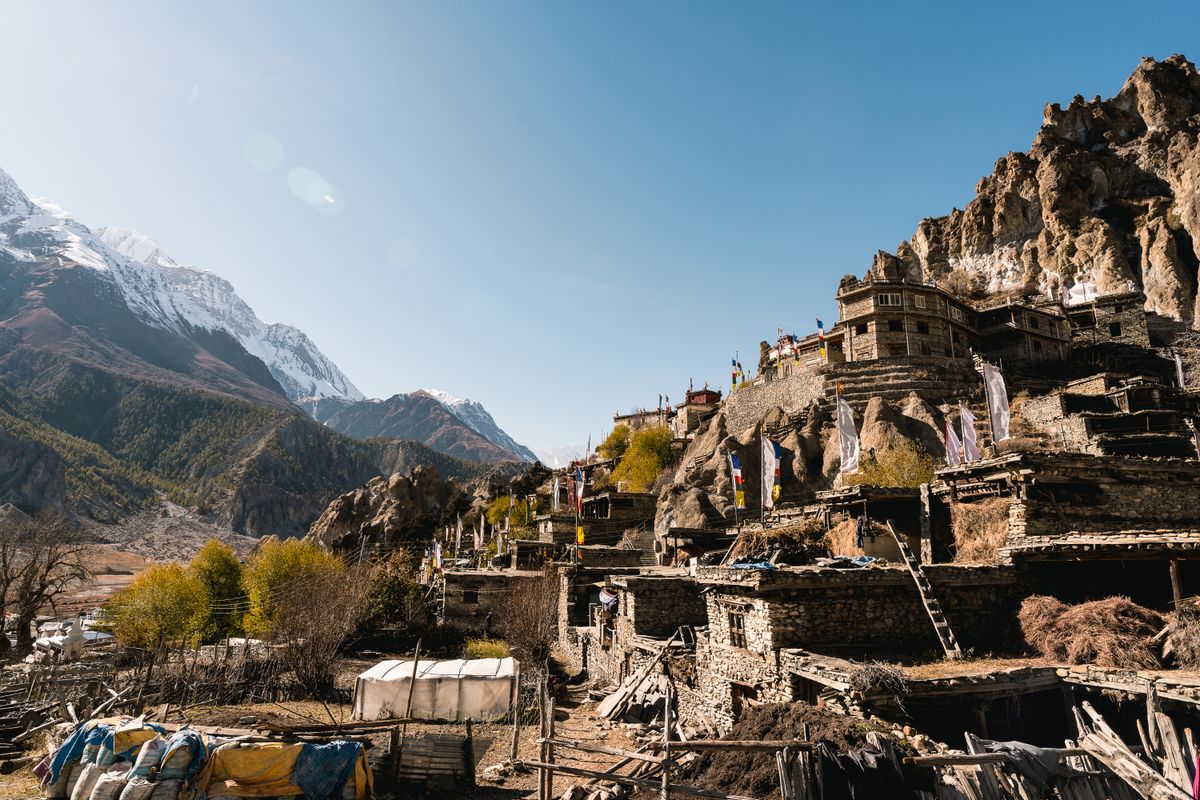
Higher up, the houses had stood apart in open fields; here they were packed together up the slope, with one larger building above the rest. From the road we could hear a radio and somebody calling a child in to eat.
At the bottom the man in our group said he could walk another valley. I would put money on the car. ■