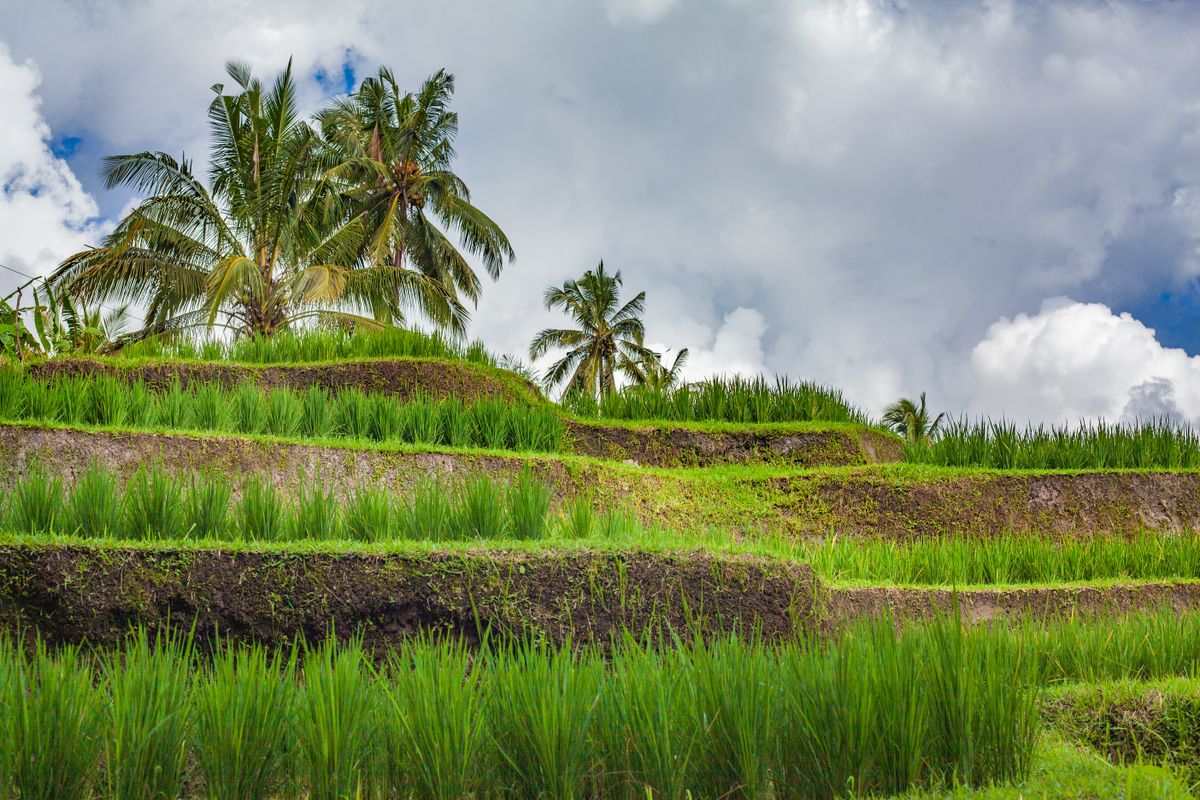
Bali's Rice Terraces Run on a Temple Timetable
From a roadside weir to the terraces of Jatiluwih and the lake temple at Beratan, Bali's rice fields run on a shared water timetable.

Bali's rice terraces usually get treated as scenery, a green stage between the beach and the next temple. They are closer to a shared timetable for water, and the timetable runs through the temples. On Bali, in Indonesia, the paddies are watered through the subak, an irrigation system developed in the 9th century, and each local irrigation association is also called a subak.
I drove the circuit in a small rented car: a canal on the way up from the south coast, the terrace village of Jatiluwih, and the lake temple at Beratan. At home in Bhutan I survey communities for a living, so I scored each stop under one of the domains I use there.
Time use
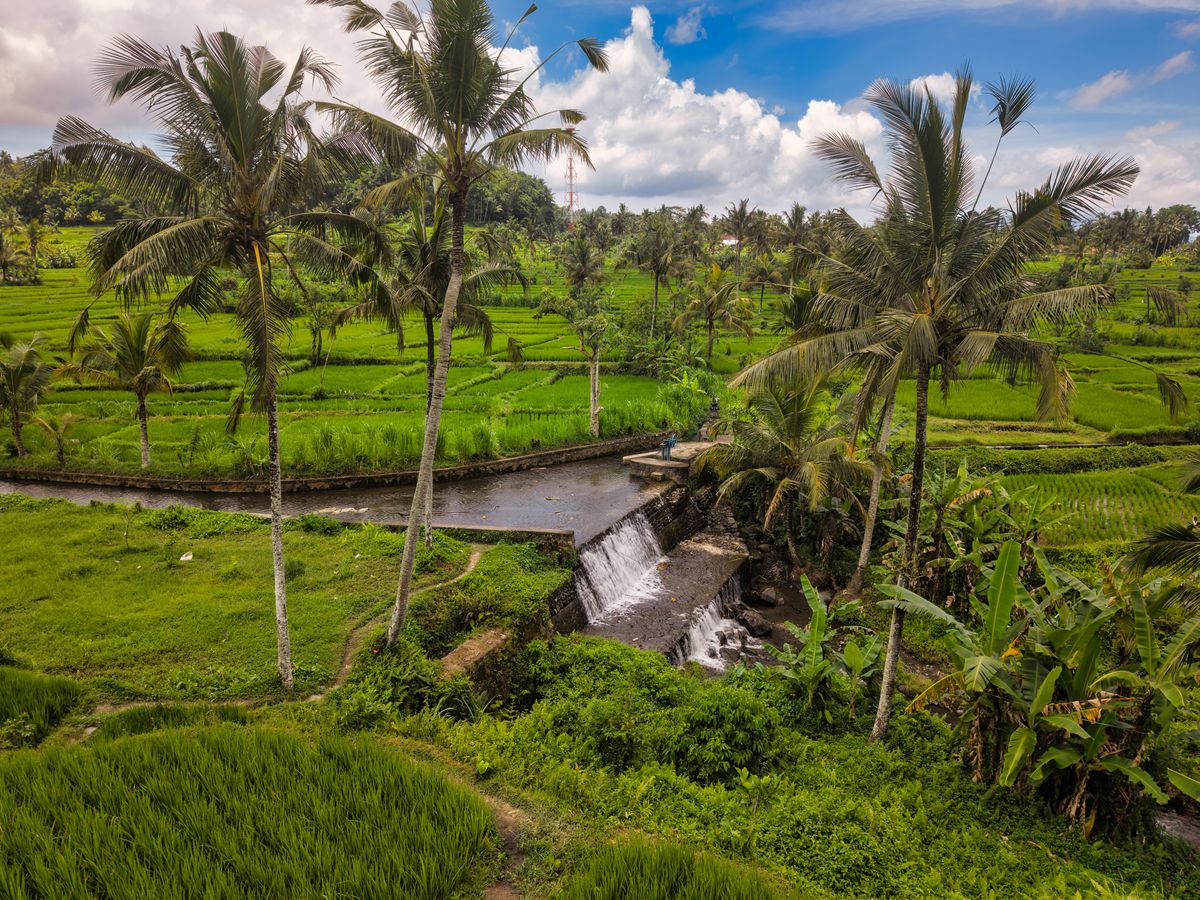
Who gets the water first, and who has to wait? Driving up from the south coast, I pulled over where the road ran above a canal, because below me the water was dropping over a small weir in a white sheet. The canal holds its level along the edge of the paddies, and whatever spills over the lip carries on downhill, presumably to whoever is next.
The scheduling has gone wrong before. In the Green Revolution era, reports described chaos in water scheduling, and the high-yielding rice varieties of that time were followed by pest losses of up to 50% of the crop in the late 1970s.
Time use, Roadside Index, in unplanned stops per hour of driving: 7 out of 10. I had meant to stop for a minute.
Whatever the canal can't hold goes over the weir and on downhill.
Living standards
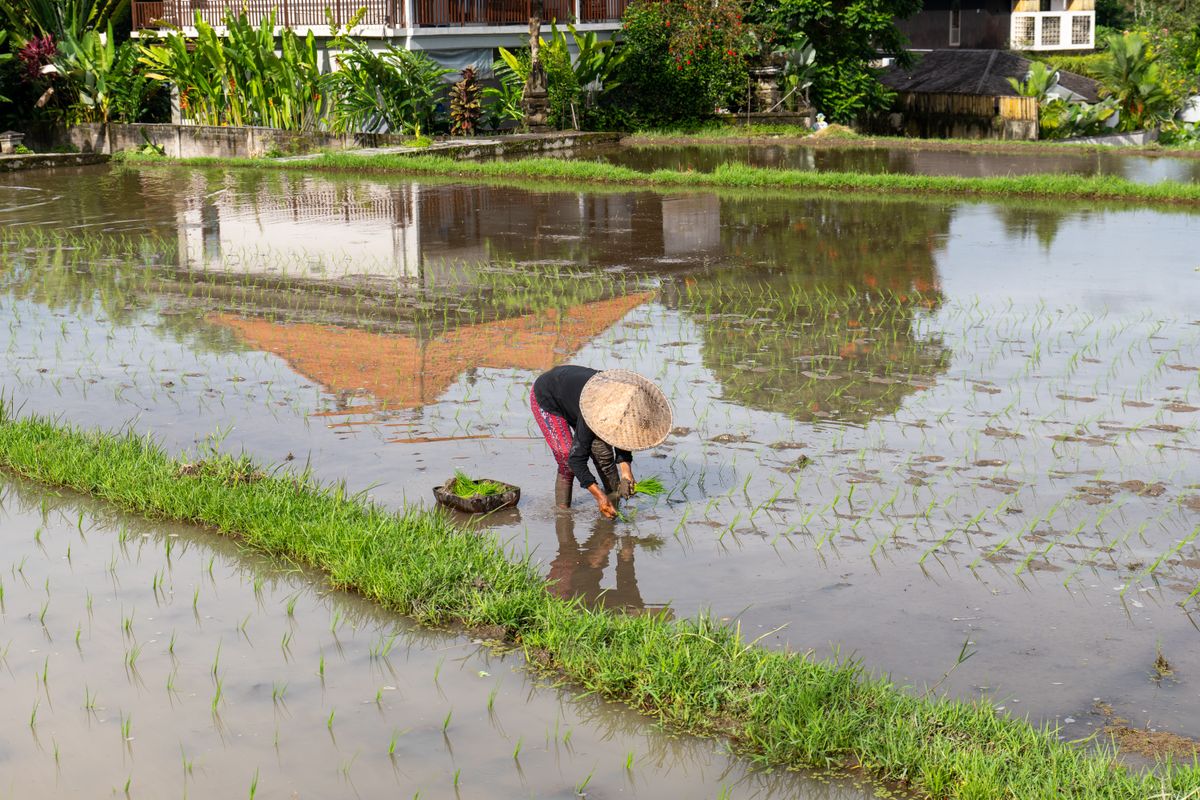
What does a household wait for before it can start work? At Jatiluwih the paddies were at no single stage in early October: some stood green, and lower down, where the fields ran up to the backs of houses, a woman was planting one that already held its water.
Her name was Komang, she told me across the bund, the grassy bank between paddies, without straightening up. She nodded at the next plot. "The water came to them first," she said, and went back to setting seedlings into the mud one at a time.
Jatiluwih is the main producer of red rice, and it sits inside the subak landscape that UNESCO listed in 2012.
Living standards, Dry Shelf Index, in places to set down a bowl of seedlings without wetting it: 2 out of 10. Komang kept hers in the water beside her.
Community vitality
Who owns a lake, and where do its users go to say so? From Jatiluwih I drove on into the mountains near Bedugul, and it was raining a little when I parked at Lake Beratan, a main source of irrigation for central Bali. The temple on its shore is Pura Ulun Danu Beratan. It honours Dewi Danu, the Balinese goddess of water, lakes and rivers.
surveyor's notes
For tall green-and-yellow terraces at Jatiluwih, go between February and April; harvest is around June to July.
Jatiluwih is in Penebel District, Tabanan Regency, at about 1,059 m above sea level.
Pura Luhur Batukaru, a temple first built in the 11th century, is also in Penebel district, on the southern slope of Mount Batukaru. Much of its grounds are closed to visitors for ceremonies through the year, so expect to see parts of it only from outside.
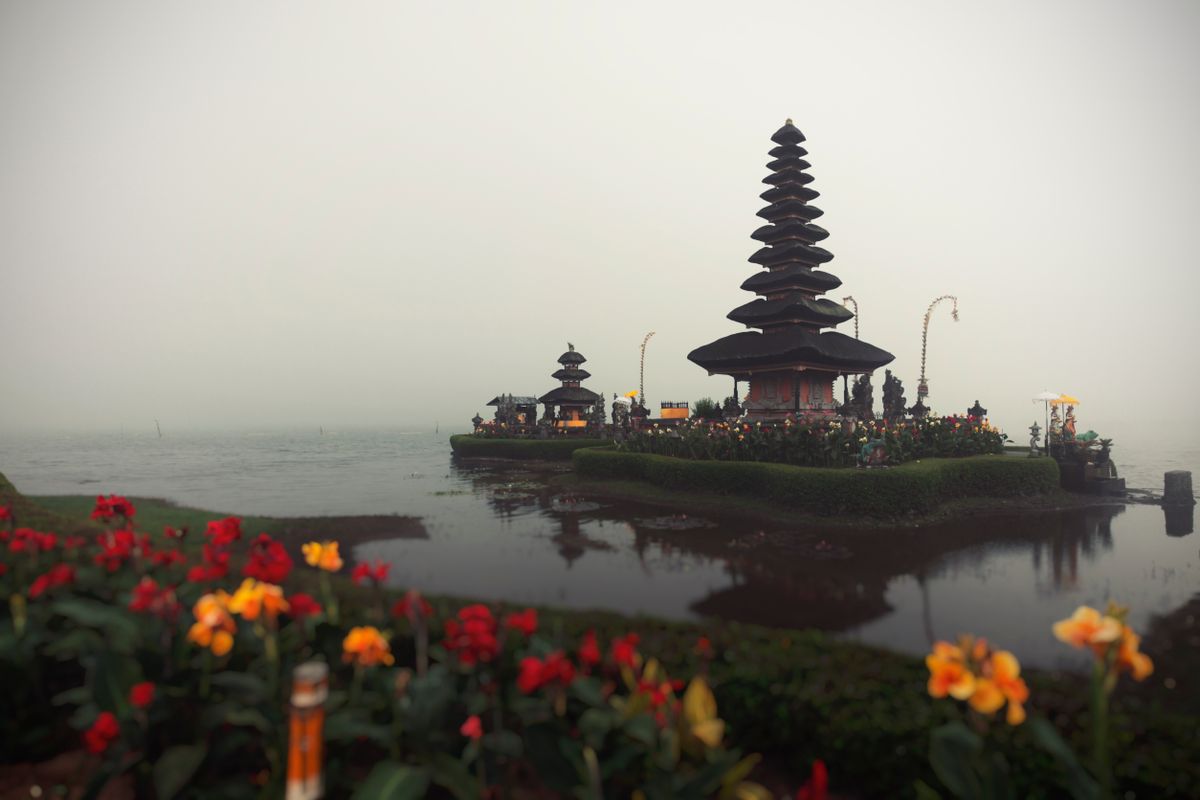
The temple's tallest shrine stands on a small platform right at the water's edge, so the goddess of the lake is honoured on the lake the fields below draw from. I stood in the mist with a few other people holding up phones, and the woman beside me tilted her umbrella over my notebook without a word before lifting her phone again.
Downstream of the lake are many smaller water temples, each belonging to a single subak, and the temples are the main focus of how the water gets shared.
Community vitality, Shared-Umbrella Index, in strangers sheltered per light shower: 9 out of 10. The sample was one, and she did not ask my name. ■