Hoi An by Nose: A Street Cook's Verdict on the Lantern Market

Smoke Before Silk
Charcoal reaches me before a single lantern does, crossing the An Hoi bridge with fish sauce and five-spice riding under it, the whole braid carried on the damp coming off the Thu Bon river. That's always been my test for a place: what's cooking before what it looks like. Somewhere under that smoke a woman is scraping a griddle in the same short strokes I use at six every morning before my own lunch rush starts.
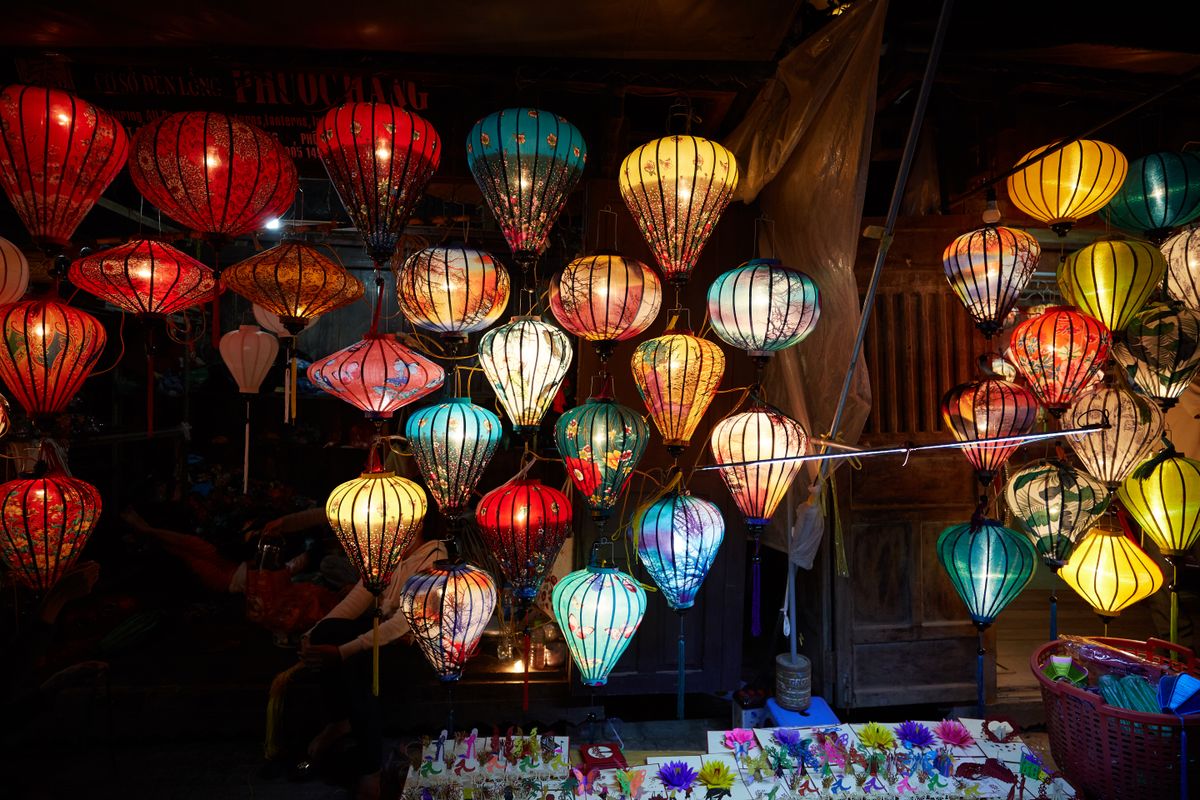
Tran Phu is lantern shop after lantern shop once you're past the bridge, silk stretched over bamboo ribs and strung three deep over the street in red, teal, and a mustard yellow no dye at home ever quite hits. A folding lantern runs anywhere from 50,000 to 150,000 dong depending on the silk and the size, and every shopkeeper folds the bamboo the same way, spokes first, silk last, like they all apprenticed under the same grandmother. I don't sell light, only food that's gone in four minutes, so there's no rivalry to have here, just envy that something this fragile survives being shipped at all.
A banh mi cart near the corner of Tran Phu and Nguyen Thai Hoc wanted 20,000 dong for pork belly, pickled carrot, and a smear of pate thin enough to still taste the bread underneath. Good char on the crust, the kind that means the baguette went back into a hot oven a second time after the first bake. Mine uses a thicker pate because my customers complain if they can taste the bread at all. Her way is lighter. Mine is more honest about being a meal instead of a snack.
Six lanterns bought as gifts and one banh mi eaten walking, and I hadn't even sat down at a stall yet. Call the first ten minutes a seven out of ten. The food hadn't shown me anything yet.
A Cao Lau the Signboard Lied About
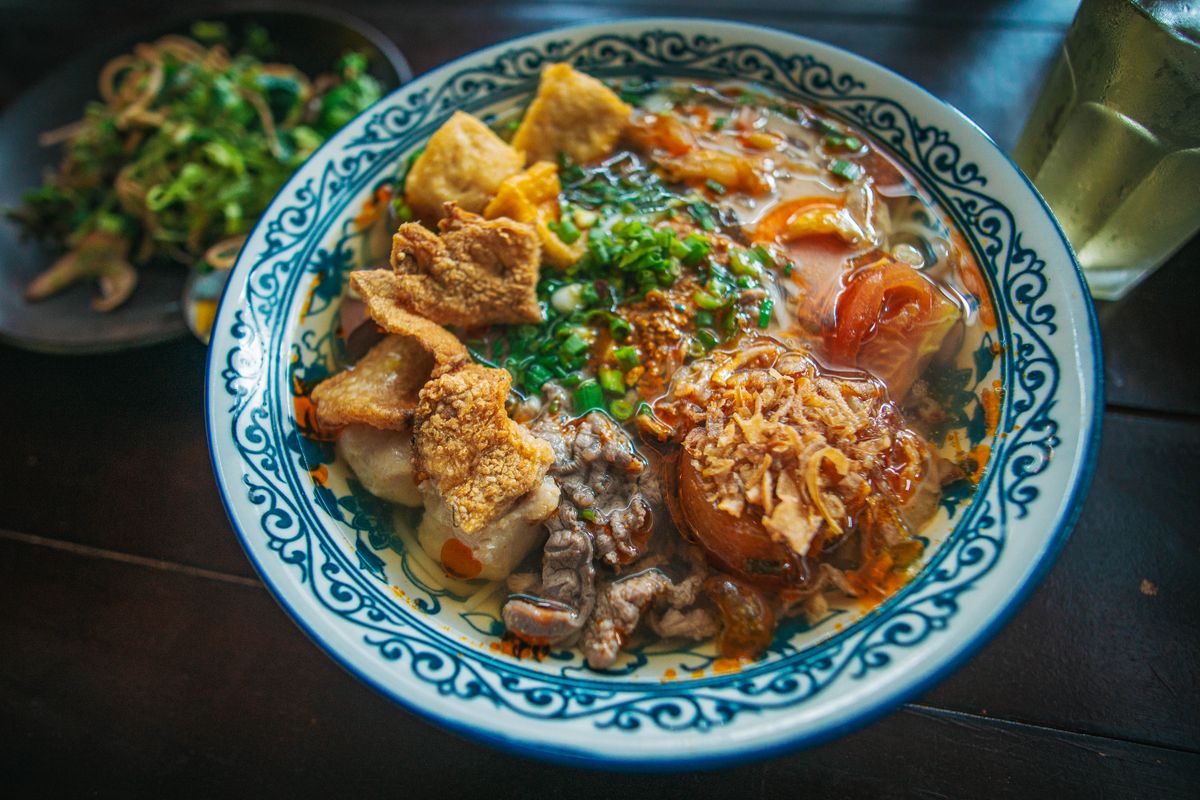
The signboard over a stall two lanes back from the market's noodle row said cao lau, and I know what that dish is supposed to be before I taste it: thick, chewy noodles made with water pulled from the Ba Le well and a lye water that only works right with local ash, barely enough broth clinging to the bowl to call it dressed rather than soaked, pork char-grilled and sliced thin, a scatter of fried pork-fat croutons for the crunch, herbs off the beds at Tra Que. That's the dish on paper. Twenty-five thousand dong to find out what actually showed up.
What showed up had more broth in it than my whole stockpot holds on a slow Tuesday, cubes of tofu standing in for half the pork, and a shrimp-paste heat under the herbs that cao lau never carries. Somebody decided the tourist crowd wanted soup, and soup is what got ladled. The herbs were real, though, mint and the local basil and a shred of banana blossom, so whoever's cooking still shops at a real market even if they've stopped making cao lau.
I finished it. The broth had been reduced with real bones, you could taste the hours in it even through all that extra water, and the tofu had been fried before it went into the bowl instead of dropped in raw, which shows someone was paying attention at one stage of this. But you don't get to call a soup cao lau just because the noodles are the right shape. I'd fail an apprentice for the switch and keep her on for the broth. Six out of ten, and only because the bones did the work the signboard wouldn't admit to.
Thu Bon River, One Candle at a Time
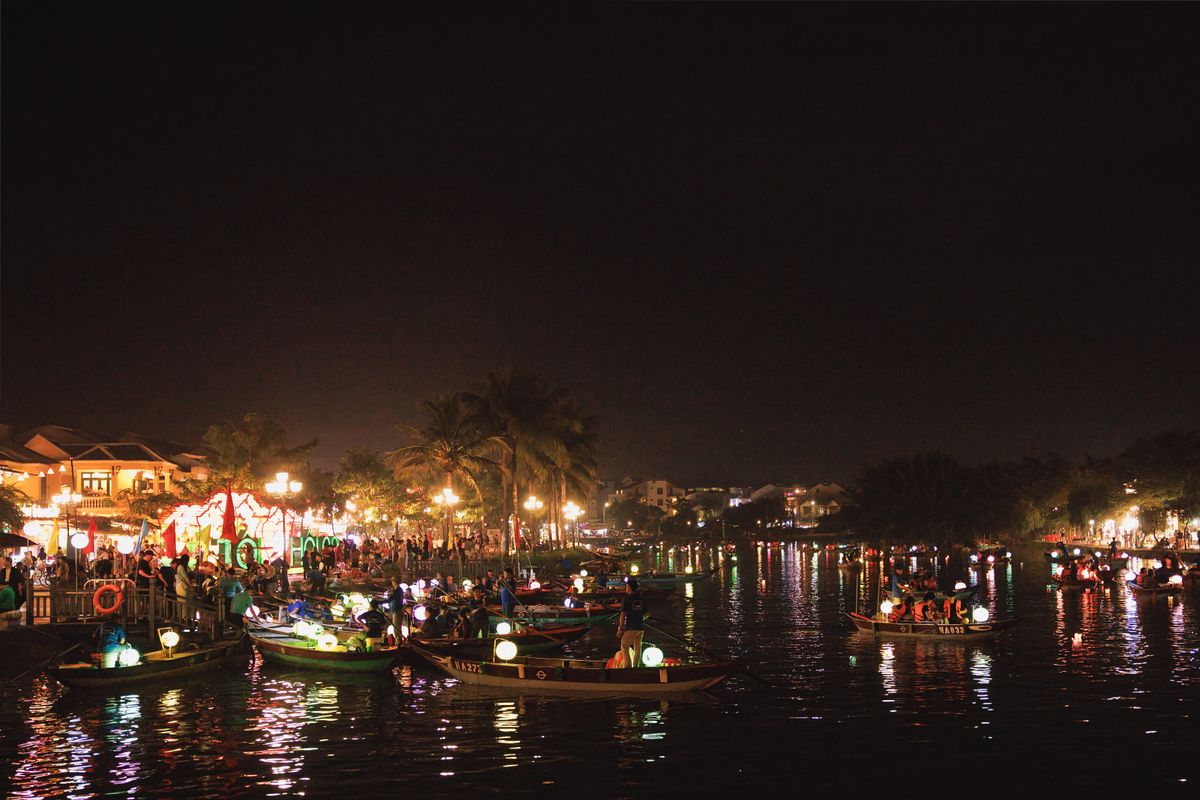
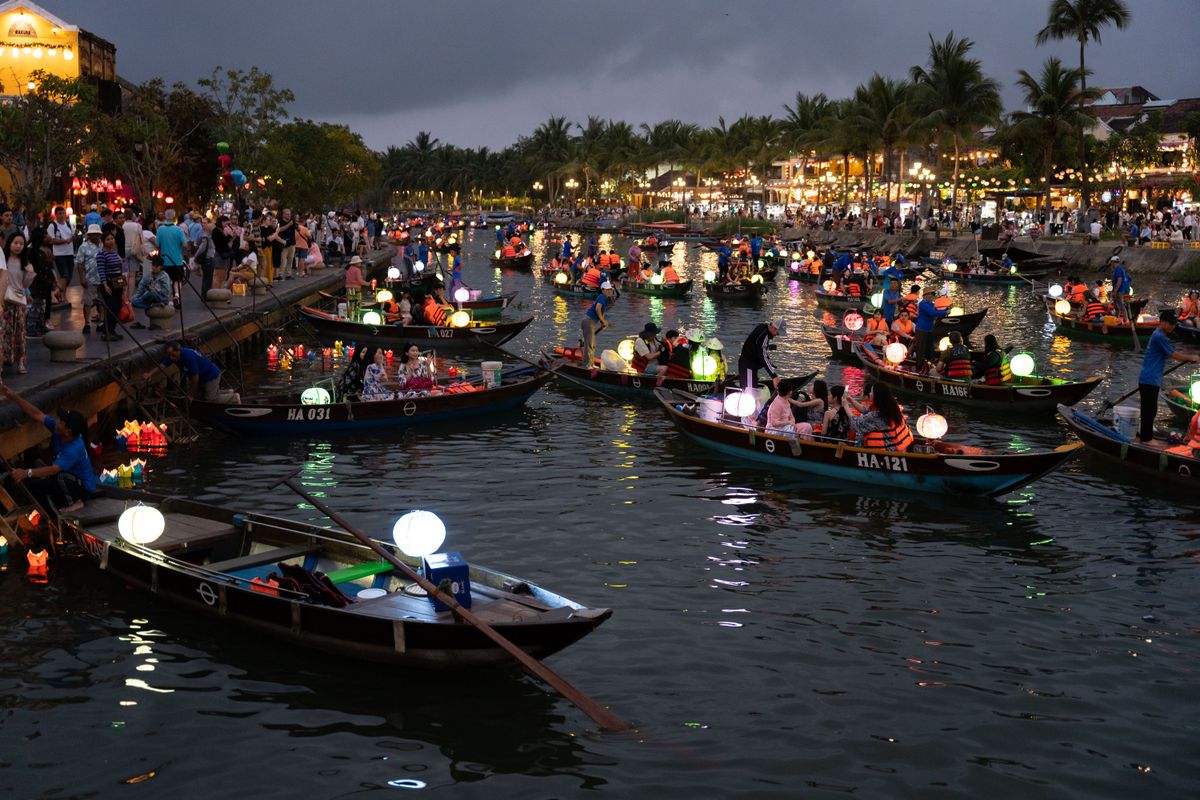
Down at the river the smell turns to wax and the sweet smoke off joss sticks. Women with flat wooden boats work the bank near An Hoi, calling out a ride for around 100,000 dong for two people, ten minutes of paddling downriver past the old town's lit shopfronts while you set candles loose behind you. If you just want the ritual without the ride, a woman with a basket of paper cups will sell you a single lantern to float from the bank for 20,000 dong.
The idea is you make a wish and float the candle, and if it drifts a good distance before it gutters out or gets swamped by someone else's wake, the wish is supposed to take. Mine went about four meters before a passing boat's wash knocked it sideways and drowned the wick. I'd wished for a slow lunch rush next Tuesday. Judging by the flame, I'm not getting one.
Whole families were doing this at once, boats stacked three deep near the bridge, more candles going into the water than the current could really carry off cleanly, and by the time I left, the bank under the bridge had a slick of drowned paper cups nobody was fishing back out. Pretty from a distance. Up close it's the same as any kitchen at the end of a long night, prettier before the cleanup starts.
A wish only travels as far as the current lets it, same as anything set loose in a kitchen.
Old Town, Closing Out
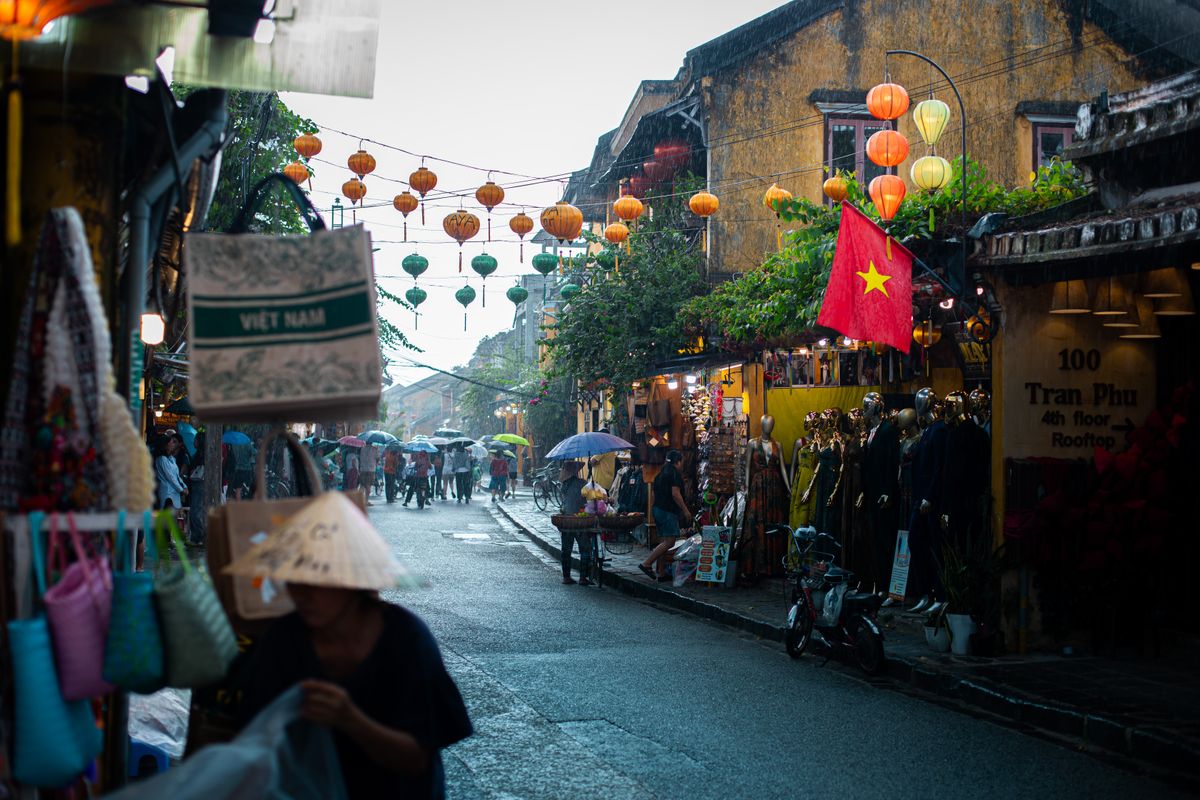
The backstreets off Tran Phu were still catching the last of the light when I cut through toward Le Loi, strings of round lanterns overhead not yet doing any real work, shopfronts open under them, a red flag hanging still with no wind in it, people walking beneath it all with umbrellas up against a heat that wasn't rain. Nobody was hurrying. Somewhere down a lane out of sight a grill was already going, and that smell got me moving faster than any lantern did.
The Crawl, Priced
Cash only, small bills
Every stall runs on cash and most can't break anything bigger than a 100,000 dong note once the evening gets busy, so carry a stack of 10s and 20s before you go in. Get to Tran Phu by half past six if you want the lantern stalls before the tour buses empty out onto them; by eight the street is shoulder to shoulder and the good broths sell out first, not last.
White Rose dumplings turned up at a shopfront off Le Loi that's only ever served the one dish, been doing it since before the market got this crowded. Ten pieces for 60,000 dong: shrimp folded into a wrapper of rice flour rolled thin enough to go translucent, pleated to look like a flower, steamed soft, then finished with shallots fried crisp in oil rendered from the shrimp shells. That last step is the whole dish. Skip it and you've just steamed a dumpling.
My own dumplings go into a fryer, not a steamer, so I don't have a real comparison to make here, only respect for a wrapper this thin holding together at all. The shallot oil is the one move I'd actually steal.
I finished the night on a che stall near the market's edge, che chuoi, banana in coconut milk with tapioca pearls, 15,000 dong in a plastic cup with a spoon that bent when I stirred it. Sweet enough. The coconut milk hadn't been reduced as long as I'd do it, thinner than the almost-custard I want mine to be, but I ate the whole cup standing up anyway, lantern light doing nothing for the taste one way or the other, and walked back over the bridge with sugar on my tongue and no wish left to make, since the river had already taken the one I had. ■