San Andrés, Three Sites: A Coach's Splits on the Seaflower Reserve
Three dive sites off a Colombian island, briefed the way you'd brief a squad before anyone gets wet.

Twenty-eight degrees on the surface, current running slack to a half-knot depending on which side of the island you're facing, visibility past thirty metres on a clean day. That's the brief for San Andrés before anyone talks about coral or colour. I dove three sites here over four days: a wall, a wreck, and a shallow patch of aquarium water off a sandbar. All three get graded the same way I'd grade a bay for my squad back in Suva, on temperature, current, and how far you actually are from something solid if the plan falls apart.
San Andrés sits in Colombia's own patch of Caribbean, out past Nicaragua's shoulder, part of an archipelago that also holds Providencia and Santa Catalina. The water around all three is protected as the Seaflower Biosphere Reserve, over 25,000 square miles of reef, mangrove, and seagrass under UNESCO recognition. That's not tourist copy. That's the reason the reef here still has structure instead of rubble.
Blue Wall: the drift leg
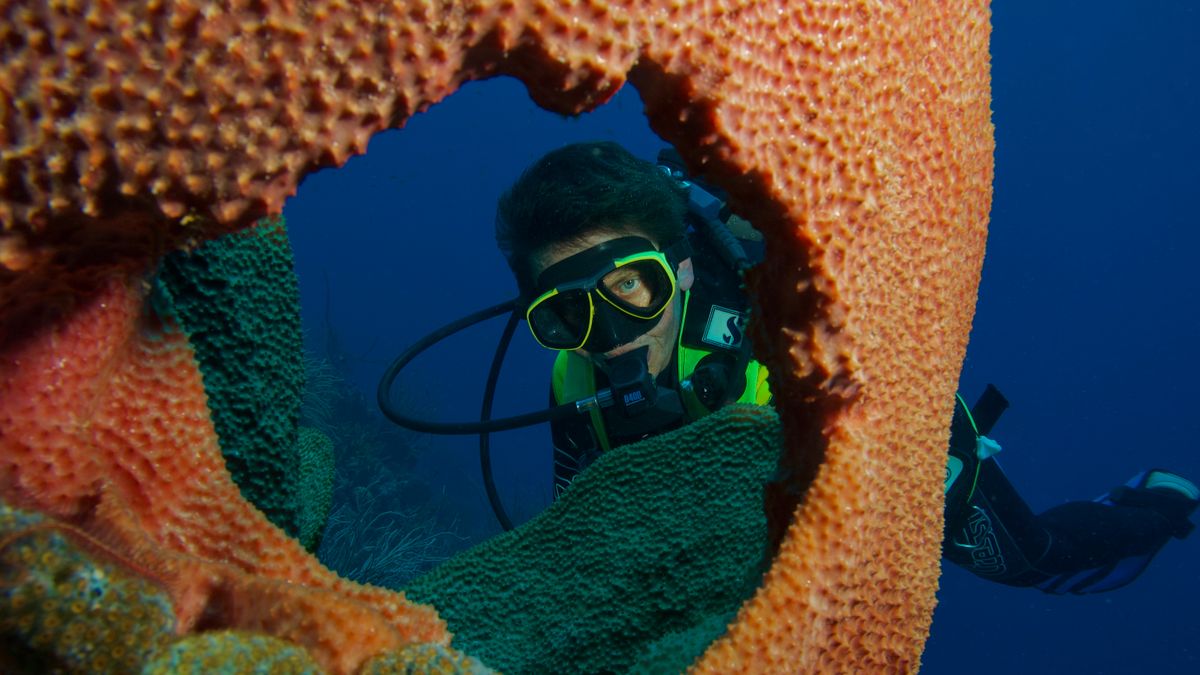
Blue Wall sits on the outer reef slope, and the brief starts the same as any wall dive: know your current before you know your depth. On my dive it ran a steady half-knot along the face, enough to carry a diver without a kick, not enough to fight a return swim if the boat picked us up at the drift's end, which it did. Water temperature held at twenty-seven degrees from the surface down to twenty metres, no thermocline worth mentioning. Visibility past twenty-five metres, which meant the wall dropped away into blue instead of grey.
The site's known for a canyon cut into the reef face, a swim-through wide enough for one diver at a time, and our guide timed it: ninety seconds in the cut, current funnelling through at maybe double the open-water speed. Nobody kicked. Nobody needed to. Blue Wall is one of more than forty named dive sites in this stretch of water, and the reef here carries part of a count that runs past 270 species of fish and 85 species of coral across walls, caves, shelves, and shoals. I logged eleven of those species by name on the slate, gave up counting after that. My splits for the leg: twenty-two minutes bottom time, four hundred metres of drift, zero strokes against the current the entire way.
Blue Diamond Wreck: the still-water leg
Barco Hundido, the locals call it, sunken boat, no poetry needed. It sits on the west coast in twelve to fifteen metres, shallow enough that the dive briefing changes character entirely. Current near zero at the wreck itself, sheltered by the coastline, water at twenty-eight degrees and flat enough that a snorkeler on the surface could watch the whole dive happen underneath them without a fin kick. That's the rating: this is the easiest water I logged all week, and I said so to the two divers in our group doing their fourth dive ever. Easy water still needs a plan. Depth this shallow means bottom time stretches long, which means divers get greedy with air they don't have.
The former cargo ship sits mostly intact, hull holding shape, superstructure collapsed enough to swim over rather than through. Fish schooled thick around the bow, a mass that broke and reformed every time a diver crossed its centre, the kind of density you only get where current isn't scattering the bait. One of our group ran his console down to 80 bar and signalled up with a face like he'd lost something. Nobody had. Thirty-four minutes bottom time on this one, the longest of the trip, at a depth so forgiving I could've run the whole dive on a single tank fill without touching my second stage of caution.
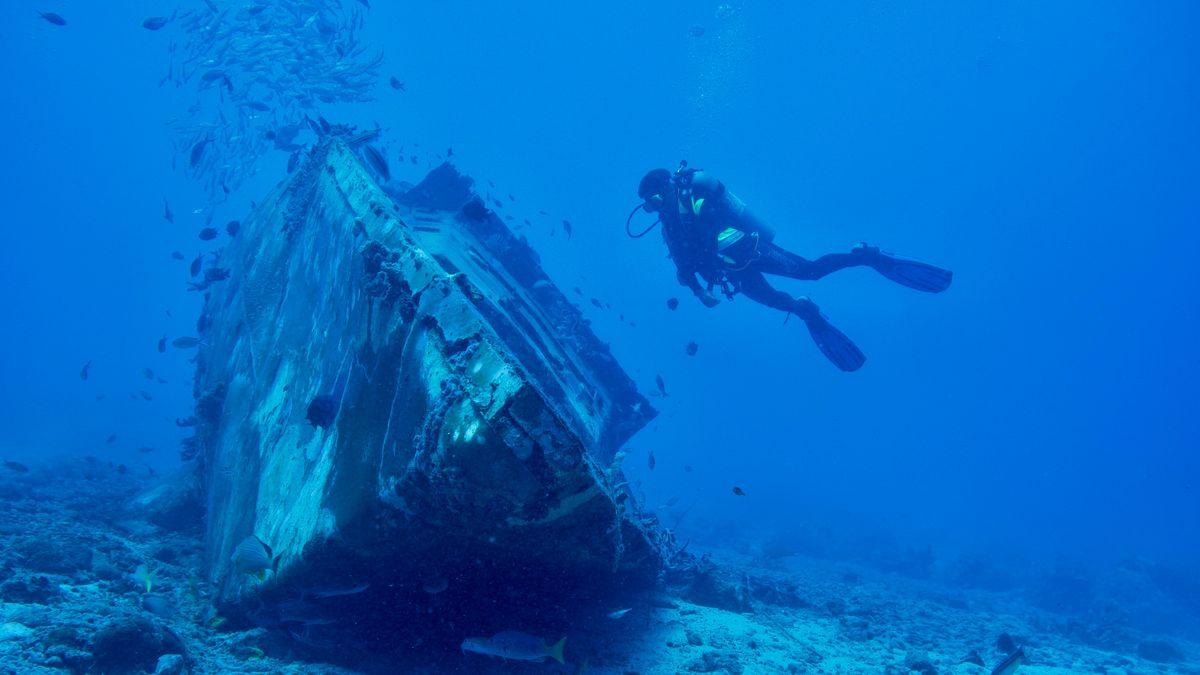
Thirty-four minutes, twelve metres, current so close to nothing I stopped checking my compass.
Johnny Cay: the shallow finish
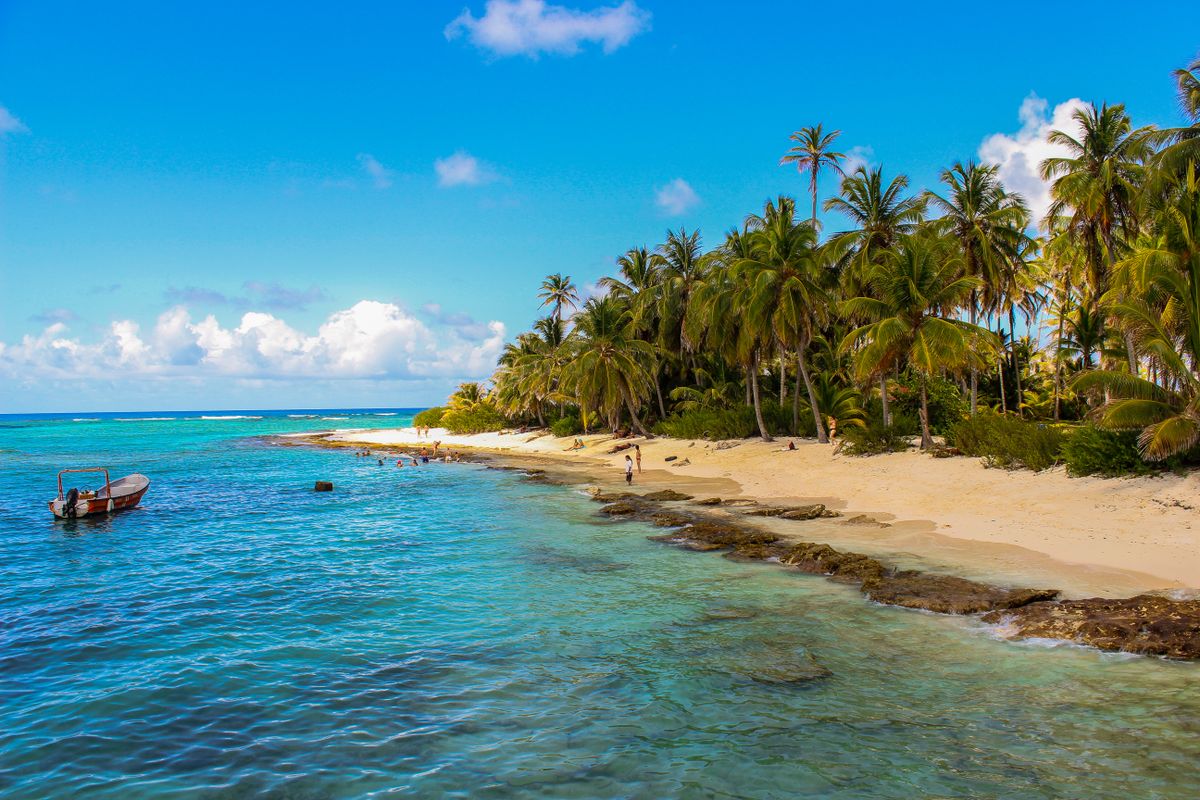
Johnny Cay, or Islote Sucre if you want the name on the chart, is a sandbar of an island less than a mile off San Andrés' north coast, and the water ringing it reads warmer again, close to twenty-nine degrees in the shallows, current barely a drift, visibility clean enough to see the bottom from the surface at four metres down. This is a snorkel leg, not a dive leg, and I graded it that way to the group before anyone got in: chest-deep in places, safe for anyone who can hold a controlled breath and keep their fins off the coral.
coach's notes
The whole circuit sits inside the Seaflower Biosphere Reserve, a UNESCO-recognised zone over 25,000 square miles of reef, mangrove, and seagrass. Reef contact rules get enforced here, not just posted.
San Andrés holds more than 40 dive sites total. Three in one trip is a taste, not the circuit.
Blue Diamond Wreck (Barco Hundido) sits at 12 to 15 metres, shallow enough for scuba, freediving, or snorkeling. Check which one your operator's actually running before you book.
Johnny Cay is a snorkel stop, not a dive site. Don't let anyone sell you a tank for water this shallow.
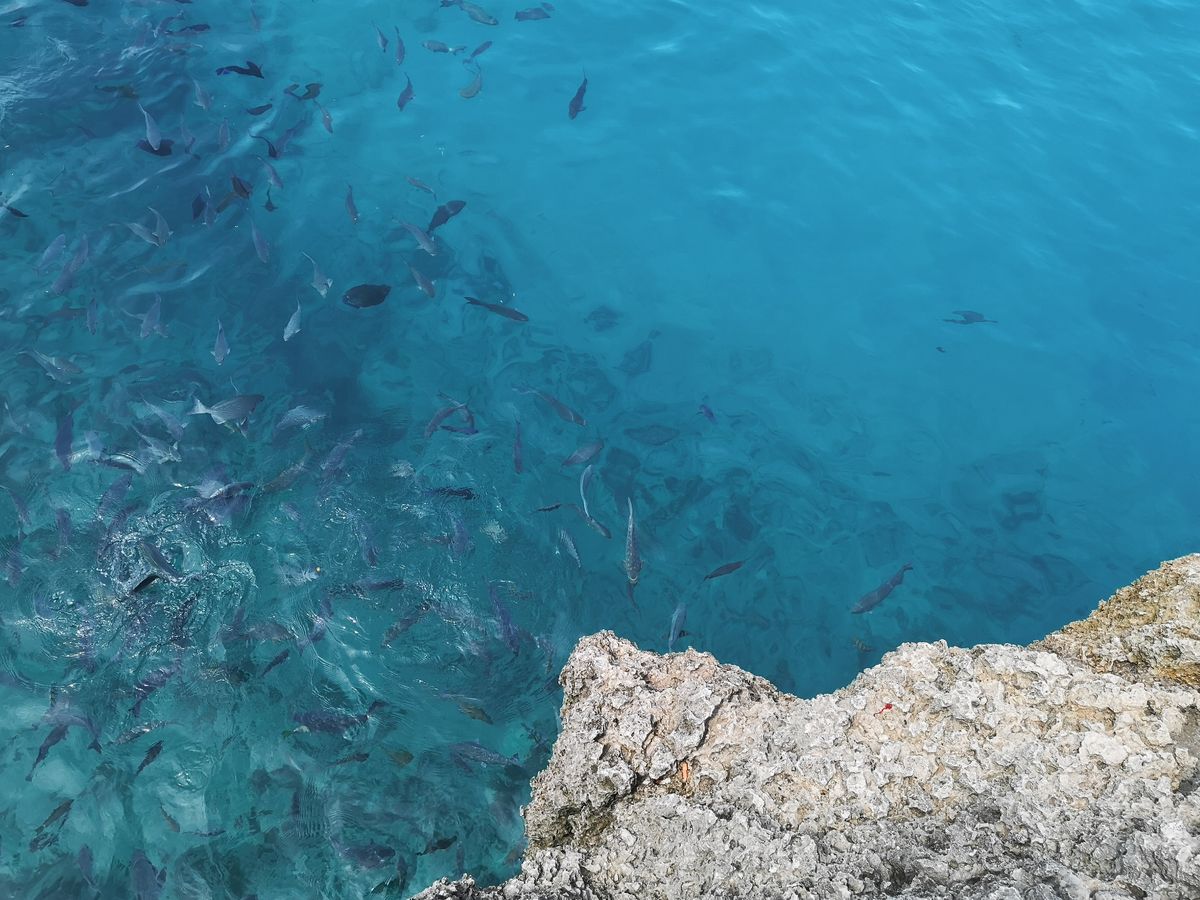
Other visitors on the boat had talked about rays and the odd nurse shark passing through, and we got neither, just parrotfish working the shallow coral heads and one barracuda holding still in open water the way they do, watching rather than hunting. The water here functions like a tank with the glass taken out, current too weak to pull a snorkeler off the sandbar even if they stopped kicking entirely, which I tested, floating for a full two minutes and drifting maybe three metres. Twelve minutes in the water, forty metres of ground covered, current reading close enough to zero that I logged it as a rounding error rather than a number.
Three sites, three different waters, and only one of them asked anything of a diver's legs. Blue Wall wanted respect for a current that would carry you whether you cooperated or not. Barco Hundido wanted patience with a tank gauge in water too easy to bully. Johnny Cay wanted nothing, which is its own kind of brief. Final split for the trip: sixty-eight minutes of combined bottom and surface time, one current worth logging, zero incidents worth writing home about. That's the number that matters. ■