Inishmore Plays Slow, Then Fast: A Ferry Hop to Dún Aonghasa and Back
A ferry out to the Aran Islands, a climb to a 2,000-year-old cliff fort, and a pub session that only really starts once the boats stop running.

There was a fella on the pier at Rossaveal working through The Star of the County Down on a tin whistle, badly, the particular kind of badly that comes from a tune learned the week before a trip rather than the year before, and nobody around him seemed to mind. That was the first sound of the day, not the engines, not the gulls, a stranger finding his way toward a tune he hadn't quite earned yet. The gulls came in under him a few bars later, then the engines, then a tannoy call for the half ten crossing, and only then did I look up and actually see the boat.
Rossaveal to Kilronan is the short way onto Inishmore, forty minutes when the swell behaves, the crossing the islanders themselves use rather than the one built for the day trippers out of Galway city, which runs ninety minutes each way and only in summer. Doolin does it in thirty five down in Clare. I'd booked Rossaveal and I'd book it again: less spectacle, more actual boat.
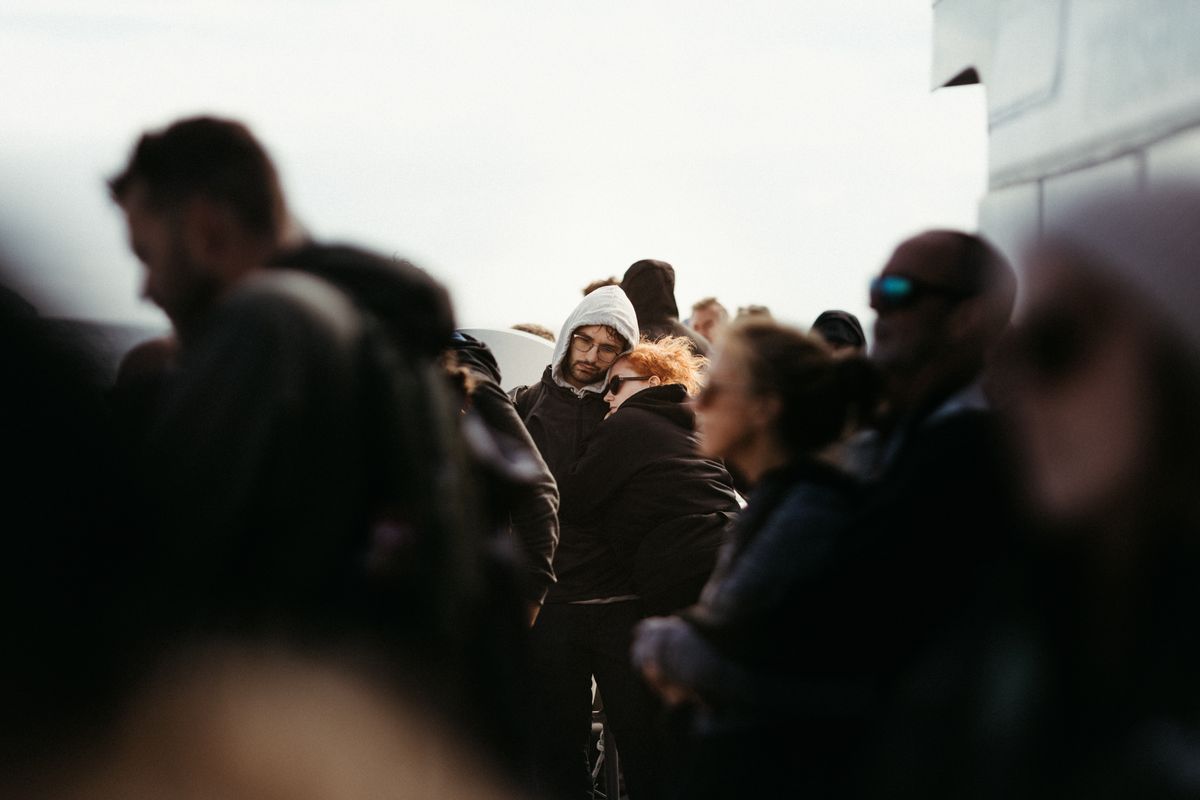
The Crossing: A Tin Whistle Finds Its Tune
The lower deck was where the noise lived. Two lads from Cork comparing hangovers in a register just under a shout, a woman reading names off a laminated map to a child who wasn't listening, the whistle player working his way, tune by tune, into something that actually resembled a tune by the time Kilronan's pier came into view. Upstairs, on the open deck, the wind did what wind does to conversation: flattened it, made everyone lean in or give up. By the time the harbour wall showed itself the boat had gone quiet in the way a room goes quiet before the first note of a set, not because anyone asked it to, just because the water had got choppy enough that talking took more than it was worth.
Kilronan doesn't try hard to greet you. A handful of minibus drivers calling out bike hire and tour options in the accent of men who've done this exact forty seconds of patter every sailing for twenty years, competent, unbothered, gone the second the crowd thins. It's a Tuesday-morning show, not an unkind one, playing its own running time and knowing you're only there for the day.
Getting to Inishmore
Dún Aonghasa: The Fort That Doesn't Need the Room
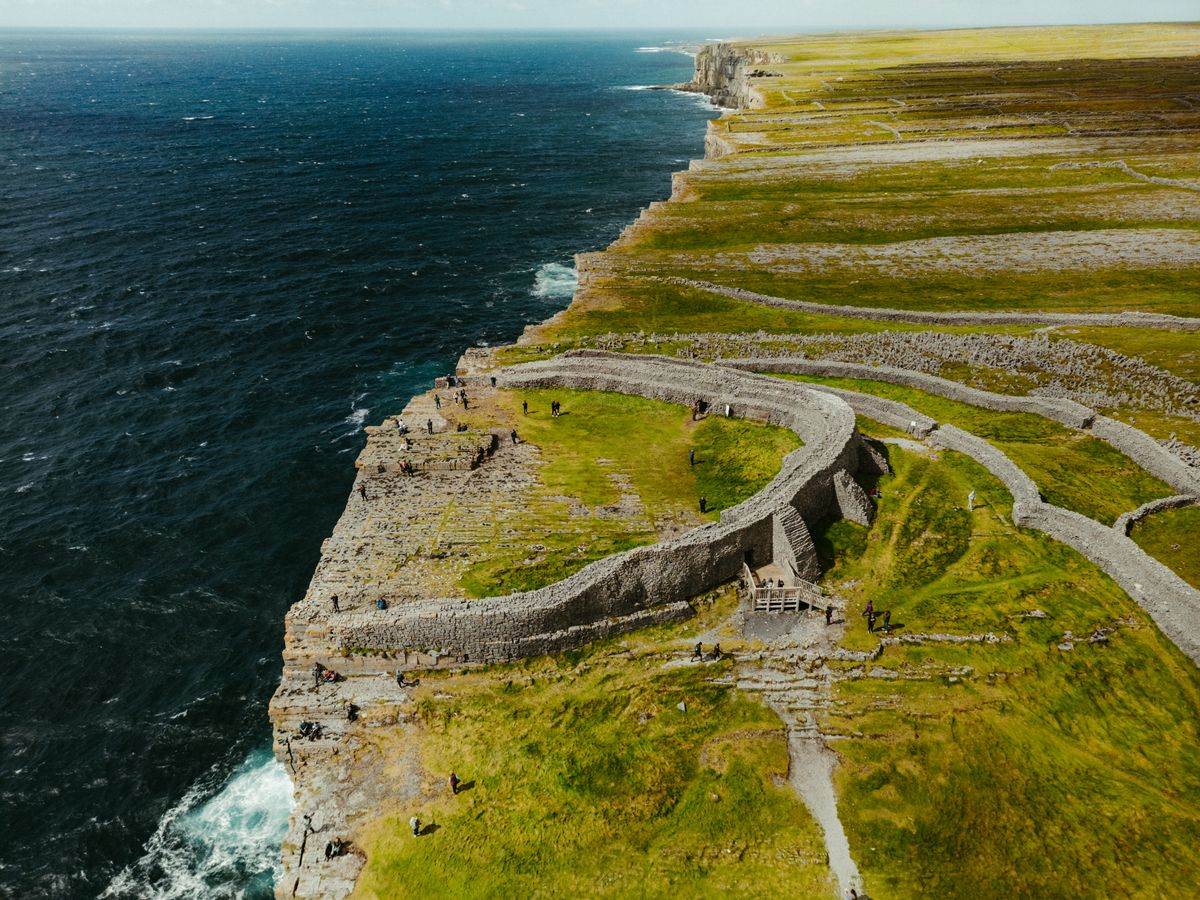
Before You Climb
All three Aran Islands are officially Gaeltacht regions, Irish-speaking by daily use, not for display.
Dún Aonghasa's walls are original stonework right at a cliff edge: dress for wind and watch your footing.
The walk up from Kilronan is unhurried; give it more time than the ferry schedule suggests you have.
The road out of Kilronan climbs slowly enough that you stop noticing you're climbing, past drystone walls stacked without mortar, past a woman calling something in Irish to a dog that ignored her completely and a child who came running. That's the sound that told me more about Inishmore than the postcard views did: not a phrase performed for a passing minibus, just a woman talking to her own dog in her own language, because it's the language she has. About 820 people live here year round, and Irish is still the first tongue in most of the houses. Nobody was doing that for me.
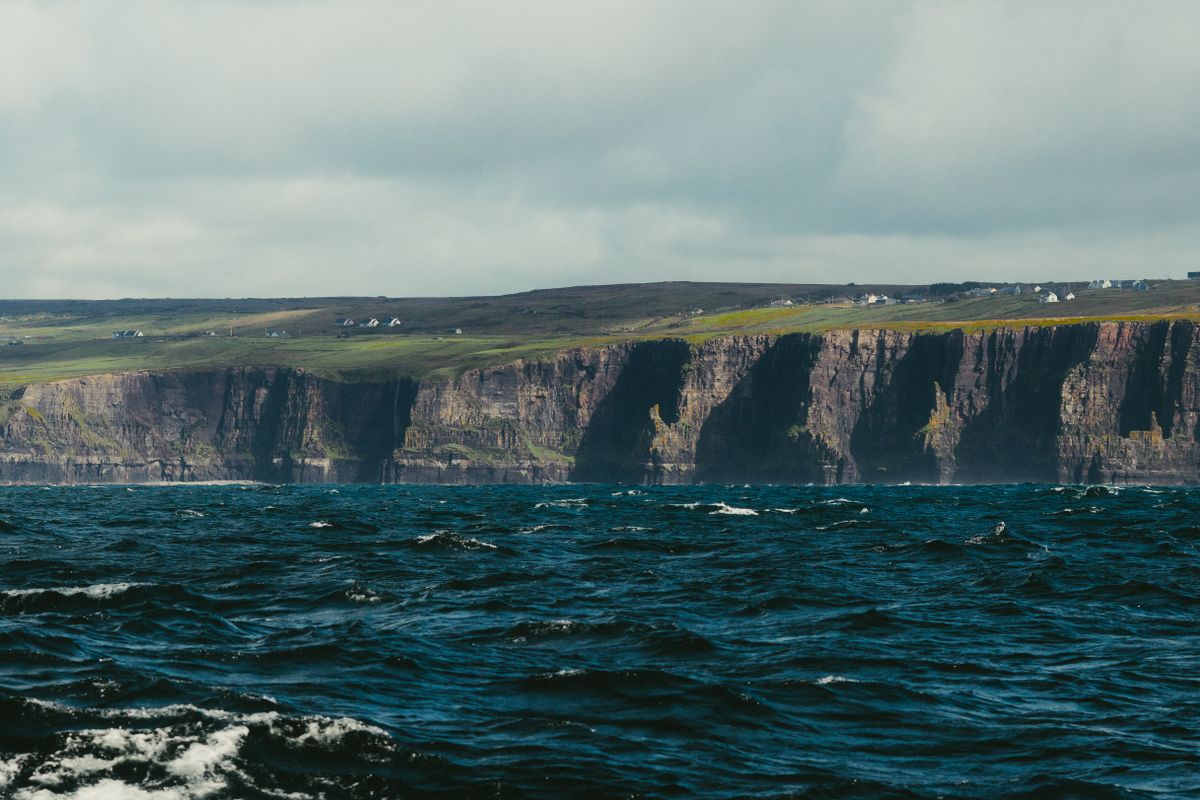
Dún Aonghasa announces itself as a change in the wind before it announces itself as a wall. The path flattens, the gorse thins out, and the noise of the island, dogs, gulls, the odd generator, drops away into something closer to a held note. Then the stone: three sets of concentric walls, over two thousand years old, built by hands with no machinery and apparently no fear, running straight up to a cliff edge with nothing polite about the drop on the other side.
I stood at the inner wall for longer than I meant to. There wasn't a session to review because there wasn't a performance happening, just the Atlantic doing what it does to a limestone cliff, over and over, no encore because it never actually stopped. A few visitors murmured the way people murmur in a cathedral. Most said nothing at all. It's the rare stop on any itinerary that doesn't need you to react to it.
Dún Aonghasa isn't playing to the room. It's the one act on the island that never learned how.
The Pub After: Last Tune, Empty Glass
There are two sessions in a harbour pub on a day the ferries run, and only one of them is for you. The first starts around six, while the last sailing back to Rossaveal is still loading, and it's a perfectly good set: a box player and a guitarist working through The Bucks of Oranmore and a couple of well-worn jigs, glancing at the door every so often to gauge how big the room's about to get. Good show. Knows its running time. Plays to whoever's boat leaves at half six, and it knows that too.
The second session doesn't have a start time, because it doesn't need one. It begins once the last ferry's gone and the room that's left is mostly islanders, the English mostly dropping out of the conversation between tunes. No set list got announced, none was needed. A woman sang a few bars unaccompanied, sean-nós style, no clapping along because clapping along isn't what that singing is for, and the box player picked up the next reel from wherever she'd left off like he'd been waiting his whole life for that exact handoff.
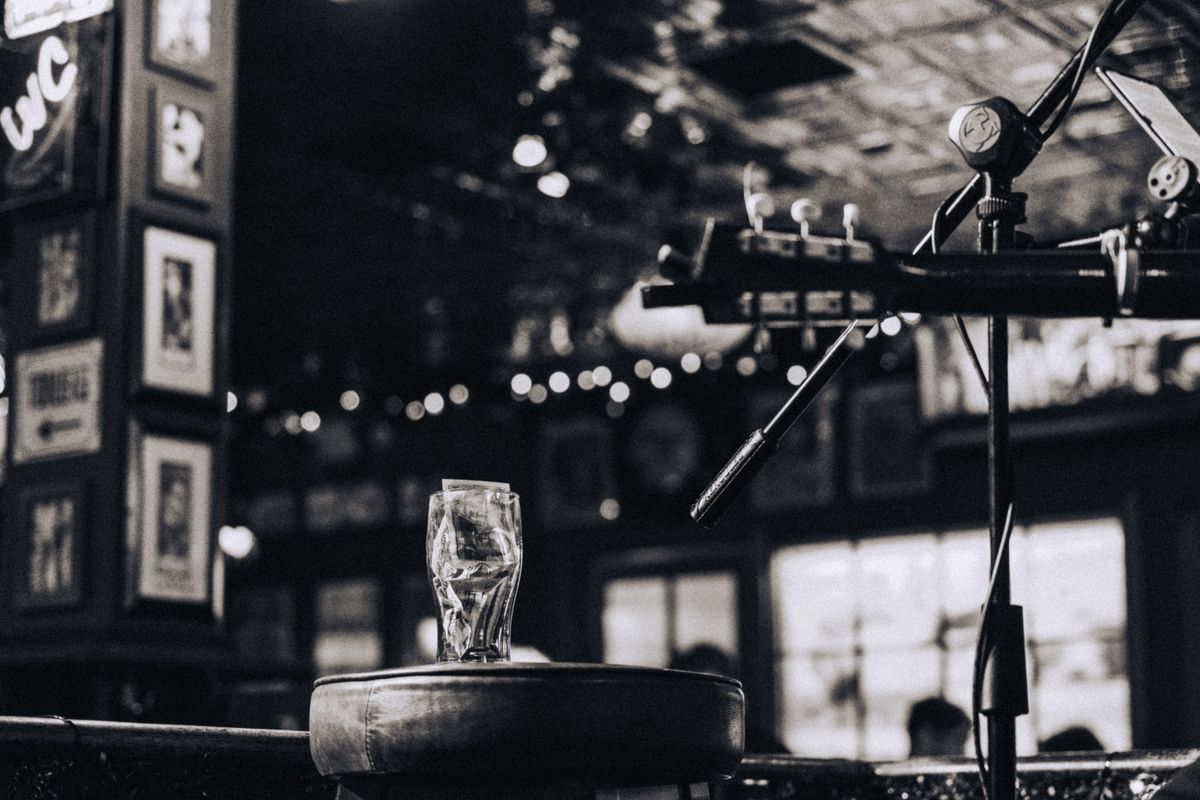
By half eleven the room had thinned to the ones who actually live on Inishmore, and the music had thinned with it, fewer tunes, longer gaps, more talk. That's the shift worth listening for on any island: not the moment the tourists leave, but the moment the place stops adjusting itself for anyone who might still be watching.
I left before the last of them did. The publican was already lifting an empty glass off a stool by the mic stand, one guitar left propped there for somebody to collect in the morning, the string lights doing their quiet work over a room that had, an hour before, held a tune nobody outside it will ever hear again. ■