Reading the Cracks on a Batik Walk Through Yogyakarta
On foot in Yogyakarta, from a museum of 18th-century batik to Beringharjo Market, reading every cloth by its cracks before its pattern.

Waxing
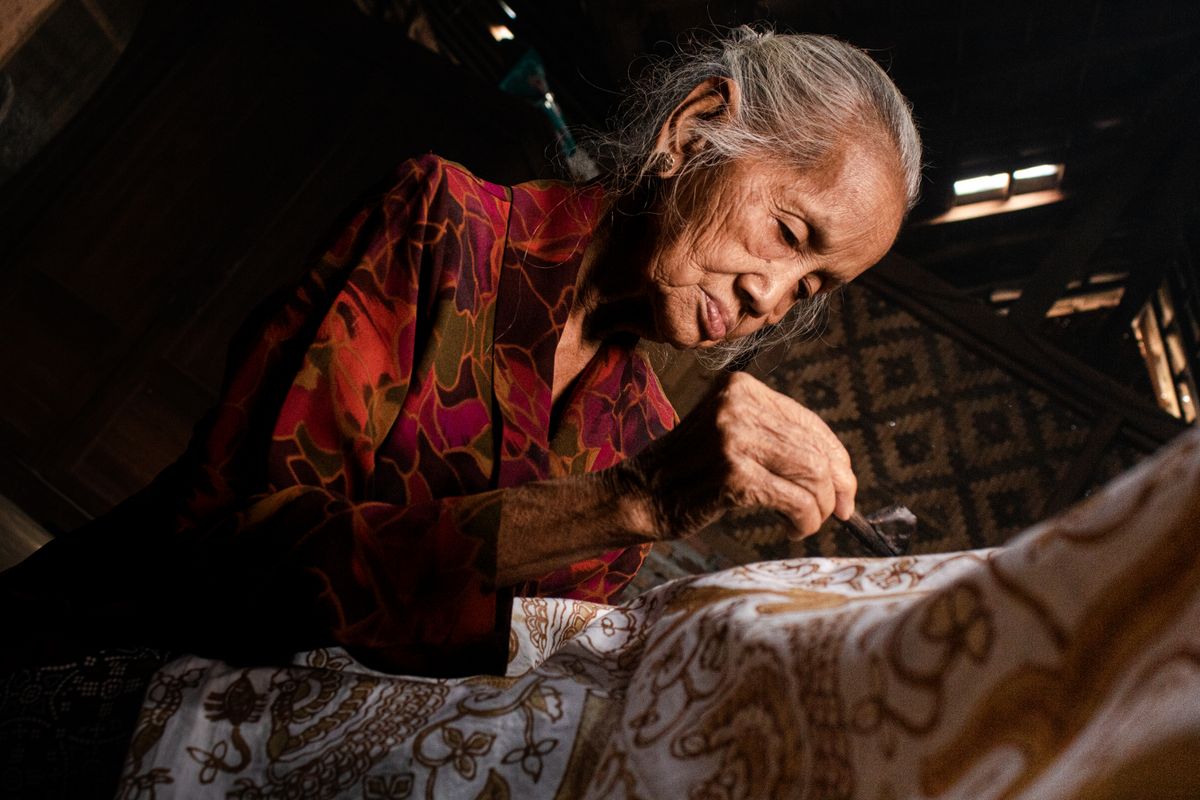
Before I look at a batik's pattern I read its cracks, the hairline veins of colour that run through the pale ground, and I have yet to meet two cloths with the same ones. Batik is cloth patterned with hot wax, drawn on in dots and lines that hold off the dye wherever they sit, and UNESCO inscribed the Indonesian craft in 2009. Last week I spent a day reading it in Yogyakarta, a city in central Java, on foot from its batik museum to Beringharjo Market and out onto the street.
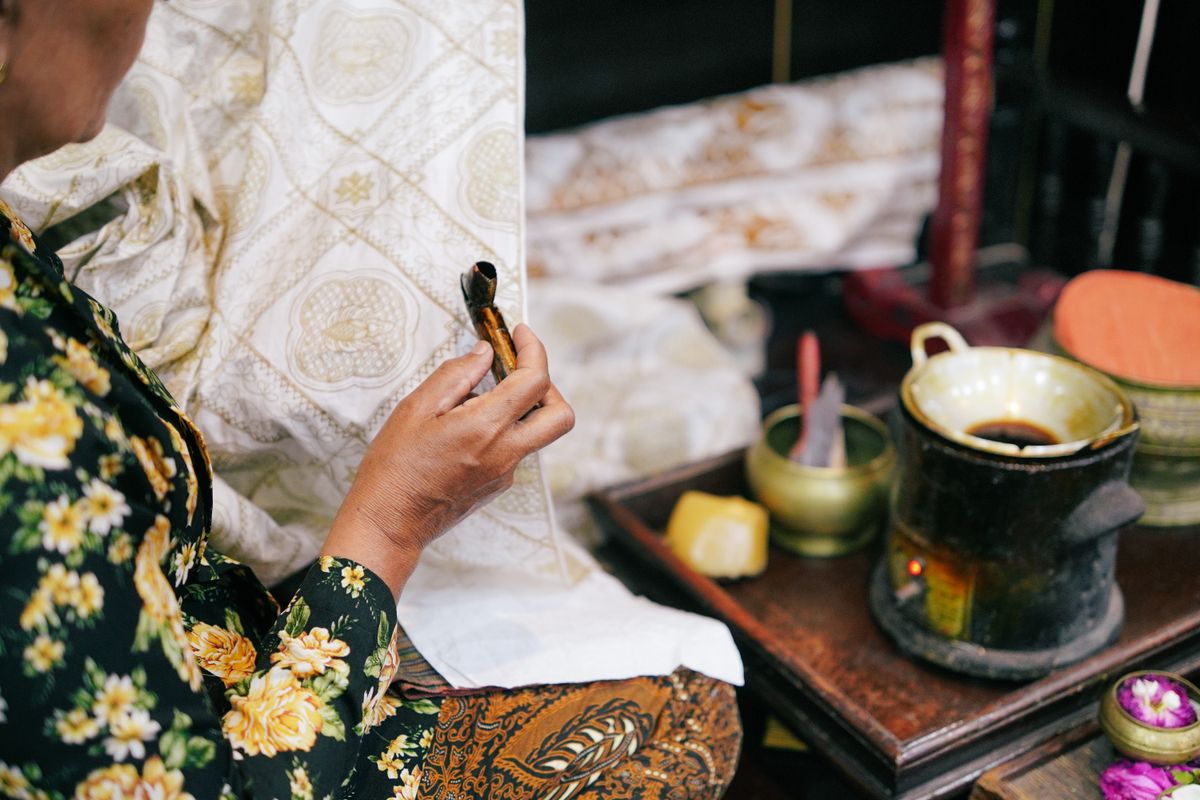
I started at Museum Batik Yogyakarta in the Bausasran neighbourhood, set up by a married couple, Hadi Nugroho and Dewi Sukaningsing. Its collection runs to about 1,200 items, and the main part is cloth from the 18th century up to the beginning of the 19th. The tools are in it too: pans, burners and canting, the small pen-like tools that draw the wax lines.
Entry is listed at Rp30,000, and the museum also runs a batik workshop, listed from Rp55,000, where you make a piece and take it home. If you have never held a canting, it is a good way to find out how hard a steady wax line is.
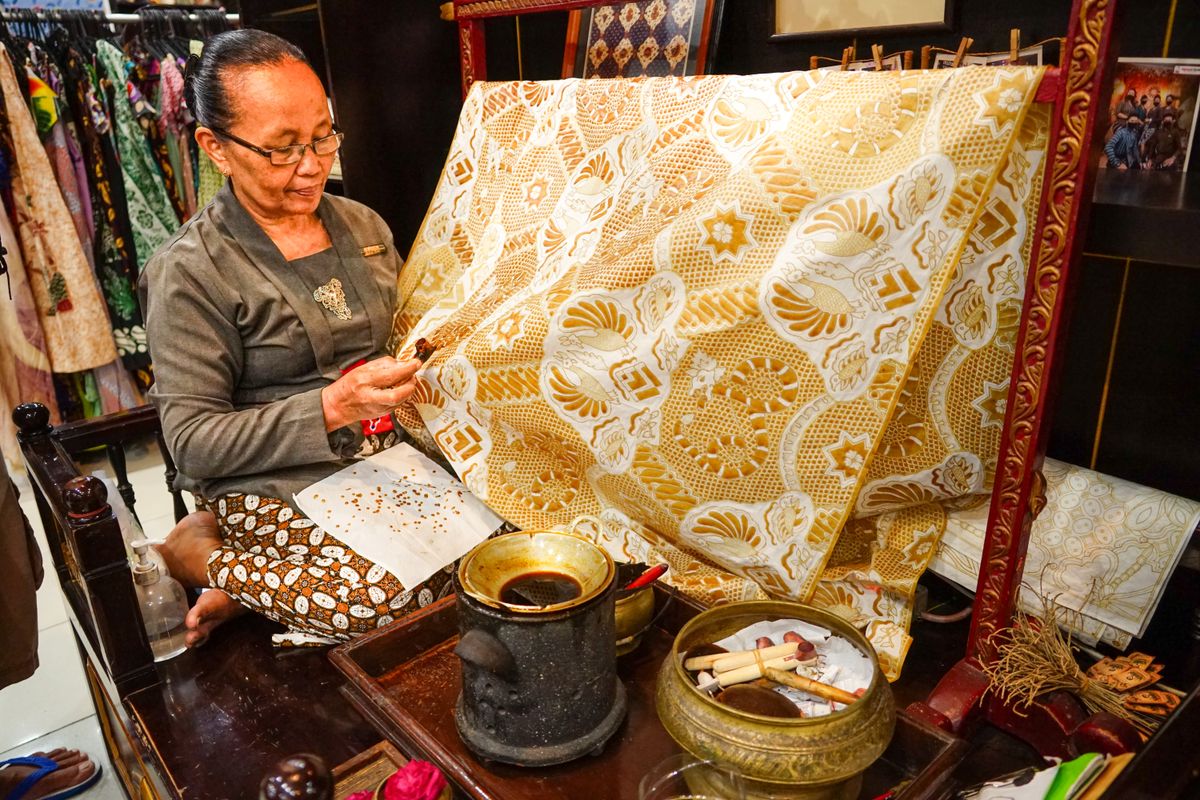
Before the market I stopped at a batik shop where a woman sat cross-legged at a carved frame, working a gold and cream cloth with her canting. What I noticed first was the sheet of paper across her lap, freckled with brown drops where the canting had dripped, because I keep one like it on my own lap at home.
Dyeing
Beringharjo Market is right off Jalan Malioboro, Yogyakarta's main street, and people have traded on the site since 1758. Its name means 'banyan tree forest'. I went for the batik, which shares the market with clothing, souvenirs, market snacks and antiques.
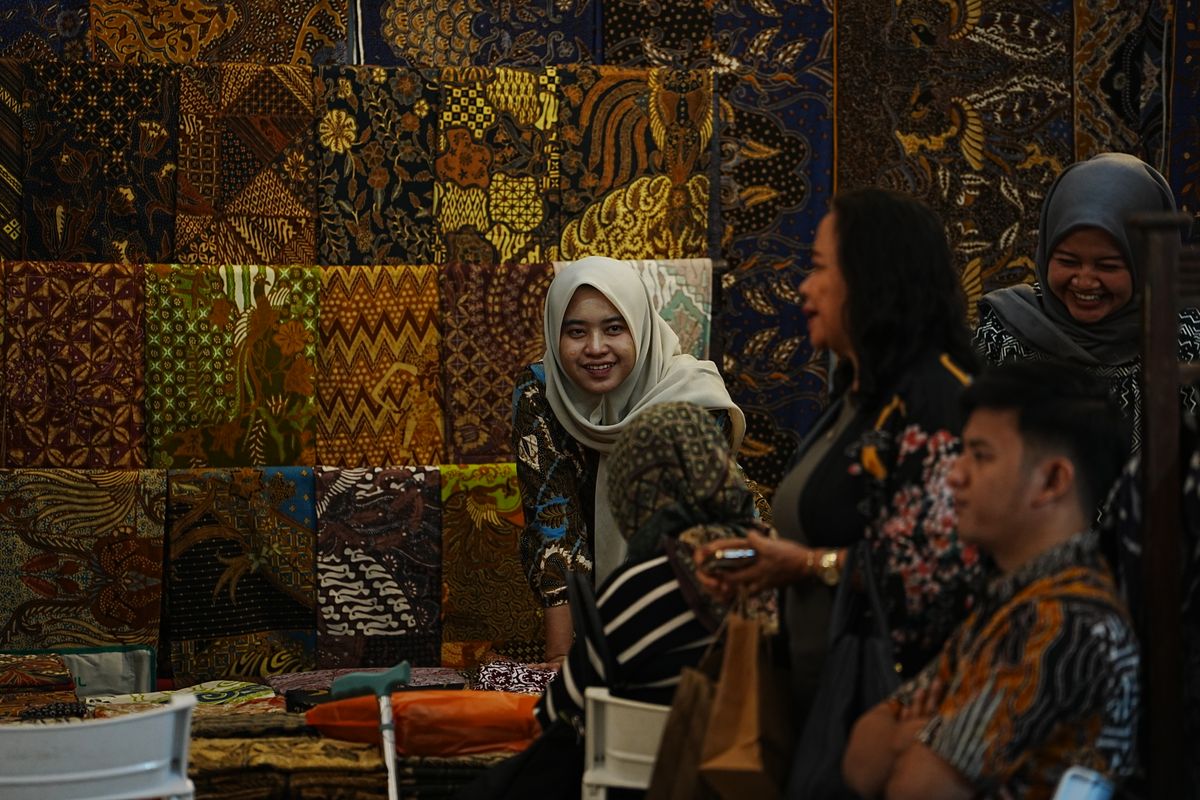
Away from the market I stopped at a stall whose folded bolts climbed the wall behind the stallholder, each fold showing a different pattern. Retno, who ran it, pulled a corner of one cloth between finger and thumb before I had asked her anything. 'Feel it first,' she said.
Batik tulis, 'written batik', is drawn line by line with a canting and takes a great deal of labour, while batik cap is waxed with copper stamps, which cuts the effort and the cost but still takes skill. Nothing on the fold told me which one Retno was holding. I held the corner to the light and approved of its cracks, fine and branching, before I asked her. 'Cap,' she said, and folded it back onto the pile.
Nothing on the fold told me whether the cloth had been drawn or stamped.
Boiling-out
I finished the day out on the street, because after so much cloth on frames and shelves I wanted to see batik on people who were walking somewhere.
dyer's notes
Museum Batik Yogyakarta: Jl. Dr. Sutomo 13A, Bausasran, Yogyakarta.
Open Monday to Saturday, 9:00 to 15:00. Sundays and holidays by reservation.
Beringharjo Market: Jalan Margo Mulyo No. 16, right off Jalan Malioboro.
Ask whether a cloth is tulis (drawn with a canting) or cap (stamped with copper).
At the museum (listed prices)
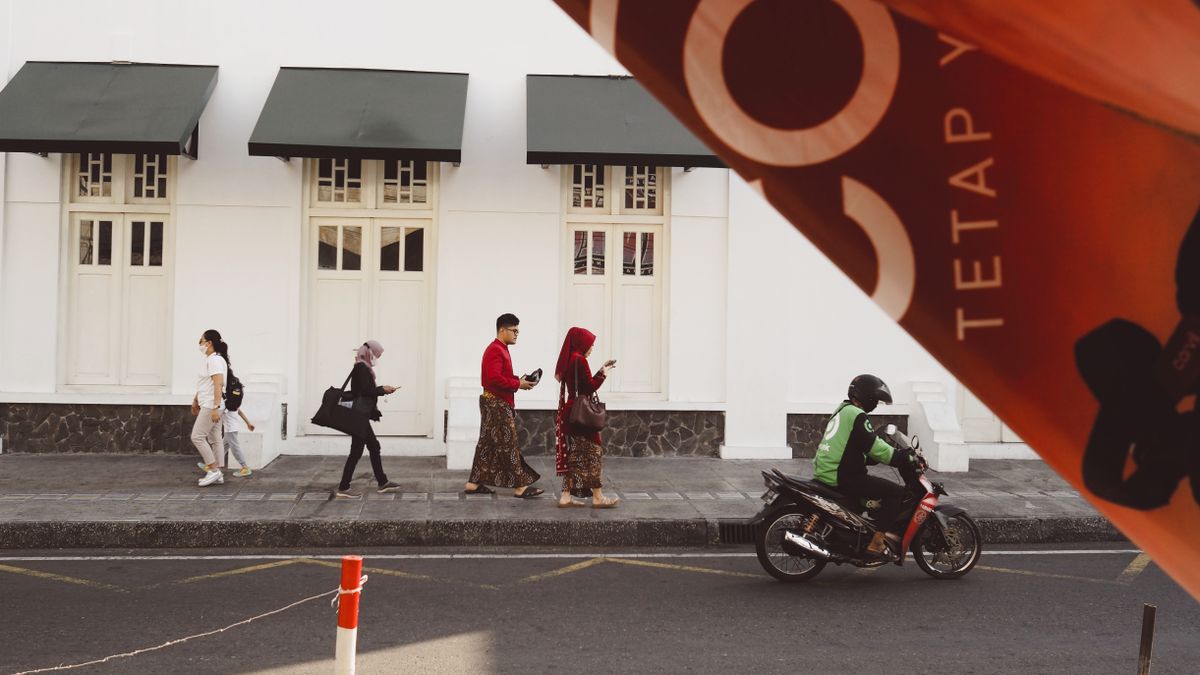
Two people in matching red passed the white shuttered buildings in batik sarongs, lengths of cloth wrapped at the waist and falling to the ankle, both reading their phones as a motorcycle taxi went by. From across the road I couldn't tell whether either cloth had been drawn or stamped, and nobody on the pavement was asking me to.
In Javanese tradition only kings and knights were allowed to wear parang, a batik pattern built on a diagonal line descending from high to low, its motifs likened to waves that never break. I looked for that diagonal on the two sarongs, and they had walked on before I could make it out either way. ■