The End of the World Has Office Hours: An Ushuaia Night Log

Fin del Mundo, Sold by the Kilo
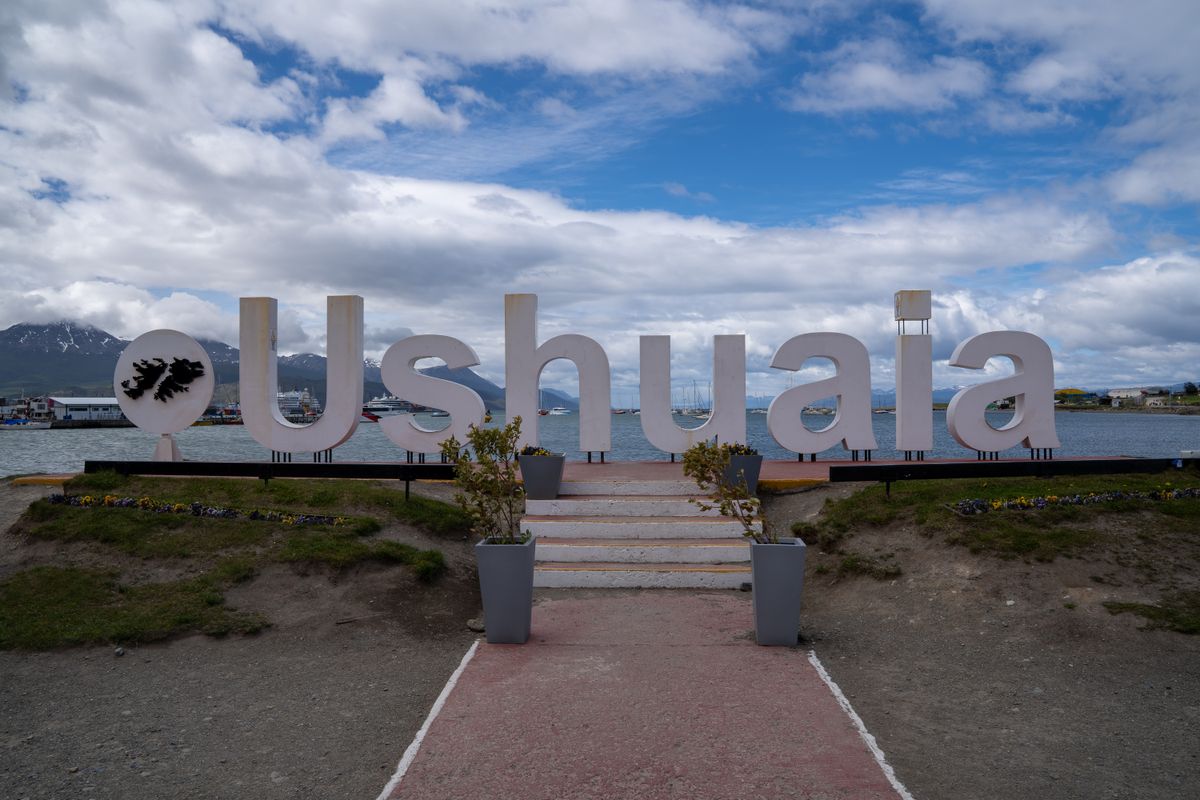
The photo every arriving flight promises. Grade for what's in this frame: unrated, it's noon.
Every ticket, every magnet, every menu here calls itself the end of the world. The sign by the port says it in three-metre steel letters, aimed straight at your camera. None of it is about the sky. That part they get to for free, after the last tour bus leaves, and most of them never look up long enough to notice.
Day-sold: the USHUAIA letter sign at the port, souvenir shops the length of San Martín selling penguin keychains and "Fin del Mundo" hoodies for 45,000 pesos, and a queue for the same photograph forty people take an hour. I stood in it. Everyone does.
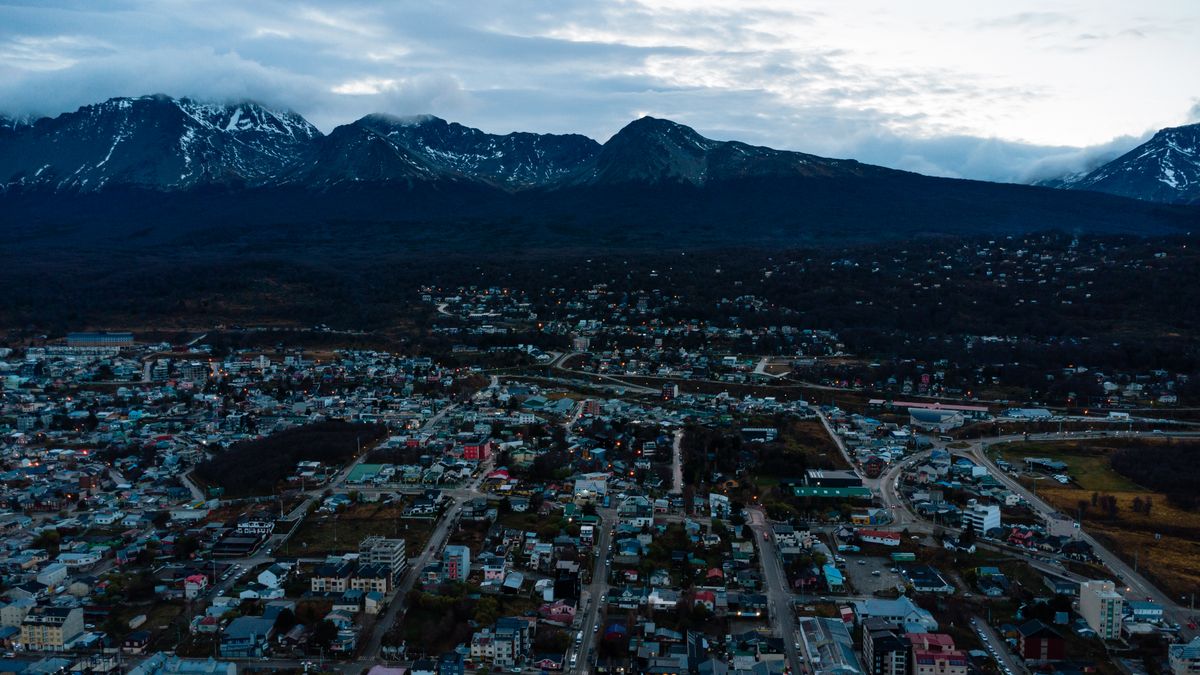
Night-true: from that same port, the sky over Ushuaia reads about a Bortle 5, maybe a 4 on a still night when the fishing fleet stays in. Sodium light off the harbor washes out anything below third magnitude. I counted eleven stars over the letters before a cruise ship's floodlights killed the rest. Grade: two stars out of five, and one of those is generous.
The Beagle Channel, on the Clock
Day-sold: a two-and-a-half-hour catamaran run down the Beagle Channel, past a sea lion colony hauled out on Isla de los Lobos and a rookery of imperial cormorants, ending at Les Eclaireurs Lighthouse. The onboard guide calls it "the lighthouse at the end of the world" every single time the boat slows down for photos.
It isn't. Jules Verne's lighthouse was San Juan de Salvamento, out on Isla de los Estados, a hundred kilometres further and unreachable on a half-day ticket. Les Eclaireurs just photographs better from a warm boat. The run costs around USD 75 a head, departs from the Muelle Turístico most afternoons, and gets you back to the dock by five.
Night-true: nothing, because there is no night-true. The operators stop selling by 5pm and the channel goes dark with no one out there to log it. That's the tell worth sitting with. Every stop on this coast gets measured, priced and photographed, right up until the point where measuring it would require staying past dinner.
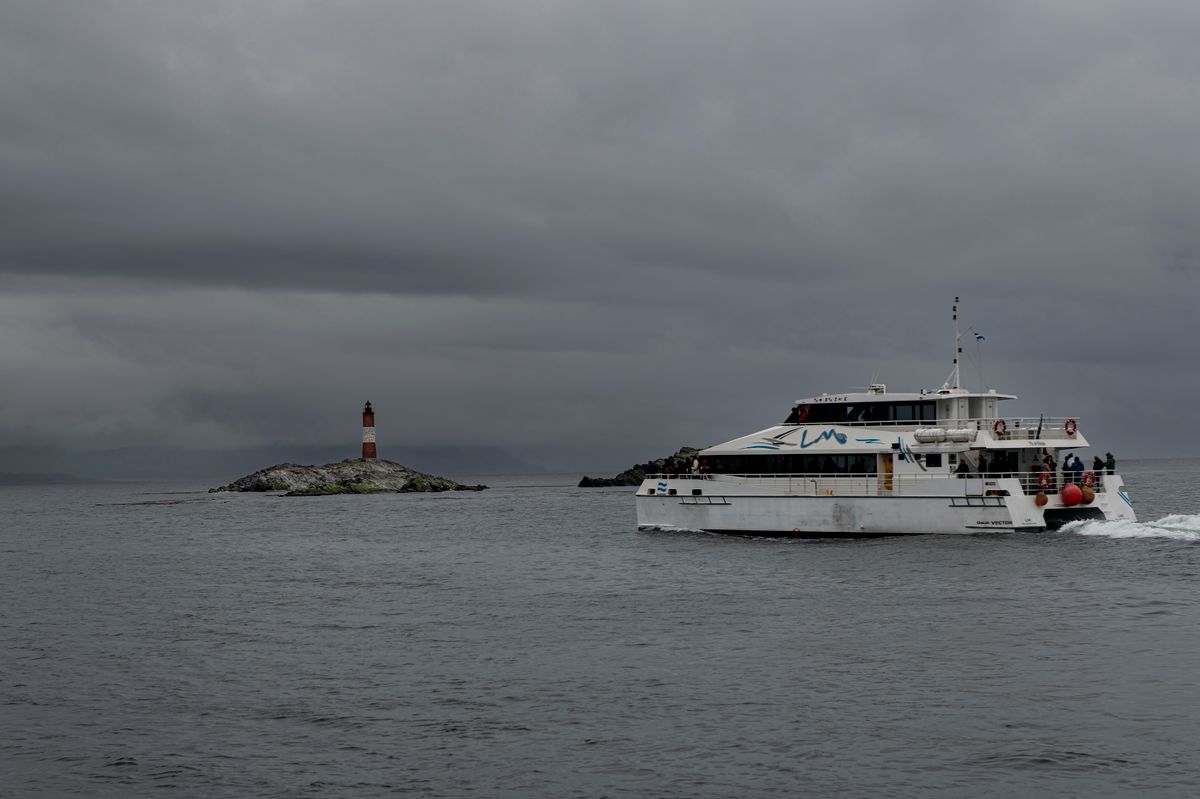
Les Eclaireurs, not the lighthouse from the Verne novel, no matter what the onboard guide says.
The day-sold total (USD, per person)
Tierra del Fuego National Park, Closes at Dusk
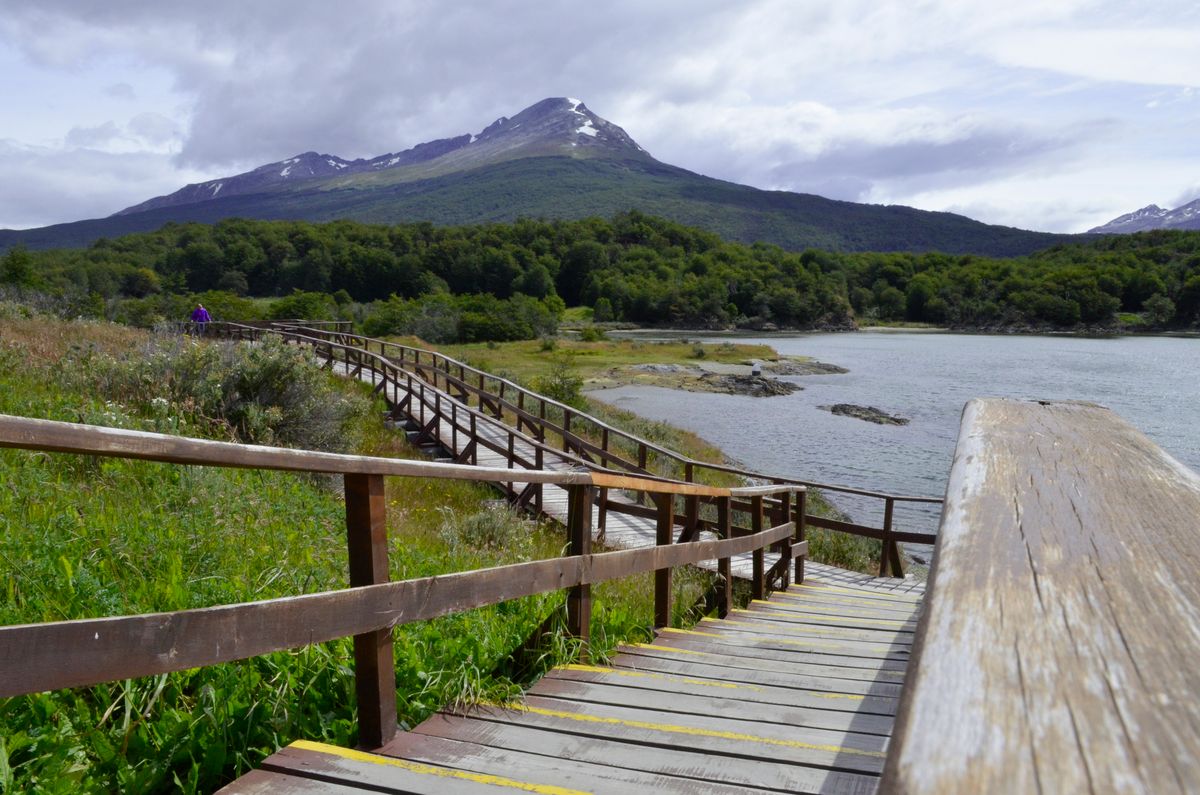
Day-sold: 30 minutes west of town, the park charges 15,000 pesos at the gate, about USD 15 at this month's exchange rate, and delivers exactly what the brochure promises. The Senda Costera boardwalk runs through lenga forest and peat bog to Bahía Lapataia, where a wooden sign marks the literal end of Ruta Nacional 3, three thousand and seventy-nine kilometres from Buenos Aires. Everyone photographs the sign. I did too.
The park closes at 8pm sharp in summer, rangers on quad bikes clearing the trails by 7:30, and no camping is allowed outside the two official sites. It is, by day, a genuinely well-run piece of national infrastructure. Guanacos graze near the road. A Fuegian steamer duck paddled the shoreline at Lapataia while I ate a sandwich that cost more than it should have.
Night-true: I can't grade it, because nobody legally sees it after dark. Whatever the sky does over Lapataia once the gate locks stays unlogged, which is a genuine loss. Snow-streaked peaks and a lake with no town glow behind them would read close to a Bortle 2. I know because I've stood at the boundary fence at 11pm in December and looked over it.
What the Sky Actually Does
Night-true, properly: I drove back out past the edge of town on Ruta 3, past the last orange streetlight, to a gravel pull-off short of the park gate where the horizon opens west toward the mountains and south toward the channel. No ticket, no operator, no hours. Just the road shoulder and a tripod.
dark-sky notes
Skip December. Ushuaia sits at 54 degrees south, and near the summer solstice the sky never gets past nautical twilight, no true dark to log. Go April through August instead, check the moon phase before you book anything (a gibbous moon over the channel does more damage than the town lights do), and budget for at least two nights, because the wind here ruins more clear skies than the cloud does.
Field log, 02:00: that glow isn't the aurora, it's airglow, indifferent to whether anyone's watching.
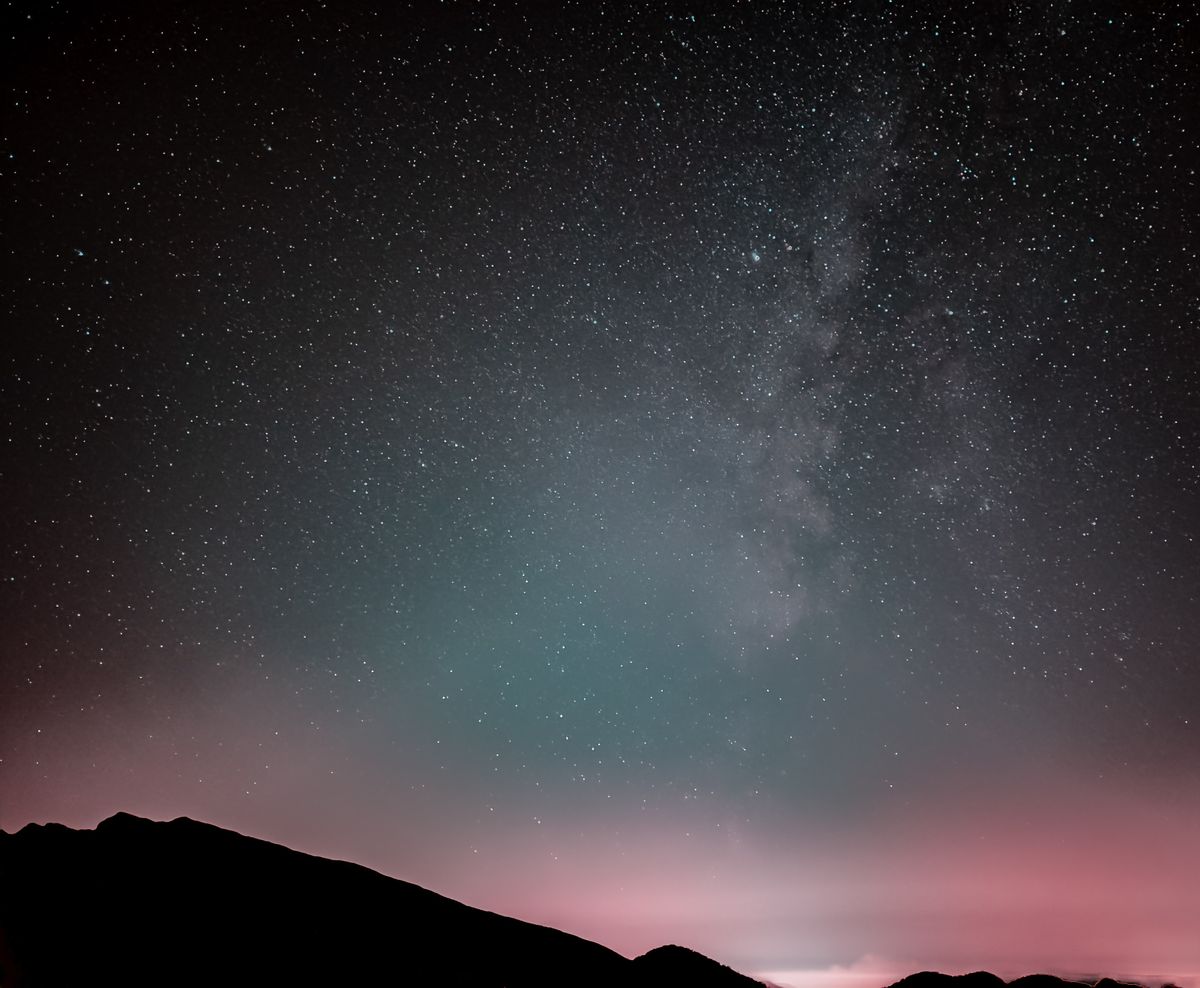
The guides down at the dock tell every boatload that Ushuaia sometimes gets aurora australis, and technically that's true, this far south, during a strong geomagnetic storm. What actually shows up on an ordinary clear night, low on the southern horizon, is airglow: oxygen and hydroxyl molecules in the upper atmosphere giving back sunlight they absorbed hours ago, unrelated to solar storms entirely. It doesn't dance. The glow just sits there, faint and constant, and most visitors never stay out late enough to be told the difference.
Final grade for the pull-off past the park gate: four stars out of five, docked one for a gust that knocked the tripod over at five and cost me a memory card I never found in the dark. Bortle 3, limiting magnitude somewhere past 6, the core of the galaxy sitting right where the brochure sign in town promises an ocean view instead. I packed up cold and a little smug about it, drove back past the sleeping souvenir shops, and was at the observatory for the 9am shift four hours later. ■