Bariloche Sells Switzerland by Day; The Steppe Tells the Truth by Night
In Bariloche, the chocolate shops close before the sky does its real work, twenty-three kilometres away.

Day: The Argentine Switzerland, Seen From Above
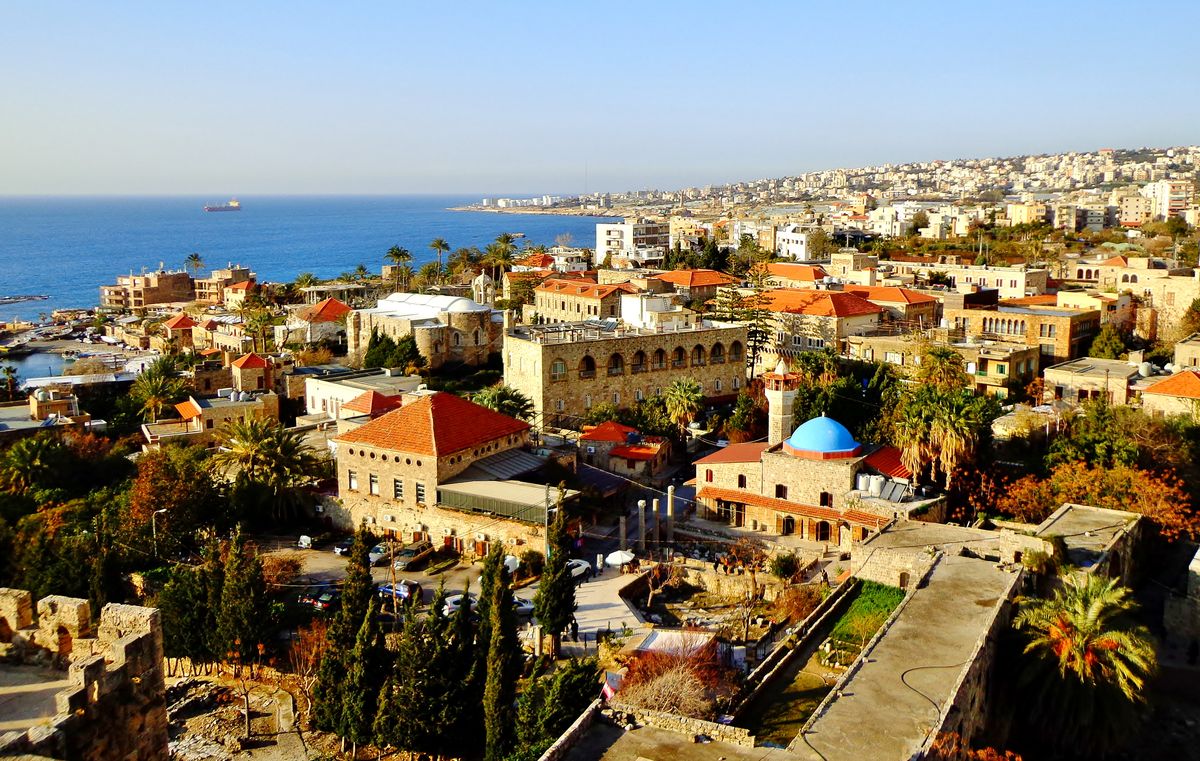
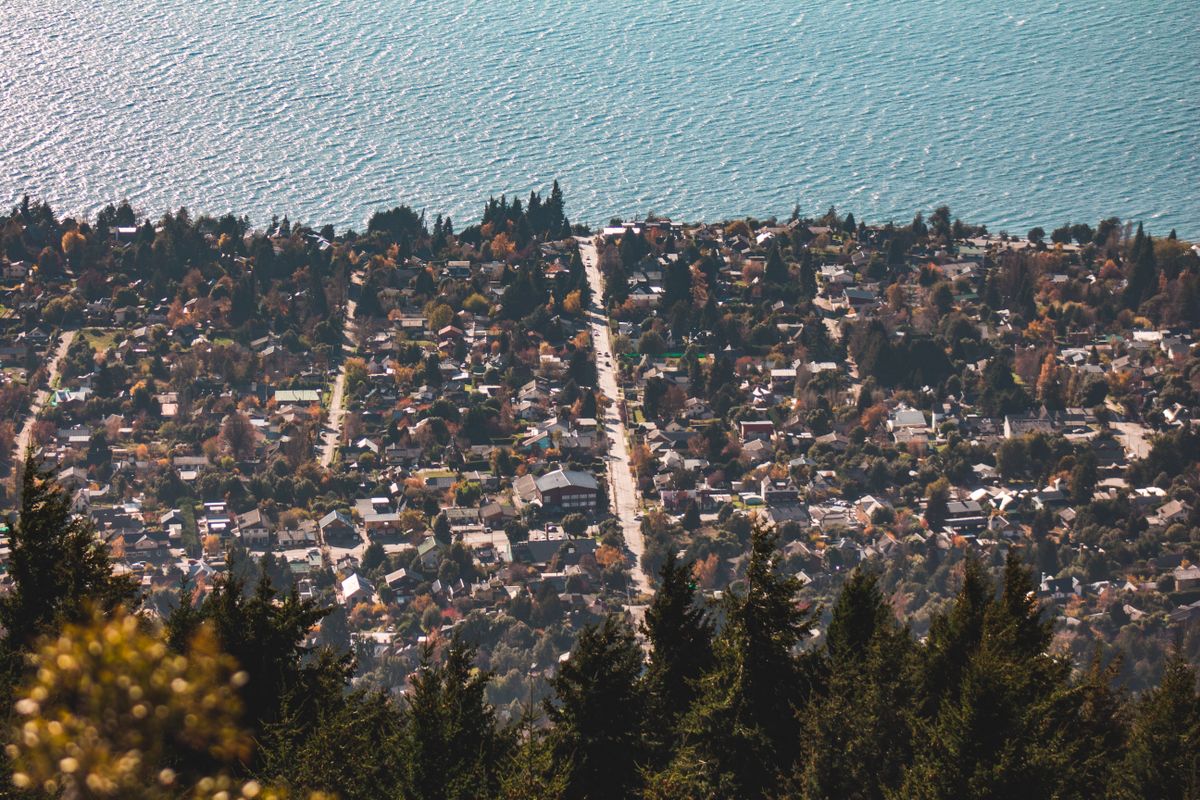
Bariloche sells itself as Switzerland with better empanadas. Chalet roofs, chocolate shops stacked three deep along Calle Mitre, a gondola up Cerro Otto that deposits you at a rotating cafe with Lago Nahuel Huapi laid out below like a postcard nobody needed to touch up. It's the version the town has been selling since the Central European settlers who built it in the early twentieth century decided the Alps were a good enough template, and a hundred years later nobody's bothered to update the pitch.
The Postcard Version
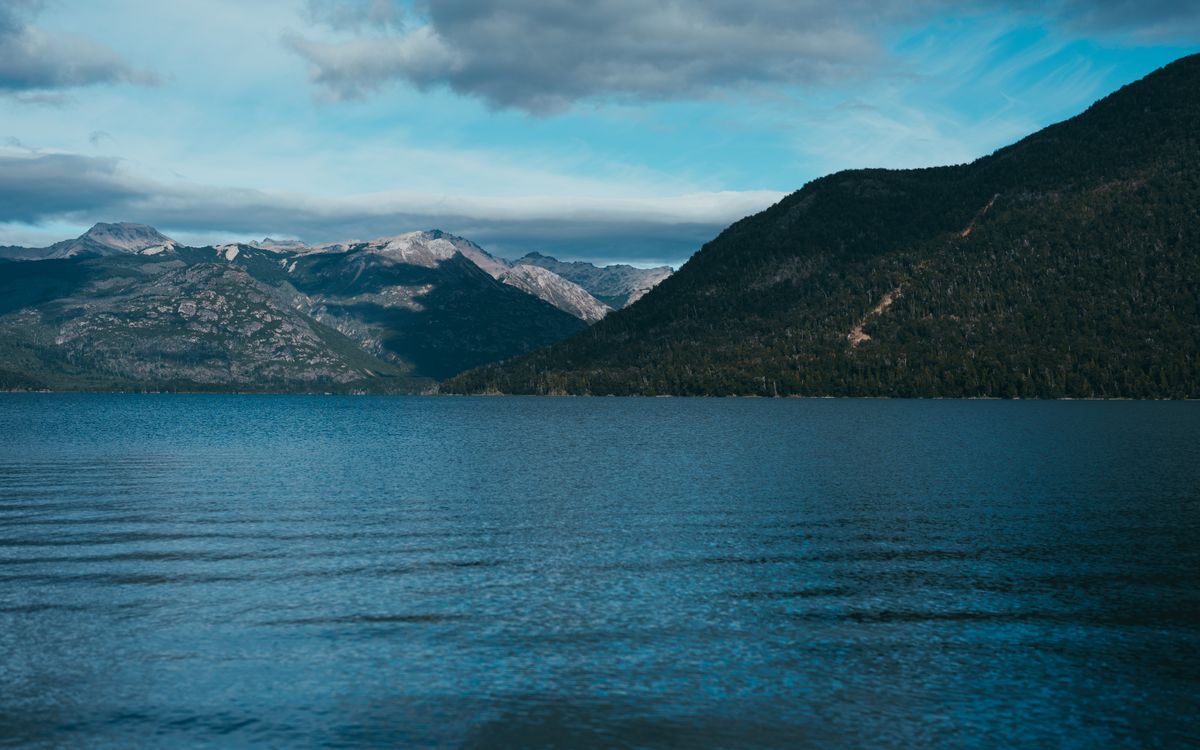
From the gondola at midday it reads like the flyer says: snow on the peaks, a lake the color of glacier melt, steep roofs that could pass for Innsbruck if you squint past the tour buses. A hostel near my room had a flyer promising stargazing right from the costanera, no need to leave town, as though the sky were an amenity the property had simply included with the room.
It isn't included. I walked the costanera at eleven that night with a Bortle chart open on my phone and counted twenty-two stars before I stopped bothering, most of them drowned by chalet floodlights and chocolate-shop signage that stays lit past midnight for anyone who wants fudge at 1 a.m. Town center reads a soft Bortle 6, pushing 7 near the casino end. Grade: one star out of five, and that's before a tour bus swings its headlights across the water.
Night: The Observatory, Twenty-Three Kilometres From Anything
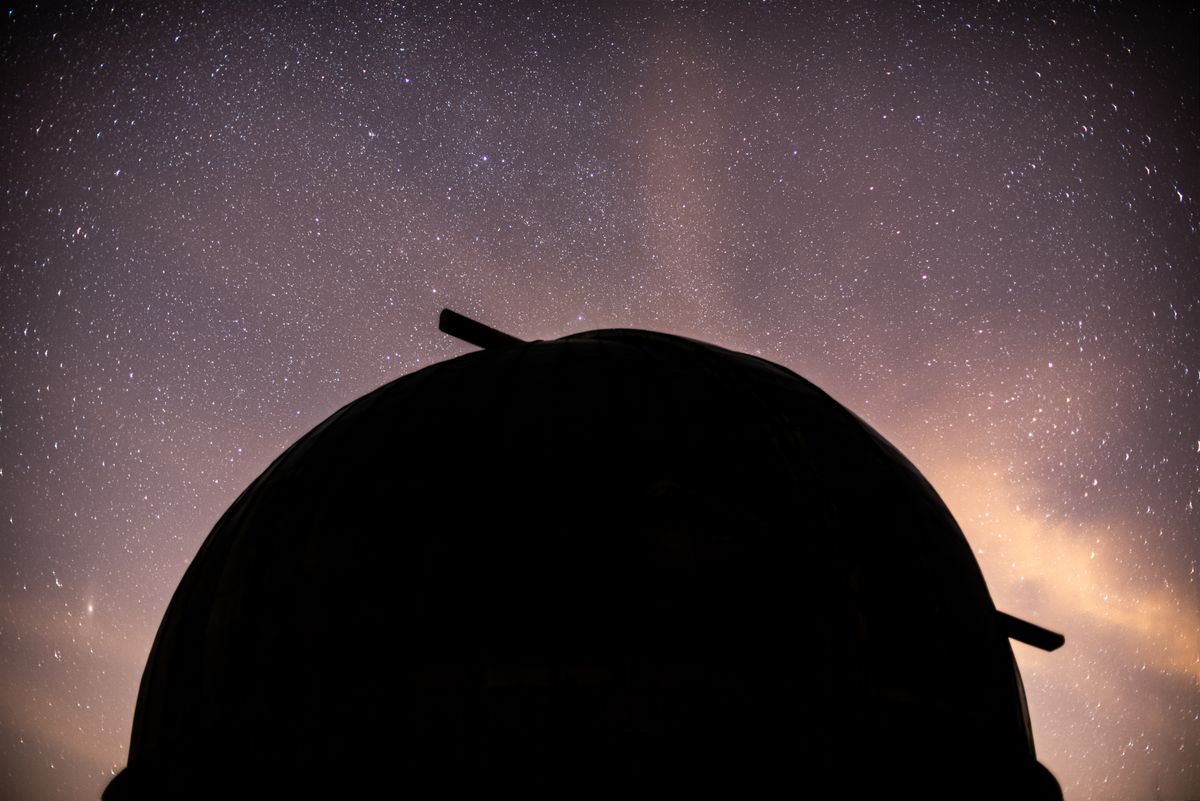
The dome sits out in the steppe on purpose, not by accident.
By day the road out is nothing worth describing. Gravel turning to dirt, sheep working the fence lines, a locked gate with an observatory sign that most day itineraries skip because there's no chocolate waiting at the end of it. Twenty-three kilometres from the plaza, give or take, and every one of them deliberate.
The site wasn't chosen for the drive. It was chosen because the plaza's light dome doesn't reach this far into the steppe, and the ridge blocks what does. That's not a scenic decision, it's a technical one, and Patagonian observatories have been making it for decades, because the wider region genuinely holds some of the clearest, least polluted skies left in South America once you clear the town centers. Bariloche just sells chocolate over the top of the one stretch tourists actually visit.
Naked eye, once my pupils gave up on the last of my flashlight and actually opened, I was past four hundred stars, easy, with the galactic core rising thick enough over the ridge that it looked less like individual points and more like a bruise of light someone forgot to clean up. Bortle 3, pushing into 2 right on the ridge itself. Grade: four and a half out of five. The missing half is for a satellite train that crossed the whole eyepiece at half past midnight and didn't apologize for it.
Dark-Sky Notes
Give your eyes 20-30 minutes off any screen or flashlight before trusting a naked-eye count.
Carry a red-light headlamp; white light resets dark adaptation instantly.
Check the moon phase before booking an observatory night, a near-full moon erases half the readings above.
Dress for steppe wind, not town wind; twenty-three kilometres out it's a different climate after sunset.
Confirm the observatory's public viewing schedule ahead, it isn't a walk-up stop like the chocolate shops.
Field log, 02:00: out here the Milky Way's dust lanes are visible naked-eye, a sight the plaza hasn't seen in decades.
Night: The Lakeshore, Closing the Log
The other postcard is Llao Llao, out on the peninsula, where the viewpoint gives you Lago Moreno on one side, Cerro Lopez and Cerro Capilla stacked behind it, and the Tristeza and Blest arms of Nahuel Huapi opening up as though the lake can't decide how big it wants to be. By day it's the single most photographed angle in the district, and it earns that.
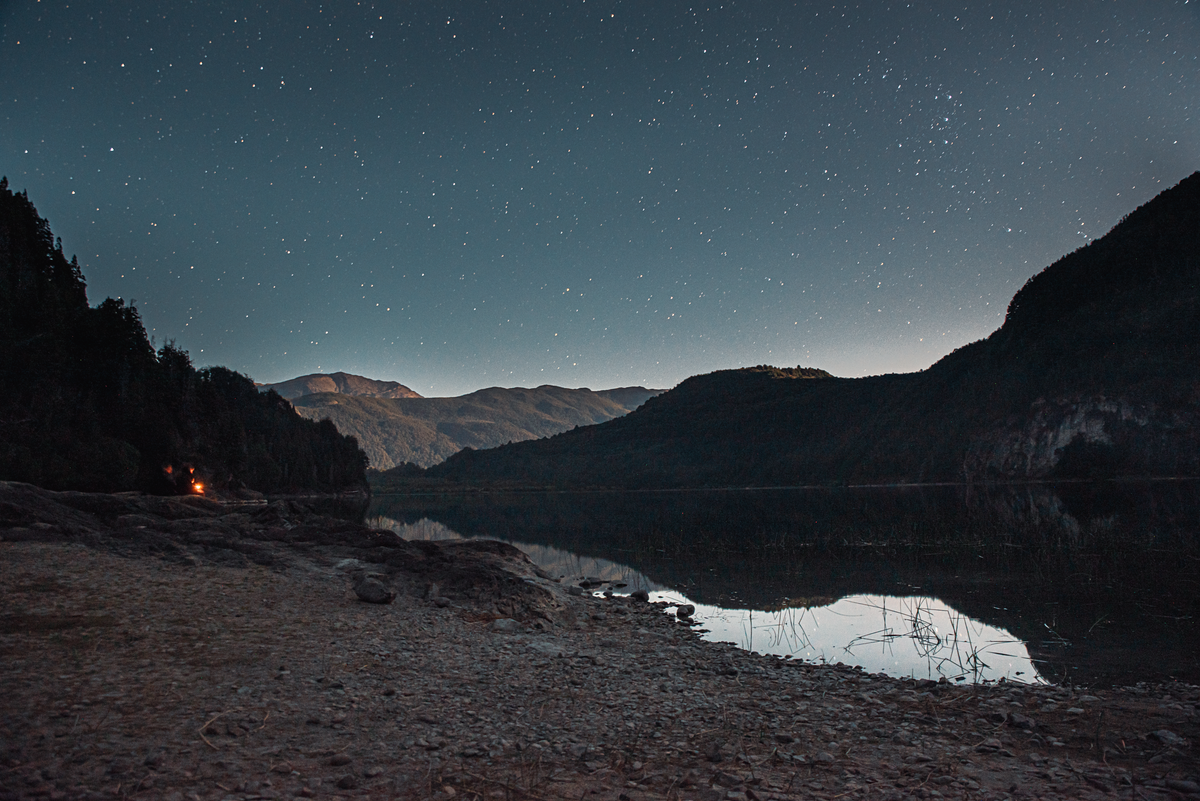
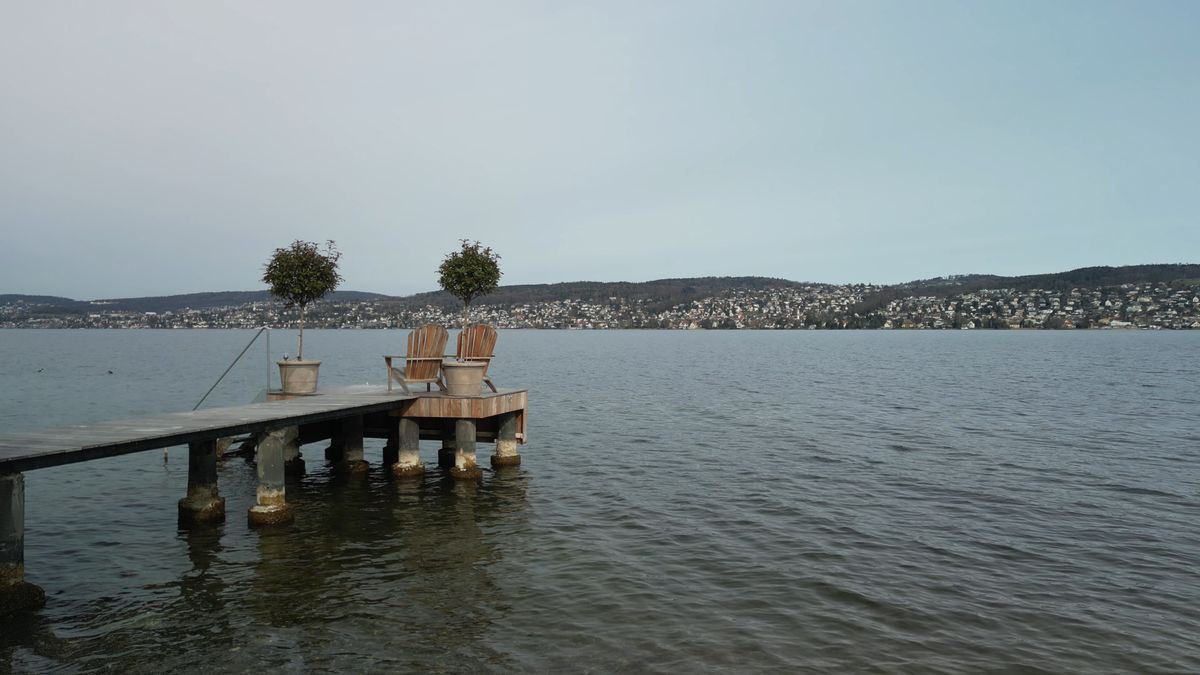
I didn't stay for that view after dark. Too many cabins with porch lights left on for guests who paid for the postcard. Further round the lake district, on a stretch of shore with nothing behind it but steppe and one dying campfire that wasn't mine, the water went black enough to double the sky, which is the only kind of doubling a lake should be allowed to do.
Grade there: a clean Bortle 4, call it three and a half stars out of five, short of the observatory only because the town's glow still smudges the horizon on that side of the lake. Three sites, three readings, one trip: Bortle 6 to 7 on the costanera, Bortle 3 at the observatory, Bortle 4 on open shore. The chocolate shops stay open latest of the three. The sky doesn't care what time they close. ■