Two Cliffs, One Wind
A falconer drives Ireland's Wild Atlantic Way and grades two clifftop landmarks the way he grades birds: by wind, by quarry, and by nerve.

Open Cliff, Broadside Wind
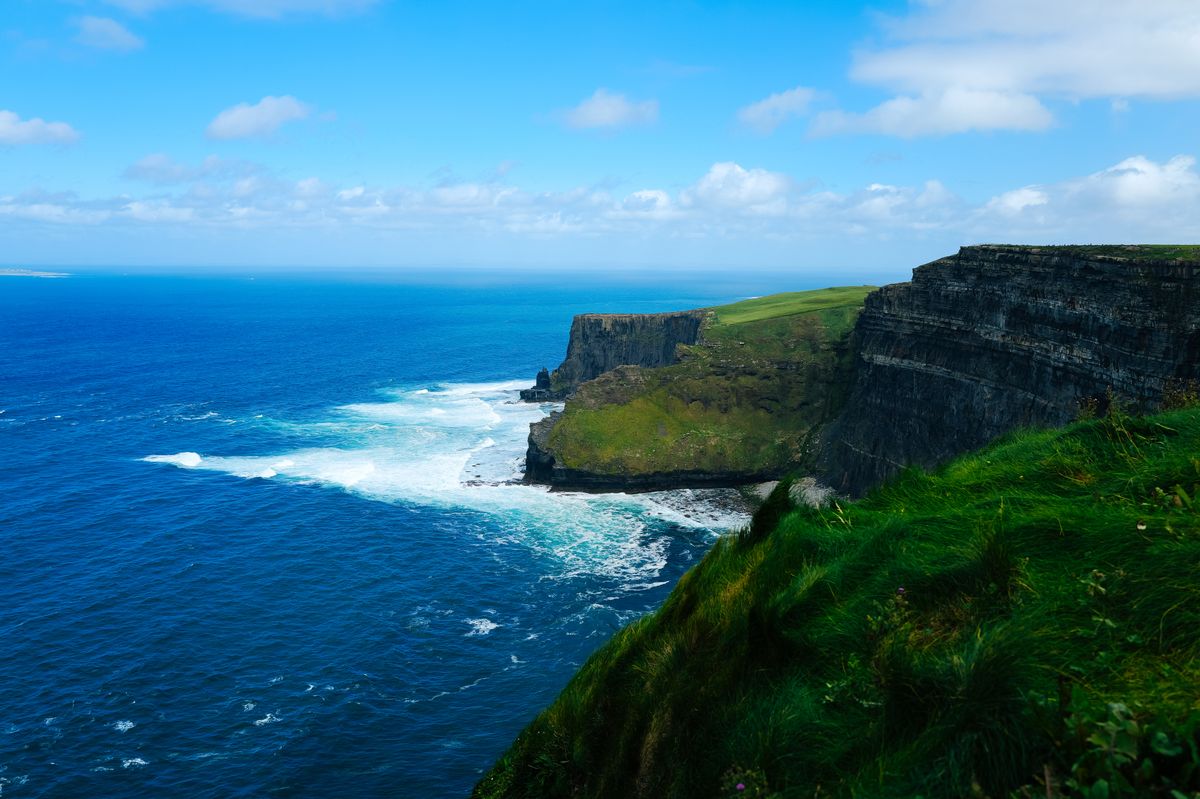
Wind at the Cliffs of Moher car park ran twenty to twenty five knots when I got out of the car, dead onshore, cold enough to notice even in August. That's not a hard wind to fly in, the cliff face throws updraught for free, but it's not a clean one either. It gusts, drops, gusts again, and a wild falcon working that line would spend more energy correcting than gliding.
It doesn't look like much from the car park. The land slopes gently up toward the cliff edge and the sky was mostly clear the day I went, the kind of morning that reads as calm until you're actually standing on the rock. A family ahead of me came dressed for that calm, shorts and t shirts, and the mother had both arms wrapped around herself by the time we reached the path. The wind at a clifftop is never the wind in the car park. I'd have told them that for free.
Moher sits roughly a third of the way down the Wild Atlantic Way, the signposted touring route that runs about 2,500 kilometres, 1,553 miles, from the Inishowen Peninsula in County Donegal to Kinsale in County Cork. The visitor centre here is built into the hillside so it doesn't break the skyline from the water, and the walk from car park to cliff edge takes maybe ten minutes past a queue for the shuttle bus and a row of ice cream vans. None of that prepares you for how narrow the actual path gets. A rope line in places, a low wall in others, then a drop that doesn't stop until the Atlantic.
A coach group came off the bus in matching red ponchos, thirty strong, and most of them handled the wind fine, heads down, cameras up whenever there was a gap in the gusts. One woman stopped about forty metres along the path, both hands locked on the rail, and wouldn't move for a full minute while her husband talked her forward step by step. That's a bird that doesn't take to the glove on the first fitting. Plenty of good birds need two or three sessions before they'll sit calm on a moving fist. She just wasn't ready for this particular glove, not that morning.
O'Brien's Tower marks the highest point of the cliffs, 214 metres, 702 feet, and the rock runs a full 14 kilometres along this stretch of County Clare coast before it drops back to sea level. A trained bird flown over that line would have real work. Fulmars ride the updraught at the cliff edge most of the day, gulls work the air lower down, jackdaws nest in the rock crevices and cut across the open ground in loose, noisy groups. On the cropped grass at the top, where the tourists walk, rabbits keep the turf short enough that a bird stooping from height would pick them out clean. It's a working cliff underneath the postcard version, whatever the gift shop in the visitor centre is selling.
Moher passes, on terrain, but only just. The wind is honest and the quarry is real, easy enough to read once you know what you're looking at. What nearly fails it is the crowd, thirty people in ponchos moving at different speeds along a ledge built for maybe six at a time. I'd fly a bird here on a weekday morning before the buses start arriving, not at half past eleven with the car park already full.
Plenty of good birds need three sessions before they'll sit calm on a moving fist.
Ridge Line, No Rail
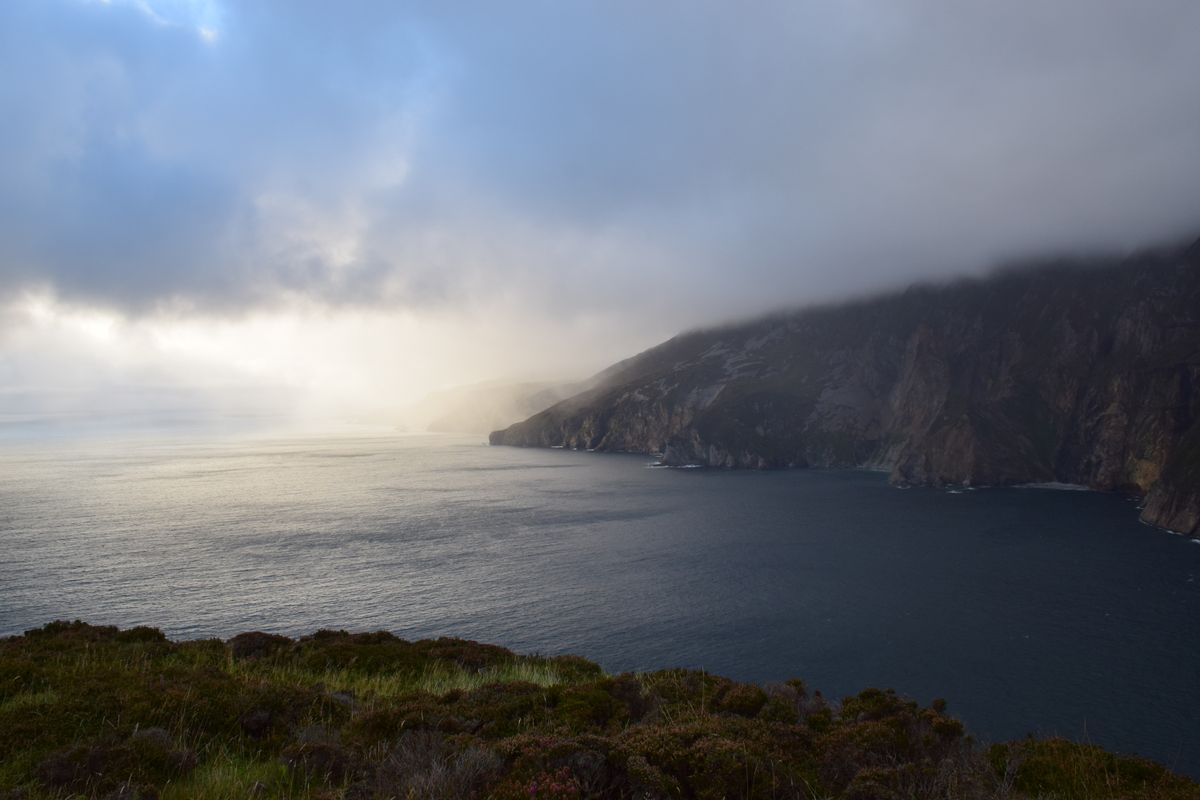
Wind at Slieve League runs harder than at Moher and less predictably, and the extra height is the reason why. Moher throws a fairly clean updraught off one even face. Slieve League climbs to 601 metres, 1,972 feet, in broken stages, ridges and gullies that each turn the air in a different direction. A bird working that face would spend most of its time fighting shear rather than settling into one line of lift.
The road up from Teelin narrows to one lane with passing places and climbs hard before it ends at a car park with room for maybe twenty cars, most of the spaces empty when I got there. No visitor centre, no shuttle bus, no queue. A short walk brings you to the Bunglass viewpoint, and from there the path along the ridge has no rail at all, just grass, wind, and a drop that runs longer than the one at Moher. Two other cars were parked when I arrived. One dog, off the lead, worked figure eights around its owner's legs and paid the drop no attention whatsoever.
That dog would take to the glove inside a week. Steadier nerve than half the young falcons I've started, and it never once looked at the edge like it mattered.
Slieve League is Ireland's second highest sea cliff, behind only Croaghaun on Achill Island in County Mayo at 688 metres. It feels remote in a way Moher doesn't, no barrier between the path and County Donegal falling away underneath it. The quarry here is thinner on the ground, literally. Ravens work the higher ledges where the wind is roughest, rock doves keep to the lower crevices out of the worst of it, and the grazing on top is too sparse and too steep for rabbits in the numbers Moher has. A bird flown here earns less meat for a good deal more risk.
Handler's notes
Moher: arrive before 11am. The car park fills and the path gets crowded fast after that.
Slieve League: single lane road up from Teelin, mind the passing places both ways.
Pack wind gear for both stops. The clifftop is colder and stronger than the car park suggests.
Neither path has a rail worth trusting completely. Watch your footing before the view.
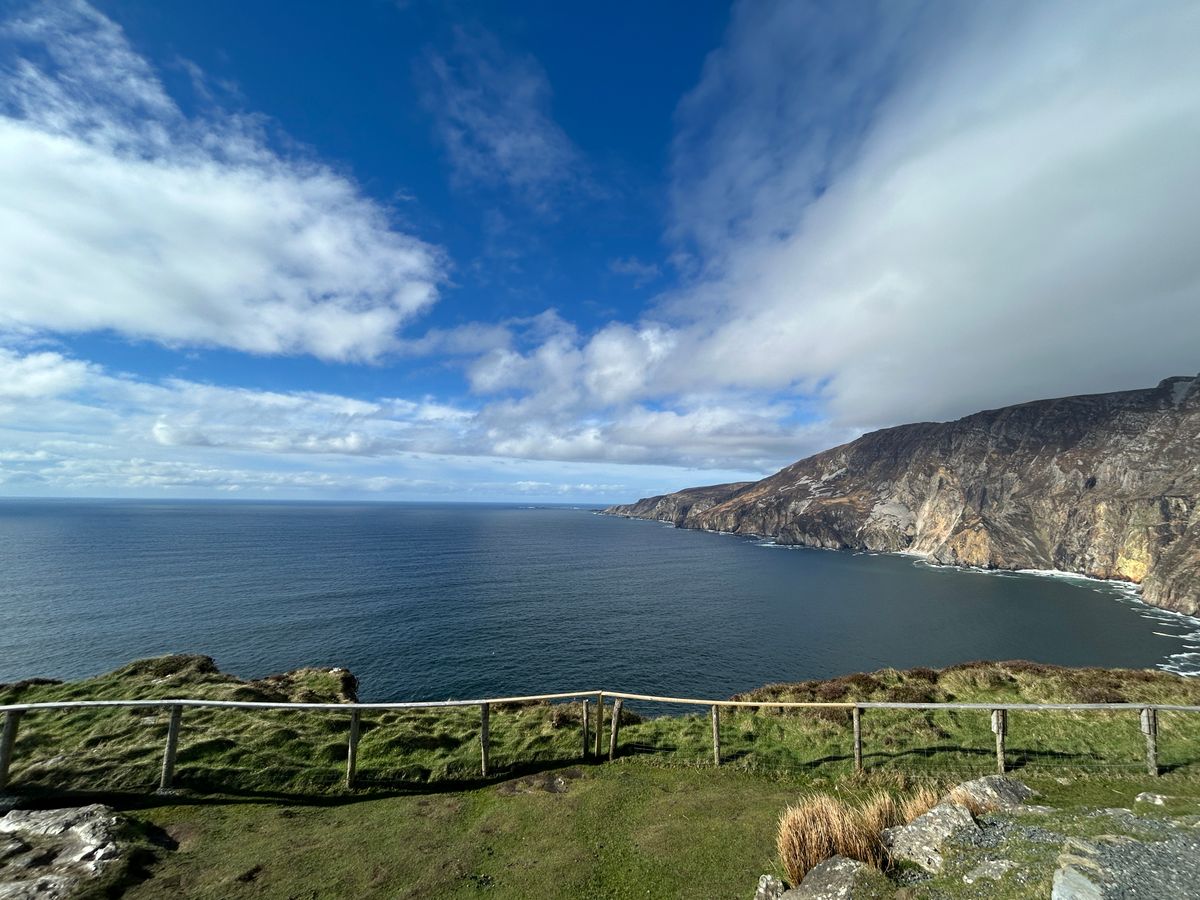
Between the two, Moher is the easier bird to start. Honest wind, clear quarry, a crowd that's a nuisance rather than a hazard. Slieve League is the harder one to trust, the wind shifts too much and the drop gives no margin for a wrong read, but it's the one I'd rather fly once it knew the ground under it. Moher will always take to the glove faster. Slieve League takes longer to settle and asks more of the handler, and that's no mark against it. ■