Wind, Rock, and the Falcons of Wadi Rum
A Wadi Rum falconer reads wind, rock, and quarry before he reads the scenery, flying his saker across open desert, a narrow canyon, and a ridge at last light.

Open Desert, Flat Ground
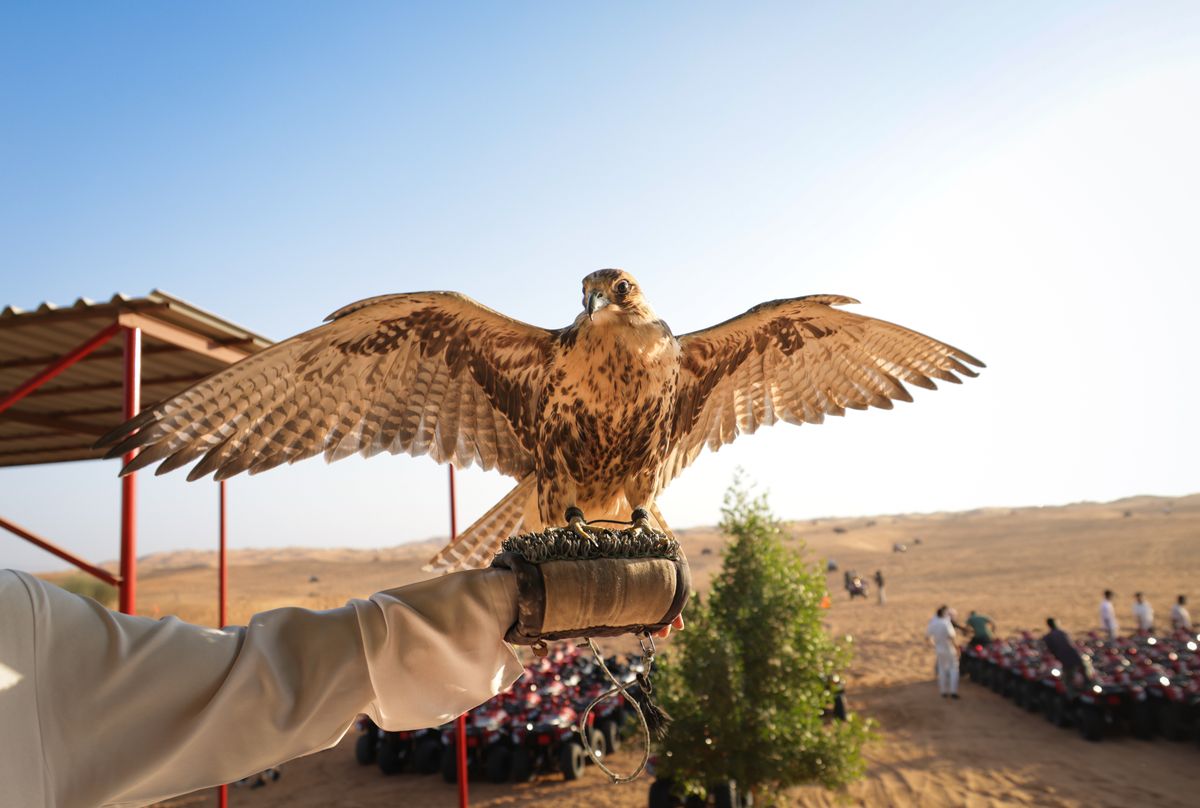
On the glove, wings still spread from the last stoop.
Wind out of the north-west this morning, eight to ten knots, steady rather than gusting, exactly the kind of air that lets a bird hold position over flat ground without burning wingbeats to stay there. No thermal yet. The gravel hasn't taken enough sun to lift off it, so anything flown before nine works on muscle, not on rising air.
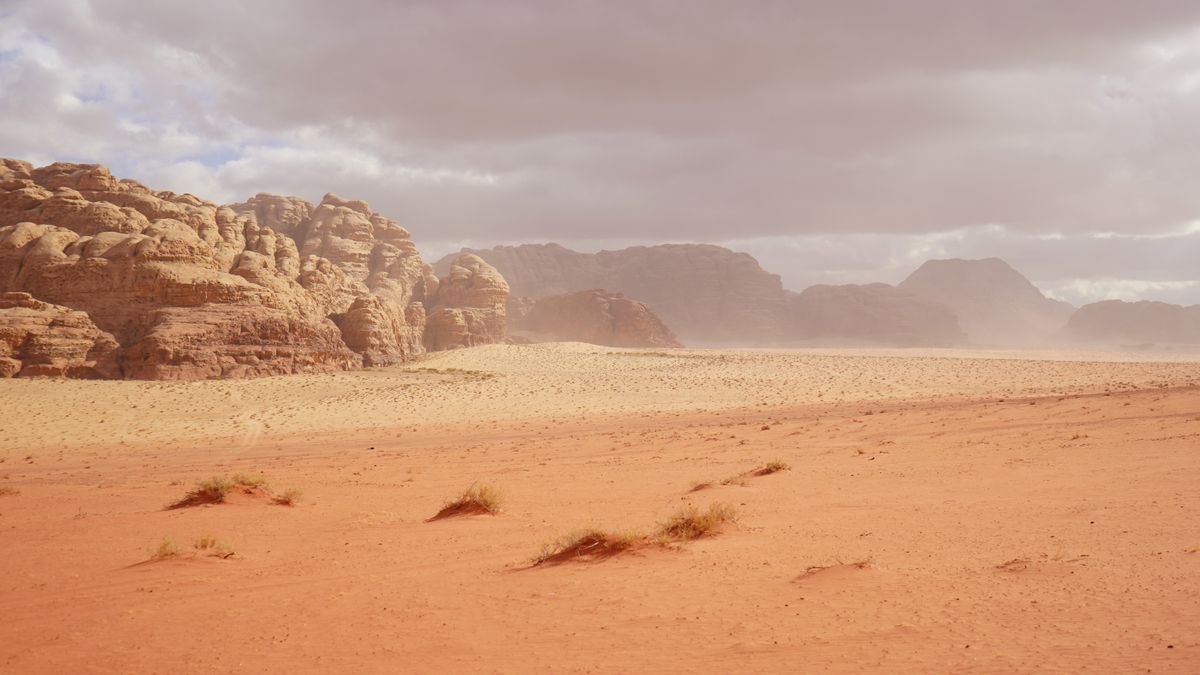
I unhood the saker on the plain south of Jebel Rum, where the dunes give way to a hard-packed gravel flat that runs maybe two kilometers before the next ridge breaks the horizon. She sits the glove a moment, reading the ground the same way I do, head cocked to the wind rather than to me. That's the sign I look for before a slip. A bird still watching my face instead of the horizon isn't ready to hunt, whatever the wind is doing.
This ground would have carried houbara once, big wary bustards that walked more than they flew and gave a falcon a real contest, the whole reason Bedouin families kept hawks in the first place, not for sport but for the pot. What's left on this flat now is stone curlew working the gravel in short runs and the odd hare breaking from a tamarisk clump. Neither matches a houbara for difficulty. Both are honest quarry for a young bird still learning to commit to a line.
I fly her off the fist rather than off a perch here, low release, wings already half open before she leaves my glove, because a flat gravel plain gives a bird no updraft to cheat with. Whatever height she gets in the first thirty meters is height she made herself. That tells me more about her than a week of mews-side handling ever could.
Call it a pass. She took the wind at a good angle, ignored me within four wingbeats, and came back to the lure on the first swing rather than the second. That's a bird settling into the work, not just tolerating it. Open ground like this is where I'd send anyone new to falconry too, client or bird, because there's nowhere to hide a bad habit.
A falcon that keeps one eye on your face hasn't decided the desert is worth more than you yet.
— mews notes
The Canyon: Jebel Khazali
Same north-west wind, but Khazali narrows it. Between rock walls maybe six meters apart the air speeds up the way it does through any gap, then drops and curls where the passage bends, so a reading taken at the mouth of the canyon is already wrong fifty meters in. I check it twice, once outside, once at the first bend, and trust the second number.
This is where a bird earns or loses my confidence. Khazali's walls run high enough that direct sun only reaches the canyon floor a few hours either side of noon, and where there's no sun there's no thermal, only whatever the wind is doing between the rock. A falcon flying this passage is working turbulence, not lift, ducking a downdraft off one wall into a crosscurrent off the other.
There's less to hunt here than the open plain offers, some rock dove using the high ledges, the occasional hare bolting from shade at the canyon mouth where sand banks up against stone. What Khazali actually tests isn't appetite, it's control. A bird that can hold a line through that kind of broken air is a bird I'd trust somewhere harder.
I don't fly young birds through here, not this year, maybe not next. The walls close the sightlines down to almost nothing, so a hawk has to commit to a line before she can see what's on the other side of the bend, and that's not a decision I ask a first-season bird to make on my behalf.
Fail, for now, on this bird specifically, not on the terrain. She held the first bend well enough but flared wide at the second, which told me she'd rather add distance than trust the turn. Reasonable choice for a young saker. Not a canyon bird yet.
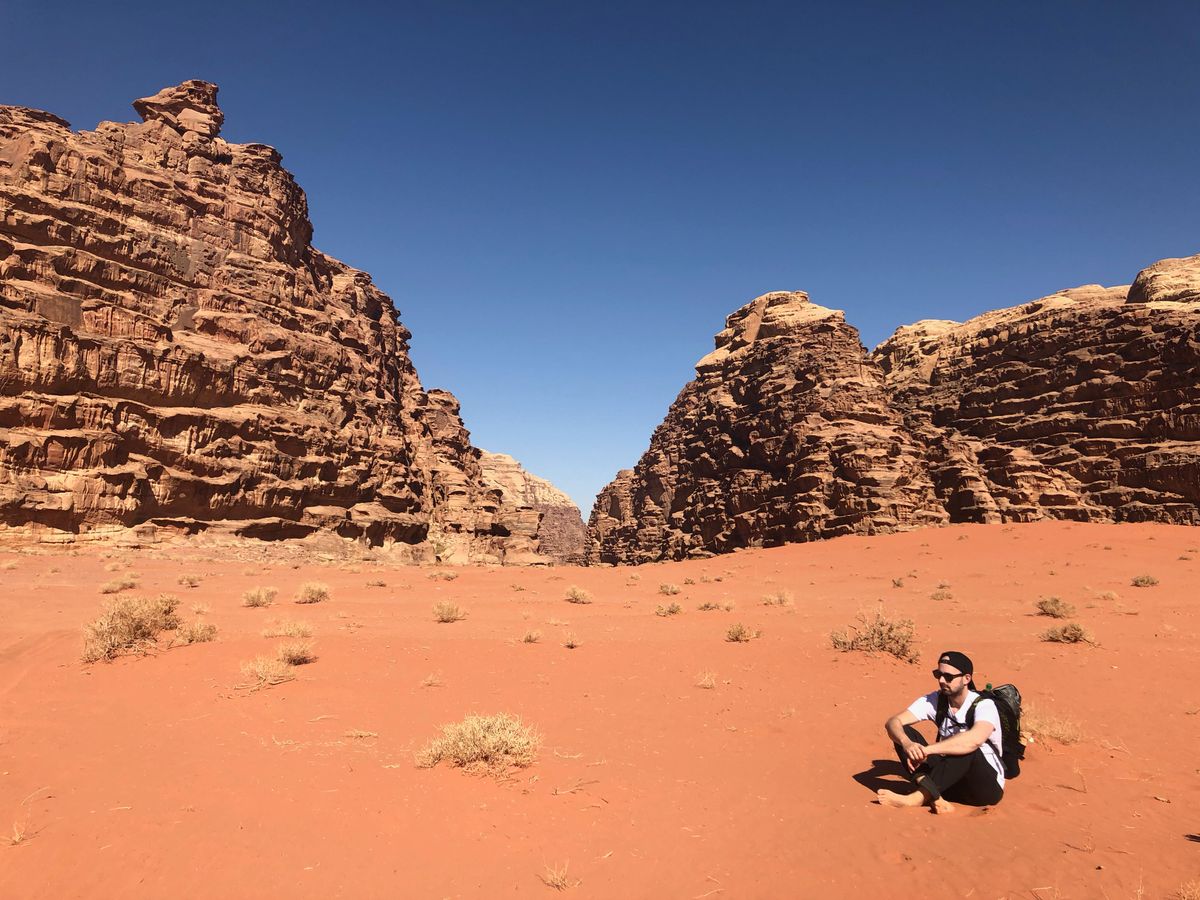
The mouth of Khazali, where the wind reading changes before you're fifty meters in.
The Ridge, Last Light
By four in the afternoon the sandstone above camp has been taking sun for eight hours straight, and it gives that heat back as thermal, a slow rising column a bird can find by feel more than by sight. Wind's dropped to almost nothing at ground level, but up along the ridge it's still moving, maybe five knots, enough to help a stoop without pushing a bird off her line.
I climb the ridge behind camp with the saker on the glove and a guest who booked the afternoon flight, a Belgian software engineer who'd read about falconry on a plane and decided, reasonably enough, that he wanted to see it rather than the postcard version of Wadi Rum. I put the glove on his fist first, no bird, just the leather and the weight of asking him to hold his arm steady for ten minutes while I explain why that matters.
He didn't flinch when she landed, didn't jerk the arm down the way most people do the first time four hundred grams of falcon hits a gloved fist harder than expected. Took to the glove faster than most, actually, which I don't say lightly. Most guests spend the first flight watching the bird. He watched the wind instead, asked why I kept looking at the rock face before I released her. Good question. Better question than half the falconers I trained with asked in their first year.
Handler's notes
Stand side-on to the bird, never face-on. A falcon reads a square-on stance as a threat, not a perch.
Keep the gloved arm bent at the elbow and steady. A dropping fist reads as the ground giving way.
Let the bird look at the terrain before you talk. She's reading wind and cover the same way I am.
Afternoon flights need the rock face still warm. Ask your guide, not the forecast.
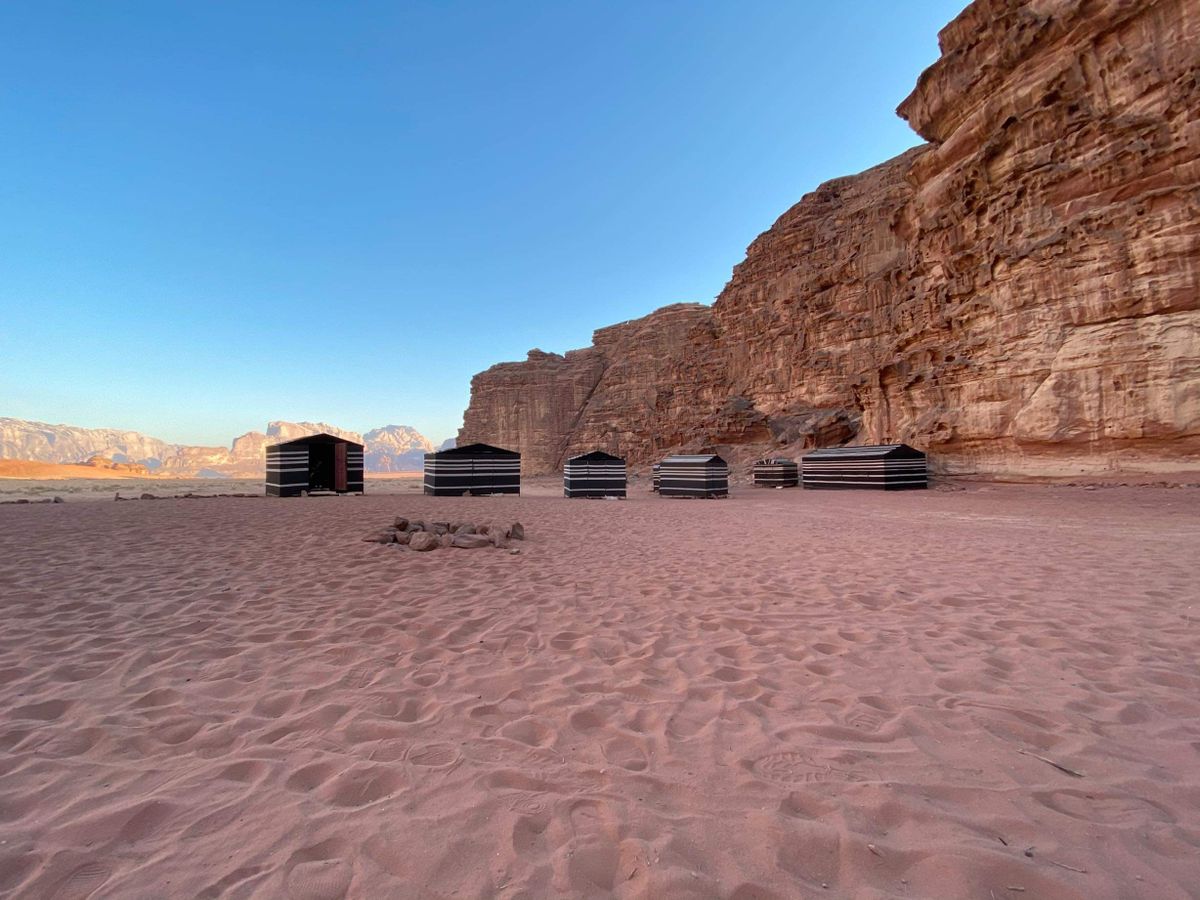
Two flights out of three earned a pass today, which is a fair average for early autumn work. The plain flight was clean, the canyon flight taught me what this particular bird isn't ready for yet, and the ridge flight, thermal-assisted, gave her the best stoop of the week. As for the guest, he'll be back. Anyone who watches the wind before he watches the bird generally is. ■