Wind, Ridge, and the Ground a Falcon Would Read: Petra's Backcountry Trails
A falconer walks the Siq, the Al-Khubtha climb, and a Bedouin tea shelter, and reads each one for wind, sightlines, and what a working bird could actually catch there.

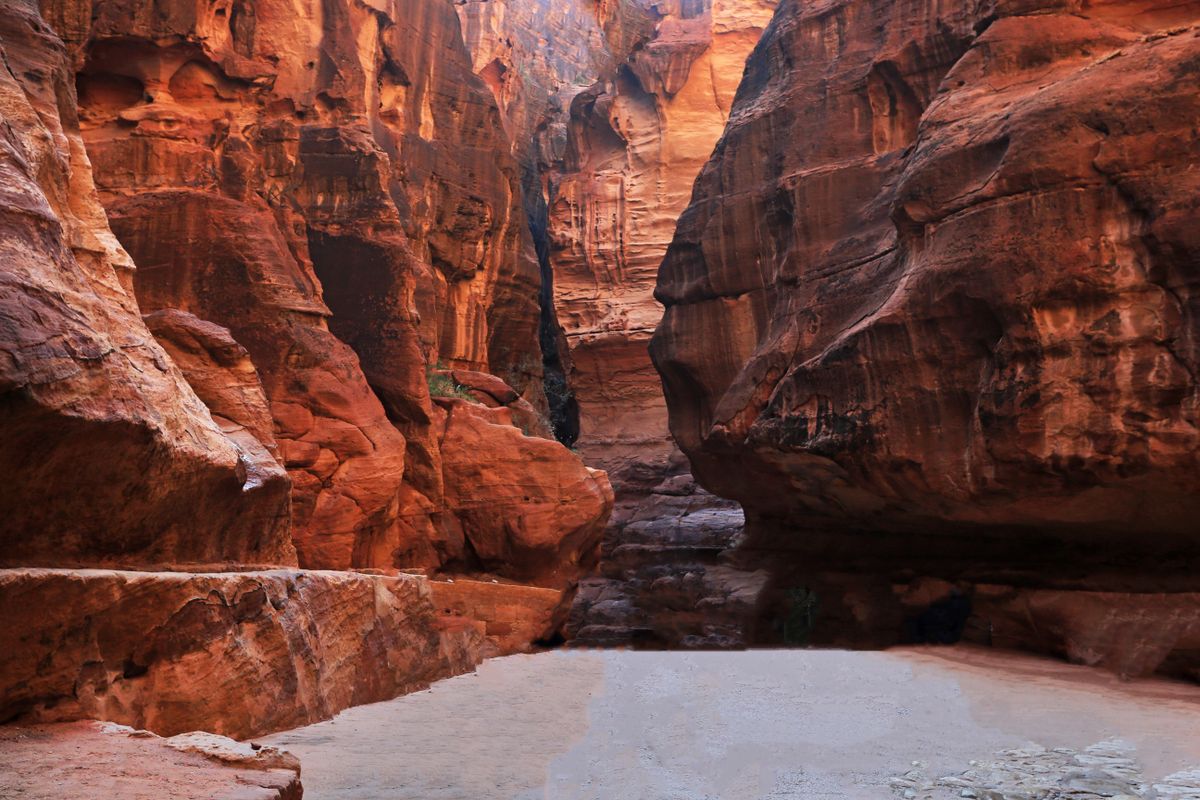
Canyon: The Siq
Under two knots down at the canyon floor this morning, if that, and what little air moves through doesn't organize into anything a bird could work. The walls run close enough in places that you could touch both sides with arms spread, and a gap that tight doesn't let wind settle into a current, only push and eddy. No thermals either: stone that never sees full sun doesn't heat enough to lift anything off it. A bird flown in here works on wingbeats alone, burning energy for no return, which is a fast way to end a hunt early.
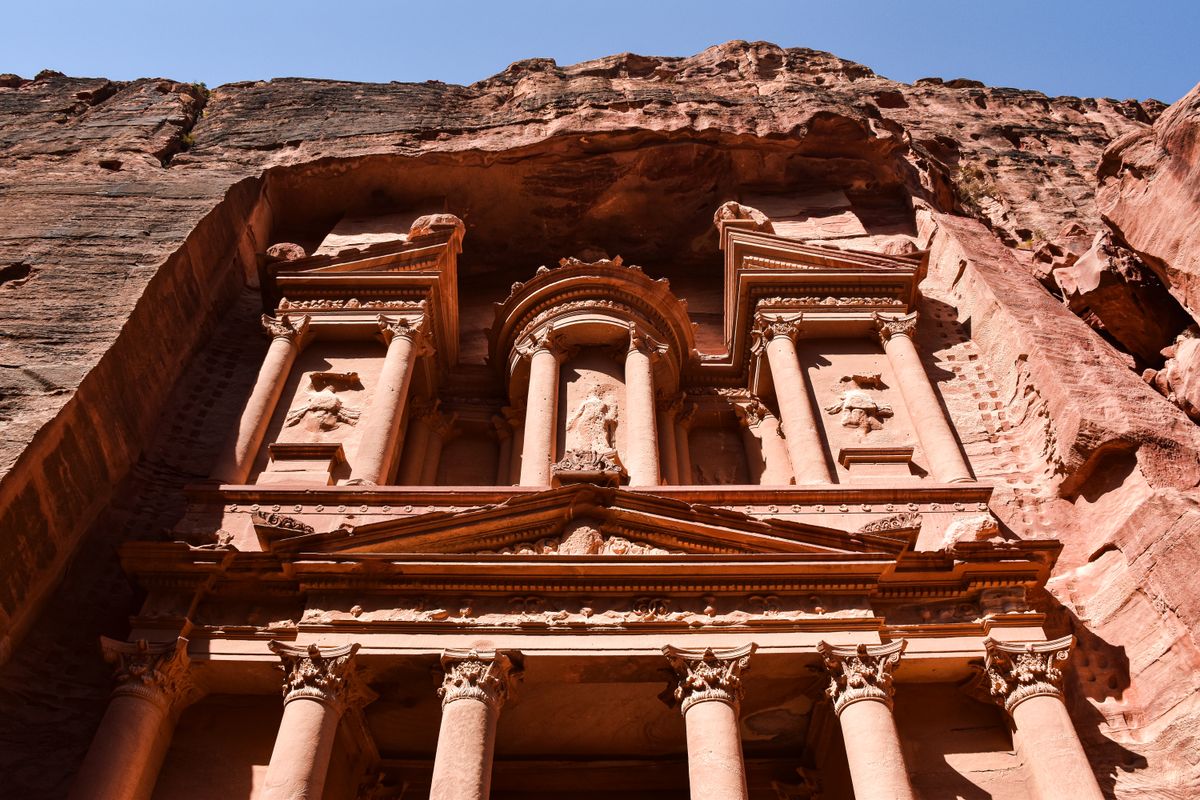
The rock closes overhead in bands of rose and ochre, and the path bends every few dozen meters so you never see more than sixty meters of it at once. Bad sightlines for a bird working ahead of you, worse for a handler trying to watch it work. Every blind corner is a place something could be waiting on the other side, which is exactly how the old caravan traders wanted it. A defensible gorge reads the same to a hunting animal as it does to a raiding party: cover on both sides, one line of approach, no room to correct.
The only quarry the Siq offers is rock pigeon, and only right at the seam where the canyon opens into daylight near the Treasury. They sit in ledge cracks thirty, forty meters up, out of any stoop a bird could safely commit to in that confined a space. Low-value, high-risk ground, and not a combination I'd fly for.
A young guide walked backward ahead of our group for a stretch, talking the whole way, never once checking his footing on ground he must have crossed a thousand times. Took to the canyon the way a good passage bird takes to the glove on day one: no flinch, no wasted attention on the walls, mind already on where the walk was going next. Most of the tourists behind him did the opposite, hands out to the rock, eyes up rather than down, the kind of first-day nerves you train out of a bird in a week and out of a person somewhat longer.
Fail the Siq as hunting ground, on the numbers. Pass it as an approach: it does exactly what a canyon like this is built to do, narrow your attention down to one direction until the light opens and gives it back to you all at once.
Ridge: The Al-Khubtha Viewpoint
Wind out of the west by the time the trail broke onto open rock above the Royal Tombs, twelve knots or so, gusting higher where it came off the ridge edge, and thermals already building on the sun-struck faces by mid-morning. A different animal entirely from the Siq. A bird up here could sit on the lift and cover the whole basin without a hard wingbeat, which is the difference between hunting ground and a walk with a view.
The climb earns its reputation. Cut steps most of the way, uneven in height, worn smooth in the middle by however many centuries of sandal and boot, and it doesn't let up until the last scramble onto the viewpoint rock. You pass the Urn Tomb, the Silk Tomb, and the Corinthian Tomb on the way, their facades catching light at angles the valley floor never gets, but the climb is the story more than any one of them.
This is real quarry ground. Rock pigeon working the tomb ledges below, chukar partridge somewhere in the scrub on the lower slopes if you're patient enough to spot one, and lift strong enough that a falcon could stoop from height and still recover over open rock instead of a canyon floor. If I flew a bird anywhere on this route, it's here.
An older man in our group sat down hard about ten meters from the edge and stayed there, waving the rest of us on. Flared wide at the first real drop, the way a young bird flares off a fist held too high too fast. Nothing wrong with the man, and nothing wrong with a bird that does that either. It just means you don't ask for a longer flight until the shorter one settles.
Pass, without qualification. Good lift, real quarry, sightlines that open rather than close. This is the one stretch on the route that would actually hold a trained bird's attention, and it held mine the same way.
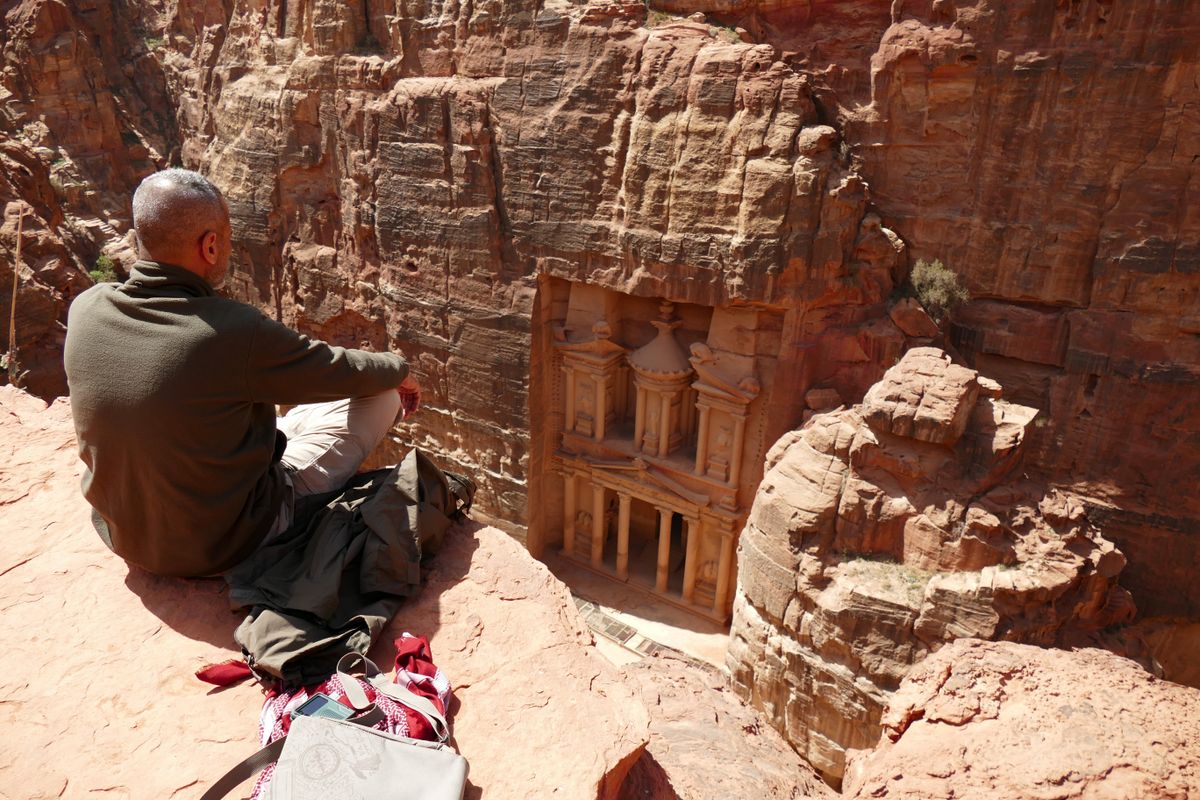
Al-Khubtha is the only stretch on this route that holds real lift and real quarry, not just a view.
— mews notes
Ridge: The Shelter Above the Valley
Wind at the shelter had dropped to something closer to six knots, still out of the west but with less force than up at Al-Khubtha, most likely because the shelter sits back off the true edge in a fold of rock that breaks the gust before it arrives. Thermal columns were still visible on the far slope if you watched for them, but weaker this late in the walk, the kind of lift a bird would ride down rather than up.
The shelter is a lean-to of woven black goat hair stretched over posts, carpets laid down in reds and blues gone soft with dust and years, run by a Bedouin family who trace back to the B'doul, the tribe that lived in these caves until the government moved them down into Umm Sayhoun in 1985. They still work this ground the way their fathers did, just with a kettle instead of a hawk. It's a loss dressed up as hospitality, and, on its own terms, still a good living.
Handler's Notes
Start before eight if you can. The Siq holds shade most of the morning, but Al-Khubtha's exposed rock takes full sun by mid-morning and there's no cover on the climb.
The cut steps to the viewpoint are uneven and worn smooth in the middle. Real hiking boots, not sandals, whatever the local guides wear.
Shelter stops are run by Bedouin families, not the park authority. Carry small notes for tea, and expect to sit a while; rushing the stop defeats the point of it.
Wind at the ridge edge gusts harder than it reads from the tomb steps below. Mind loose hats and bags near the viewpoint drop.
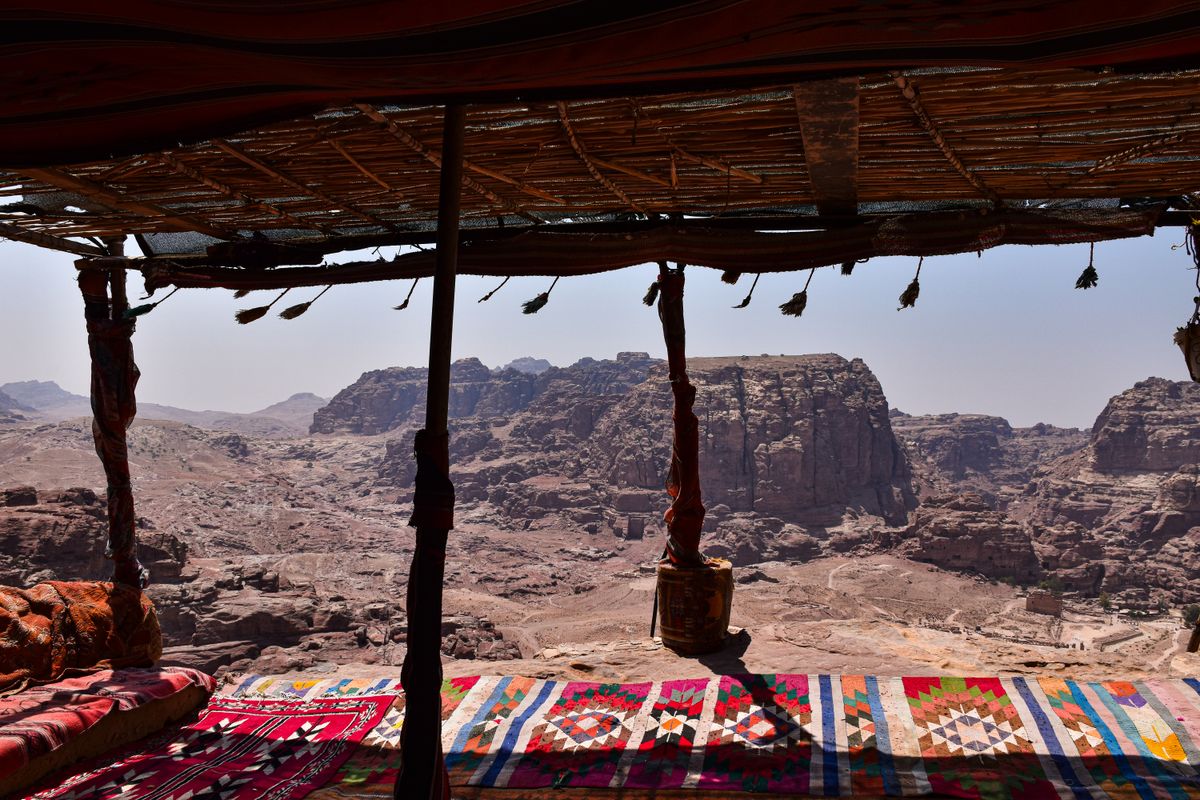
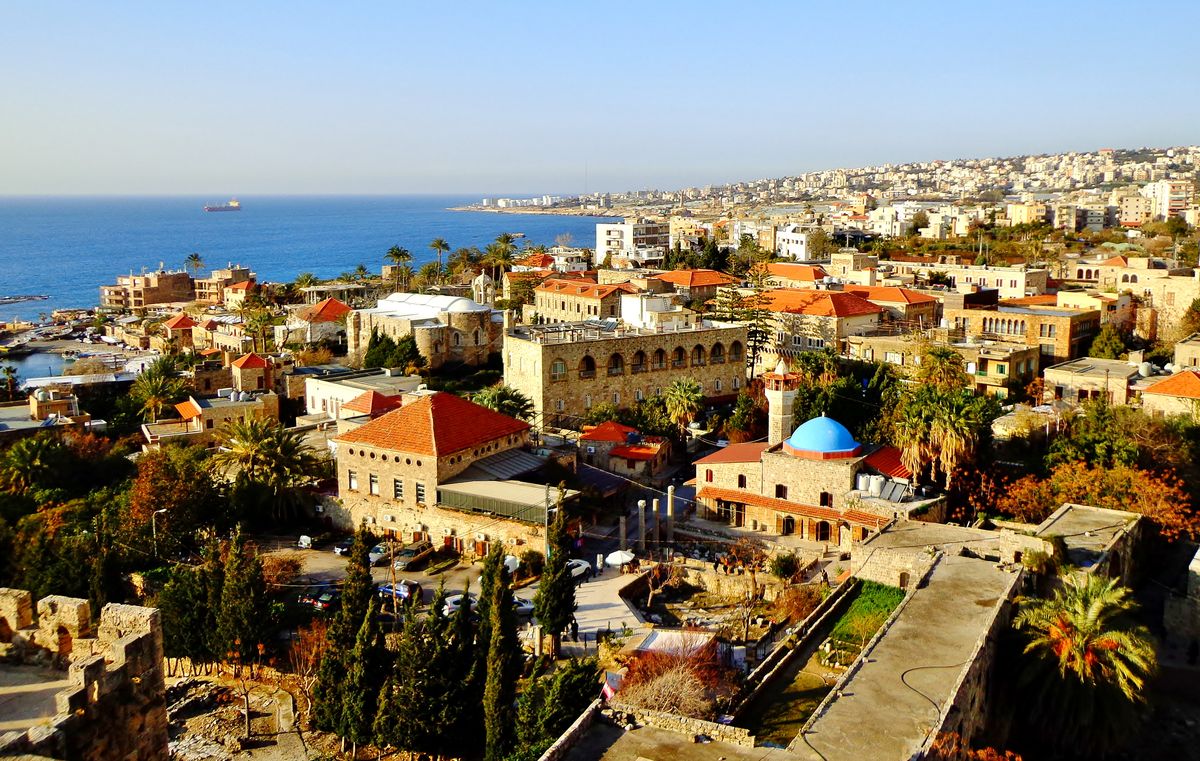
From the carpets you can see most of the basin at once: the Royal Tombs below, catching the afternoon light, and Jabal Haroun a long way off to the south-west, its white dome visible when the haze lifts. A bird working that ground could choose its line, drop into a stoop on whatever crossed the open country between the ridgelines, and climb back out on the same lift that carried it up. Good hunting country, if it were mine to fly, though I'd want to watch that haze first; heat like that softens the air enough to cost a bird height on the way home.
One of the boys running the shelter pours tea without looking at the cup, eyes still on whoever he's talking to, and it never spills. That's the kind of unbothered you can't train into a bird. Either they're born with it or they're not, and you spend most of a career working out which are which before you waste six months on the wrong one.
Overall verdict on the route: pass, with conditions. The Siq is approach only, dead ground for a bird and worth walking anyway for what it does to your attention. Al-Khubtha is the one stretch that would hold a trained bird's interest on its own merits, wind and quarry both. The shelter is recovery ground, not hunting ground, which is exactly what you want after a climb like that, whether you're leading a bird or a group of tired legs. ■