Tasmania Is Not a Volcano: A Field Guide to Rocks Everyone Gets Wrong
Four stops across Tasmania's dolerite, granite, and quartzite, where the guidebooks get the geology wrong and the rocks don't care either way.
Cradle Mountain: An Intrusion Mistaken for a Volcano
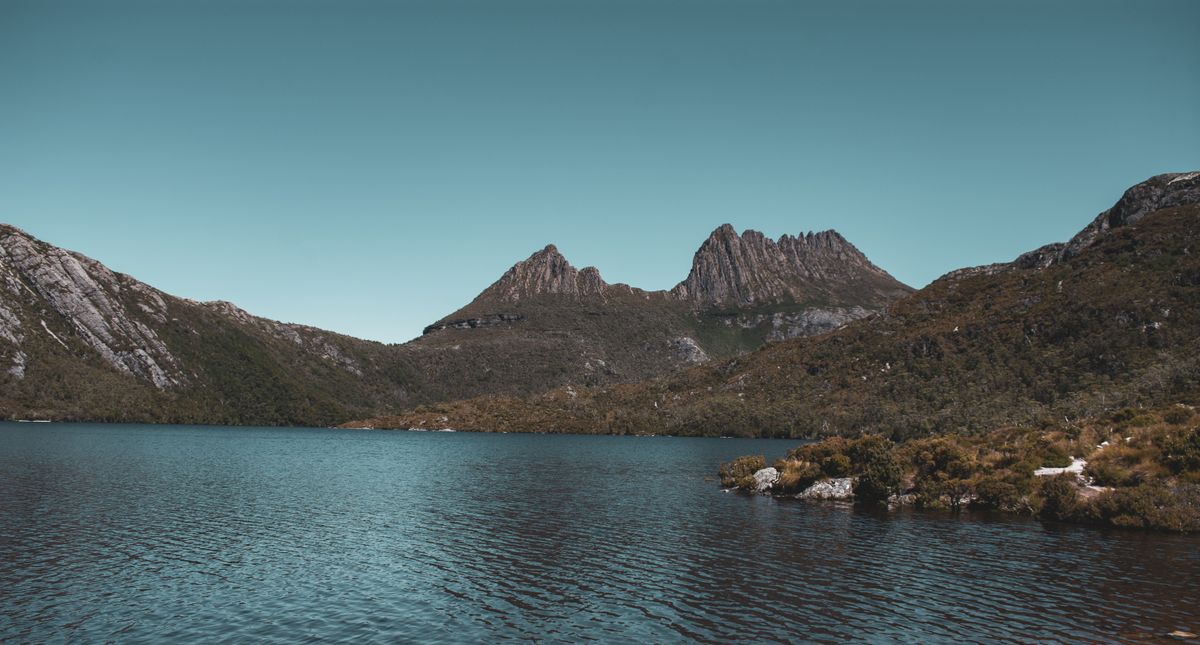
Dolerite is not lava. It is magma that got impatient with the surface and stopped a few kilometres short, cooling slowly inside older rock instead of erupting through it. Around 176 million years ago, as Gondwana began working out how to become Australia and Antarctica, a sheet of this magma forced itself between layers of Permian and Triassic sandstone across what is now Tasmania. It never saw daylight until erosion did the work for it, tens of millions of years later.
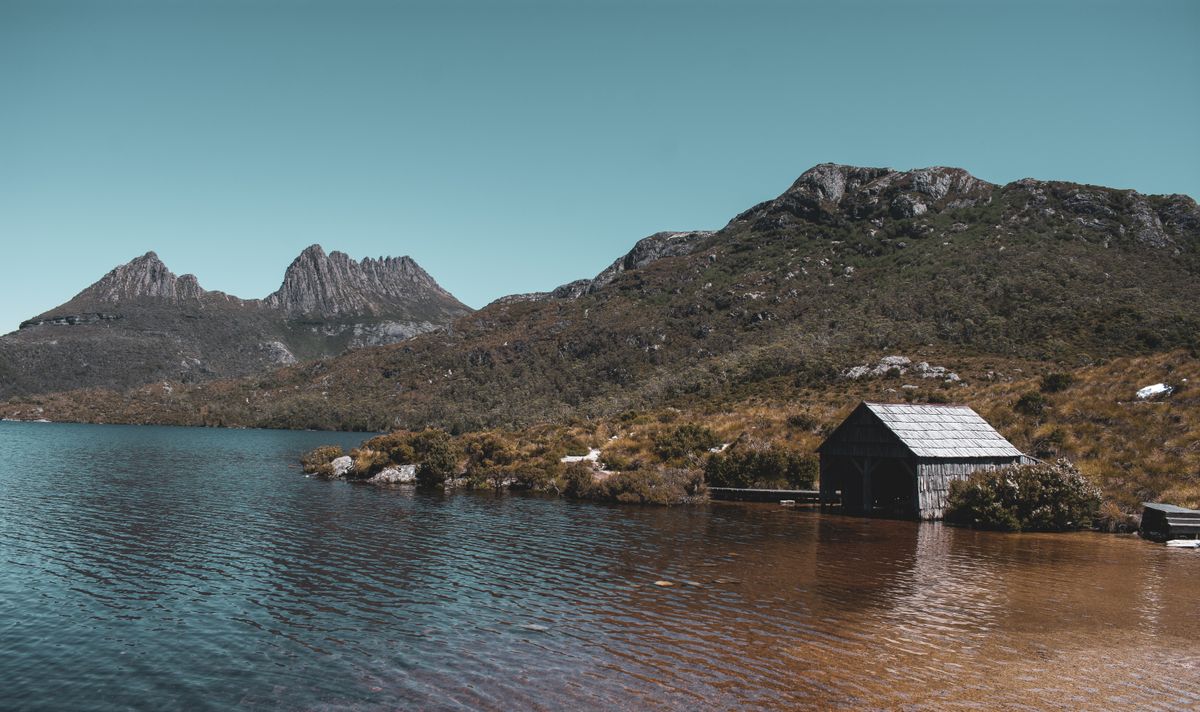
Dove Lake sits at the bottom of that erosion, a slab of black water held in a bowl the last ice age carved out of the dolerite. The boathouse on the shore dates to 1940 and looks like it, weatherboard and a shingle roof holding ground against wind that comes off the peaks with nothing to slow it down first. Cradle Mountain stands behind it in a jagged row, the kind of skyline that makes a person reach for the word 'volcano' whether or not they know what one actually looks like.
They don't know what one looks like, going by the visitor centre logbook, where at least four entries a week ask about the mountain's 'last eruption.' There wasn't one. Cradle Mountain has no crater, no vent, no ash layer, because it was never a volcano to begin with: it's the exposed edge of that Jurassic dolerite sheet, later carved by glaciers into the ragged profile everyone photographs. The jaggedness does most of the misleading. Frost-shattered dolerite breaks along vertical joints, so a slowly cooled intrusion ends up looking more dramatic than most actual stratovolcanoes manage.
Pop quiz, since the logbook keeps asking: what turns a flat-lying sheet of igneous rock into a mountain range with a silhouette like a bad day? Ice, mostly. Cirque glaciers gouged out the valleys either side of the dolerite during the last glaciation, leaving the harder rock standing proud in a ridge. No lava required, then or ever.
field data
Cradle Mountain day pass (Tasmania Parks Pass): $44 per vehicle, cash not accepted at the gate
Dove Lake shuttle from the visitor centre: $19 return, runs every 10 minutes in season
Overland Track booking fee (Oct-May, six days): $212 per person, plus your own hut karma
The boathouse is a photo stop only, not open for entry
The Organ Pipes Are Not the Giant's Causeway
Columnar jointing happens when a thick body of rock cools slowly enough, and evenly enough, that it contracts into hexagons instead of cracking at random. The physics is the same whether the rock is basalt at the surface or dolerite underground, which is exactly why people keep comparing kunanyi's Organ Pipes to the Giant's Causeway and getting the comparison half right.
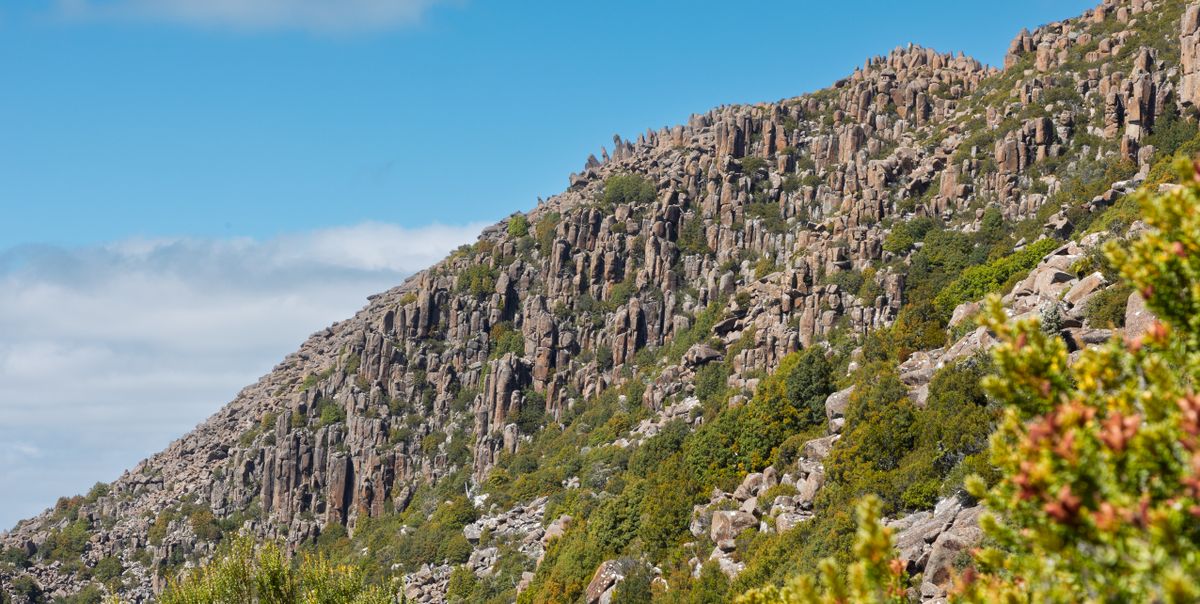
The walk up from the Chalet on kunanyi's Pinnacle Road takes about forty minutes each way along the Organ Pipes Track, weather permitting, and up here weather is a suggestion rather than a forecast. Sun at the car park, horizontal drizzle by the lookout, which the ranger at the Chalet described as 'a good day.' The columns run for close to a kilometre along the cliff face below the summit road, grey and hexagonal and stacked like something built on purpose.
Built on the same principle as Ireland's basalt columns, at least, but not from the same rock or the same process. The Giant's Causeway formed from thin lava flows that cooled fast at the surface, which is why the crystals in it are too small to see with the naked eye. The Organ Pipes formed from a thick dolerite sill that cooled underground over thousands of years, slow enough to grow crystals you can pick out with a hand lens. Same hexagons, different birth certificate.
So is it fair to call the Organ Pipes 'Tasmania's Giant's Causeway,' the way three separate brochures in the Chalet gift shop do? Only if you're comfortable calling a dolerite sill a basalt flow, which no dolerite has ever forgiven anyone for.
Pop quiz: same shape, same rock family, same planet. Not the same rock.
Wineglass Bay: the Pink Is Not the Lichen
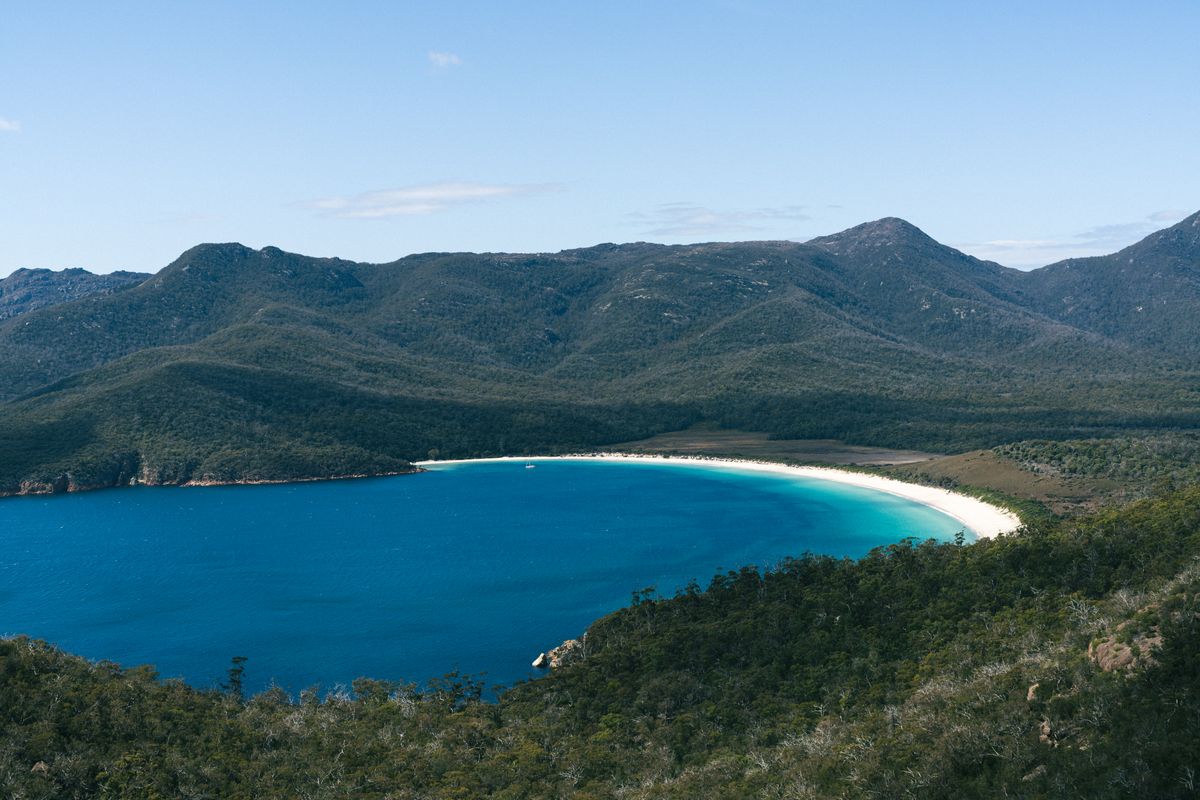
Freycinet's granite went solid about 360 million years ago, during the Devonian, when a batch of magma cooled slowly enough underground to grow visible crystals of quartz, orthoclase feldspar, and mica. The orthoclase is the reason the rock reads pink from a distance. It has nothing to do with the rust-coloured lichen crusted across the same boulders, a mix-up I heard repeated by two separate tour guides in one afternoon.
The climb to the Wineglass Bay lookout from the car park takes about forty minutes of switchbacks through she-oak and granite boulders the size of shipping containers. It gains height fast enough that most people stop twice to pretend they're admiring the view rather than catching their breath. The lookout itself is a granite shelf with a guardrail, no more than that, and it delivers the curve of the bay in one clean sweep.
The curve is real granite, the pink is real feldspar, and neither one is the orange lichen everyone points at when a guide says the word 'pink.' Xanthoria, the lichen doing the pointing, sits on the surface of the rock in patches and has nothing to do with what the rock is made of underneath it. Scrape it off, which nobody should do, and the granite underneath is exactly as pink as it was before. The other story going around, that the bay is named for water once stained red by whale blood from the shore-based whaling station at Parsons Cove, is at least geologically irrelevant and historically unresolved. The rock, unlike the story, isn't waiting on an argument to settle.
Pop quiz: what colour is granite? Depends which mineral is doing the talking. Freycinet's answer, feldspar pink under a coat of lichen rust, is two different rocks' worth of true at once.
Freycinet, the actual outlay
Franklin-Gordon Country: the River Is Not Dirty
The rivers through Tasmania's southwest run the colour of black tea because of tannins, organic compounds leached out of button grass and the buttonwood scrub lining every bank, not because of pollution, peat runoff, or anything a visitor should worry about after filtering. The bedrock underneath is quartzite, some of it pushing 700 million years old, among the oldest exposed rock anywhere in Tasmania.
I flew into Melaleuca on a six-seat light plane out of Cambridge Aerodrome, the only practical way into this part of the world short of a multi-week walk, and spent four days on the Old Port Davey Track before a rafting operator picked up the group for two nights on the Gordon. The water under the raft ran the colour of strong-brewed tea over sand the colour of driftwood, and every guide on the trip fielded the same question at least once a day.
field data
Melaleuca flight, return from Cambridge Aerodrome: about $340
Guided Gordon River rafting add-on, two nights: around $890
Old Port Davey Track hut nights: no bookable huts, tent only, pack a fly
Bring a headnet; the march flies do not care about your geology lecture
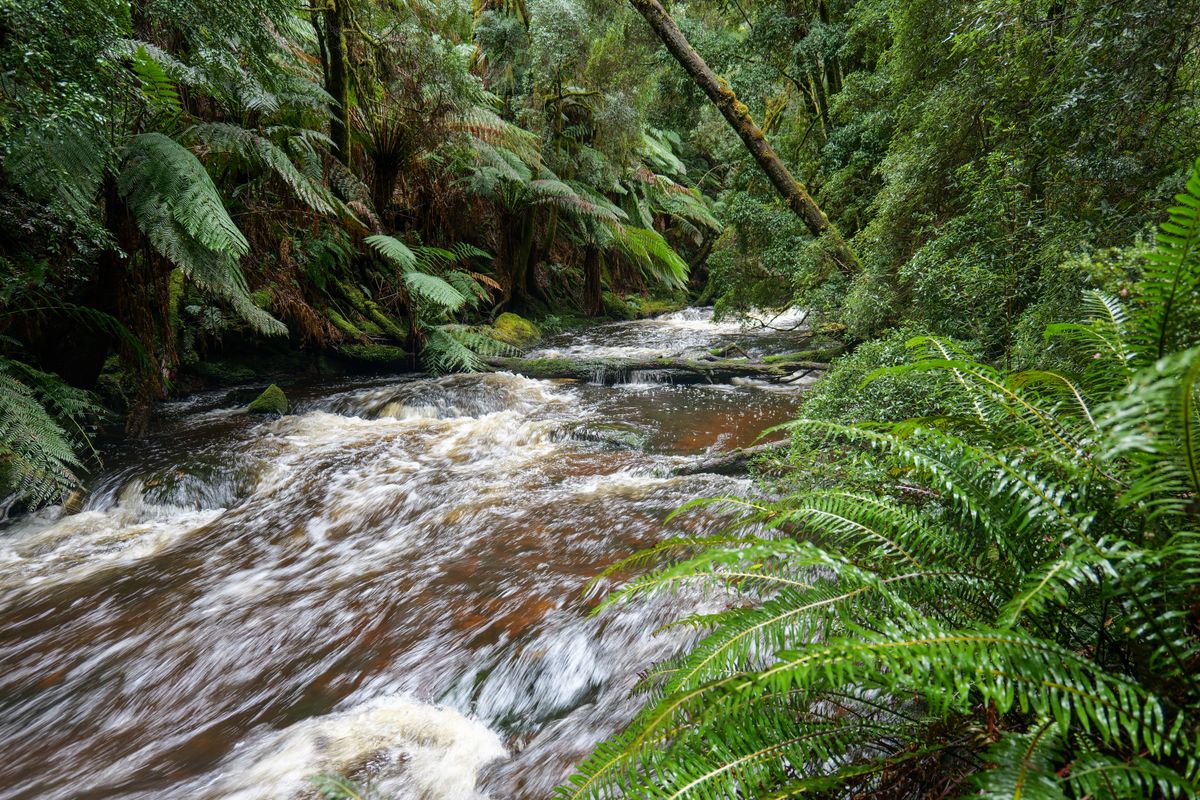
The question is always some version of 'is the water safe,' asked with the specific suspicion reserved for anything that looks like it shouldn't be. Is it safe? Yes, filtered the same as anywhere else in the bush. Does it stain a water bottle a faint permanent amber? Also yes, and no amount of scrubbing back at Melaleuca gets it clear again. The tannin staining that worries people shares its chemistry with a strongly brewed cup of tea, just steeped over button grass instead of leaves. The plains themselves exist because the quartzite soil underneath is too poor, and burned too regularly, for much else to compete.
One of the other rafters spent the whole second night insisting the tannin colour meant the water was 'basically swamp runoff' and therefore contaminated, which is not what tannin means and not how filtration works, and no amount of chemistry talk moved him off it. He filtered his water twice out of principle and complained about the taste anyway. The river did not care either way, and by the third day, neither did I. ■